
The Export Dilemma: High-Frequency Changeovers vs. Rigid Compliance
In 18 years of designing sauce and seasoning lines for export-oriented factories, I have seen a fundamental shift in the B2B landscape. It used to be about "Scale"—building the fastest possible line for a single SKU. Today, for factories competing in the global market, it is about "Agility." If your line is bolted to the floor and requires eight hours of teardown just to switch from a 12oz glass jar of hot sauce to a 32oz PET bottle of ketchup, you are technically insolvent in the modern co-packing environment.
Export factories face a unique double-bind: they must maintain the strict sanitary standards required by the FDA or BRCGS while simultaneously running smaller, high-frequency batches for diverse international clients. Achieving this requires moving away from traditional, monolithic line architecture toward modular production platforms. In my experience, a well-engineered modular line can reduce downtime by 60% compared to a static configuration. We explore the strategic impact of this in our guide on modular sauce solutions for export.
At HSYL, we don't just supply kettles and fillers; we engineer flexible production ecosystems. For an engineering manager, modularity isn't just a buzzword—it is the ability to swap a piston filler for a flow meter filler in under two hours, or to add a secondary heating circuit for high-viscosity pastes without re-plumbing the entire steam line.
Skid-Mounted Logic: The Foundation of Modular Expansion
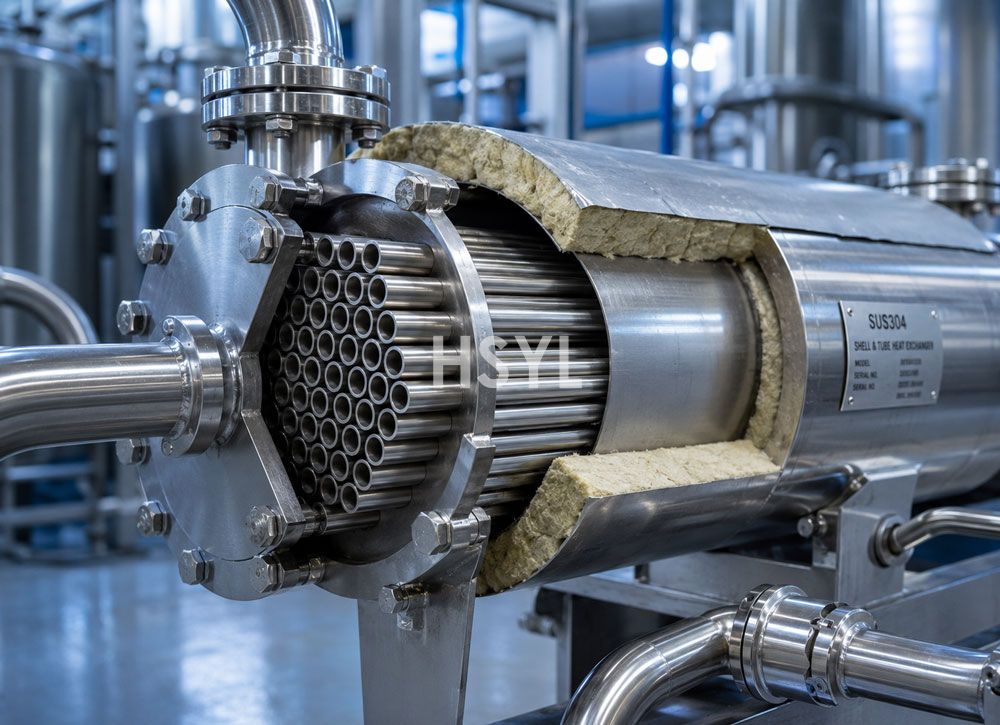
The "old way" involved mounting every pump, tank, and heat exchanger on its own concrete pad. The "modular way" involves skid-mounting. When we design a seasoning and sauce production solution, we group the core mixing, heating, and cooling components onto a portable stainless steel skid. All the internal piping, wiring, and PLC controls are pre-integrated on that frame.
This engineering approach offers three massive advantages:
- Utility Consolidation: You only need a single point of connection for steam, air, and water. If you need to move the line or expand the factory, you "unplug" the skid rather than cutting pipe.
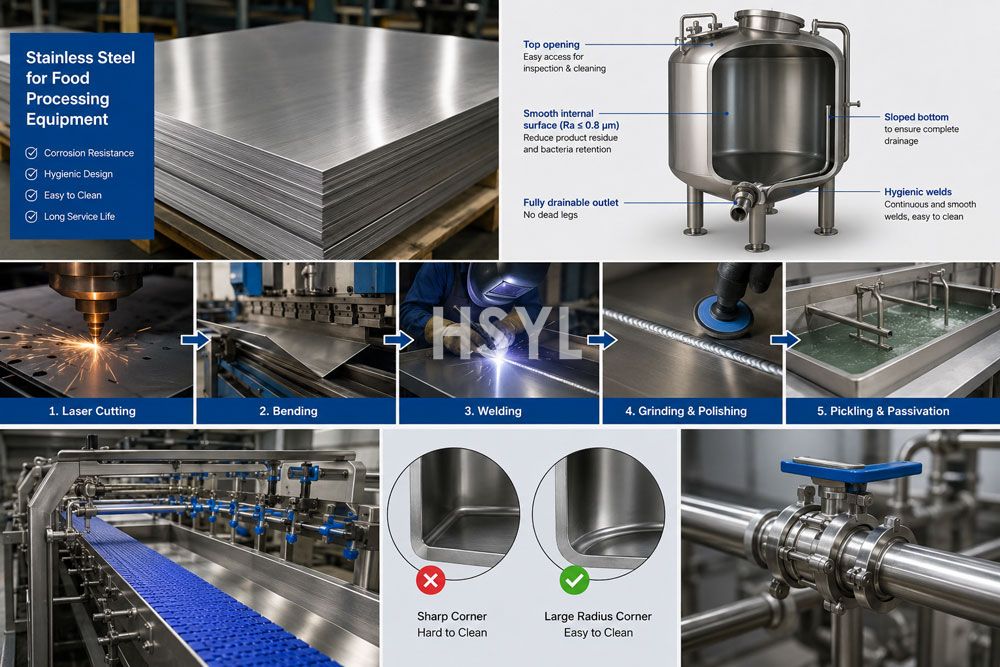
- Sanitary Isolation: Skids elevated on 6-inch legs allow for 100% floor visibility and cleaning, which is a critical point for auditors looking for bacterial harbor in "blind spots."
- Parallel Commissioning: We can build and test the skid in our facility while you are still pouring the epoxy floor in yours, shaving weeks off your time-to-production.
Solving the 30-Minute Changeover: Engineering SMED
In manufacturing engineering, we talk about SMED (Single-Minute Exchange of Die). For a sauce line, the changeover "die" is the filling head, the capper chuck, and the labeler guide rails. If your operators are reaching for a crescent wrench, you’ve already lost the battle for efficiency. My 18 years on the floor have taught me that tool-less design is the only way to ensure SKU flexibility remains profitable.
A fast changeover architecture includes:
- Tri-Clamp Fittings: All piping transitions must use sanitary tri-clamps. Threads are a biological hazard and a mechanical bottleneck.
- "Click-to-Position" Guides: Conveyor guide rails should be etched with measurement markers. When moving from a 2-inch bottle to a 4-inch jar, the operator simply slides the rail to the marked number and locks a cam lever. No measuring tapes, no guesswork.
- Piston Stroke Automation: Our thick sauce filling lines use servo-driven pistons. Instead of manually turning a handwheel to adjust volume, the operator selects the SKU on the HMI (Human-Machine Interface), and the servo automatically calibrates the stroke length to +/- 0.5% accuracy.
CIP for High-Viscosity Residues: The "Invisible" Bottleneck
Standard CIP (Clean-in-Place) works well for milk or water-based beverages. For a thick BBQ sauce or a chunky salsa, standard spray balls aren't enough. The residue is too tenacious. If your modular line isn't designed for high-impingement cleaning, your changeover time will be eaten up by manual scrubbing.
The engineering solution involves automated CIP skids with multi-stage chemical dosing. We utilize rotary jet heads that provide mechanical force to "strip" the sauce from the tank walls. More importantly, the modular line must be designed with dead-leg elimination. Any pipe section longer than 1.5 times the diameter that doesn't have active flow is a "dead leg" where old sauce can hide and contaminate the next batch. At HSYL, we audit every manifold design at the drafting stage to ensure zero-stagnation flow. Check our washing and cleaning technologies specifically our high-efficiency CIP tanks for more detail.
[Insert image: A dual-tank CIP skid with automated chemical dosing pumps for a modular sauce factory]
Viscosity Management: One Line, Ten Sauces
An export factory might run thin soy sauce in the morning and thick mayonnaise in the afternoon. These fluids have vastly different rheological properties. A pump that works for one will shear the other or fail to prime. Engineering a modular line means selecting the positive displacement pump that covers the widest range—typically a rotary lobe pump or a twin-screw pump.
Additionally, temperature control is essential for viscosity. If your sauce cools too much in the filling pipe, it thickens, the pressure rises, and your filling accuracy drops. We integrate heated jackets not just on the mixing kettle, but all the way to the filling nozzle. Using a modular heating loop allows you to maintain a precise "filling temperature" regardless of the ambient factory conditions—a crucial factor for shelf-stable canning and jar-filling lines.
The ROI of Modularity: The "Future-Proof" Factory
When I consult with operations directors, the ROI discussion isn't just about labor savings. It’s about Opportunity Cost. If a major export client asks for a 50,000-unit run of a new sauce in a "stand-up pouch" instead of a jar, a static line manager has to say "no" or buy a whole new line. A modular line owner simply buys a pouchfilling module, plugs it into the existing mixing and CIP backend, and starts production in weeks, not months.
This "lego-style" scalability allows factories to grow incrementally. You can start with a semi-automatic ketchup line and add automated capping, labeling, and palletizing modules as your volume justifies the investment. This preserves cash flow while maintaining industrial-grade quality.
Final Engineering Checklist for Multi-SKU Factories
- The 90-Second Rule: Can any operator pull a filling nozzle for cleaning in under 90 seconds without a wrench? If not, redesign the fitting.
- The Drain Test: After a water rinse, is there a single puddle in the pipes or tanks? Pooling is the enemy of SKU integrity.
- The HMI Test: Does the PLC handle the filling weight, conveyor speed, and capping torque with one "Recipe" click?
Building an export-ready sauce factory requires a partner who understands the mechanical grit of the workshop floor and the strategic agility of the global market. At HSYL, our senior engineers are dedicated to providing the modular infrastructure that eliminates the trade-off between variety and efficiency. For more technical insights on high-viscosity processing, visit our high-speed mixing systems page.
Related Sauce Production Resources
- Industrial Ketchup and Tomato Sauce Processing Lines
- High-Viscosity Thick Sauce Filling and Packaging Solutions
- Advanced CIP Systems for Multi-SKU Food Factories
Future-Proof Your Sauce Production with HSYL Engineers
The ability to pivot between products is the ultimate competitive advantage for modern export factories. At HSYL, our senior engineering consultants specialize in designing modular, skid-mounted sauce production lines that prioritize rapid changeovers and rigorous sanitary compliance. Whether you are building an OEM ketchup line or a multi-SKU artisanal hot sauce facility, we provide the industrial-grade machinery and integrated PLC logic to make your operation truly agile. Contact us today to discuss your SKU variety and ROI goals with an engineer who understands your floor.
Frequently Asked Questions
What is a modular sauce production line
How long does a fast SKU changeover typically take
Do I need a separate filler for thick sauces and thin liquids
Is CIP (Clean-in-Place) mandatory for export sauce factories
Can I add automation to my line later
What is the best way to handle chunky sauces with pieces
What material grade is best for high-acid condiment production
Related Articles



Get professional consultation
Do you have any questions or need technical support regarding the content of this article? Fill out the form below, and our expert team will provide you with professional solutions.