Gain in-depth insights into Canned Mackerel and Sardine Production Line equipment’s working principles, application scenarios, and technical highlights.
Canned Mackerel and Sardine Production Line
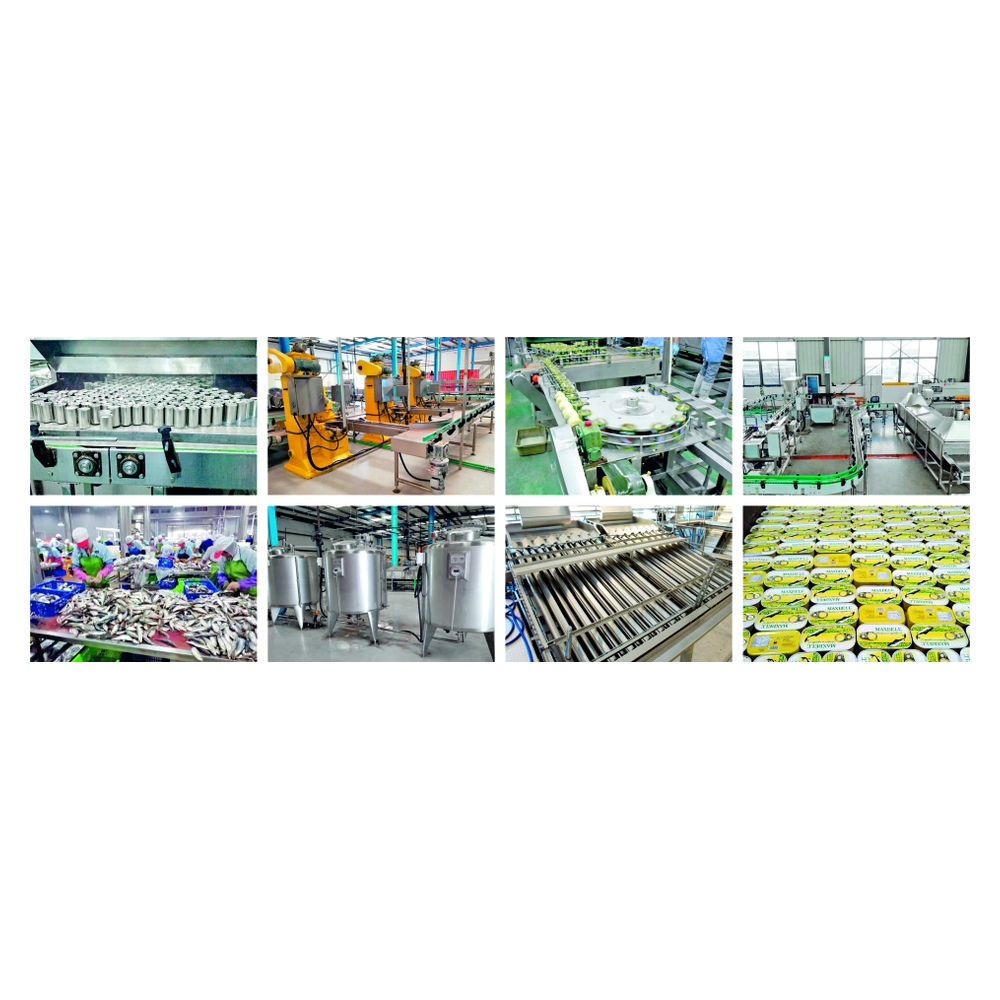
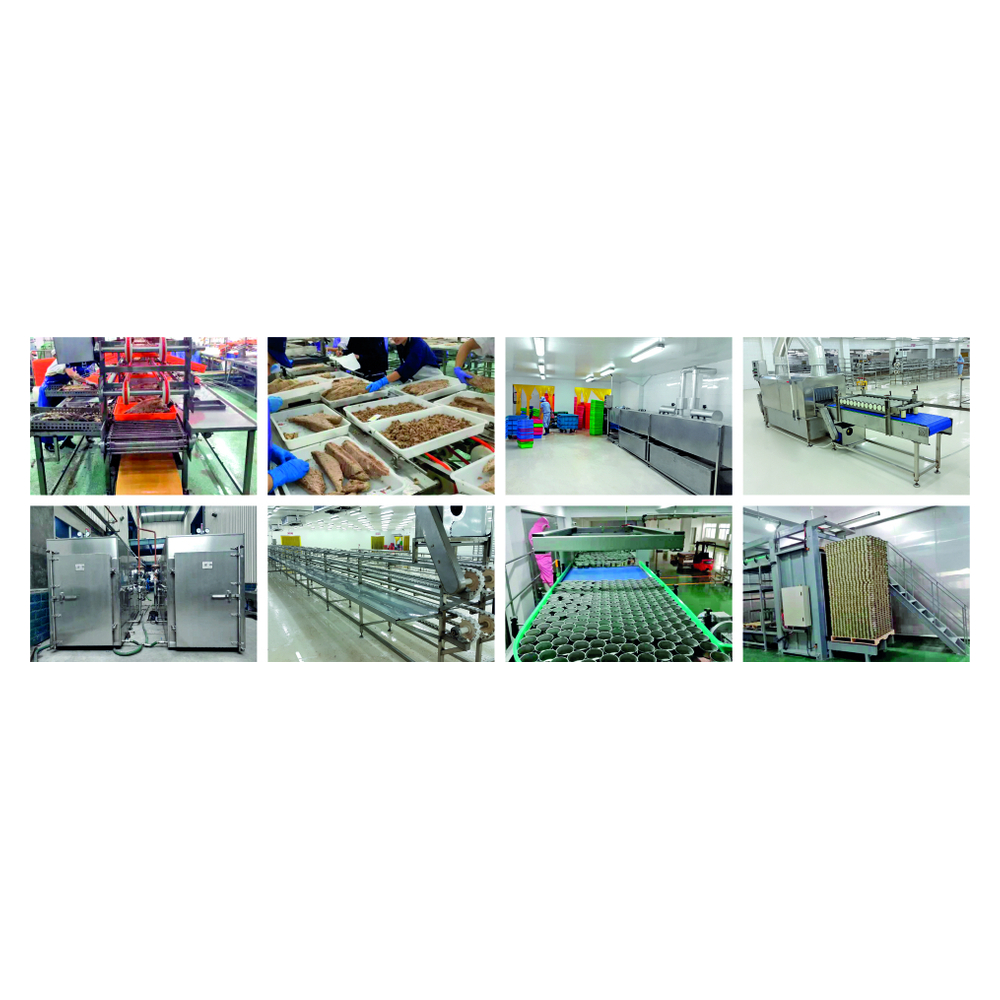
This fish canning line is intended for mackerel and sardine processing. Its equipment scope combines fish preparation and washing with can loading, thermal exhausting, draining, packing-liquid dosing and sealing.
Canned Mackerel and Sardine Production Line: Technical Parameters
| Parameter | Value |
|---|
| Raw material | Frozen or chilled mackerel and sardines |
| Can formats | Tinplate, aluminum, easy-open ends (EOE), club cans |
| Materials | SUS304 main frame / SUS316L fluid-contact zones |
| Typical can sizes | Mackerel: 155 g oval, 425 g tall round; sardine: 125 g club |
| Control system | Siemens PLC (S7-1200 / S7-1500) with touchscreen HMI (Siemens or Weinview); Schneider electrical components; Allen-Bradley on request |
| Delivery lead time | 60–90 days after deposit and layout/drawing approval (single machines 30–45 working days) |
| Warranty | 12 months from commissioning (wear parts excluded); lifetime technical support |
| Certifications | CE, BRC, USDA, UL |
Final parameters are confirmed on the model specification sheet for your product, container and output. HSYL has 10+ years of canning-line engineering experience, 50+ turnkey projects in 25+ countries and 1000+ customers, with CE, BRC, USDA and UL certifications.
Capacity Configurations
| Configuration | Reference capacity | Automation | Typical buyer |
|---|
| Pilot / small scale | 1,500–2,500 cans/hr | Semi-automatic | Startups, regional canneries |
| Mid scale | 8,000 cans/hr (Algeria fish canning reference) | Fully automatic | Export-oriented processors |
Key Features
- Thawing tank and thawing washer for incoming fish.
- Descaling and head-and-tail cutting machines for primary preparation.
- An evisceration conveyor followed by washing and brine-washing equipment.
- Can-loading conveyor, exhaust box and draining unit for the canning section.
- Packing-liquid dosing and sealing equipment at the end of the listed scope.
Line Equipment
- Thawing tank
- Thawing washer
- Descaling machine
- Head-and-tail cutting machine
- Evisceration conveyor
- Fish washer
- Brine washer
- Can-loading conveyor
- Exhaust box
- Draining unit
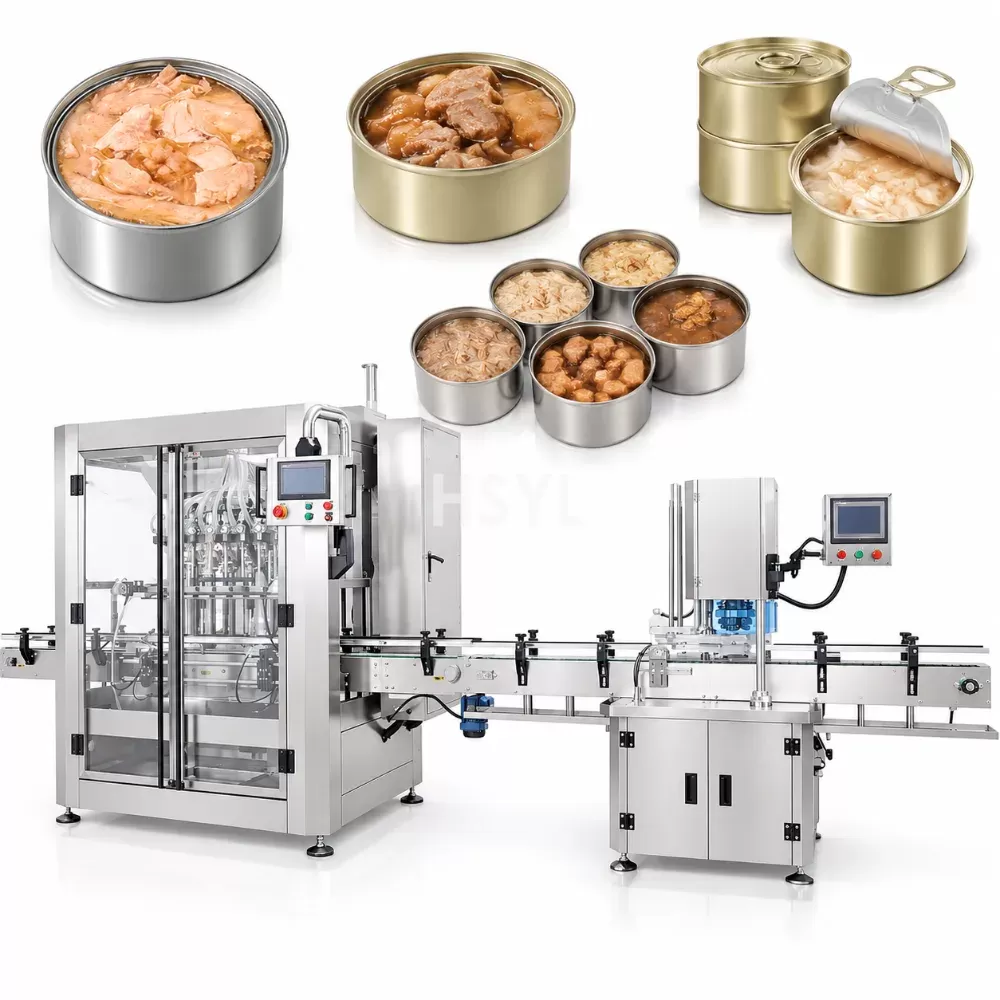
- Packing-liquid dosing machine
- Can seamer
Canned Mackerel and Sardine Production Line: Process Flow
- Thawing tank: Frozen mackerel/sardine blocks are thawed.
- Thawing washer: Fish are washed and separated.
- Descaling machine: Scales removed.
- Head-and-tail cutting: Fish cut to can height.
- Evisceration conveyor: Viscera removed.
- Fish washer: Cleaned fish washed.
- Brine washer: Brine treatment.
- Can-loading conveyor: Fish packed into cans.
- Exhaust box: Thermal exhausting / pre-cooking in can.
- Draining unit: Cook water drained.
- Packing-liquid dosing: Oil, brine or tomato sauce added.
- Can seamer: Cans double-seamed; then washing, retort sterilization and packing (scope defined separately).
Applications
- Canned mackerel.
- Canned sardines.
Information for Equipment Selection
- Fish species, size range and incoming frozen or chilled condition.
- Required fish preparation and filling presentation.
- Can dimensions, packing liquid, output and downstream equipment interfaces.
Send your product requirements and production layout to discuss the equipment configuration.
What Affects Canned Mackerel and Sardine Plant Cost?
Buyers searching for mackerel canning plant cost should compare quotations on the same scope. The main cost drivers are:
- Raw fish preparation scope: Whole frozen fish needs thawing, heading/gutting, pre-cooking or brine washing before filling; a line that receives prepared loins or portions is a much smaller investment.
- Supply boundary: Whether the quote starts at raw-material receiving or at filling, and whether retorts, utilities (boiler, compressor, cooling tower, water treatment), installation and commissioning are included.
- Target output and shifts: Cans per minute, working hours and planned stops determine machine sizes, number of filling/seaming heads and the number of retorts or tunnel length.
- Automation level: Manual or assisted stations versus automatic loading, basket handling, inspection and palletizing change both equipment cost and long-term labor cost.
- Container formats and changeovers: Every can diameter/height, end type (EOE or sanitary) and tray format needs its own tooling; frequent changeovers may justify quick-change parts.
- Materials of construction: SUS304 versus SUS316L for product-contact and wet zones, and the hygienic design level required by your buyers or auditors.
- Building and utilities: Factory area, floor drainage, steam capacity, power supply and cooling water at your site affect civil and utility investment, which is separate from equipment price.
- Destination-market compliance: Documentation for CE marking, US FDA low-acid canned food filing support, customer audits (e.g. BRC) and voltage/frequency adaptation.
- Spare parts, training and service: Spare tooling, seam-inspection equipment, operator training and remote/on-site support included in the scope.
To receive a mackerel canning quotation broken down by equipment, utilities and services, send your product, container drawings, target output and factory layout to HSYL.
Frequently Asked Questions
Which fish are covered by this line?
The line is described for mackerel and sardines. Fish size and the required preparation method should be included in the equipment specification.
What preparation equipment is included?
The listed preparation modules include thawing, descaling, head-and-tail cutting, evisceration conveying, washing and brine washing.
Where does the listed equipment scope end?
The listed modules end with packing-liquid dosing and can sealing. Downstream thermal processing and finished-can handling should be defined separately in the project scope.