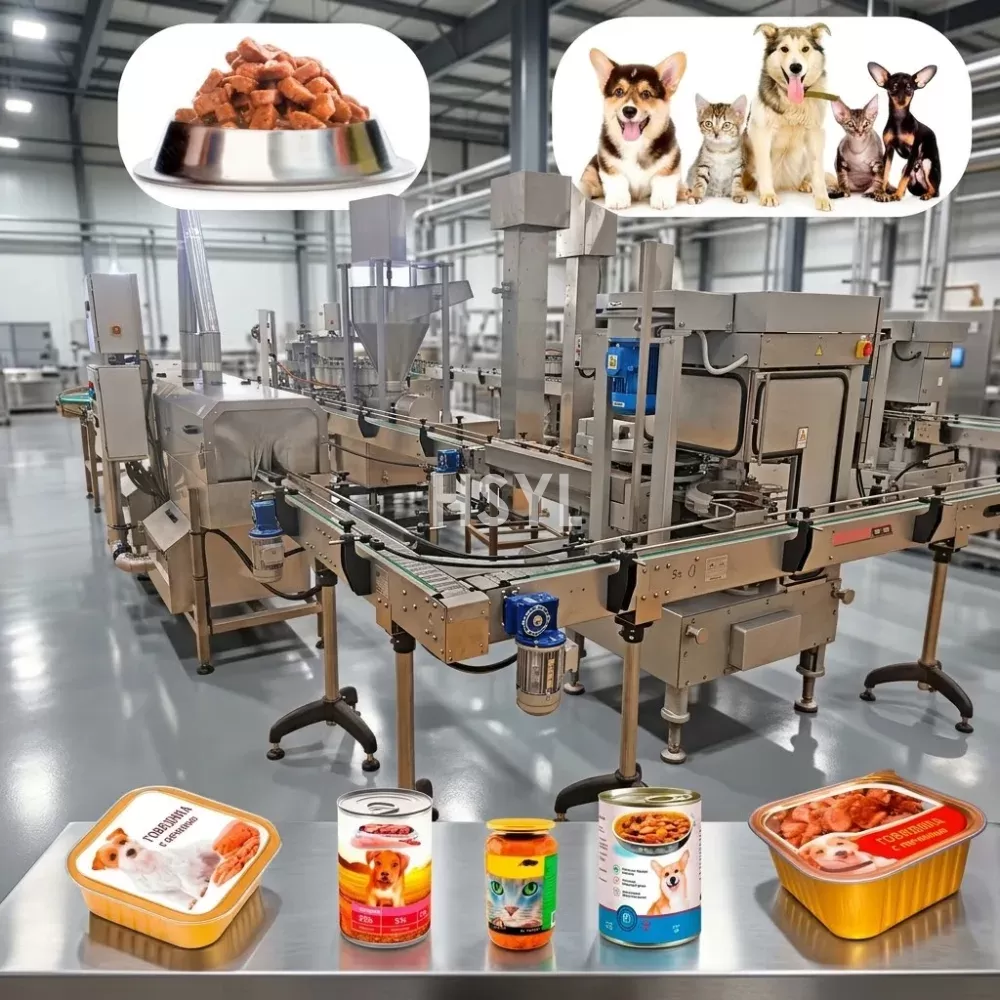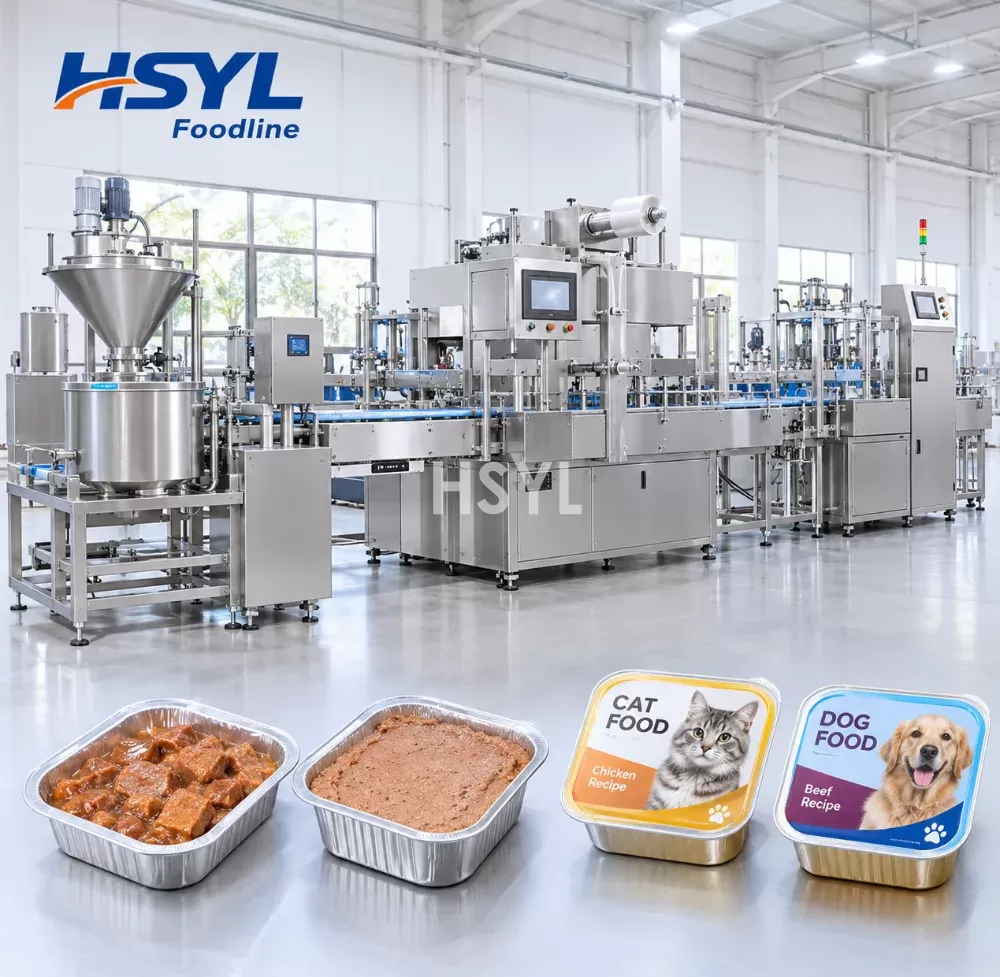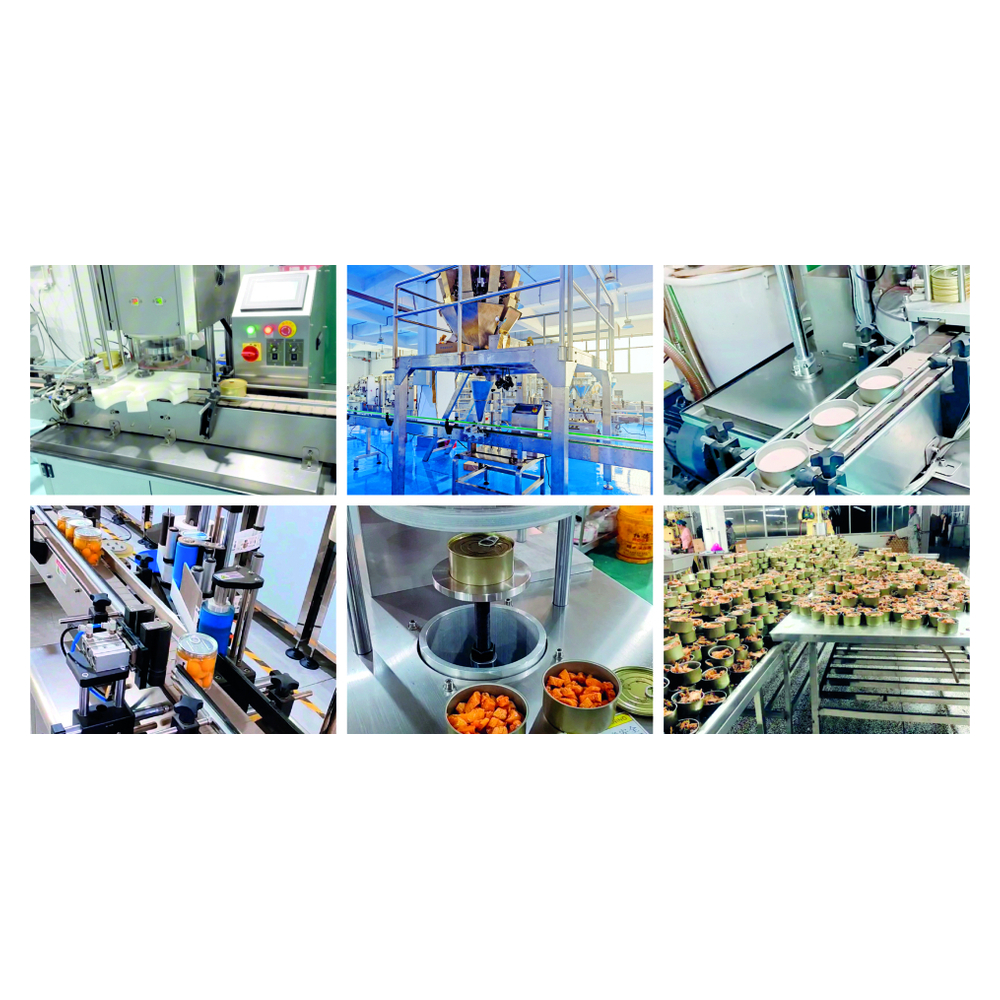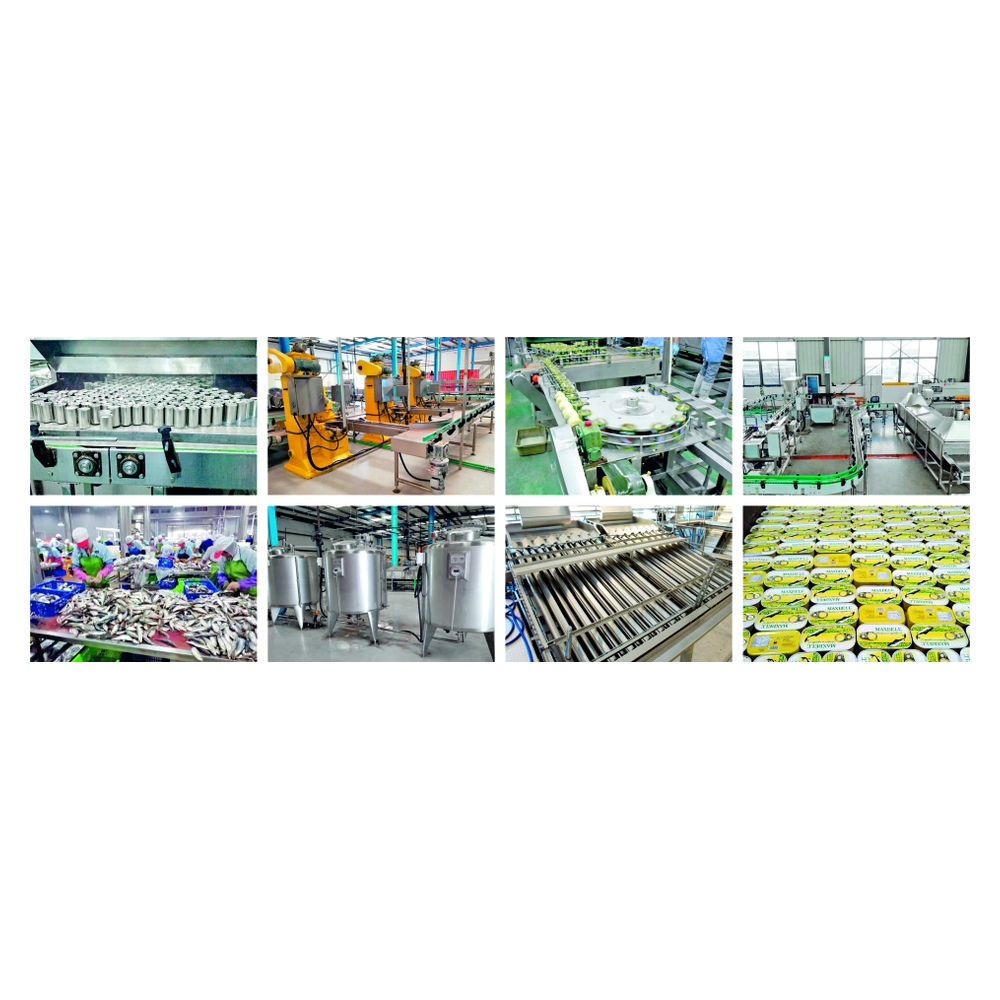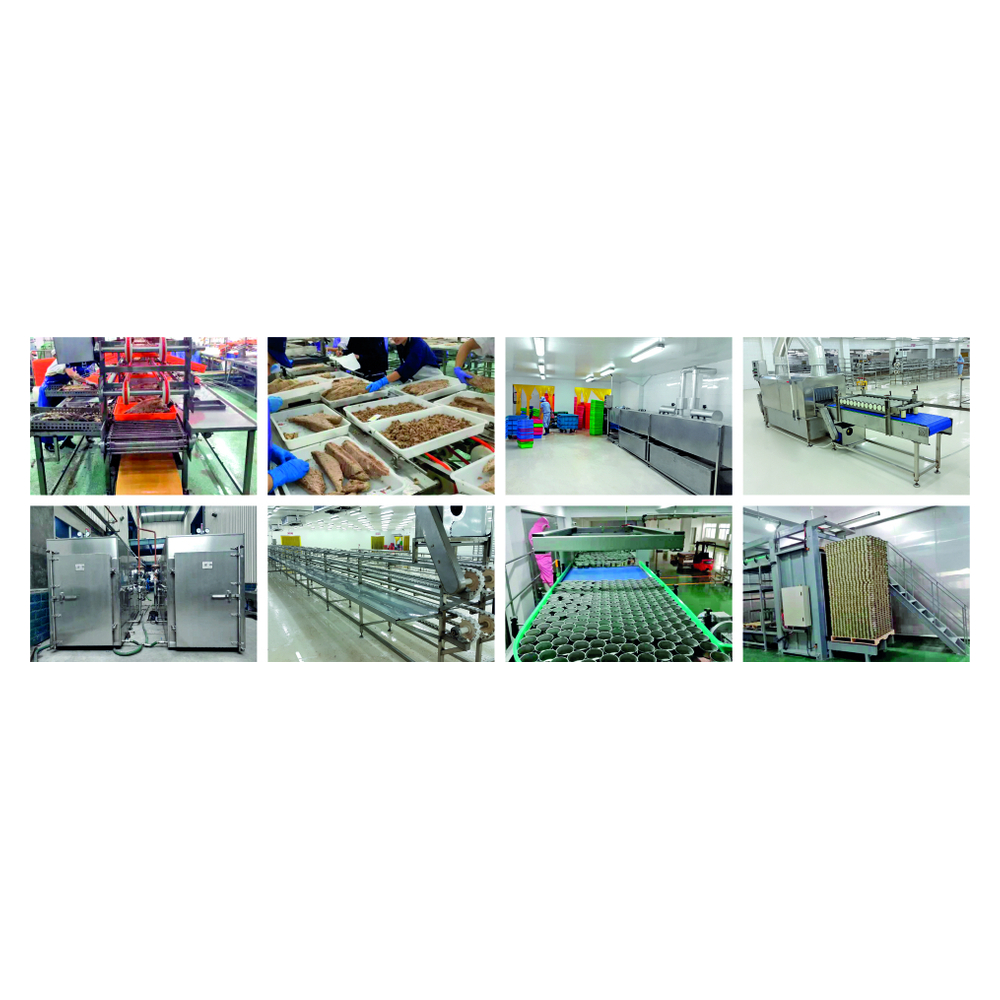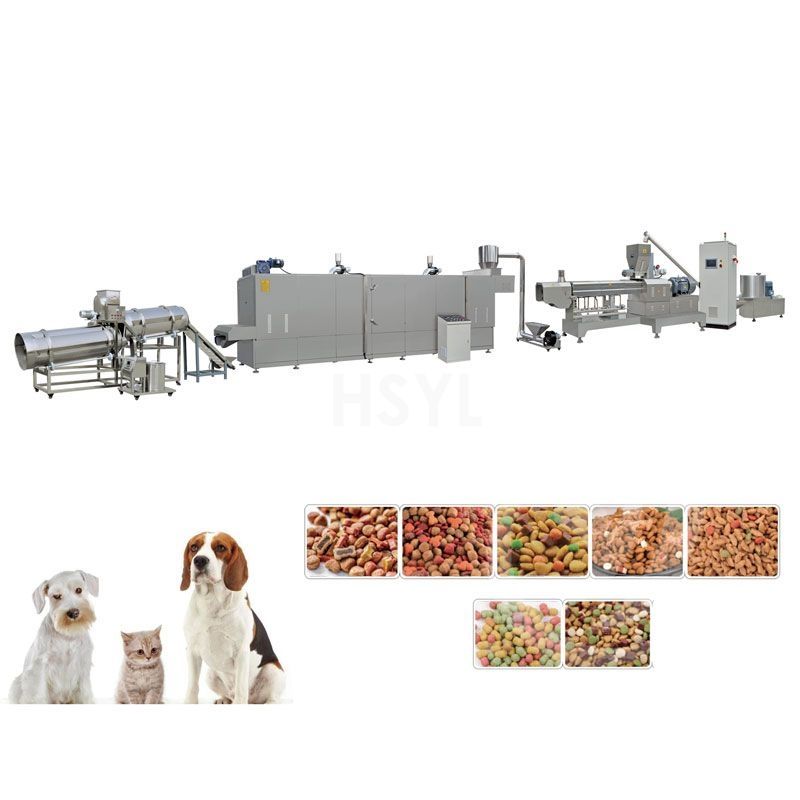
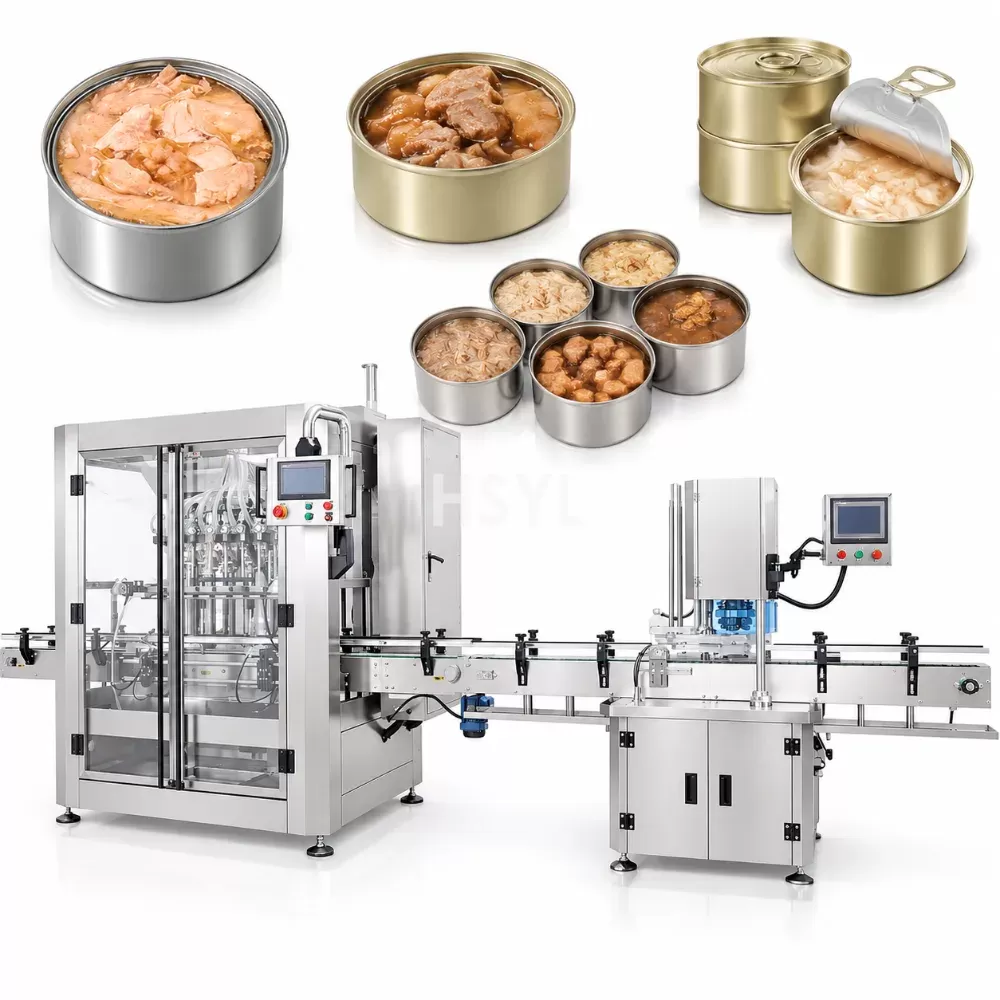
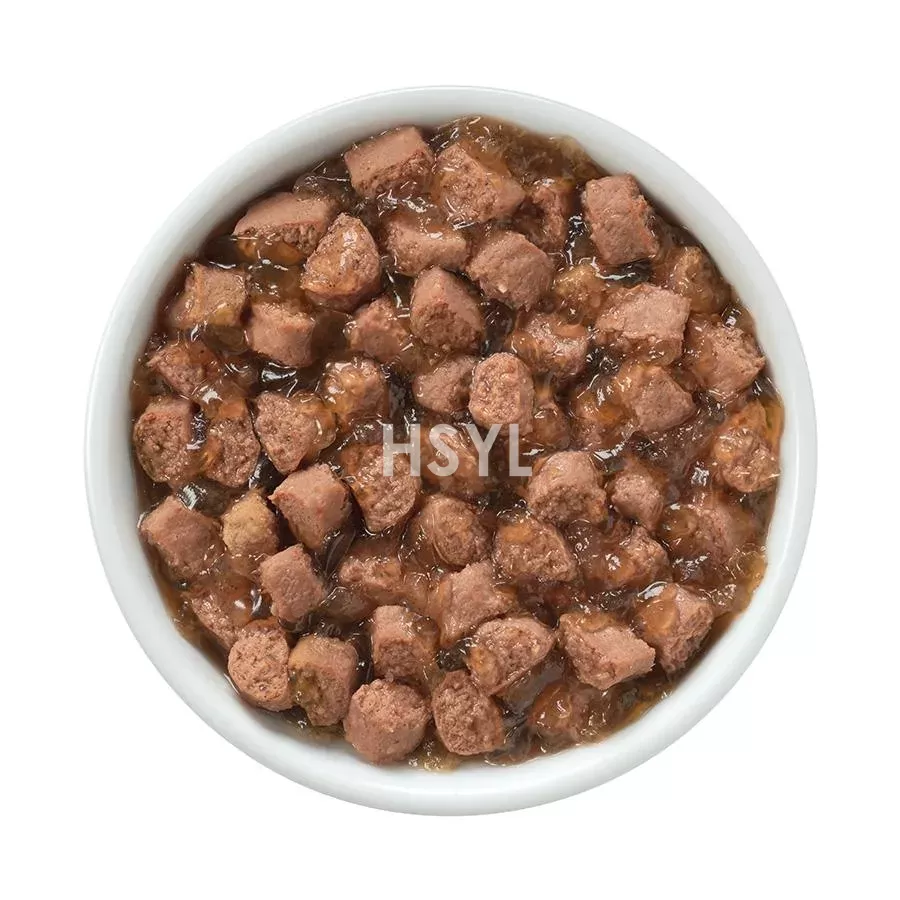
HSYL provides industrial wet pet food canning line solutions for manufacturers producing premium chunks in gravy (CIG) and chunks in jelly (CIJ) canned pet food. The production line is designed to manufacture uniform reformed meat chunks and combine them with accurately dosed gravy or jelly to create consistent, high-quality canned pet food products.
Unlike conventional wet pet food production processes that rely primarily on meat paste filling, this specialized production system integrates frozen meat grinding, vacuum mixing, multi-rope meat extrusion, steam tunnel protein setting, rotary dicing, anti-stick multi-head weighing and liquid dosing. The integrated process helps manufacturers produce defined meat pieces with controlled dimensions, texture and filling weight.
HSYL can configure individual processing machines or complete automated production systems according to meat formulations, chunk dimensions, can sizes, target output and packaging requirements.
Specialized Production Technology for Chunks in Gravy and Chunks in Jelly
Chunks in Gravy (CIG) and Chunks in Jelly (CIJ) are popular wet pet food formats that combine solid meat pieces with a liquid or semi-solid filling medium. Their manufacturing processes require precise control over meat formulation, chunk formation, thermal setting and portion dosing.
Chunks in Gravy (CIG) Pet Food
Chunks in Gravy products consist of shaped meat pieces distributed in a liquid gravy sauce. The production line forms uniform meat chunks, measures the required solid portion and doses hot gravy into each container.
The filling process is designed to maintain a consistent ratio between meat chunks and gravy while supporting the desired product appearance and package weight.
Chunks in Jelly (CIJ) Pet Food
Chunks in Jelly products combine reformed meat pieces with a prepared jelly-based filling medium. The meat processing and chunk formation stages are similar to those used for CIG products, while the liquid preparation and dosing configuration are adjusted according to the jelly formulation.
Jelly preparation, heating and dosing equipment can be integrated into the production system to support consistent distribution of meat pieces and jelly within each container.
Complete Chunks in Gravy and Jelly Pet Food Production Process
The production line connects meat preparation, forming, thermal setting, cutting, weighing and liquid filling into a coordinated manufacturing workflow.
1. Frozen Meat Grinding and Preparation
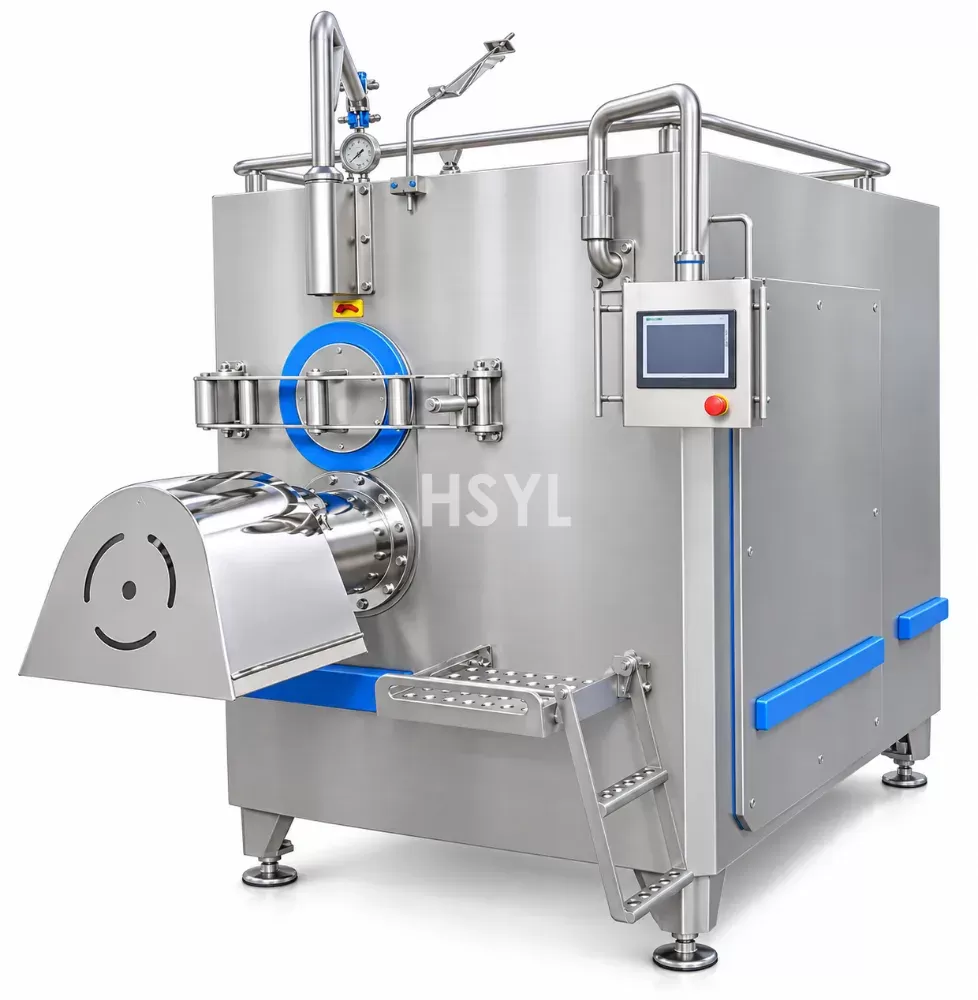
Frozen or chilled meat raw materials are processed through industrial meat grinding equipment to achieve the required particle size and material consistency.
The grinding configuration depends on the incoming meat condition, formulation and required texture of the finished meat chunks. Proper raw material preparation provides a consistent foundation for subsequent mixing and extrusion.
2. Vacuum Mixing and Meat Formulation
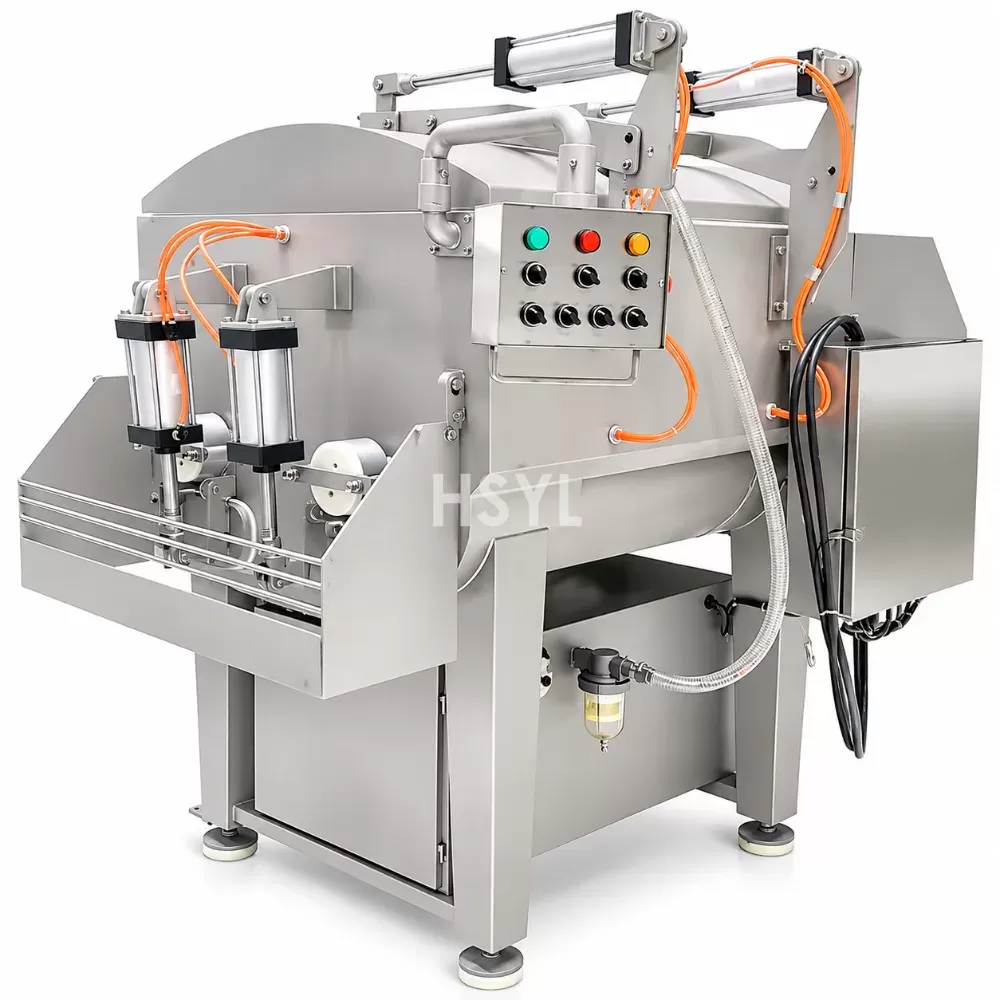
Prepared meat ingredients are transferred into a vacuum mixing system, where meat, functional ingredients and other formulation components are blended into a homogeneous mixture.
Vacuum mixing helps reduce entrapped air and supports consistent material distribution. The formulation and mixing parameters are selected according to the required binding properties, extrusion performance and finished chunk texture.
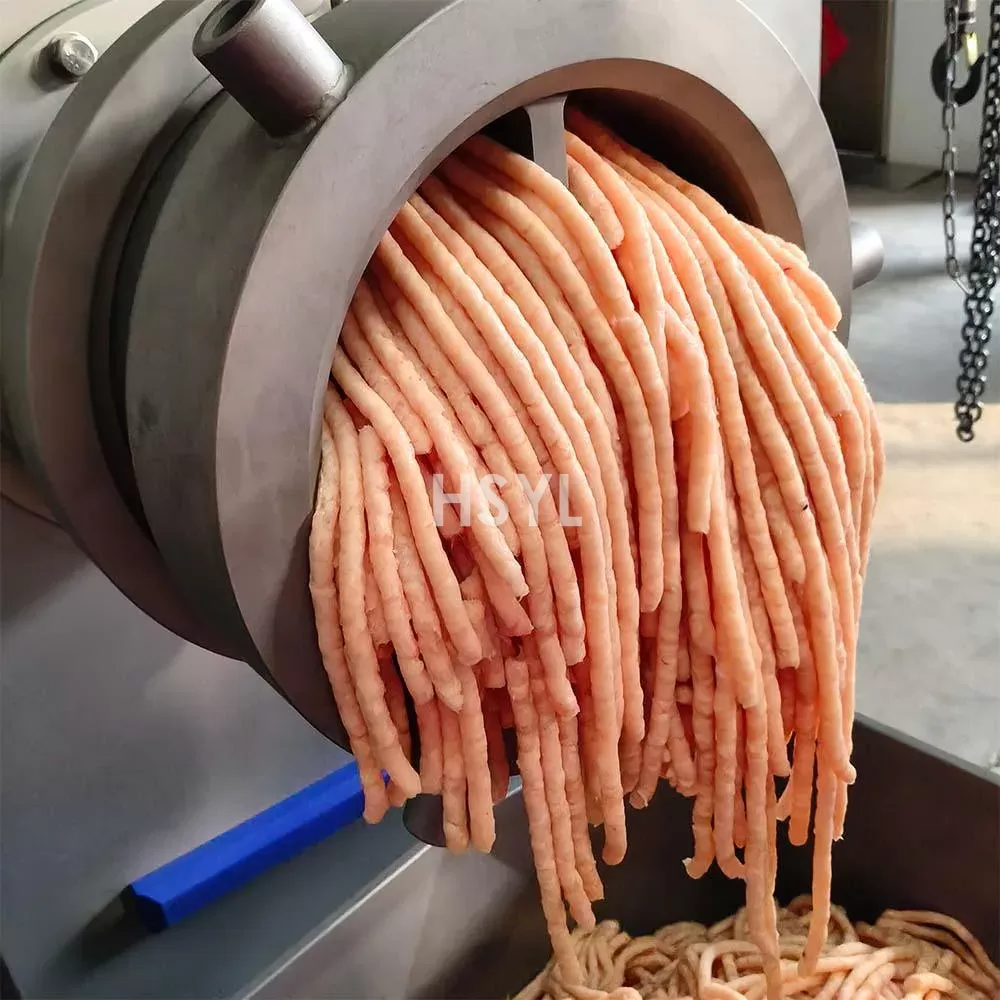
3. Multi-Rope Meat Extrusion System
The prepared meat mixture is transferred to a multi-rope extrusion machine, which forms multiple continuous meat strands through specially designed extrusion outlets.
Multi-rope extrusion increases forming efficiency by producing several meat strands simultaneously. The extrusion configuration can be adjusted according to the required strand diameter, meat formulation and finished chunk dimensions.
This stage is particularly important for manufacturers looking to achieve uniform meat chunk shapes and consistent downstream cutting performance.
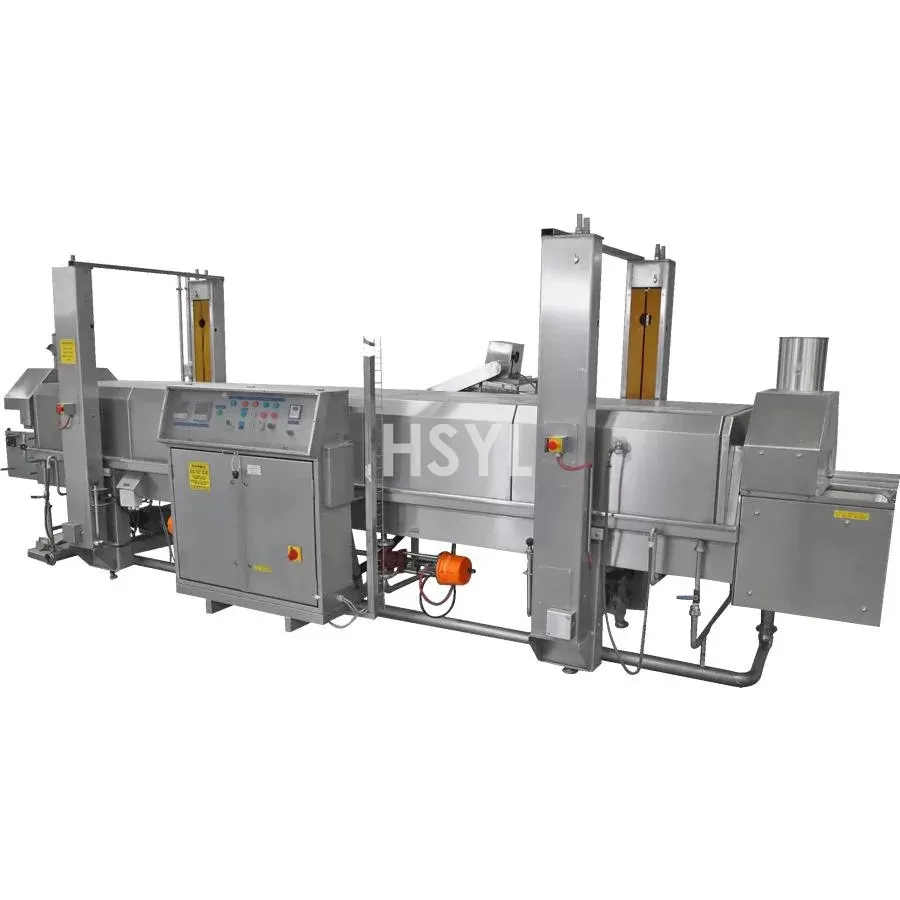
4. 95°C Steam Cooking Tunnel
The extruded meat strands pass through a continuous steam cooking tunnel designed for controlled thermal treatment. The specified process configuration can operate at approximately 95°C, depending on the product formulation and required processing conditions.
Steam heating promotes protein coagulation and helps the extruded meat strands maintain their formed structure before cutting. This thermal setting stage is essential for producing stable, uniform meat pieces during subsequent handling.
For more information about industrial steam cooking tunnel technology, see our Pet Food Steam Cooking Tunnel equipment solution.
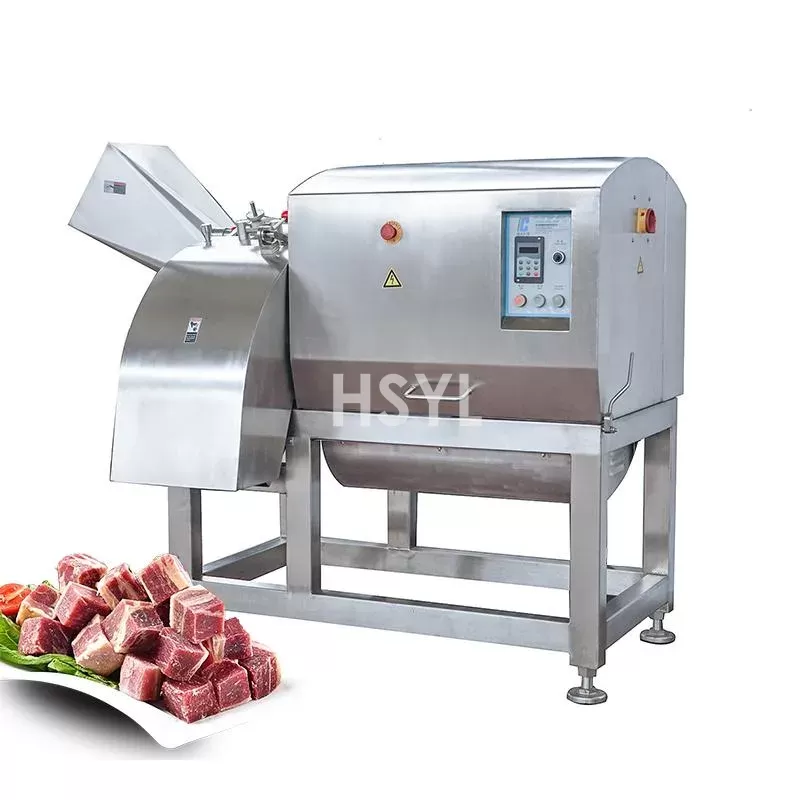
5. Rotary Meat Dicing and Cutting
After steam cooking, the continuous meat strands are transferred to a rotary dicing system for cutting into individual meat chunks.
The cutting mechanism is configured according to the required chunk length and product dimensions. Consistent cutting helps improve the uniformity of finished meat pieces and supports accurate downstream weighing and filling.
The rotary cutting system is designed to work in coordination with the upstream extrusion and steam cooking stages, helping maintain continuous material flow.
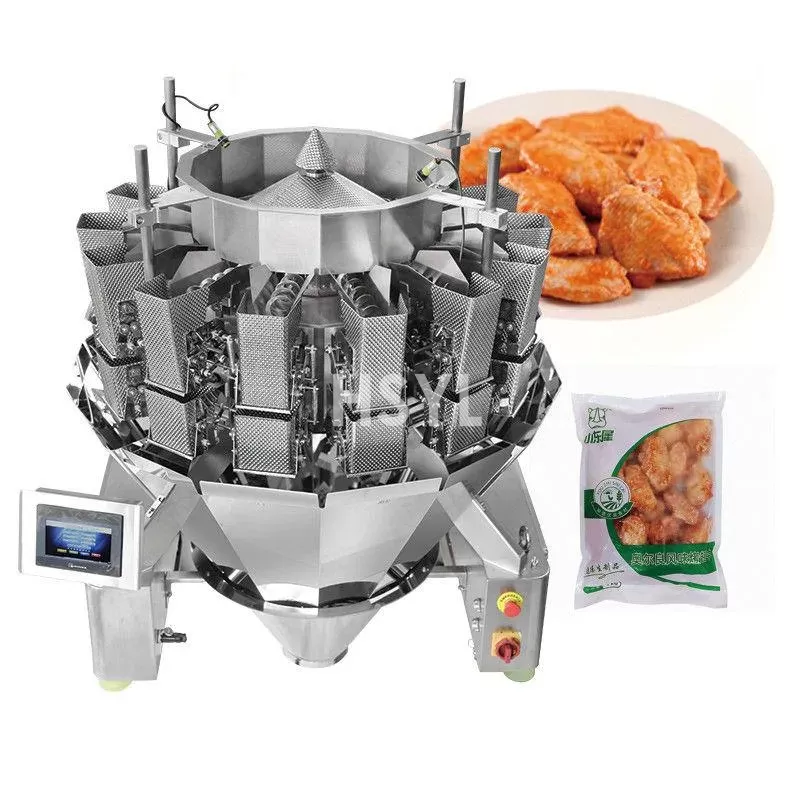
6. Anti-Stick Multi-Head Weighing System
The cut meat chunks are transferred to an anti-stick multi-head weighing system for automatic portion measurement.
Specially configured product-contact surfaces and feeding mechanisms help reduce meat adhesion during product distribution and weighing. The multi-head weighing system combines individual weighing hoppers to achieve the target solid filling weight for each container.
Weighing configurations can be selected according to chunk dimensions, product stickiness, target portion weight and required packaging speed.
Explore our Automatic Multi-Head Weighing and Pet Food Filling Equipment for more information about solid product dosing and filling solutions.
7. Hot Gravy or Jelly Preparation and Dosing
For Chunks in Gravy products, a dedicated preparation system heats and supplies the formulated gravy sauce to the filling station. For Chunks in Jelly products, the corresponding jelly preparation and dosing system is configured according to the recipe and required filling characteristics.
Temperature-controlled transfer and dosing systems help maintain suitable product conditions during filling. The liquid dosing process is coordinated with the solid meat portion to achieve the required meat-to-liquid ratio in each container.
8. Solid and Liquid Dual-Stage Can Filling
The measured meat chunks and prepared gravy or jelly are delivered to the can filling section through coordinated dosing systems.
The solid filling system first dispenses the required meat portion, followed by the controlled addition of gravy or jelly. This dual-component filling arrangement helps achieve consistent filling weights and product distribution.
Can feeding, filling positions and dosing sequences can be configured according to container dimensions and production requirements.
9. Can Seaming and Retort Sterilization
After filling, the containers are transferred to an automatic can seaming machine for hermetic closure. Seaming specifications are selected according to the can material and lid structure.
Sealed cans can then enter a retort sterilization system for thermal processing according to the validated product formulation, container specifications and required commercial sterility conditions.
Retort processing parameters must be established through appropriate thermal process validation rather than applying one standard temperature and time to every product.
10. Cooling and Final Packaging
After thermal processing, the cans are cooled under controlled conditions and transferred to subsequent handling equipment.
Additional equipment can be integrated for water removal, inspection, date coding, labeling, carton packing and finished product handling.
Key Equipment for CIG and CIJ Pet Food Production
HSYL provides equipment configurations covering the complete meat chunk forming, processing and canned pet food packaging workflow.
Industrial Frozen Meat Grinder
Processes frozen or chilled meat into suitable particles for subsequent formulation and mixing. Grinding specifications are selected according to the incoming raw materials and finished product requirements.
Vacuum Meat Mixing Machine
Mixes meat ingredients and formulation components under controlled vacuum conditions to support consistent blending and suitable material properties for extrusion.
Multi-Rope Meat Extrusion Machine
Forms multiple continuous meat strands simultaneously. Extrusion outlets and forming parameters can be configured according to the required meat strand dimensions.
Continuous Steam Cooking Tunnel
Provides controlled steam heating for extruded meat strands. The process supports protein coagulation and structural setting before the cutting operation.
Rotary Meat Dicing Machine
Cuts thermally set meat strands into individual chunks with controlled dimensions for subsequent weighing and filling.
Anti-Stick Multi-Head Weigher
Automatically measures solid meat chunk portions through multiple weighing heads. The system is designed to support accurate portion control and efficient product distribution.
Gravy and Jelly Preparation System
Prepares and supplies gravy or jelly formulations to the filling station. Heating, mixing, holding and transfer configurations are selected according to the required recipe and filling characteristics.
Automatic Can Filling and Seaming Equipment
Coordinates solid meat portion filling and liquid dosing before hermetically sealing the containers. Equipment configurations can accommodate different can sizes and filling requirements.
Retort Sterilization System
Processes sealed pet food cans under controlled thermal conditions to achieve the required commercial sterility and shelf-life objectives.
Applications of the CIG and CIJ Pet Food Production Line
The production system can be configured for different canned wet pet food formulations and product presentations.
Chunks in Gravy Cat Food
Suitable for cat food containing reformed chicken, beef, fish or mixed meat chunks distributed in gravy sauce. The solid and liquid filling systems can be adjusted according to the recipe and required meat-to-gravy ratio.
Chunks in Jelly Cat Food
Designed for canned cat food containing shaped meat chunks in a jelly-based medium. The jelly preparation and dosing section can be configured according to the required consistency and formulation.
Chunks in Gravy Dog Food
Suitable for wet dog food products containing chicken, beef and other meat ingredients in gravy. The forming, cutting and weighing systems can be configured for different chunk sizes and serving weights.
Mixed Meat Chunk Pet Food
Can be configured for products containing different meat ingredients and combinations of solid meat pieces with gravy or jelly formulations.
Customized Production Line Configuration
Different pet food manufacturers have different requirements for meat formulations, chunk dimensions, can formats and production output. HSYL develops equipment configurations according to the actual manufacturing process and product specifications.
Meat Formulation and Product Texture
The meat preparation, vacuum mixing and extrusion systems are selected according to the raw materials, formulation and required finished chunk structure.
Meat Chunk Dimensions
Extrusion strand diameter and rotary cutting parameters can be evaluated according to the required chunk size, shape and finished product presentation.
Solid-to-Liquid Filling Ratio
The multi-head weighing system and gravy or jelly dosing equipment are coordinated to achieve the required solid and liquid filling weights.
Can Size and Filling Weight
Can feeding, solid dosing, liquid filling and seaming configurations are selected according to container dimensions and target net weight.
Production Capacity and Automation
The number of extrusion ropes, steam tunnel capacity, cutting speed, weighing configuration and downstream packaging speed are considered when planning the complete production system.
Factory Layout and Equipment Integration
HSYL can assist with production flow planning, equipment arrangement and integration according to available factory space, utility conditions and project requirements.
Why Choose HSYL for Canned Pet Food Production Equipment?
Specialized Processing and Packaging Solutions
HSYL focuses on industrial food processing machinery and complete production line solutions. Our equipment configurations can cover meat preparation, product forming, cooking, filling and packaging processes.
Integrated Meat Chunk Forming Technology
The combination of multi-rope extrusion, steam cooking and rotary dicing provides a coordinated approach to producing reformed meat chunks for CIG and CIJ pet food products.
Flexible Solid and Liquid Filling
Solid meat weighing and gravy or jelly dosing can be integrated to support different canned pet food formulations and packaging requirements.
Customized Engineering
Equipment configurations are developed according to actual product characteristics, production targets and factory conditions rather than relying on a single standard setup.
Complete Production Line Support
From individual processing machines to integrated production systems, HSYL supports equipment selection, process planning, layout coordination and project-based engineering services.
Build Your Chunks in Gravy and Jelly Pet Food Production Line with HSYL
Planning to manufacture premium canned cat food or dog food with uniform meat chunks in gravy or jelly?
HSYL provides customized industrial pet food processing and canning equipment solutions, covering frozen meat preparation, vacuum mixing, multi-rope extrusion, steam cooking, rotary dicing, automatic weighing, liquid dosing and can packaging.
Whether you are establishing a new pet food manufacturing facility or upgrading an existing production line, our team can evaluate your product formulation, packaging specifications and production targets to develop a suitable equipment proposal.
Contact HSYL to discuss your CIG or CIJ pet food manufacturing project.