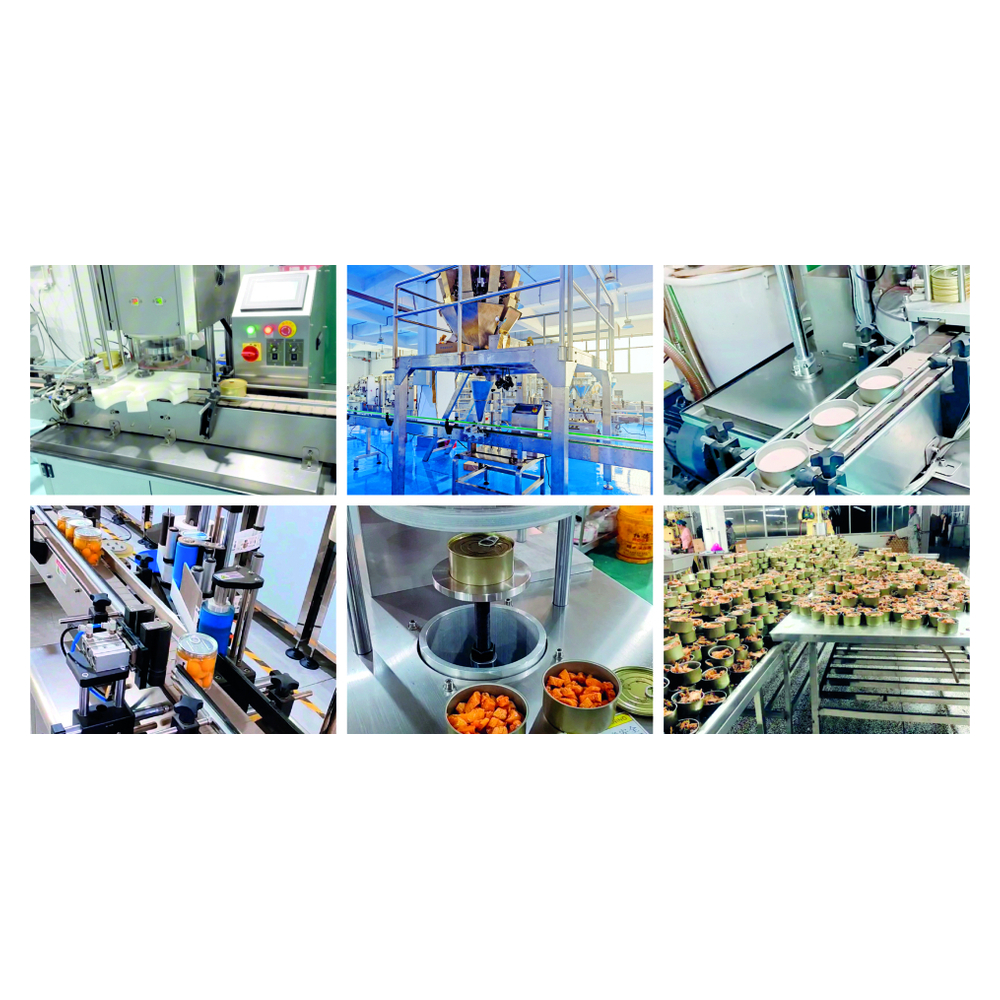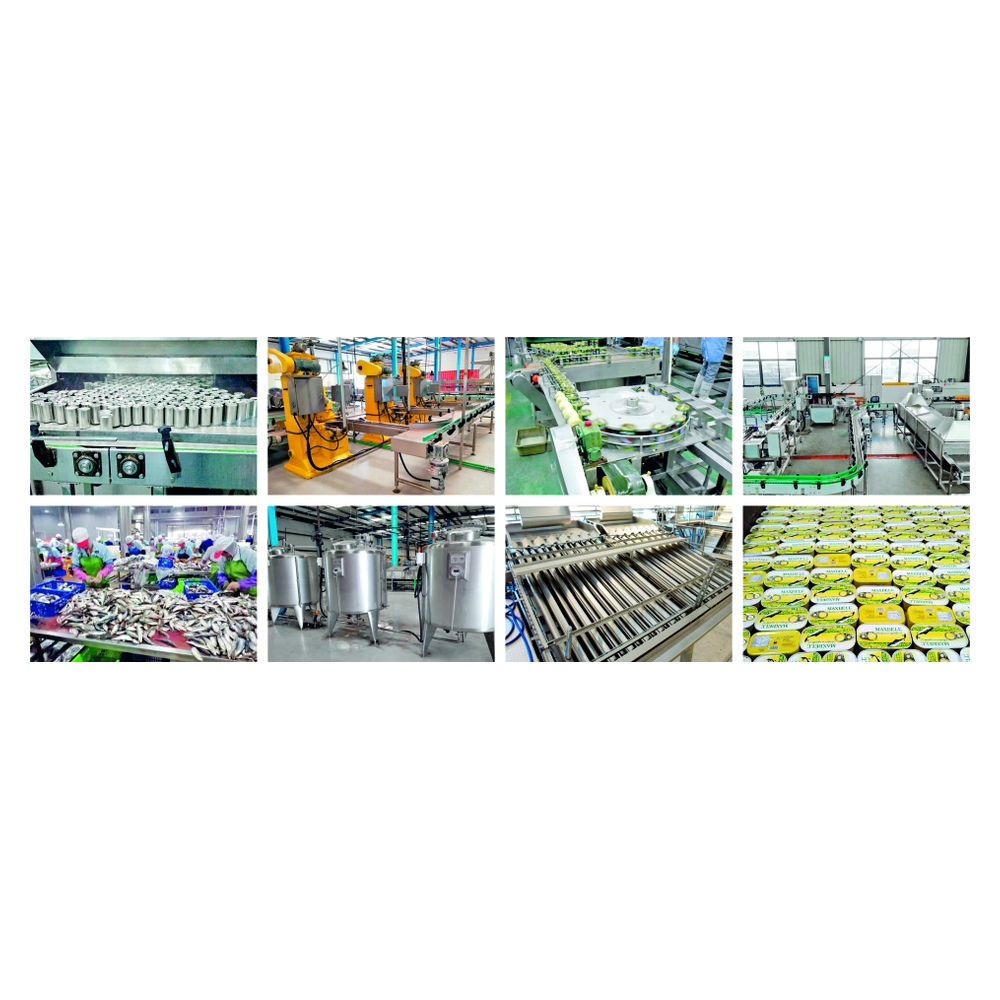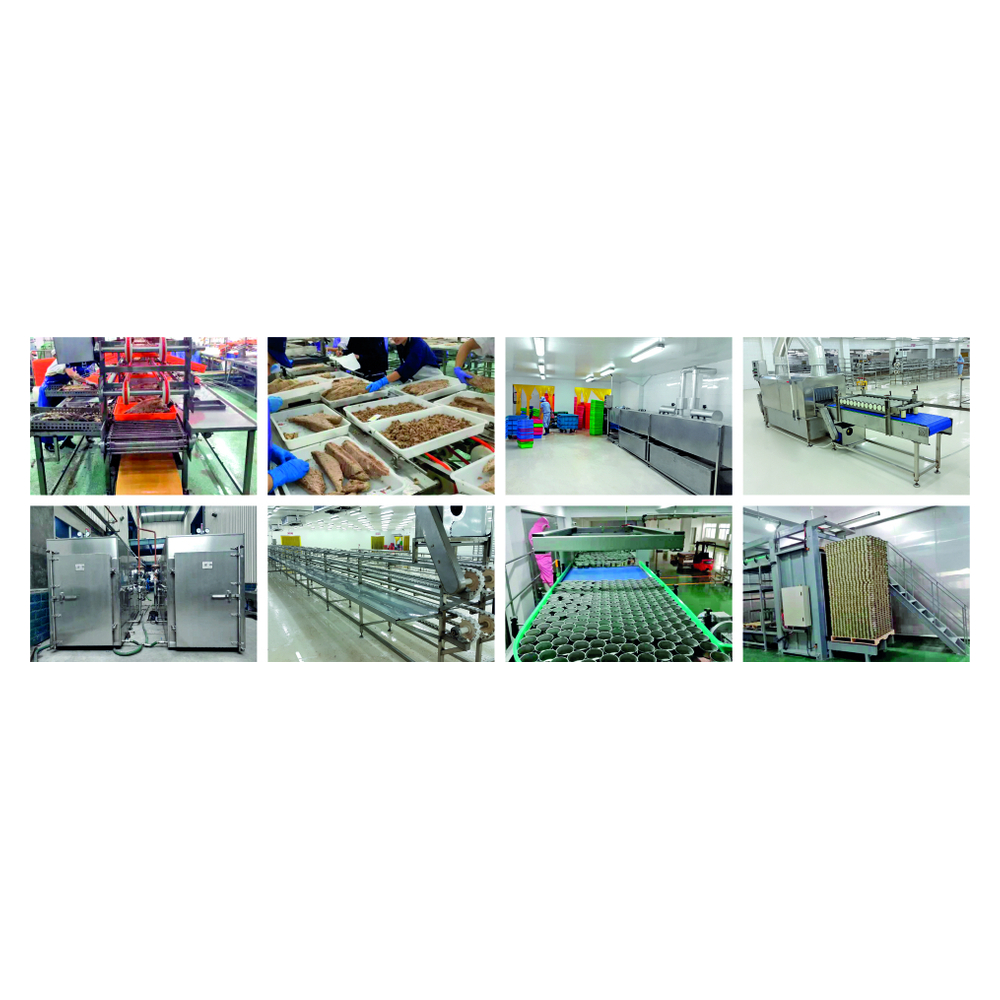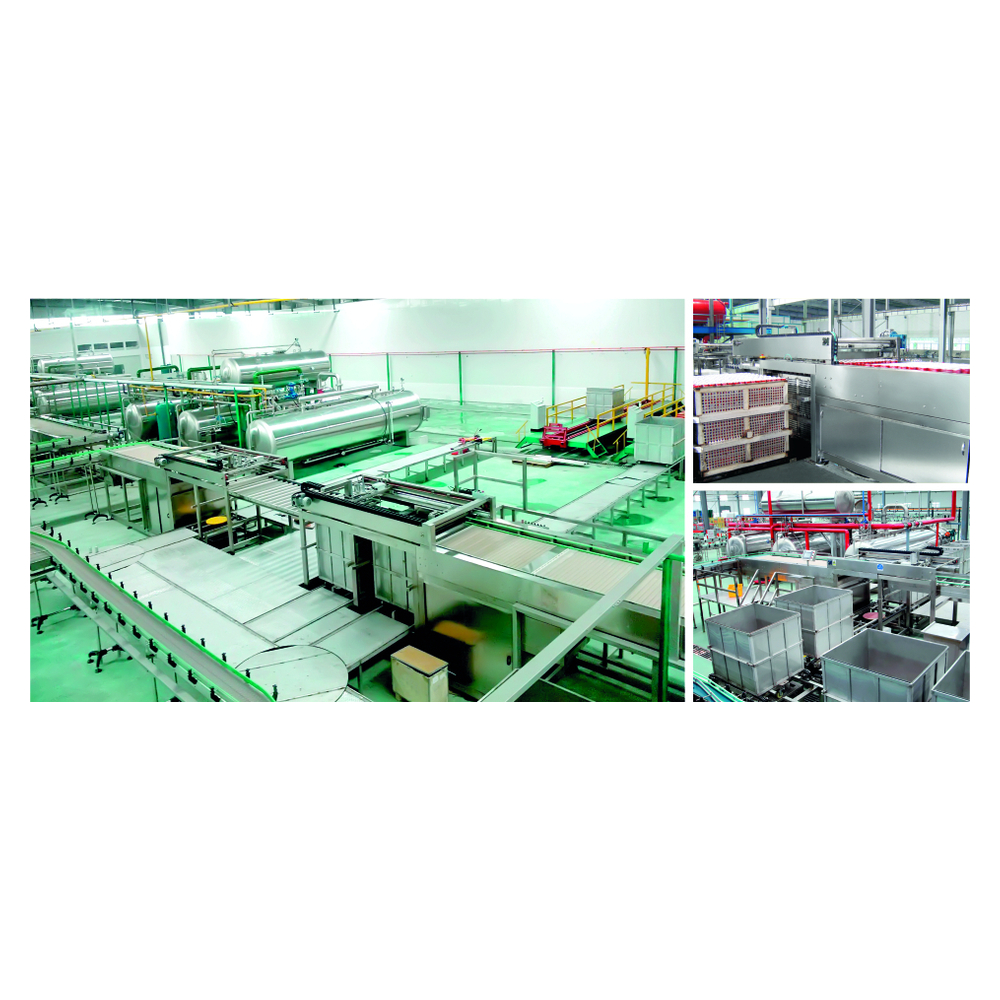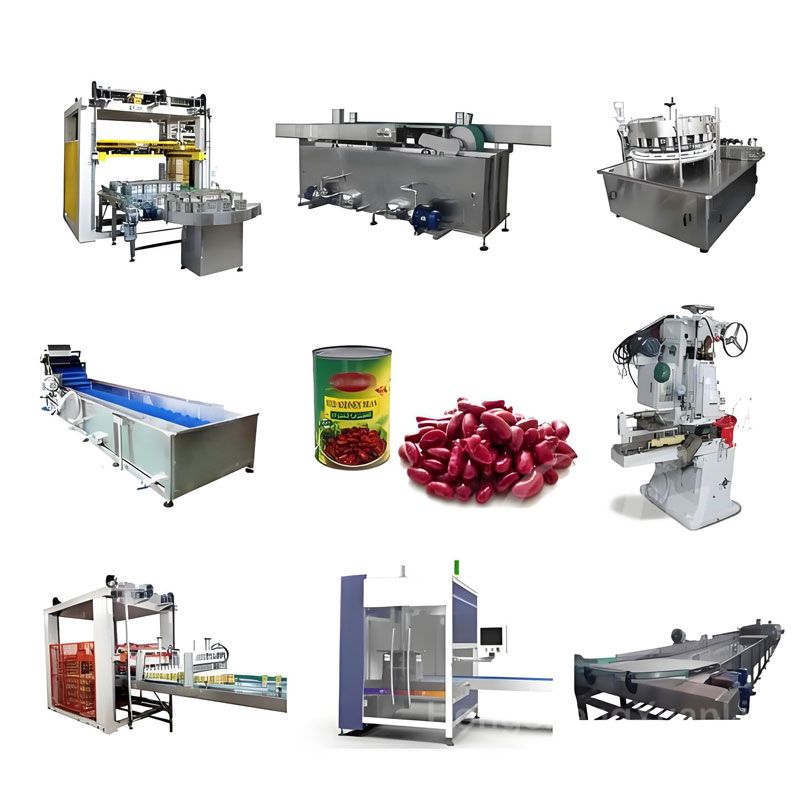
A wet pet food canning line should match the product texture, visible particle content and the selected metal can. Filling, can closing and downstream basket handling need a shared specification. Recipe preparation should be defined as a separate supply section rather than assumed to be included.
Specify texture and the finished can
Describe the product at the filler as well as in the finished pack. A smooth paste, a product with visible particles and a mixture with liquid create different transfer and filling requirements. Provide representative product samples and the conditions under which the material will be handled.
- Product form, particle information and the required finished presentation.
- The number of recipes, their differences and planned changeover frequency.
- Can body and end drawings, net weight and the intended product range.
- Target finished output, shift pattern and the accepted method of evaluating filled product.
Define the filling-to-palletizing scope
| Section | Equipment boundary to confirm |
|---|---|
| Empty-can supply | Platform or other loading arrangement, container handling and transfer to filling. |
| Product filling | Filler selection, transfer from the preparation section and fill-control requirements. |
| Can closing and washing | Seaming arrangement, closure inspection and closed-can washing. |
| Basket handling | Loading, transfer, unloading and the coordination of batch movements. |
| Thermal processing | Equipment interface and responsibility for product-specific process qualification. |
| Drying and pallet handling | Drying, coding, inspection and downstream stacking or palletizing boundaries. |
The sequence and operating conditions need to be confirmed for the product, container and selected process. This page describes equipment interfaces and does not provide a formulation or thermal-processing schedule.
Keep recipe preparation explicit
Raw-material receiving, size reduction, mixing and other preparation tasks should appear separately in the quotation if they are required. Identify the product condition delivered to the filling section and the party responsible for achieving it.
For an existing preparation room, provide the transfer interface, available holding arrangement and cleaning method. Do not assume that an equipment proposal beginning at the can-loading platform includes the machinery needed to develop or prepare every pet food recipe.
Evaluate product transfer and filling together
Define the acceptable product structure after transfer and filling. Review the proposed pump or feed method against the actual product, the transfer distance and access for cleaning. Include the criteria used to assess filling consistency and product appearance.
When several recipes will share the line, record which changes affect transfer parts, filler settings, container tooling or cleaning work. A common can size alone does not establish that all formulations will use an identical operating arrangement.
Coordinate batch handling and acceptance
Basket loading and unloading should be reviewed with the agreed can pattern, basket dimensions and thermal-processing arrangement. Identify responsibility for each transfer and the way production will be scheduled around batch operations.
- Confirm the product and containers used for equipment evaluation.
- Define the included equipment, controls and connecting conveyors.
- Assign responsibilities for utilities, preparation-room interfaces and site work.
- Agree closure checks, equipment acceptance records and process-qualification responsibilities.
For the distinction between meat and pet food project inputs, see the existing meat canning versus pet food canning guide. Its role is to support scope definition; it does not replace a product-specific equipment review.
Prepare a wet pet food canning enquiry
Send the product texture and particle specification, representative sample information, recipes, can drawings and target output. State whether recipe preparation already exists and include the site layout and required supply boundary.