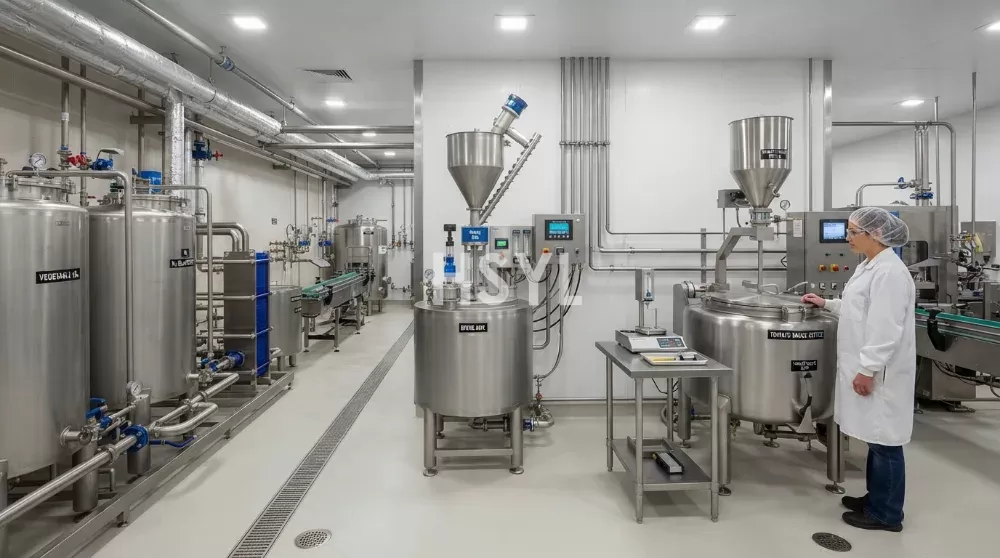
Canned Fish Filling Media: Oil, Brine, Tomato Sauce and Flavored Sauce Systems
The filling medium — the liquid that fills the void spaces between the fish piec...


Yellow croaker canning line for whole fish, portions and fillets in oil, brine or sauce. Plan preparation, filling, seaming and retort capacity with HSYL.
The Yellow Croaker Canning Production Line is a fully integrated, automated seafood processing solution engineered for industrial canneries, seafood processing plants, and ready-meal manufacturers seeking stable quality, high yield, and compliant large-scale production of canned yellow croaker products. Designed from a factory-level perspective, this production line supports consistent processing of whole fish, segments, or fillets into oil-packed, sauce-based, or brine canned products, meeting international hygiene and food safety standards.For complete autoclave batch scheduling and facility sanitation planning, refer to our engineering overview on tuna canned production line.
As a professional food processing equipment manufacturer, we design yellow croaker canning production lines to address real operational challenges such as labor shortages, hygiene risks, inconsistent product quality, and limited capacity scalability. The system is suitable for both new factory investments and modernization of existing seafood canning facilities.
The process starts with the incoming fish specification and the required presentation inside the can. Identify the yellow croaker species, fish length and weight range, fresh or frozen condition, and finished product before selecting preparation equipment.
Different product formats require different handling arrangements:
| Finished Product | Preparation and Packing Requirements |
|---|---|
| Prepared whole-fish packs | Define head and tail removal, cleaning requirements, fish size grades and the arrangement of fish inside each can. |
| Cross-cut portions | Match portion dimensions to the can opening and internal depth. Specify the required bone condition and piece count or fish weight per can. |
| Fillet packs | Define skin and bone requirements, trimming criteria and fillet dimensions. Assess handling and placement using representative product samples. |
Receiving, inspection and grading are followed by the preparation steps required for the selected product. Frozen raw material also requires a suitable thawing stage before further processing.
Pre-cooking or other recipe-specific treatment should be included where required by the selected process. The preparation and packing sequence must be confirmed for the actual product.
At the packing stage, fish portions and the selected oil, brine or sauce are added according to the pack specification. Filled cans proceed through headspace control, seaming, closure inspection, scheduled retort processing, cooling and final packaging.
Line planning should match preparation and packing output with retort batch capacity, while providing access for inspection, cleaning and maintenance.
Seafood canning factories face recurring challenges that directly impact profitability and compliance. The yellow croaker canning production line is designed to systematically resolve these issues.
Manual processing leads to high labor dependency, variable cutting accuracy, and inconsistent can fill weights. Poorly designed equipment increases yield loss through breakage, overcooking, or trimming waste. Inadequate hygiene control raises the risk of cross-contamination and regulatory non-compliance. Limited automation restricts daily output and makes it difficult to respond to market demand fluctuations.
By implementing an integrated yellow croaker canning production line, processors achieve stable quality, controlled yields, improved sanitation, and scalable production capacity.
The yellow croaker canning production line is built with industrial-grade components and process-driven engineering logic. Key technical advantages include modular construction for flexible expansion, precision portioning and filling systems to maintain uniform can weight, and controlled thermal processing to preserve texture and flavor.
Servo-driven conveying systems ensure gentle handling of fish, reducing breakage and improving appearance. Centralized control allows operators to monitor line status, adjust parameters, and maintain consistent output. All critical contact surfaces are manufactured with food-grade stainless steel to ensure durability and hygiene.
This yellow croaker canning production line supports a wide range of canned seafood products, including whole yellow croaker in oil, segmented fish in tomato or chili sauce, brined fish for export markets, and customized regional recipes. It is suitable for traditional canned seafood factories, export-oriented processors, central kitchens producing shelf-stable meals, and integrated seafood processing parks.
The line can also be adapted for similar fish species with comparable size and texture, providing long-term equipment utilization flexibility.
Capacity of the yellow croaker canning production line can be configured based on raw material input, can size, and automation level. The system supports small-batch production lines for specialty products as well as high-capacity industrial lines designed for continuous multi-shift operation.
Line configurations can include semi-automatic or fully automatic solutions, with optional buffer systems to stabilize upstream and downstream processes. Equipment modules can be added or upgraded as production demand increases.
The layout should provide defined routes for raw fish, prepared product, processing waste and finished cans. Cleaning access is particularly important around cutting equipment, packing stations and sauce-contact components.
Specify contact materials, removable parts, drainage and cleaning procedures for each selected machine. Where clean-in-place equipment is included, identify the exact circuits covered and the components that require separate cleaning.
The thermal process must be established for the actual yellow croaker product, container and formulation by a qualified thermal processing authority.
Automation should be selected by task. Fish feeding, preparation, portion placement, liquid dosing, seaming and retort handling may require different levels of operator involvement.
For products requiring a defined arrangement of fish inside the can, assess manual placement, assisted packing and automated handling against the same presentation and output requirements.
Agree on how fill weight, piece arrangement and product damage will be evaluated during trials. Define staffing for inspection, replenishment, changeovers and cleaning alongside normal production duties.
Provide the fish size distribution, finished product sample, can and lid drawings, required output and factory layout when requesting a configuration.
For an existing cannery, identify the machines that will remain in use. Review their operating speeds, transfer heights, container compatibility and available retort capacity before specifying additional equipment.
The proposal should identify supplied modules, connection points, utility requirements, changeover parts and the installation or training services included.
Define destination-market requirements during project planning. Request the applicable material records, electrical documentation, pressure-vessel documentation and equipment certificates for the selected configuration.
Agree on acceptance criteria before manufacture. Trials should use representative fish, filling medium and containers, with documented checks for product presentation, filling performance, closure quality and output under the agreed operating conditions.
If you are evaluating a yellow croaker canning production line for a new facility or capacity upgrade, our engineering team is available to provide technical consultation, line configuration recommendations, and project feasibility support. Contact us to discuss your processing requirements and develop a reliable, compliant, and scalable yellow croaker canning production line solution.


The filling medium — the liquid that fills the void spaces between the fish piec...
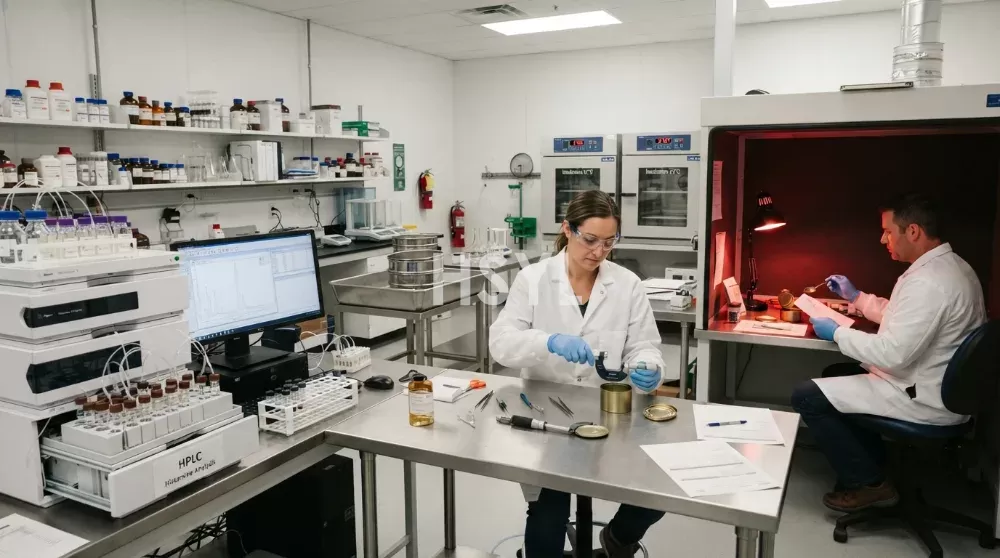
A sardine and mackerel canning line processes small pelagic fish — typically 10–...
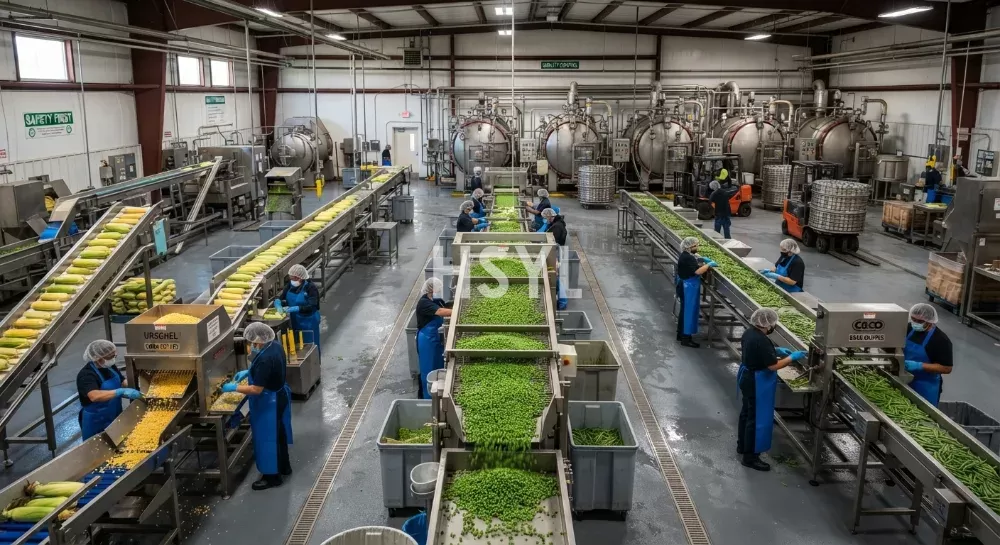
Direct AnswerA low-acid canned vegetable processing line — corn, peas, and green...
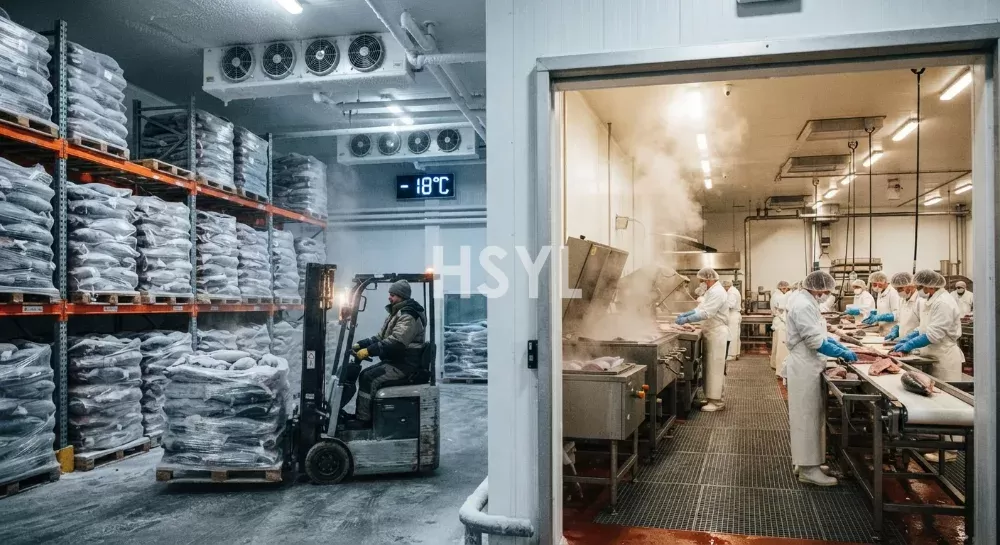
Direct AnswerThe most expensive asset in a fish cannery is not the retort or the...