Direct Answer
The most expensive asset in a fish cannery is not the retort or the filler — it is the factory building and the fixed overhead that must be paid every month regardless of whether the line is running. A cannery that processes a single fish species with a 3-month harvest season has a factory that is idle for 9 months of the year, and the 3 months of revenue must cover 12 months of overhead. Seasonality management — the combination of frozen raw-material storage and off-season processing, multi-species line rotation, and harvest-window planning — is therefore not an operational detail; it is the primary determinant of whether a fish cannery is profitable. This article covers the seasonal fishery characteristics of the major canned fish species, the frozen-storage strategy for extending the processing season, the multi-species rotation that maximizes line utilization, and the cold-storage capacity calculation that a cannery must perform before committing to a single-species or multi-species operating model.For line retooling specifications between round sardinella and Pacific mackerel, review our detailed sardine and mackerel canning line for small pelagic fish.
Seasonal Fishery Characteristics by Species
| Species | Primary Fishing Method | Peak Season (Temperate) | Season Duration | Frozen Storage Viability |
|---|---|---|---|---|
| Skipjack tuna | Purse seine | Variable by ocean; year-round in tropical WCPO | 6–10 months in most fisheries | Good — frozen-at-sea skipjack processes well |
| Sardine (European pilchard) | Purse seine | May–October (NE Atlantic) | 4–6 months | Moderate — frozen sardines have softer texture after thaw |
| Atlantic mackerel | Purse seine, trawl | September–March (NE Atlantic) | 5–7 months | Good — fatty fish freezes well for canning |
Frozen Raw-Material Strategy
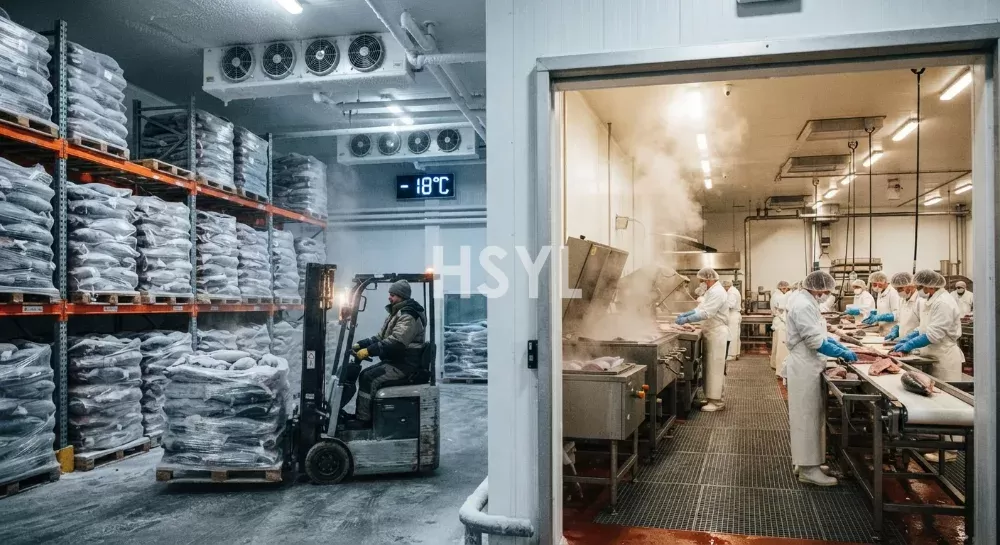
Freezing the raw fish during the harvest season and processing it during the off-season is the standard strategy for extending the canning season. The frozen-storage system must maintain the fish at -18°C or below with minimal temperature fluctuation — temperature cycling (partial thawing and re-freezing) produces large ice crystals in the muscle tissue that damage the cell structure, increasing the drip loss during thawing. The storage capacity required is: Frozen Storage Tonnage = Daily Processing Rate × Off-Season Processing Days × (1 + Safety Margin for catch variability). For a cannery processing 50 tons of raw fish per day and running 200 days of off-season processing from frozen stock, the required frozen storage capacity is approximately 10,000 tons. The cold-storage facility capital cost and the energy cost of maintaining -18°C for the storage duration must be included in the business case for off-season processing.
Multi-Species Rotation
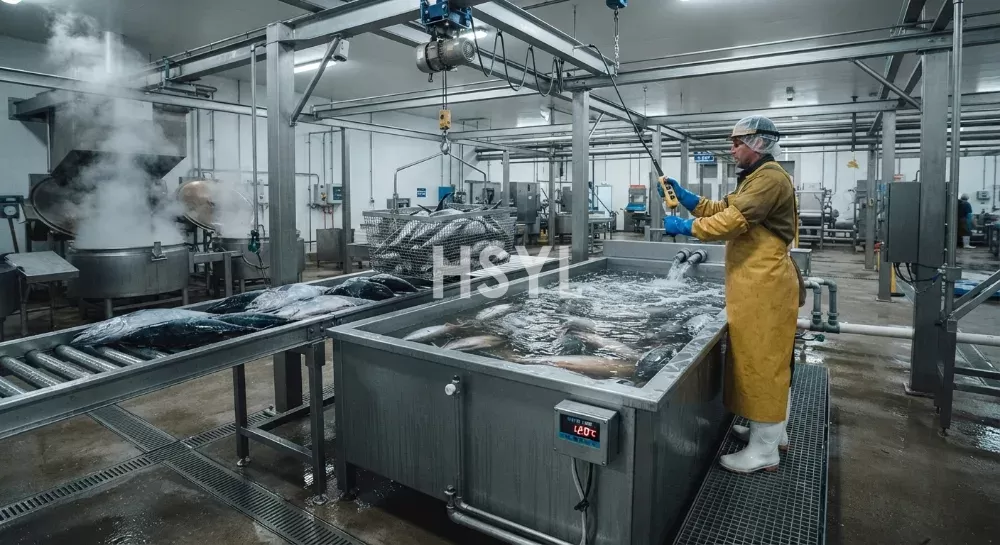
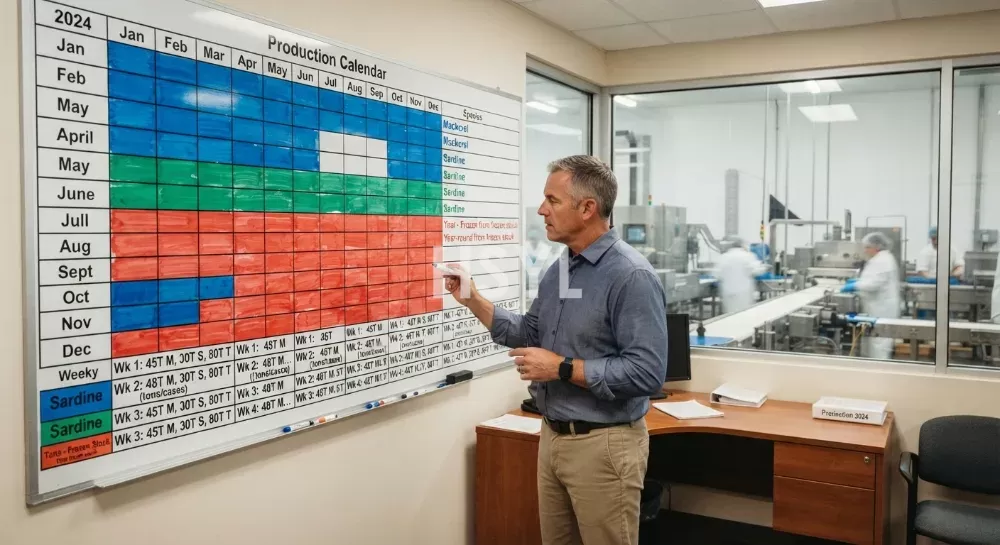
A single cannery that processes three species — sardine, mackerel, and tuna — with overlapping harvest seasons can achieve year-round operation without frozen storage, provided the harvest calendars align. The typical sequence: mackerel in the autumn and winter, sardine in the spring and summer, and tuna — available year-round from frozen-at-sea supply or with a complementary tropical fishery — filling the gaps. The multi-species strategy increases the complexity of the HACCP plan (different CCPs for scombroid mackerel vs. clupeid sardines), the line changeover frequency (equipment cleaning and adjustment between species), and the supply-chain management (multiple fishing vessel relationships), but it converts a seasonal factory into a year-round operation.
Conclusion
Seasonality management — the combination of frozen storage and multi-species rotation — converts a fish cannery from a seasonal business into a year-round manufacturing operation. The frozen-storage strategy requires a cold-store investment, an energy budget, and a quality-management program for frozen raw material. The multi-species strategy requires a flexible HACCP plan, a multi-species supply chain, and a line that can change over between species efficiently. For the single-species processing flows, see the canned fish sterilization engineering guide. For the equipment procurement framework, see the canning line procurement guide.
Frequently Asked Questions
How do fish canneries operate outside the fishing season?
How much frozen storage capacity does a fish cannery need?
Related Articles




Get professional consultation
Do you have any questions or need technical support regarding the content of this article? Fill out the form below, and our expert team will provide you with professional solutions.