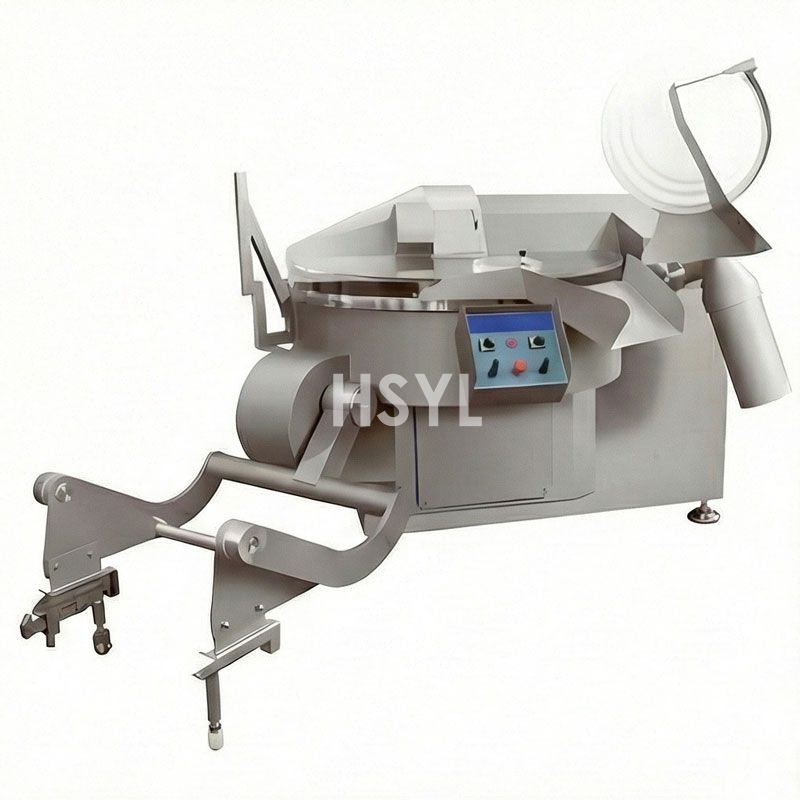
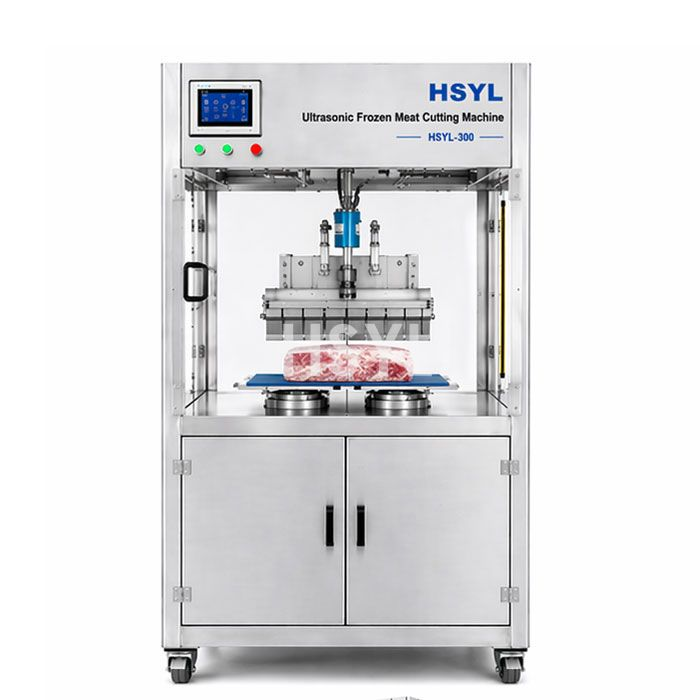
Stainless steel is the standard material for industrial food processing equipment, but specifying “stainless steel construction” is not enough to define equipment quality.
Two machines may both be described as SUS304 equipment while delivering very different levels of corrosion resistance, structural stability, cleanability and service life. The difference often comes from material certification, sheet thickness, surface condition, welding quality, component geometry, drainage, post-weld treatment and the way food-contact areas are separated from mechanical zones.
For food factories, material selection must therefore be treated as part of the complete process design rather than as a single purchasing specification.
This guide explains how stainless steel grade, fabrication technology and hygienic engineering work together in washing machines, cutting systems, mixing tanks, cooking equipment, fryers, conveyors, filling machines and complete food production lines.

Why Stainless Steel Grade Alone Does Not Define Equipment Quality
The stainless steel grade determines the basic alloy chemistry, but the finished machine is a fabricated system. Its actual performance depends on several connected factors:
- The chemical composition and traceability of the stainless steel
- Food acidity, salt concentration and chloride exposure
- Operating and cleaning temperatures
- Sheet and plate thickness
- Welding method and heat input
- Surface roughness and polishing direction
- Removal of weld heat tint and embedded iron
- Internal corner radius and joint design
- Drainage and prevention of standing water
- Compatibility with manual cleaning, COP or CIP
A poorly welded SUS316L tank can be less reliable and more difficult to clean than a correctly fabricated SUS304 tank used in an appropriate application. Similarly, a mirror-like surface does not automatically mean that a machine is hygienically designed.
For a broader overview of alloy grades used in utensils, commercial kitchens and processing systems, see this guide to stainless steel for kitchen equipment.
Start with the Processing Environment, Not the Grade Name
The correct material should be selected according to the actual process environment. The equipment manufacturer needs to understand what the machine will process, how long the product remains in contact with the surface, how the equipment will be cleaned and what chemicals will be used.
| Process Factor | Engineering Question | Material Impact |
|---|---|---|
| Food composition | Does the product contain salt, organic acids, sugar, fat or fermentation by-products? | Determines the required resistance to pitting, crevice corrosion and chemical attack. |
| Temperature | Is the equipment used for freezing, ambient processing, cooking, frying or sterilization? | Affects thermal expansion, distortion, oxidation and gasket selection. |
| Contact time | Does product pass through continuously or remain in a tank for several hours? | Longer exposure may increase the corrosion risk. |
| Cleaning method | Will the machine be manually washed, pressure cleaned, foam cleaned or connected to CIP? | Determines surface finish, drainage, seal and chemical-resistance requirements. |
| Chloride exposure | Are brine, seafood residue, salted meat or chloride-containing cleaners present? | May justify upgrading selected wetted components from 304 to 316L. |
| Mechanical loading | Will the component carry product weight, pressure, vacuum, vibration or rotating loads? | Determines thickness, reinforcement and structural design. |
Material selection should be completed zone by zone. It is rarely necessary or economical to manufacture every machine component from the same stainless steel grade.
SUS304: The General-Purpose Material for Food Machinery
SUS304 is widely used in food processing because it provides a practical balance of corrosion resistance, formability, weldability, availability and cost.
Typical SUS304 applications include:
- Fruit and vegetable washing tanks
- Conveyor frames and product-contact belts
- Mixing chambers and ingredient hoppers
- Commercial cooking kettles
- Food preparation tables
- General filling-machine contact parts
- Protective covers and machine enclosures
- Dry-product processing systems
Information about the chemical composition and corresponding ASTM, JIS and EN designations of 304 stainless steel can be used when preparing project material specifications.
SUS304 performs well in many normal food-processing environments, but it is not immune to corrosion. Problems can occur when the surface is repeatedly exposed to concentrated salt, stagnant warm water, aggressive chlorine-based chemicals or acidic residues that are not removed after production.
In these conditions, the first step is not automatically to change the entire machine to SUS316L. The engineering team should first identify the actual corrosion zones, improve drainage, eliminate crevices, verify the cleaning procedure and then determine which components require a higher alloy grade.
304L and 316L for Welded, Salty and Acidic Systems
When 304L Is Relevant
304L is a low-carbon version of 304. Its lower carbon content reduces the risk of sensitization in welded areas, making it useful for heavily welded vessels, tanks, hoppers and piping assemblies.
However, 304L does not have the molybdenum addition found in 316L. It should not be treated as a direct substitute for 316L in aggressive chloride environments.
When 316L Should Be Considered
316L contains molybdenum, which improves resistance to localized corrosion in many chloride-bearing and chemically aggressive environments.
Common applications include:
- Seafood washing and processing systems
- Brine preparation and circulation tanks
- Pickle and fermented-food equipment
- Salted meat processing machinery
- Acidic sauce and seasoning systems
- Selected dairy tanks and sanitary piping
- Equipment exposed to aggressive sanitation cycles
- Wetted components that cannot be completely drained immediately
Technical grade information for 316L stainless steel is useful when verifying alloy composition, equivalent standards and material certificates.
316L is not corrosion-proof. Concentrated chlorides, high temperatures, stagnant liquid, damaged surfaces and poorly fabricated crevices can still cause pitting or crevice corrosion. Upgrading the alloy cannot compensate for poor equipment geometry or an unsuitable cleaning program.
For example, HSYL seafood processing solutions may use SUS304 for frames and general components while applying SUS316L selectively to brine tanks, wetted piping or high-risk food-contact areas.
Divide the Machine into Material Zones
A complete food machine contains different hygiene and corrosion zones. A rational specification assigns materials according to the exposure and function of each zone.
| Equipment Zone | Typical Material Approach | Main Considerations |
|---|---|---|
| Direct food-contact zone | SUS304, 304L or 316L | Food chemistry, contact time, temperature and cleanability |
| Wetted piping and tanks | 304L or 316L | Welding, CIP chemicals, pressure and chloride exposure |
| Splash zone | Usually SUS304 | Frequent washdown and food residue |
| Dry structural frame | SUS304 or another approved structural material | Load, vibration, factory humidity and cleaning frequency |
| Cutting blades | Hardenable stainless tool grade | Hardness, toughness, edge retention and sharpening |
| Heating components | Application-specific heat-resistant alloy | Maximum temperature, oxidation and thermal cycling |
| External decorative panels | 304, 430 or another specified grade | Appearance, corrosion exposure and cost |
This zoning method controls cost without weakening the hygiene or service life of the food-contact system.
Material Certification and Incoming Inspection
Before fabrication begins, the equipment manufacturer should verify that the supplied stainless steel corresponds to the approved project specification.
Important documents and inspections include:
- Material Test Certificate or Mill Test Certificate
- Heat number and batch traceability
- Chemical composition
- Mechanical properties
- Applicable ASTM, JIS, EN or GB standard
- Sheet or plate thickness tolerance
- Surface condition and protective film
- Positive Material Identification when required
A certificate marked “stainless steel” is insufficient. The document should identify the exact grade, standard, heat number and test results.
Raw-material quality also affects fabrication. Flatness, thickness consistency, surface defects and residual stress influence cutting accuracy, bending consistency, welding distortion and final appearance. Reliable stainless steel sheet should therefore be selected according to both alloy grade and downstream manufacturing requirements.
Sheet Thickness Is a Structural and Hygienic Decision
Buyers often compare equipment only by stainless steel grade, while ignoring sheet thickness and reinforcement design.
Thin material can reduce the initial price but may cause:
- Wall deformation during welding
- Vibration during machine operation
- Oil-canning or visible panel distortion
- Loss of tank geometry
- Poor sealing at doors and covers
- Cracks around repeatedly loaded joints
- Difficulty maintaining the required slope for drainage
Excessively thick material is not automatically better. It increases cost, equipment weight, forming force, welding heat input and thermal inertia.
The correct thickness should be determined through the component dimensions, load, pressure, vacuum, temperature, support spacing and required service life. Tanks, fryer bodies, machine guards and conveyor frames should not all use the same thickness specification.
Cutting and Edge Preparation
Laser cutting, waterjet cutting, shearing and plasma cutting can all be used in stainless steel fabrication. The process should be selected according to material thickness, dimensional tolerance, heat input and required edge quality.
After cutting, product-contact components should be inspected for:
- Sharp edges and burrs
- Heat discoloration
- Dross or slag
- Microcracks at cut edges
- Surface scratches
- Carbon-steel contamination
Cut edges that remain accessible to food or cleaning solution should be deburred, blended and cleaned. A precise cutting process does not eliminate the need for hygienic edge finishing.
Separate tools and work areas should be used for stainless steel wherever practical. Grinding dust or particles from carbon steel can become embedded in a stainless surface and later appear as rust staining, even when the base material is genuine 304 or 316L.
Bending, Forming and Thermal Distortion
Austenitic stainless steel work-hardens during cold forming. Bending parameters must account for material thickness, bend radius, rolling direction, springback and the surface finish required after fabrication.
Incorrect forming can produce:
- Cracking at tight bends
- Uneven corner radii
- Surface marking from contaminated tooling
- Dimensional variation
- Residual stress
- Distortion during later welding
For tanks, hoppers and covers, large smooth bends are generally easier to clean than sharp fabricated corners containing multiple weld seams. Whenever possible, hygienic design should reduce the total number of joints rather than relying on polishing to correct an unnecessarily complicated structure.

Welding Quality Is Critical to Corrosion Resistance
Welding changes the local temperature, microstructure and surface condition of stainless steel. Even when the correct alloy has been selected, poor welding can create the weakest area of the machine.
Critical welding controls include:
- Correct filler-metal selection
- Clean joint preparation
- Controlled heat input
- Suitable shielding gas
- Back purging for sanitary piping where required
- Consistent penetration
- Avoidance of undercut and porosity
- Control of distortion
- Removal of weld spatter
- Final inspection of the food-contact surface
For food-contact tanks and piping, the internal weld should be continuous and cleanable. Intermittent welding, unsealed lap joints and inaccessible overlapping plates can create spaces where water, product residue and microorganisms remain trapped.
Weld heat tint is more than a cosmetic issue. Heavy oxidation adjacent to a weld can reduce local corrosion resistance. The affected area may require controlled mechanical finishing, chemical pickling or another qualified treatment before final passivation.
Grinding, Polishing, Pickling and Passivation Are Different Processes
These operations are frequently confused, but each has a different function.
Mechanical Grinding
Grinding removes weld reinforcement, sharp edges and larger surface defects. It can create a smooth transition between the weld and parent material, but aggressive grinding can reduce wall thickness or create deep directional scratches.
Polishing
Polishing reduces surface roughness and creates a more uniform finish. The process must use stainless-compatible abrasives and controlled grit progression. A bright appearance alone does not confirm that the required roughness has been achieved.
Pickling
Pickling removes heat tint, scale and a thin affected surface layer. It is particularly relevant after welding when oxide formation cannot be removed adequately by light mechanical finishing.
Passivation
Passivation removes free iron contamination and supports restoration of the chromium-rich passive surface. It does not repair cracks, smooth rough welds or remove heavy heat tint. Surface defects must be corrected before passivation.
Electropolishing
Electropolishing removes a controlled microscopic layer from the stainless steel surface. It can reduce surface peaks, improve cleanability and create a more uniform passive condition. However, it cannot correct deep pits, incomplete weld penetration, unsealed joints or poor drainage.
Surface Finish: Measure Roughness, Not Only Appearance
Common stainless steel finishes include 2B, No. 4 brushed, bright annealed and electropolished surfaces. Each may be appropriate for different equipment zones.
| Finish | Typical Use | Engineering Consideration |
|---|---|---|
| 2B | Tanks, panels, trays and general food machinery | Practical base finish, but actual roughness and fabrication damage should be verified. |
| No. 4 brushed | Worktables, covers and visible commercial equipment | Grinding direction and scratch depth affect cleaning. |
| Bright annealed | Decorative panels and selected formed parts | Reflectivity does not automatically confirm sanitary performance. |
| Electropolished | High-hygiene vessels and sanitary components | Requires controlled pretreatment and measurable acceptance criteria. |
Many hygienic food-equipment specifications use a maximum surface roughness around Ra 0.8 micrometres for product-contact stainless steel. However, the correct requirement depends on the applicable standard, product, cleaning method and customer specification.
The final measurement should include welded and repaired areas, not only the original mill-finished sheet. A tank wall may begin with an acceptable surface but become difficult to clean after uncontrolled grinding and weld finishing.
Hygienic Geometry Is as Important as Surface Finish
A smooth alloy surface cannot solve contamination risks created by poor geometry.
Food-processing equipment should be designed to minimize:
- Horizontal ledges that collect water
- Closed hollow sections with unsealed openings
- Sharp internal corners
- Threaded fasteners in food-contact zones
- Unsealed overlapping sheets
- Dead legs in process piping
- Gasket gaps and exposed grooves
- Product accumulation under conveyor belts
- Lubricated mechanisms above open food
- Areas that cannot be visually inspected
Where drainage is required, tanks, covers, channels and machine bases should be sloped so that water and cleaning solution leave the equipment instead of remaining after sanitation.
Open-frame construction can improve access for inspection and cleaning. Removable guards, hinged covers and tool-free access should be considered where operators must clean belts, rollers, blades, nozzles or product transfer points.
These principles are especially important in dairy processing systems, seafood lines, meat-processing equipment and sauce production systems where residues can enter narrow joints or remain inside piping.
CIP Compatibility Requires More Than a Cleaning Connection
Connecting a spray ball or circulation pump does not automatically make a machine CIP-compatible.
A functional CIP design should consider:
- Cleaning-solution velocity and turbulence
- Coverage of all internal surfaces
- Removal of air pockets
- Drainability after each cleaning stage
- Temperature and chemical concentration
- Gasket compatibility
- Pump and valve configuration
- Dead-leg control
- Return-flow monitoring
- Separation of cleaning and product circuits
The cleaning cycle must be developed around the product residue. Fat, protein, starch, sugar, tomato solids and mineral deposits do not respond to the same chemical program.
For a practical example, review how CIP cleaning systems for tomato processing equipment address adhesive, high-acid product residues.
Material Recommendations by Food Application
| Application | Typical Material Strategy | Main Risk |
|---|---|---|
| Dry flour, powder and bakery ingredients | SUS304 contact surfaces | Dust accumulation, inaccessible joints and cross-contamination |
| Fresh fruit and vegetables | SUS304, with upgraded components where chemicals or acids require | Continuous water exposure and sanitation chemicals |
| Meat and poultry | SUS304 or selected 316L zones | Protein residue, salt, intensive washdown and inaccessible blade assemblies |
| Seafood and brine | Selective use of 316L in high-chloride wetted zones | Pitting and crevice corrosion |
| Dairy products | 304L or 316L sanitary tanks and piping according to process | Biofilm, weld condition and incomplete CIP coverage |
| Acidic sauces and pickled foods | 316L assessment based on pH, chloride and temperature | Combined acidic and chloride attack |
| Continuous frying equipment | SUS304 or application-specific material with structural reinforcement | Thermal distortion, oil residue and difficult access |
| Retort and pressure processing | Engineering selection based on pressure, water chemistry and code requirements | Pressure fatigue, weld quality and water-side corrosion |
These are general engineering approaches rather than universal rules. Final material selection must be based on the complete product formulation, process parameters, cleaning chemicals and destination-market requirements.
Inspection Requirements for Finished Food Equipment
Before shipment, material and fabrication quality should be verified through a documented inspection process.
Depending on the project, inspection may include:
- Material certificate review
- Positive Material Identification
- Dimensional inspection
- Sheet-thickness verification
- Weld visual inspection
- Dye-penetrant testing of selected welds
- Pressure or vacuum testing
- Surface-roughness measurement
- Drainability testing
- Water circulation or spray-coverage testing
- Inspection of gaskets and seals
- Passivation or pickling records
- Operational testing with representative material
The acceptance standard should be agreed before manufacturing. Statements such as “food-grade stainless steel” or “sanitary welding” are too general unless measurable criteria are included in the technical agreement.
A Practical Stainless Steel Purchasing Specification
A food-equipment quotation or purchase agreement should define at least the following information:
- Stainless steel grade for each equipment zone
- Applicable ASTM, JIS, EN or other material standard
- Minimum sheet or plate thickness
- Food-contact and non-food-contact surface finish
- Maximum surface roughness where required
- Welding method and weld-finish requirements
- Internal corner and joint design
- Pickling and passivation requirements
- Material traceability documents
- Cleaning method and chemical compatibility
- Drainage and accessibility requirements
- Inspection and acceptance procedure
This information makes quotations easier to compare and reduces the risk of receiving equipment that technically uses the requested alloy but does not provide the expected hygiene or structural quality.
Life-Cycle Cost Is More Important Than Material Price Alone
The cheapest stainless steel specification does not always produce the lowest operating cost.
Corrosion, difficult cleaning and structural deformation can lead to:
- Longer sanitation time
- Higher water and chemical consumption
- More frequent replacement of components
- Unplanned production shutdowns
- Product contamination risks
- Reduced equipment resale value
At the same time, specifying 316L for every panel, frame and cover may add unnecessary capital cost without improving the performance of the actual food-contact system.
The most economical solution is usually a zone-based material strategy supported by correct fabrication, measurable hygienic requirements and an appropriate cleaning procedure.
Conclusion
The quality of stainless steel food processing equipment is determined by much more than the alloy name printed on a quotation.
Reliable equipment requires the correct grade, verified raw material, suitable thickness, controlled cutting and forming, qualified welding, appropriate surface treatment, drainable geometry and a cleaning system designed around the actual food product.
HSYL designs and supplies individual food machines and complete food processing lines according to product characteristics, production capacity, hygiene requirements, factory utilities and destination-market specifications.
Before selecting equipment, provide the product formulation, salt and acid content, processing temperature, cleaning method, required capacity and factory conditions. This allows the engineering team to define a stainless steel specification that balances hygiene, corrosion resistance, structural reliability and project cost.
Get professional consultation
Do you have any questions or need technical support regarding the content of this article? Fill out the form below, and our expert team will provide you with professional solutions.