Crate washer filtration should be reviewed against the residues that actually enter the machine. A filter description or screen opening alone does not show how the system handles food fragments, labels, fibrous material or the changing soil load across a shift.
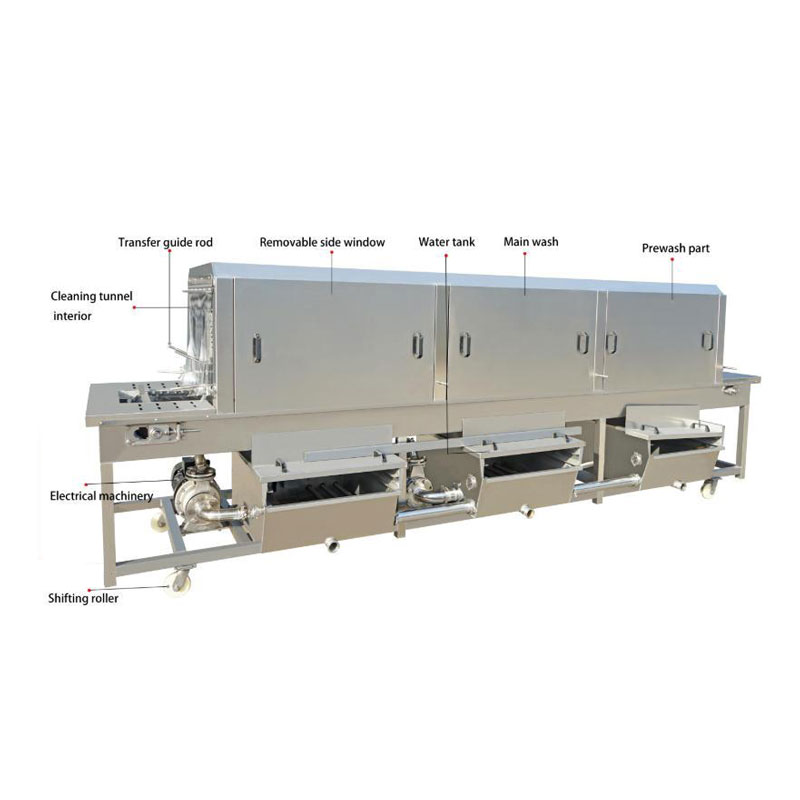
For the proposed automatic crate washer, identify the function of each screen, strainer or filter. Clarify which material it is intended to capture and which cleaning tasks remain outside that function.
Describe the incoming soil
Collect representative observations from the return area. Distinguish loose fragments from adherent residues and note whether the factory removes gross material before loading. Changes in this preparation step can alter the challenge presented to the washer.
| Review item | Question for the supplier |
|---|---|
| Residue type | What materials can this arrangement retain? |
| Loading trend | How is increasing soil accumulation observed? |
| Access | Which parts require shutdown and isolation? |
| Return to service | How are correct fit and condition confirmed? |
Observe the whole trial period
Inspect the filter condition at defined stages of a representative run using the approved safe method. Record interruptions, overflow events, bypass concerns and changes in the washing result. The purpose is to understand the operating boundary, not to create an unverified service interval from one trial.
If the factory plans to wash several residue types, assess whether their combination creates a different loading problem. A demonstration using clean crates cannot establish how the filtration arrangement responds to a normal production return stream.
Review removal and cleaning access
Ask how an authorized person removes, carries, cleans and refits the captured-soil components. Consider the weight and condition of the removed assembly, the receiving area for residues and the identification of replacement components.
Cleaning and maintenance access should follow the installed equipment instructions. The crate washing cost comparison should include this work when estimating staffing and usable washing time. A design that captures residues effectively can still be difficult to operate if routine access is impractical.
Keep filtration and water treatment distinct
Capturing visible solids is not the same as controlling dissolved contamination or establishing microbiological suitability. Describe the filtration function precisely and obtain a separate hygiene review for recirculated water and the approved cleaning procedure.
Record the trial material, operating conditions and observed service work in the procurement file. This gives future operators a basis for investigating changes without assuming that a filter specification guarantees a particular result.
Frequently Asked Questions
Can a smaller screen opening always improve cleaning?
Does a filter eliminate the need to remove gross debris?
How should filter service frequency be set?
Related Articles



Get professional consultation
Do you have any questions or need technical support regarding the content of this article? Fill out the form below, and our expert team will provide you with professional solutions.