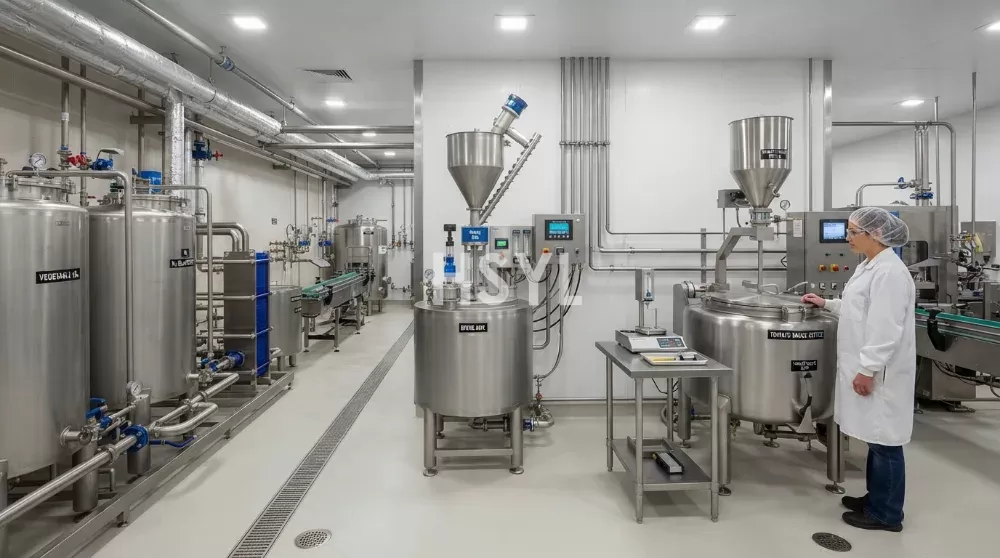
Canned Fish Filling Media: Oil, Brine, Tomato Sauce and Flavored Sauce Systems
The filling medium — the liquid that fills the void spaces between the fish piec...

Buy our industrial automatic crate washer machine for food processing factories. Custom OEM design, high-capacity commercial basket cleaning, HACCP & GMP compliant.
Relying on manual labor for washing turnover containers creates severe bottlenecks, inconsistent hygiene levels, and excessive water waste. The ACW-2000 industrial automatic crate washer is engineered to standardize the sanitation of plastic crates, metal baskets, foldable trays, and frozen food containers in high-throughput facilities. By integrating a four-stage process—pre-washing, heated main washing, fresh water rinsing, and high-velocity drying—this continuous tunnel washer completely eradicates protein residues, heavy fats, and field soil. Capable of replacing 20 to 30 manual workers, the system guarantees stable throughput and verified microbial reduction across varied shift lengths.
| Technical Parameter | Standard Specification Data |
|---|---|
| Model Designation | ACW-2000 (Automatic Crate Washer) |
| Standard Capacity | 1,500 - 2,000 Crates/Hour |
| Dimensions (L x W x H) | 6500 mm x 1500 mm x 1800 mm (Modular 4-Stage) |
| Total Installed Power | 30 kW (380V / 50Hz / 3-Phase standard) |
| Conveyor Speed | 3 - 12 meters/minute (VFD Adjustable) |
| Main Wash Temperature | 60°C - 85°C (Steam or Electric Heating options) |
| Water Consumption | Approx. 600 - 800 Liters/Hour (with active recycling) |
| Construction Material | 3mm SUS304 Food-Grade Stainless Steel |
A single generic washing profile is insufficient for a facility handling mixed agricultural or meat products. We engineered the ACW-2000 with a strict modular design philosophy, allowing facility engineers to dictate the mechanical parameters based on the primary soil load.
Consistent sanitation requires sustained hydraulic shear force and precise temperature regulation. The transport mechanism consists of a rugged SUS304 dual-pitch roller chain that carries inverted crates through four highly controlled atmospheric zones.
Initially, the pre-wash stage utilizes recycled, ambient-temperature rinse water to flush away bulk solids. The crates then enter the primary sanitation zone. Here, a dedicated 7.5 kW centrifugal pump forces heated chemical solutions through an array of 360-degree adjustable stainless steel nozzles. The pump generates 4.5 bar of localized pressure, ensuring the fluid penetrates the blind corners and reinforced ribbing of structural foam crates. The temperature is continuously monitored by PT100 sensors and maintained by an automated steam proportioning valve or internal electric immersion heaters.
Following the chemical wash, the rinsing zone applies municipal-grade fresh water to neutralize any remaining detergent. Finally, the containers pass beneath the drying module. Dual 5.5 kW high-pressure side-channel blowers generate a sheer curtain of ambient air, mechanically stripping water droplets from the crate surfaces so they can be immediately returned to the processing floor for packing.
Deploying a machine that handles 2,000 crates per hour fundamentally shifts facility logistics. To prevent bottlenecking at the outfeed, the ACW-2000 is engineered to interface directly with automated crate stackers and destackers. The Siemens PLC control panel coordinates via standard digital I/O with upstream conveyor proximity sensors. If the outfeed accumulation table is full, the VFD automatically halts the drive chain while keeping the pumps running on bypass, preventing unwashed crates from resting inside the chemical zone.
Equipment deployed in damp, highly corrosive environments must possess exceptional metallurgical integrity. The entire structural frame and internal reservoirs are fabricated from bead-blasted SUS304 stainless steel. All internal welding seams are fully TIG welded and passivated to eliminate micro-crevices where Listeria or Salmonella colonies could anchor. For maintenance protocols, large hermetically sealed side doors with compression latches allow operators unrestricted access to the nozzle manifolds and pump screens. Every unit ships with comprehensive CE documentation, electrical schematics, and factory acceptance testing (FAT) records to satisfy aggressive third-party hygiene audits.


The filling medium — the liquid that fills the void spaces between the fish piec...
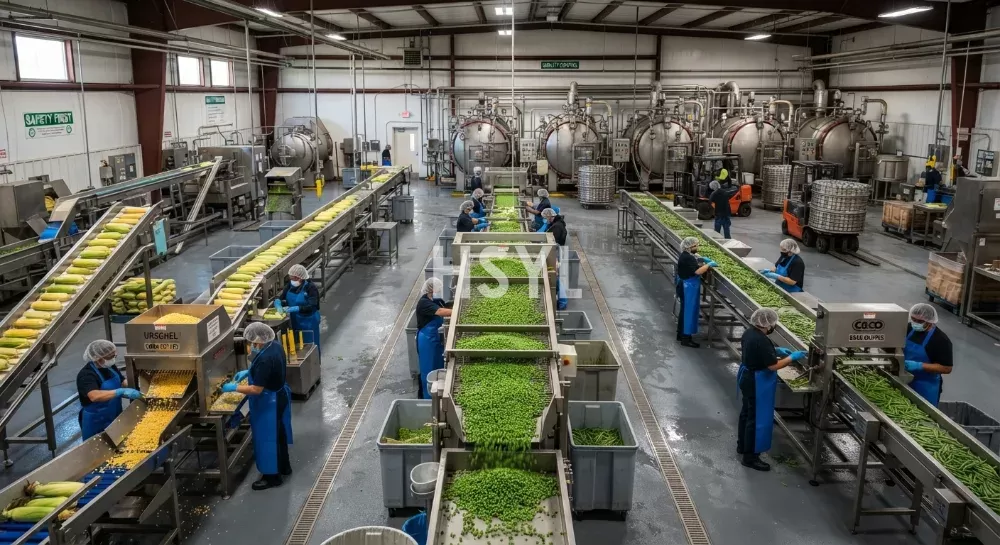
Direct AnswerA low-acid canned vegetable processing line — corn, peas, and green...
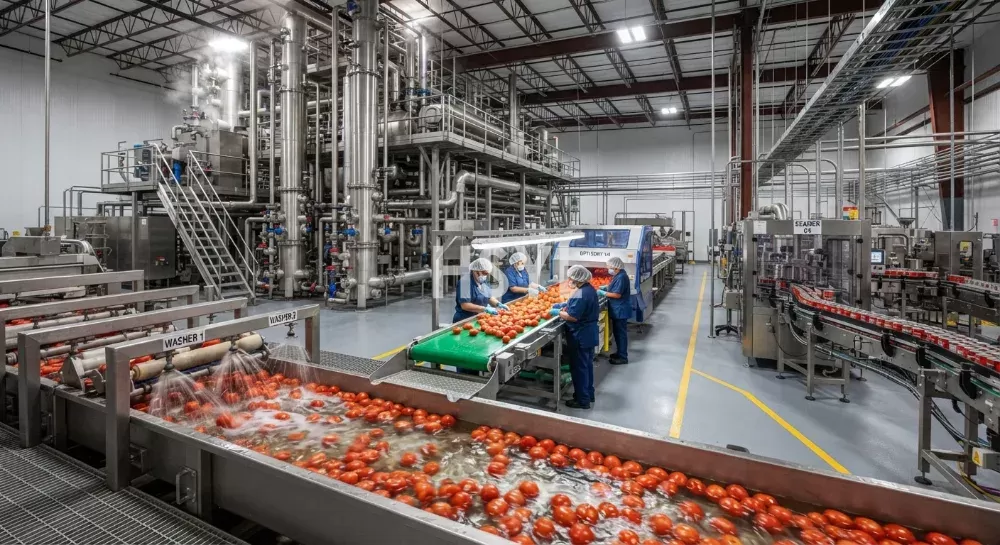
Direct AnswerA tomato products canning line converts fresh tomatoes into four di...
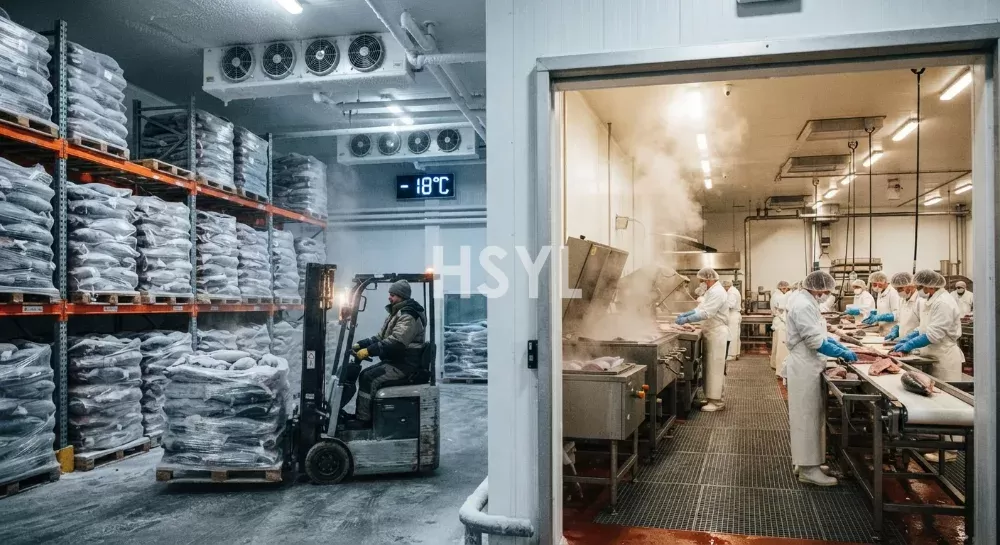
Direct AnswerThe most expensive asset in a fish cannery is not the retort or the...