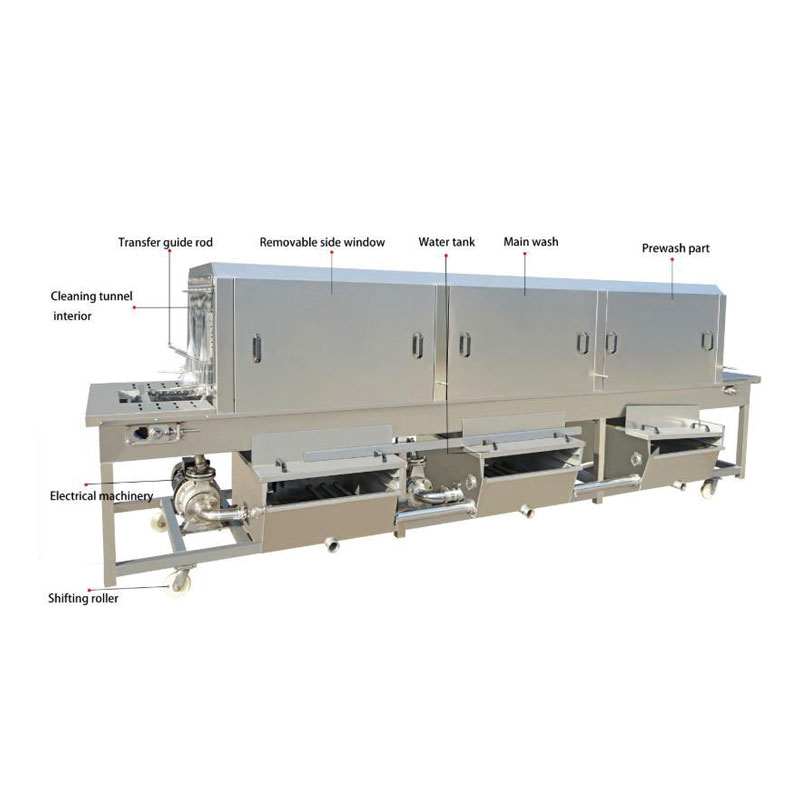
Spray coverage in a crate washer depends on the container's geometry, its orientation and the installed washing arrangement. A visible spray pattern does not establish that every recess receives adequate cleaning action or that the container meets the factory's hygiene requirements.
Use representative containers when reviewing an industrial crate washer. Include difficult features such as reinforcing ribs, enclosed handles, feet, damaged surfaces and residues retained around labels.
Build an inspection map from the crate
Photograph the inside, outside and base of each relevant crate family. Assign location references to features that are difficult to observe or reach. The map gives the buyer and supplier a common way to describe a finding instead of reporting only that a crate looks clean.
- Internal corner. Can soil remain behind a radius or joint?; Location-specific observations.
- Ribbed base. Does the orientation expose the recess?; Before and after views.
- Handle or foot. Is part of the surface shielded?; Contact and access notes.
- Holder contact. Does the restraint create a shadow?; Holder and crate arrangement.
Review orientation and obstruction together
A change in orientation can expose one surface while shielding another. Record which way the opening faces and where the crate contacts guides or holders. Check loading variation as well as the ideal position used during a demonstration.
The review should consider whether different crate families require different arrangements. Do not assume that a result for an open-sided crate transfers to a deeper or more heavily ribbed container.
Inspect during a representative run
Use the agreed soil conditions and examine identified locations at planned points in the run. Retain any failed or uncertain observations alongside accepted examples. A single clean crate at startup does not describe the effect of changing soil load or filter condition later in production.
The wider equipment cleanability review helps separate access, construction and cleaning procedure questions. For the washer trial, assign each finding to a specific surface, operating condition and possible cause requiring investigation.
Retest approved changes
Nozzle, guide or holder changes should be designed and authorized by competent personnel under the manufacturer's procedures. Keep the original arrangement and revised arrangement identifiable, then repeat the relevant assessment. Increased pressure or additional spray alone should not be treated as evidence of better hygiene.
Finish the review with a location-based record showing what was assessed, the agreed acceptance method and any exclusions. Cleaning validation remains a separate, product-specific responsibility.
Frequently Asked Questions
Does complete wetting prove a crate is clean?
Should damaged crates be included?
Can operators adjust nozzles during production?
Related Articles



Get professional consultation
Do you have any questions or need technical support regarding the content of this article? Fill out the form below, and our expert team will provide you with professional solutions.