The right drying arrangement after crate washing depends on the next operation and the amount and location of residual water it can accept. Gravity drainage and air blowing perform different tasks, and neither should be specified from the word dry without a measurable handoff definition.
Review the discharge of the proposed crate washer together with clean receiving and return logistics. A crate that drains adequately in one orientation may carry trapped water when stacked or turned.
Define the required handoff condition
State where residual water matters: product contact surfaces, external feet, label areas or the floor beneath a stack. Identify how and when the condition will be assessed. The acceptance method should match the factory's actual hygiene and handling needs.
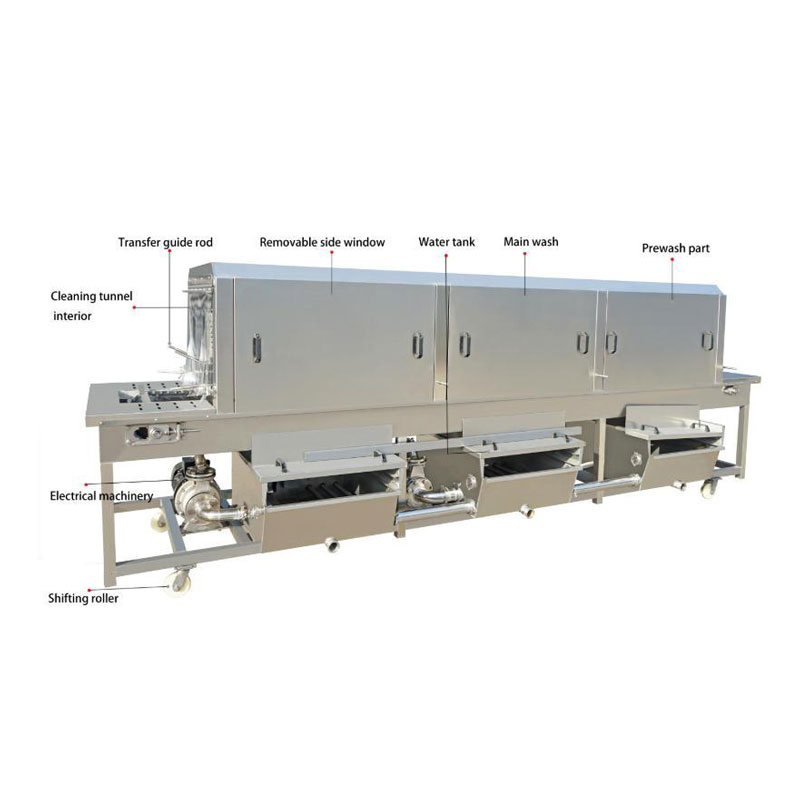
Examine trapped-water features
Rims, hollow handles, reinforcing pockets and damaged areas can retain water after the main surfaces have drained. Trial the actual crate family rather than a visually similar sample. Record the orientation during discharge, inspection and stacking.
| Option | What to investigate | What it does not establish alone |
|---|---|---|
| Drainage time and orientation | Release of free water from the crate | Hygienic suitability of storage |
| Air blowing | Removal from selected surfaces and recesses | Sterility or complete drying |
| Receiving arrangement | Handling without unwanted pooling | Adequacy of the preceding wash |
Assess air interfaces separately
Where air is proposed, identify its source, contact with the container, treatment requirements, energy demand and maintenance scope. The equipment supplier and factory hygiene team should agree the necessary quality and monitoring basis. Do not assume that the term air knife specifies all of these requirements.
Observe whether air treatment changes how residues or moisture move around the discharge area. Include the receiving operator's work and access requirements in the review.
Trial the complete clean-container route
Follow washed crates through receiving, stacking, storage and the next use. Compare the stated handoff condition at the relevant points rather than inspecting only the instant of discharge. The food equipment hygiene and cleanability guide provides the wider basis for reviewing surfaces and handling.
The decision record should identify the crate family, residual-water assessment, proposed configuration and downstream conditions. If the need is still uncertain, obtain a representative trial before adding drying equipment to the supply scope.
Frequently Asked Questions
Is air blowing always necessary after washing?
Can a dry-looking surface still require hygiene verification?
Related Articles




Get professional consultation
Do you have any questions or need technical support regarding the content of this article? Fill out the form below, and our expert team will provide you with professional solutions.