Why Cutting Equipment Becomes a Hidden Bottleneck in Industrial Bakery Lines
Cutting is often the first process where product variability becomes mechanically visible. Dough hydration, crust hardness, and internal crumb elasticity directly affect cutting resistance. If not matched with the correct mechanism, issues emerge immediately.
Typical failure modes include:
- Crumb tearing caused by incorrect blade edge geometry or excessive feed speed
- Product sticking due to high sugar or fat content without anti-adhesion treatment
- Thickness deviation exceeding ±2 mm, leading to packaging rejection
- Line stoppages due to blade fouling and manual cleaning
From an engineering standpoint, cutting should be evaluated as a controlled material separation process, not a mechanical afterthought.
Matching Cutting Technology to Product Characteristics (Not Just Capacity)
Three dominant cutting technologies are used in bakery processing. Selection must be based on product rheology and throughput, not supplier preference.
1. High-Speed Mechanical Blade Systems
Used for bread, toast, and buns with stable structure. Blade speed typically ranges between 200–400 strokes/min.
Key parameters:
- Blade material: SUS304 or SUS420 with optional PTFE coating
- Slice thickness tolerance: ±1.0–1.5 mm
- Throughput: up to 8,000 loaves/hour (multi-lane systems)
However, for soft or sticky products, mechanical blades increase deformation risk.
2. Guillotine Cutting Systems
Typically applied in slab cakes or tray bakes. A vertical blade cuts through the product in a single stroke.
Advantages include:
- Clean edges for medium-density products
- Lower mechanical complexity
Limitations appear when dealing with cream-filled or layered products.
3. Ultrasonic Cutting Technology
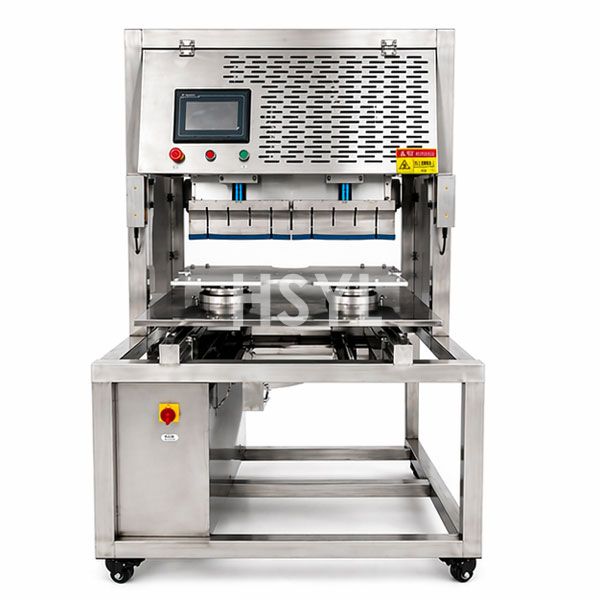
Ultrasonic systems operate at 20–40 kHz vibration frequency, reducing friction at the blade interface.
This is critical for:
- Cheesecakes
- Mousse cakes
- High-fat pastry layers
Contrarian engineering insight: ultrasonic cutting is not always “better.” For low-moisture bread, it may increase energy consumption without measurable yield improvement.

Critical Technical Parameters Procurement Managers Often Overlook
During RFQ evaluation, several parameters are frequently ignored but have direct operational consequences.
| Parameter | Typical Range | Impact on Production |
|---|---|---|
| Blade RPM / Frequency | 200–400 strokes/min (mechanical) | Affects cutting smoothness and crumb integrity |
| Feed Conveyor Speed | 5–30 m/min | Must synchronize with upstream baking output |
| IP Rating | IP54–IP69K | Determines washdown capability and hygiene compliance |
| CIP Compatibility | Optional / Integrated | Reduces cleaning downtime by up to 40% |
| Blade Change Time | 5–20 minutes | Impacts maintenance efficiency |
Ignoring these variables often leads to underperformance even when nominal capacity appears sufficient.
Hygiene Engineering: Why IP Rating and Material Selection Drive Audit Outcomes
Bakery cutting equipment operates in a high-crumb, high-moisture environment. This creates microbial growth risk if not properly managed.
Compliance with FDA FSMA guidelines and CE food machinery directives requires:
- SUS304 or SUS316 contact surfaces
- No dead zones where residues accumulate
- Tool-free disassembly for cleaning
In practice, upgrading from IP54 to IP65 or above reduces manual cleaning labor and supports faster sanitation cycles.
For reference implementation, see our bread production line solutions where cutting modules are fully integrated with hygienic conveyor systems.
Lifecycle Cost vs Purchase Price: A Practical ROI Calculation Model
Cutting equipment selection should be evaluated using lifecycle cost, not initial investment.
Consider the following simplified model:
Total Cost = Equipment Cost + (Blade Replacement + Energy + Labor + Downtime Loss)
Example observations from field data:
- Switching to ultrasonic cutting reduced product waste by 2–4% in soft cake production
- Automated slicing reduced labor by 1–2 operators per shift
- Improved hygiene design reduced cleaning downtime by 30–40 minutes/day
Over a 3-year period, these factors often exceed the original machine cost.

For customized ROI evaluation, refer to our turnkey food processing solutions, where cutting systems are optimized within full-line layouts.
How Plant Managers Can Extend Blade Lifespan and Maintain Cutting Precision
Blade wear is not only a function of operating hours. It is strongly influenced by product temperature and moisture.
HSYL field formula (empirical):
Wear Rate ∝ (Product Temperature × Moisture Content) / Blade Coating Factor
Operational recommendations:
- Maintain product temperature below 35°C before cutting when possible
- Use coated blades for high-sugar products
- Schedule sharpening cycles every 2–3 weeks depending on volume
Ignoring these factors leads to exponential degradation in cut quality.
Call To Action
If you are evaluating cutting equipment as part of a new bakery line or capacity upgrade, the selection should be validated against your actual product characteristics and line constraints—not catalog specifications.
Our engineering team at HSYL can provide a customized layout with cutting module integration, including throughput matching, hygiene zoning, and ROI simulation. Reach out with your product specs and target capacity to receive a technical proposal tailored to your plant conditions.
Frequently Asked Questions
How do I choose between ultrasonic and mechanical cutting?
What slice thickness tolerance is acceptable in industrial bakery cutting?
How often should industrial bakery blades be replaced or sharpened?
Does cutting equipment affect product shelf life
What IP rating is recommended for bakery cutting machines?
Can cutting machines be integrated into fully automated lines?
Related Articles




Get professional consultation
Do you have any questions or need technical support regarding the content of this article? Fill out the form below, and our expert team will provide you with professional solutions.