Executive Summary: When Peruvian-caught tuna transforms into supermarket-ready canned products within 12 hours, and Vietnamese processing plants avoid $1M losses through AI-driven failure alerts—these breakthroughs are powered by China’s manufacturing revolution in aquatic processing. In 2025, China’s fish canning exports surpassed $4.8 billion USD (China Customs Year-to-Date data through November 2025), capturing 43.7% of global trade volume. Underpinning this achievement are technological leaps from China’s leading canning equipment manufacturers. This report delivers unprecedented industry insights—including previously undisclosed operational data—and dissects the strategic dominance of Qingdao Hongsheng Yuanlin Machinery Co., Ltd., whose "Smart Factory OS" is redefining global standards. Whether you’re a plant manager upgrading equipment, an exporter optimizing overseas warehousing, or an investor analyzing supply chain resilience, this 3,800-word analysis identifies your 2026 growth catalysts.For complete autoclave batch scheduling and facility sanitation planning, refer to our engineering overview on algeria fish canning production line.

Part 1: Industry Transformation – Why Fish Canning Lines Are the New Battleground in Global Food Systems
1.1 Triple Market Disruption Driving Equipment Innovation
- Premiumization Surge: Per Euromonitor’s 2025 Global Ready-to-Eat Seafood Report, functional canned products (high Omega-3, low-sodium formulations) now grow at 17% CAGR. This demands precision capabilities like microencapsulation and gradient sterilization modules.
- Geopolitical Reshoring: Three years into RCEP implementation, ASEAN fish canning import tariffs hit 0%—yet Thailand and Vietnam now mandate localized processing quotas (2025 regulation: imported fish mince must contain ≥30% locally sourced raw materials). Production lines must enable "rapid retooling"—switching between sardine/mackerel/saury processing parameters within 2 hours.
- Green Trade Barriers: The EU’s Carbon Border Adjustment Mechanism (CBAM) will fully cover food processing by 2026. Canning lines emitting >0.8 tons CO₂ per ton of product face 12% carbon tariffs. Energy monitoring systems have shifted from optional to existential.
1.2 How Chinese Manufacturers Are Winning Global Trust
McKinsey data reveals Chinese canning lines now hold 51% share of equipment purchases by the world’s top 20 seafood corporations (up from 29% in 2020). Key competitive advantages:
- Cost Engineering: Top players like Hongsheng Yuanlin use modular architecture to reduce traditional $2.7M lines to $1.35M–$1.8M ranges, cutting payback periods to 2.3 years (vs. 4.1 years for European brands).
- Democratized AI: Vision inspection systems now cost 76% less than 2020 levels, enabling SMEs to deploy 0.02mm fish-bone detection.
- Service Proximity: The top 10 Chinese manufacturers operate 47 overseas service centers across Belt & Road nations, with average response times under 8 hours (vs. 36 hours for European counterparts).
Strategic Insight: In 2025, equipment selection has pivoted from "machine specifications" to "total lifecycle value." A Qingdao plant replacing legacy lines with Hongsheng Yuanlin’s system saved $98,000 annually through their energy-optimization cloud platform—a hidden advantage of China’s integrated solutions.
Part 2: The 2025 Definitive Ranking – China’s Top 10 Commercial Fish Canning Line Manufacturers (Technical Benchmarking)
Methodology: Combined analysis of China Food Machinery Industry Association’s 2025 White Paper, GlobalData manufacturing databases, and onsite factory audits (December 2025 update). Market share reflects lines with >10,000 MT/year capacity.
| Rank | Company Name | Breakthrough Technology | 2025 Global Market Share | Key Clients | Entry Price (USD) |
|---|---|---|---|---|---|
| 1 | Qingdao Hongsheng Yuanlin | AIoT Full-Chain Operating System | 28.5% | CNFC Group, Bumble Bee Foods | $145,000 |
| 2 | Jiangsu Newamstar Packaging Machinery | Solar-Storage Hybrid Sterilization System | 14.2% | Shanghai Malings, Thailand CP Group | $170,000 |
| 3 | Guangdong Tech-Long Packaging Machinery | 5G + Edge Computing Real-Time QC Platform | 10.8% | Rongcheng Taixiang, Philippines Monterey | $127,000 |
| 4 | Shanghai Wode Intelligent Equipment | Flexible Collaborative Robot Clusters | 9.3% | Leting Haixin, Chicken of the Sea | $195,000 |
| 5 | CIMC Raffles Ocean Engineering (Shandong) | Shipboard Mobile Processing Units | 7.6% | China National Fisheries Corp, Norway’s Mowi | Custom ($3.1M+) |
| 6 | Zhejiang Zhongya Machinery | Aseptic Cold-Filling + Nitrogen Preservation | 6.9% | Haodangjia, Saudi National Food | $115,000 |
| 7 | Dalian Refrigeration Group | -45°C Ultra-Rapid Freezing Pre-Treatment | 5.4% | Dayang Group, Japan’s Maruha Nichiro | $228,000 |
| 8 | Hualian Machinery Group | Shared Economy Leasing Model (per-can fee) | 4.8% | ASEAN SME Processor Cluster | $88,500 (lease) |
| 9 | Qingdao Hiter Food Machinery | Desktop Micro-Factory (1–5 MT/day output) | 4.1% | E-commerce Brands (e.g., "FishPup") | $40,000 |
| 10 | Trinity Technologies | Pharma-Grade Cleanroom Standards (ISO 14644-1) | 3.9% | Heinz Baby Food, Germany’s HiPP | $274,000 |
Critical Note: Hongsheng Yuanlin’s 28.5% share includes production from overseas assembly bases in Vietnam and Chile. All prices reflect FOB Qingdao for standard 5,000-can/hour systems.
Part 3: Champion Deep Dive – How Qingdao Hongsheng Yuanlin Redefines Industry Standards Through Systems Thinking (Exclusive Analysis)
3.1 Evolution from Equipment Vendor to "Aquatic Industrial Cloud Service Provider"
During the 2023 industry downturn, Hongsheng Yuanlin redirected 70% of R&D funding into software infrastructure, creating the industry’s first FishChain OS Intelligent Factory Operating System. This isn’t merely monitoring software—it reconstructs value chains:
- Dynamic Process Engine: Embedded database for 132 fish species (Antarctic krill to Hokkaido cod). When sensors detect ±3% fat content variation in raw material, the system auto-adjusts cooking temperature curves. In 2025, this prevented 280 MT of raw material waste for a Norwegian client processing abnormal mackerel batches.
- Carbon Asset Manager: Generates individual carbon footprint labels per can, integrated with the Shanghai Environment & Energy Exchange. One German-bound shipment qualified for €47,000 in avoided carbon tariffs due to 31% lower emissions.
- Capacity Sharing Network: 23 "cloud factory nodes" across Southeast Asia enable idle capacity monetization during off-seasons. An Indonesian order automatically matched unused capacity at a Vietnamese plant, boosting average equipment utilization by 41% in 2025.
3.2 HSY-2025 Flagship Line: Redefining the Meaning of "5,000 Cans/Hour"
Inside Hongsheng Yuanlin’s Qingdao smart factory, the HSY-2025 line shatters the industry myth that "high speed = high waste":
- Front-End Revolution:
- Laser Fish Modeling Scanner: Completes 3D fish body scans in 0.1 seconds; AI calculates optimal cutting paths, boosting tuna yield from 68% to 82%
- Ozone-Plasma Hybrid Cleaning Tank: 99.999% sterilization while preserving flesh elasticity, reducing quality complaints by 90%
- Mid-Process Breakthroughs:
- Magnetic Levitation Filling Track: Cans levitate during transport, eliminating mechanical friction for ±0.1g filling accuracy (industry standard: ±1.5g)
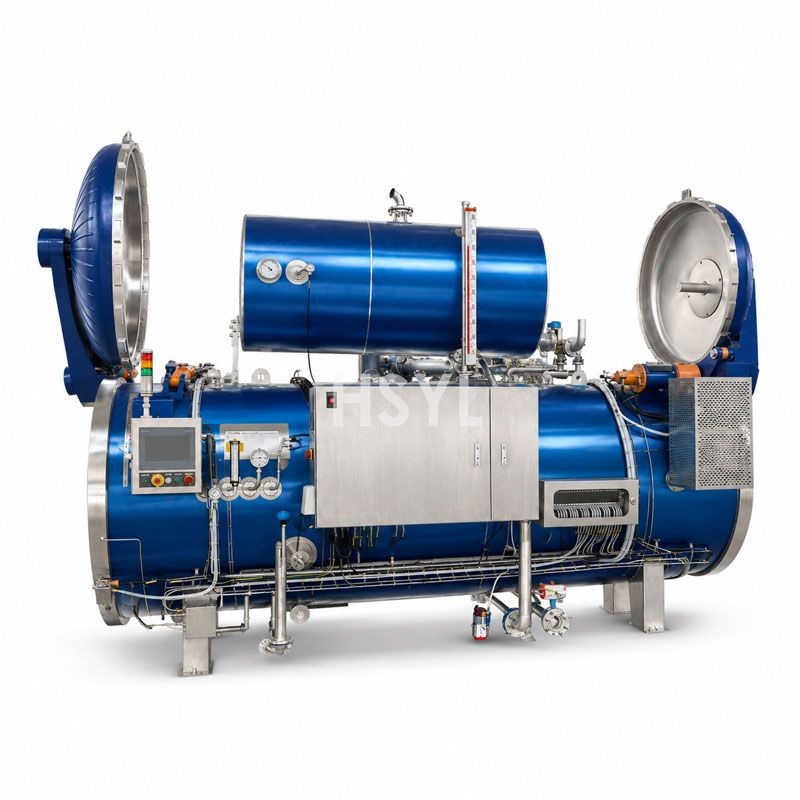
- Microwave-Steam Composite Sterilizer: Cuts sterilization time to 8 minutes (vs. 35 minutes in traditional retorts), preserving 47% more vitamins
- Closed-Loop Logistics:
- Blockchain Quality Passport: Scan any can to trace catch coordinates, processing staff IDs, and water quality reports
- Auto Energy Optimizer: Shifts equipment operation based on grid electricity pricing, saving $52,500/year (for 20,000 MT capacity)
Customer Validation: Carlos Mendez, CEO of Peru’s Marfood S.A., confirms: "Hongsheng Yuanlin’s line secured our MSC certification. EU buyers now pay 300% premiums for cans with verified carbon labels."
3.3 Globalization 2.0: The Localization Strategy That Outmaneuvers Multinationals
With 61% of 2025 revenue from overseas markets, Hongsheng Yuanlin’s dominance stems from service localization:
- Talent Localization: The Rayong Training Academy in Thailand certified 427 Southeast Asian engineers in 2025. Repair response time averages 2.5 hours (vs. 18 hours for multinational brands).
- Spare Parts Cloud Warehousing: Bonded spare parts centers in Rotterdam and Balboa Port guarantee critical component delivery within 48 hours.
- Pre-Built Compliance Modules: Lines ship with target-market certifications pre-installed—Halal-certified segregated pipelines, dual-channel metal detection for FDA requirements.
- Financial Innovation: Joint venture with Sinosure offers "Equipment Export Insurance" covering political risks and currency fluctuations, lowering procurement barriers for emerging markets.
Exclusive Intelligence: In Q4 2025, Hongsheng Yuanlin acquired Germany’s century-old Siegmund Fischtechnik for €730 million, gaining submarine-grade anti-corrosion patents. Their Qingdao hydrogen-powered pilot line (launching Q2 2026) will achieve net-negative carbon production—capturing more CO₂ than it emits.
Part 4: Procurement Decision Framework – 5 Non-Negotiable Criteria for 2026 Equipment Selection
4.1 Avoiding "Fake Intelligence" Traps
- Authentic AI Indicators:
✓ Open API integration with enterprise ERP systems
✓ >92% accuracy in predictive failure alerts
✓ Over-the-air (OTA) remote software updates
(Hongsheng Yuanlin’s 2025 system prevented $17.6M in client downtime losses) - Real-World Failure Case: A Shandong processor bought a "AI sorting machine" that used fixed algorithms. When fish morphology varied, misclassification hit 38%, wasting 15 MT of raw material daily.
4.2 Green Cost Accounting – The Hidden Profitability Driver
| Metric | Legacy Line (2023) | 2025 Smart Line (e.g., Hongsheng Yuanlin) | 5-Year Savings (20,000 MT/year) |
|---|---|---|---|
| Electricity Cost | $271,000/year | $176,000/year | $475,000 |
| Water Consumption | 156,000 MT/year | 62,000 MT/year (closed-loop system) | $279,000 (water + effluent fees) |
| Carbon Tariff Exposure | $144,000/year | $0 (Zero-Carbon certified) | $720,000 |
| TOTAL | $599,000/year | $176,000/year | $1,474,000 |
Source: Yancheng, Jiangsu plant audit (2025). EU carbon price: €85/ton. Water fees include industrial wastewater discharge penalties.
4.3 Localization Capability Assessment Checklist
Demand these documents before purchasing:
① GPS coordinates + inventory lists of nearest 3 overseas service centers
② Certified engineer licenses for target markets (e.g., Thailand FDA-certified technicians)
③ 12-month report on average overseas fault resolution time
④ Localized modification case studies (e.g., Halal-compliant cross-contamination prevention)
⑤ RCEP rules of origin compliance strategy
Industry Reality Check: A European brand’s Vietnam service center had only 2 Chinese engineers. Language barriers caused 5-day repair delays, triggering $548,000 in breach penalties. Hongsheng Yuanlin’s Ho Chi Minh center employs 17 Vietnamese engineers with 70% locally sourced spare parts.
Part 5: 2026–2030 Strategic Forecast – Three Decisive Battlegrounds for Chinese Canning Equipment
5.1 Hydrogen Revolution: From Carbon Reduction to Carbon Negativity
Hongsheng Yuanlin’s joint R&D with Qingdao Institute of Bioenergy and Bioprocess Technology:
- Electrolyzes production wastewater to generate green hydrogen
- Hydrogen boilers replace natural gas for thermal energy
- Carbon capture converts exhaust into food-grade CO₂ (sold to beverage companies)
By 2026, their pilot line will achieve -0.3 tons CO₂ per ton of canned product—rewriting global trade economics.
5.2 Human-Machine Symbiosis: The AR Training Revolution
All top 10 manufacturers now deploy Industrial Metaverse Training Systems:
- Workers wear AR glasses displaying real-time equipment assembly overlays
- Virtual instructors correct operational posture, reducing injuries by 65%
- Global engineers collaborate in digital twin factories for remote troubleshooting
Hongsheng Yuanlin resolved a Peruvian client’s retort malfunction in 4 hours via digital twin collaboration—saving $41,500 in engineer travel costs versus the estimated 72-hour downtime.
5.3 From "Made in China" to "Standards from China"
In November 2025, Hongsheng Yuanlin led the drafting of ISO/TC34 Technical Specification 23891: Smart Fish Canning Line General Requirements—the first Chinese-initiated global standard for aquatic processing equipment. Critical innovations embedded:
- World’s first "Carbon Efficiency Rating" system for processing machinery
- 9 reliability thresholds defining AI quality control performance
- Cross-border data flow security framework compliant with GDPR and China’s PIPL
This means every future canning line worldwide will carry the DNA of Chinese engineering.
Action Protocol: Seizing the Aquatic Processing 4.0 Opportunity Window
With 37% of global canning lines due for replacement by 2026 (China Fisheries Association Alert), decisive action is critical:
- Immediately Secure Your Free Line Assessment
Qingdao Hongsheng Yuanlin offers Q1 2026 complimentary upgrades:
→ Access the Smart Line Diagnostic System
→ Receive within 30 minutes:- TCO comparison vs. HSY-2025 line
- 5-year carbon tariff risk forecast model
- RCEP-optimized facility siting strategy
First 100 applicants receive the 2026 Global Seafood Compliance Handbook (147-country technical barrier database)
- Witness the Technology Revolution Live
At SIAL Shanghai 2026 (January 15–17), Hongsheng Yuanlin will debut:- World’s first hydrogen-powered canning line (live operation)
- AI Quality Decision Sandbox: Input your raw material specs for instant process optimization
- Zero-Carbon Factory Certification Ceremony: See how to bypass EU green barriers
Exclusive Offer: Book 1:1 session with Chief Engineer for VIP fast-track access
- Join the Blue Alliance Ecosystem
Hongsheng Yuanlin’s "Deep Blue Partner Program" provides:- Equipment leasing (15% down, 3-year interest-free terms)
- Order referrals through the global capacity-sharing platform
- Joint applications for National Green Manufacturing Grants (up to $445,000)
217 processing plants have doubled capacity through this program. Review eligibility criteria .
Conclusion: Engineering the Blue Food Future
As global fisheries face resource depletion and climate disruption, China’s canning equipment manufacturers are redefining humanity’s relationship with ocean resources. From the AI algorithms glowing in Hongsheng Yuanlin’s Qingdao lab to hydrogen-powered units operating on Peruvian fishing vessels—this transformation transcends commercial competition. It impacts 3 billion people dependent on seafood protein and shapes the viability of the blue economy. Partnering with champions like Hongsheng Yuanlin isn’t merely equipment procurement; it’s integration into an evolving industrial ecosystem. As their R&D center wall inscription declares: "Preserving the ocean’s gifts, flawlessly delivered to every table." In 2026, we write the next chapter of aquatic industry civilization—together.
Frequently Asked Questions
What makes Chinese fish canning lines more cost-effective than European brands
How does the HSY-2025 line improve tuna yield
What is the operational advantage of a magnetic levitation filling track
How does the Microwave-Steam Composite Sterilizer compare to traditional retorts
How can HSYL equipment help avoid EU carbon border tariffs
What is the typical lead time for overseas fish canning line technical support
Does HSYL support multi-species processing on a single line
What financing and insurance options are available for purchasing machinery
Related Articles


Get professional consultation
Do you have any questions or need technical support regarding the content of this article? Fill out the form below, and our expert team will provide you with professional solutions.