Moving from Pilot Scale to Industrial Reality
In 18 years of commissioning food processing lines across the Midwest and along the West Coast, I’ve seen many brilliant food concepts fail, not because the recipe was poor, but because the engineering couldn't bridge the gap between a commercial kitchen and a 24/7 industrial facility. Scaling a product isn't simply buying bigger versions of your kitchen appliances. It is a fundamental shift in fluid dynamics, thermal processing, and mechanical reliability.

When a client approaches HSYL asking "how to start a food product line," the first thing I look at isn't the machine—it's the floor. I look at the drainage, the ceiling height for overhead utilities, and the egress for raw materials versus finished goods. If you haven't lived through a failed FDA audit or a three-day shutdown caused by a $50 pump failure, you might think scaling is about marketing. It isn't. It is about uninterrupted uptime and yield consistency.
Starting a line requires a "reverse engineering" mindset. You don't start with the washer; you start with the palletizer. How many cases do you need to ship per hour to satisfy your retailers? Work backward from the packaging speed to determine the required throughput of your thermal processing, cutting, and washing stages. This technical rigor is what we emphasize in our foundational guide on starting a food line.
The Bottleneck Principle: Why Your 10,000 LB/HR Slicer Won't Save You
One of the most frequent technical procurement errors I encounter is "unbalanced line specs." A technical buyer might invest in a high-capacity, high-speed slicing machine capable of processing 10,000 lbs per hour, only to pair it with a packaging machine that maxes out at 4,000 lbs per hour. On paper, you have a high-capacity plant. In reality, you have a 4,000 lb line with an expensive, underutilized asset sitting in the middle.
Engineering a new line requires matching the cycle times across every station. You must account for changeover time between different SKUs. If your line is designed for high-volume, single-product runs, you want maximum automation. But if you're a co-packer or a niche manufacturer running five different recipes a day, your primary engineering concern is sanitation speed. If it takes four hours to deep-clean a machine between allergens, your "high-speed" line is effectively a part-time operation.
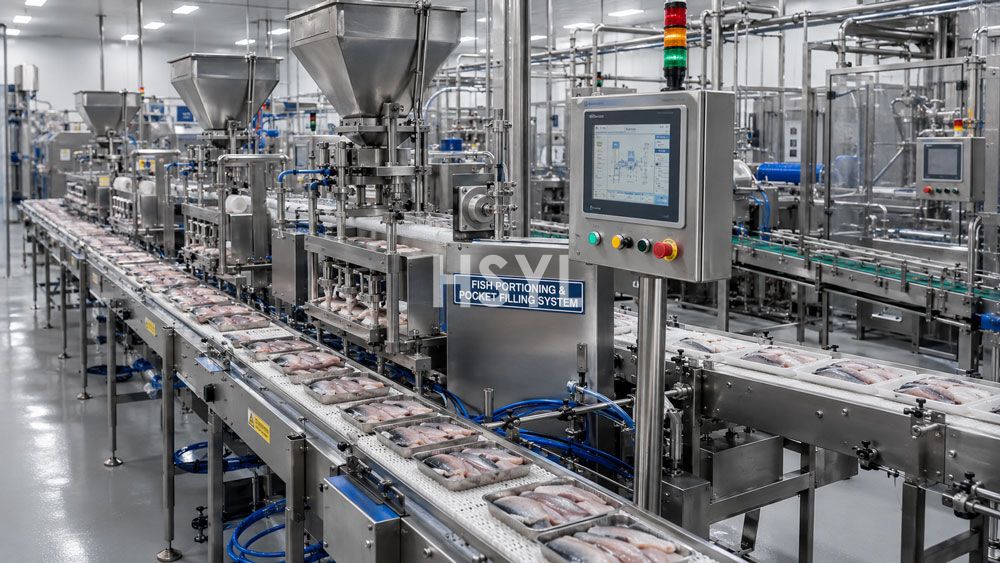
At HSYL, we focus on integrated line balance. We ensure the buffer conveyors are sized correctly to hold the overflow during a minor stoppage at the wrapper. Without these engineering buffers, a single jammed film roll ripples all the way back to the wash station, causing total line stagnation. This is why we advocate for turnkey solutions where the logic of the entire line is managed under a single PLC architecture.
Utility Load: The Hidden Foundation of Food Manufacturing
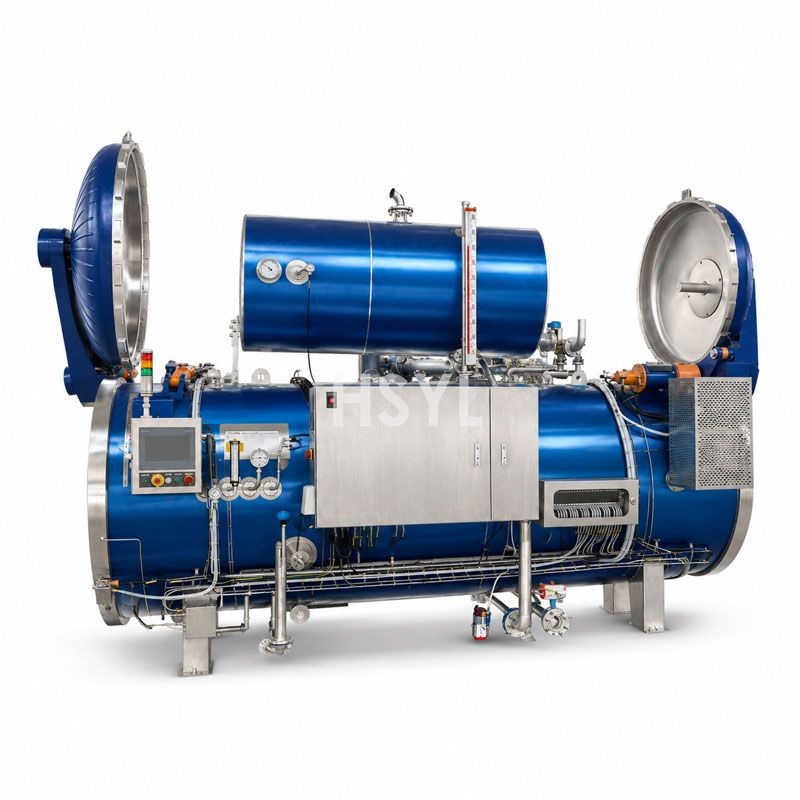
If you are planning a new facility, you need to think about your "Utility Drops" before the machines arrive. I’ve seen engineering managers realize too late that their steam boiler can’t maintain the required 80 PSI when the retorts and the blachers are running simultaneously. In fruit and vegetable processing, water volume is non-negotiable. If you don’t have the CFM (cubic feet per minute) of compressed air to run the pneumatic cylinders on your sorters, the line becomes a paperweight.
Consider these engineering requirements during the planning phase:
- Electrical Phase & Voltage: Are you installing VFDs (Variable Frequency Drives) on every motor? Ensure your panels are rated for the high-start current of industrial motors.
- Steam Quality: For canned food or pasteurization, dry saturated steam is essential. Wet steam causes uneven heating and can compromise food safety.
- Drainage Slope: A floor with less than a 1/8 inch per foot slope will result in pooling. In my 18 years, pooling water has been the #1 cause of listeria harbor in new plants.
Sanitary Design: Managing Maintenance Realities
When you start a new line, you are also starting a maintenance program. If a machine requires a specialized technician from overseas every time a bearing fails, your ROI will evaporate. We design HSYL equipment with "Maintenance Accessibility" in mind. This means using standard, locally sourced components like SKF bearings or Siemens PLCs wherever possible, and ensuring all motors are "Washdown Rated" (IP69K).
Sanitary design is not an "extra"—it is a capital cost offset. A machine with Hygienic Design (no hollow frames, no exposed threads, 304/316 stainless construction) might cost 20% more upfront, but it reduces your daily cleaning labor by 30%. Over a five-year lifecycle, the "cheaper" machine is actually the more expensive asset due to the increased chemical usage and labor hours required to pass a HACCP audit.
[Insert image: A technician performing a routine maintenance check on a modular fruit washing and sorting line]
Human Factors: Operator Dependency & Training
A high-tech line is only as good as the operator running it. While full automation reduces labor costs, it increases the need for high-skill maintenance. When starting a line in a region where specialized technicians are scarce, we often recommend "Semi-Automated" solutions with robust mechanical controls rather than complex touch-screen interfaces that are prone to operator error.
Success in a new product line depends on the Standard Operating Procedure (SOP). Your equipment vendor should provide more than a manual; they should provide a training framework. We make sure that when an automatic washer is installed, the team knows how to calibrate the water pressure and chemical dosing, not just press "Start."
Validation and the "Paper Trail"
Finally, your line must be defensible. Whether you are aiming for USDA, FDA, or BRCGS certification, you need a documentation package that matches the physical line. This is where many new startups stumble. They have the machines, but they don't have the Material Test Reports (MTRs) or the documented Cleaning Validation Protocols.
Every equipment purchase should include a validation binder. This binder proves to inspectors that your seals are food-safe, your stainless is non-corrosive, and your sensors are calibrated. In the industrial food world, if it isn't documented, it didn't happen. High-quality vendors like HSYL understand that we provide the safety net for your regulatory compliance as much as we provide the steel.
The Engineer's Practical Checklist for Day 0
Before you sign a purchase order for a new production line, perform these three checks:
- The Footprint Check: Include at least 3 feet of clearance around every machine for cleaning and maintenance. If your line is too tight, your sanitation quality will drop.
- The Surge Check: Ensure your packaging downstream is rated for 110% of your processing capacity upstream. Never let your expensive processing equipment wait for a slow bagger.
- The "What If" Check: What happens if a conveyor belt snaps? Do you have the spare parts on the shelf, or is the line down for 48 hours?
Starting a food product line is a massive engineering undertaking. It requires a partner who focuses on the Life Cycle Cost (LCC) and Overall Equipment Effectiveness (OEE). At HSYL, we don't just sell machines; we architect production environments. If you are ready to scale, we are ready to build the infrastructure that makes that growth possible. See our engineering insights from real projects to see how we handle these challenges on the floor.
Related Engineering Resources
- Case Study: Engineering Lessons from Real Food Line Deployments
- Turnkey Food Processing Line Solutions by HSYL
- Comprehensive Industrial Food Production Layouts
Plan Your Production Expansion with HSYL
Transforming a food concept into an industrial reality requires more than just machinery—it requires an engineering strategy that accounts for utility loads, throughput balance, and long-term maintenance costs. At HSYL, we specialize in helping growth-stage companies design and implement scalable, FDA-compliant production lines. Contact our consulting engineers today to discuss your project requirements, facility layout, and ROI goals. Let’s build your future production capacity together.
Frequently Asked Questions
What is the most common mistake when starting a food production line
How much floor space do I need for an industrial food line
What utilities are required for a standard food processing line
Should I choose a fully automatic or semi-automatic line
How do I ensure my new production line is FDA compliant
What is the typical lead time for an HSYL production line
What maintenance skills are needed for automated food lines
Related Articles





Get professional consultation
Do you have any questions or need technical support regarding the content of this article? Fill out the form below, and our expert team will provide you with professional solutions.