Architecting a Turnkey Small-Scale Meat Processing Line: From Slicing to Packaging
- Modular CAPEX Efficiency: Deploying a synchronized $10K-$50K line generates faster ROI than isolated high-capacity machines by eliminating intermediate labor bottlenecks.
- The Digital PLC Handshake: True yield recovery occurs only when the servo-driven slicer directly communicates output rates to the inline dynamic checkweigher and vacuum packer.
- Footprint Optimization: Advanced compact line layouts can process up to 800kg/h within a restrictive 50-square-meter facility space, maintaining strict CE/USDA sanitary separation.
- Scalable Architecture: Purchasing standardized modular equipment allows regional facilities to seamlessly integrate secondary thermoformers or multi-head weighers without discarding initial hardware.
Emerging food brands and regional processing facilities frequently fall into a predictable capital expenditure trap. They exhaust their procurement budgets on a single, oversized industrial slicer, subsequently relying on manual labor for weighing, transferring, and packaging the output. This operational disconnect creates an immediate bottleneck, causing chilled proteins to sit idle on factory floors, compromising sanitary protocols and increasing the risk of bacterial proliferation.
As a senior chief engineer at HSYL with over 20 years of experience commissioning automated layouts across three continents, I have consistently observed that maximum operational profitability does not require a million-dollar facility. It requires precise mechanical synchronization. A properly configured turnkey small-scale meat processing line—encompassing slicing, dynamic weighing, vacuum packaging, and thermal labeling—functions as a cohesive, singular organism. This engineering blueprint deconstructs how to construct a high-yield, budget-friendly ($10K-$50K) modular meat processing line that immediately elevates your facility's output.
Engineering the Modular Meat Line Layout for Sub-1000kg/h Operations
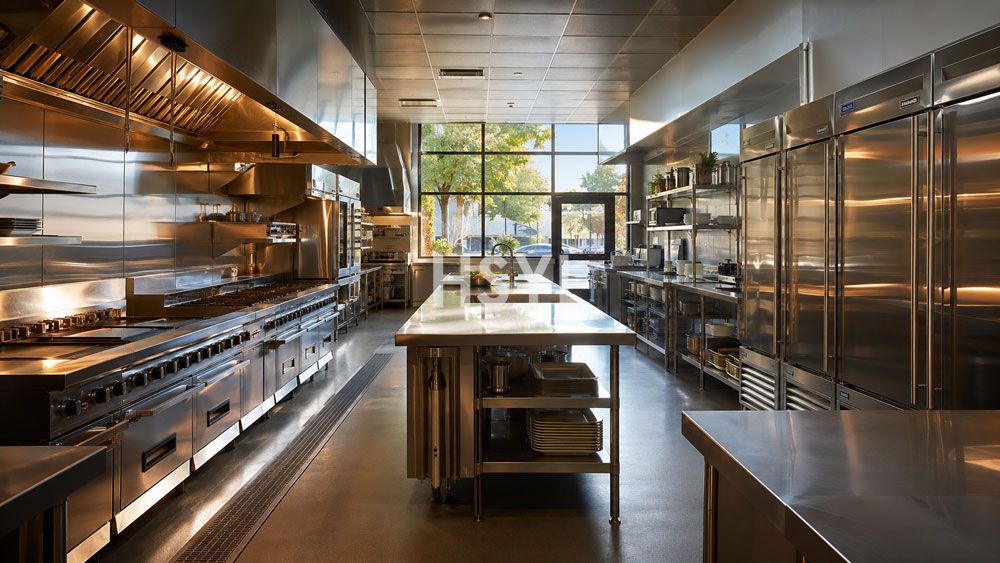
When designing a specialized facility tailored for high-mix, low-volume production, spatial economics dictate the equipment selection. A turnkey small-scale meat processing line must strictly adhere to linear or U-shaped continuous flow models to minimize operator movement. Instead of massive standalone units, the modern engineering approach utilizes highly mobile, interlinked machinery mounted on heavy-duty, locking casters with SUS304 stainless steel frames.
This layout philosophy ensures the raw protein moves unidirectionally from the tempering zone directly through the processing modules without ever backtracking. To maintain rigorous USDA Food Safety and Inspection Service guidelines regarding cross-contamination, the footprint must separate the raw cutting zone from the finished packaging zone, even if the total operational floor space is strictly limited to 50 square meters.
Synchronizing Slicing Kinematics with Dynamic Weighing Protocols
The foundation of any turnkey meat line begins with the mechanical cutting interface. Small-scale operations cannot afford to lose margins to target-weight giveaway or off-cut waste. We specify industrial slicers equipped with independent closed-loop servo motors rather than legacy belt-driven asynchronous motors. This ensures the blade RPM remains mathematically constant, even when processing dense, bone-in proteins or sub-zero tempered blocks.
Operating a slicer with a heavy-duty SUS316L blade (engineered to an HRC rating of 58-60) guarantees a slice thickness tolerance of strictly < 0.5mm. However, precise cutting is rendered obsolete if the weighing process relies on static scales and manual operator adjustment. The slicer's outfeed conveyor must drop the protein directly onto a dynamic inline checkweigher.
Utilizing high-precision electromagnetic force restoration load cells, the checkweigher instantly verifies the portion mass. If a portion falls outside the ± 1% target parameter, an automated pneumatic reject arm diverts the product before it reaches the packaging phase. This mechanical handshake between slicer and weigher instantly recovers up to 3% of total yield previously lost to manual over-packing.

Vacuum Sealing the Yield: Integrated Packaging and Labeling Systems
Once the protein is precisely sliced and verified, it must be hermetically sealed to halt aerobic bacterial growth and extend retail shelf life. For small-scale processing architectures with a CAPEX budget under $50,000, continuous thermoforming systems are often financially unviable. Instead, the engineered solution is an automated double-chamber vacuum packaging machine integrated with a customized outfeed belt.
The vacuum system must be equipped with industrial-grade rotary vane vacuum pumps capable of achieving a residual pressure of < 2 millibars within a 15-second cycle time. Operators simply load the verified meat portions into pre-fabricated barrier pouches and position them on the sealing bars. While chamber one undergoes the vacuum and gas-flush (MAP) cycle, the operator simultaneously loads chamber two, ensuring zero idle mechanical time.
Immediately following the thermal seal, the packages slide onto an automated labeling conveyor. Implementing an inline thermal transfer overprinter (TTO) ensures that critical traceability data—including lot codes, exact weights from the checkweigher, and expiration dates—are applied directly to the film without human intervention. This turnkey food processing line solution completely eradicates the manual bottleneck at the end of the production line.
The Stranded Asset Ratio: A Contrarian Approach to Equipment CAPEX
Procurement managers frequently attempt to lower initial CAPEX by purchasing used, isolated machines from various auctions. This represents a fundamental misunderstanding of processing economics. The true cost of a production line is measured in labor overhead and yield loss, not just the invoice price of the steel.
We calculate line inefficiency using a proprietary formula known as the Systemic Yield Bleed Index (SYBI):
SYBI = (Slicer Output kg/h - Packaging Intake kg/h) * Labor Rate * Operational Hours
If your slicer generates 500kg/h but your manual packaging process can only handle 200kg/h, the remaining 300kg/h sits in bins, losing ambient temperature control. The moisture purge increases, the weight drops, and you are forced to deploy three additional full-time employees just to manually shuttle the product. Investing $35,000 into a fully synchronized, interlinked turnkey system mathematically eliminates this SYBI, frequently achieving total system ROI in less than 8 months solely through labor and yield savings.
| Operational Parameter | Pieced-Together Used Equipment | HSYL Synchronized Turnkey Line |
|---|---|---|
| System Integration (PLC) | Zero (Manual transfer required) | Fully integrated digital handshake |
| Target Weight Giveaway | 3.5% - 5.0% | < 1.0% |
| Labor Requirement (per 500kg/h) | 5 to 7 Operators | 2 to 3 Operators |
| Sanitation Washdown Rating | Inconsistent (Mixed IP ratings) | Uniform IP69K across all modules |
| Expected ROI Timeframe | 18 - 24 Months | 6 - 9 Months |
Breaking the 300kg/h Ceiling: A Regional Deli Processor Case Study
A regional artisanal sausage and deli meat brand in Eastern Europe was struggling to fulfill expanding retail contracts. Their production was artificially capped at 300kg/h. The primary bottleneck was an outdated standalone slicer paired with entirely manual weighing scales and a single, slow vacuum sealer. Cross-contamination risks were escalating due to extended product dwell times on the factory floor.
Our engineering group designed and installed a bespoke, modular small-scale turnkey line with a total capital expenditure of strictly $42,500. We deployed a continuous servo-driven slicer directly feeding an inline checkweigher, which automatically rejected off-weight slices. The verified batches were conveyed directly to a synchronized double-chamber vacuum packer equipped with MAP gas flushing capabilities.
The operational transformation was immediate and absolute. The facility scaled their daily throughput to a stable 800kg/h while utilizing the exact same 50-square-meter room footprint. Target weight giveaway dropped to an unprecedented 0.6%, and the company was able to reassign three packaging operators to higher-value inbound quality control tasks. As an integrated custom food processing equipment manufacturer, we ensured that every single module could be upgraded later without discarding the core line architecture.
3-Point Mechanical Validation Protocol for Facility Upgrades
Before issuing a purchase order for any small-scale processing line, project managers must verify the exact compatibility of the interlinked modules. Execute this technical audit on your proposed layout:
- Belt Speed Synchronization Verification: The outfeed conveyor speed of the slicer must dynamically match the infeed belt speed of the checkweigher. A speed differential greater than 2% will cause the meat slices to fold or stack, instantly triggering a false rejection by the load cells.
- Vacuum Pump Capacity Mapping: Verify the exact cubic meter per hour (m3/h) displacement rating of the vacuum packer's rotary pump. For a line running at 500kg/h, the pump must pull a full vacuum in < 20 seconds; otherwise, the packaging module will permanently bottleneck the upstream slicer.
Unified IP69K Sanitation Auditing: Ensure every single module in the turnkey line—from the slicer's servo housing to the labeler's printhead enclosure—carries a verified IP69K rating. A single machine with a lower IP65 rating will force the sanitation crew to alter their high-pressure CIP procedures, destroying cleaning efficiency.
Stop allowing mismatched, isolated machinery to bottleneck your regional facility's growth and destroy your yield margins. True operational scalability demands precise engineering and unified mechanical synchronization from the first slice to the final thermal label. Contact the HSYL engineering division today to request a customized, modular 2D line layout and a comprehensive CAPEX/ROI analysis explicitly tailored for your target production volumes.
Frequently Asked Questions
What is a turnkey small-scale meat processing line
How much does a small-scale meat processing line cost
Why is a dynamic checkweigher necessary in a meat processing line
Can I expand a small-scale turnkey meat line later
What is the optimal layout for a small meat processing facility
Related Articles

Get professional consultation
Do you have any questions or need technical support regarding the content of this article? Fill out the form below, and our expert team will provide you with professional solutions.