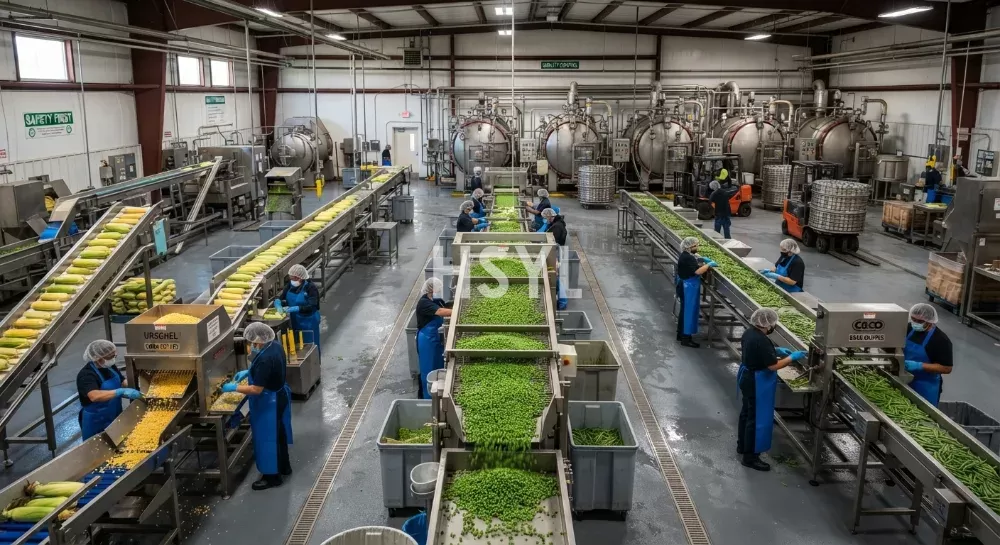
Low-Acid Canned Vegetables: Corn, Peas and Green Beans Processing Line
Direct AnswerA low-acid canned vegetable processing line — corn, peas, and green...


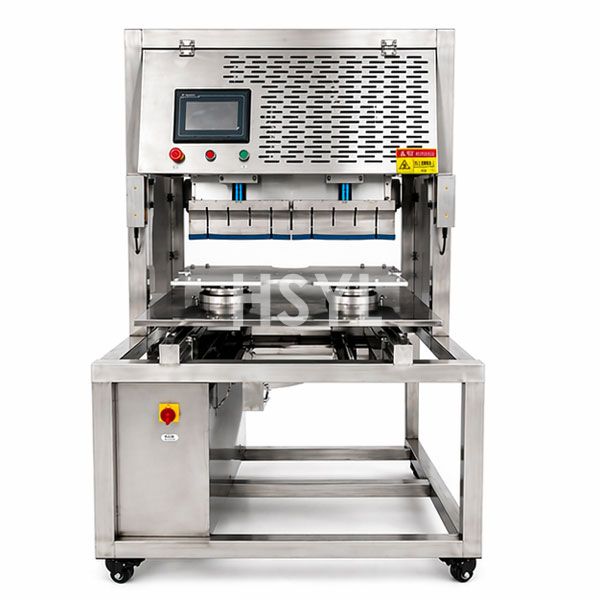
Ultrasonic granola bar cutting machine for sticky oat, nut, and fruit slabs. Clean sidewalls, stable pitch control, SUS304 build. Request a quote.
Granola bars fail at the cutting stage for a simple reason: the slab is cohesive, but not uniform. Oats absorb syrup differently from nuts. Dried fruit remains tacky longer than the binder around it. Seeds create local hardness. A standard knife reacts to those variations by pushing, dragging, and tearing. The result is usually visible at once: smeared edges, pulled inclusions, rounded corners, and a bar that no longer looks as controlled as it did on the forming conveyor.
This ultrasonic granola bar cutting machine is built for that type of slab. It is intended for producers running sticky formulas with honey, glucose syrup, brown rice syrup, malt syrup, or similar binders, especially where visual quality and bar pitch consistency both matter. The machine is typically installed after slab cooling and before primary wrapping, when the product has enough structure to travel but still resists clean separation under ordinary blade pressure.
Cooling and cutting settings should be evaluated together for each granola recipe. Record the slab temperature and firmness at the cutter, then compare edge smear, loose crumbs and inclusion displacement under repeatable conditions. If cooling time is changed, check both the cutting result and how the bars handle during transfer to packaging. The aim is to establish a stable process for the actual binder and inclusion mix.
Ultrasonic cutting addresses those defects by reducing friction at the blade interface. The product is separated with less dragging force, which helps the slab behave more like a controlled cut and less like a pulled mass.
Not every snack bar behaves the same in the cutter. Granola bars are usually more particulate and visually inclusion-driven than dense nutrition bars. That makes sidewall appearance especially important. Buyers in this segment often care about how the bar looks through the film as much as they care about weight control.
| Product Type | Typical Structure | Main Cutting Risk | Why Ultrasonic Helps |
|---|---|---|---|
| Classic granola bar | Rolled oats with syrup binder | Edge smear and corner drag | Reduces sticking at the cut face |
| Fruit and nut bar | High whole-inclusion content | Inclusion breakout | Improves cleaner separation around particulates |
| Seed bar | Dense seed matrix with syrup | Irregular sidewall | Helps maintain straighter bar geometry |
| Chocolate-drizzled cereal bar | Tacky top surface after cooling | Surface pickup on blade | Shortens contact drag during the stroke |
| Model | Machine Format | Max Slab Width | Product Thickness | Capacity | Cutting Speed | Installed Power | Voltage | Dimensions | Material | Weight |
|---|---|---|---|---|---|---|---|---|---|---|
| UGB-400 | Single-lane servo cross-cutter | 400 mm | 10-35 mm | 180-320 kg/h | 80-140 cuts/min | 4.5 kW | 380V / 50Hz / 3Ph, customizable | 2400 x 1250 x 1800 mm | SUS304 frame, titanium blade, food-grade PU conveyor | 760 kg |
| UGB-800 | Dual-lane servo shuttle | 800 mm | 10-40 mm | 350-650 kg/h | 140-220 cuts/min | 6.9 kW | 380V / 50Hz / 3Ph, customizable | 3250 x 1580 x 1880 mm | SUS304 frame, titanium blade, optional SUS316L contact parts | 1160 kg |
| UGB-1200 | Inline multi-lane cutting cell | 1200 mm | 12-45 mm | 700-1000 kg/h | 220-300 cuts/min | 9.8 kW | 380V / 50Hz / 3Ph, customizable | 4350 x 1820 x 1960 mm | SUS304 frame, titanium blade, optional SUS316L contact parts | 1680 kg |
Actual output depends on slab temperature, binder ratio, inclusion load, target pitch, and whether longitudinal slitting is integrated upstream.
This cutter is generally not bought as an isolated bench machine. It is specified as part of wider Snack Food Production Solutions, then linked downstream to a Multifunctional Food Packaging Machine or equivalent wrapper once bar geometry is stable enough for transfer.
That integration matters because sticky bars can look acceptable on the cutting bed and still fail at discharge if conveyor timing and transfer pitch are wrong. HSYL can coordinate slab width, infeed height, discharge direction, signal exchange, and wrapper interface so the cut section does not become the unstable point in the line.
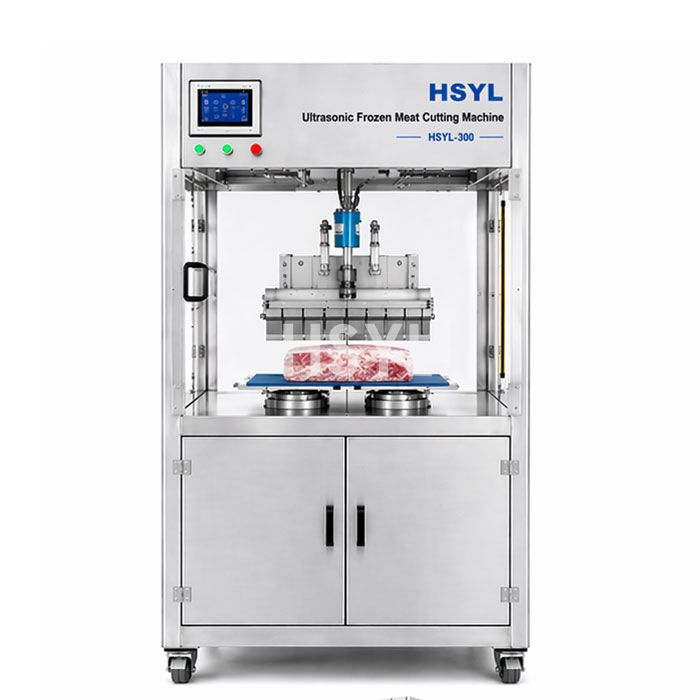
The cutting head uses a digital ultrasonic generator, piezoelectric transducer, tuned booster, and titanium blade. Electrical energy is converted into high-frequency mechanical vibration and delivered to the blade edge. In granola applications, the key benefit is reduced drag through a tacky, inclusion-rich matrix.
The positioning job is handled separately. Servo conveyors and encoder feedback move the slab to the cut point, product sensors confirm position, and the PLC executes the stroke based on stored pitch settings. This separation between blade dynamics and indexing logic improves repeatability and makes recipe changeover more predictable.
Because sticky bars often involve allergens and sugar residues, sanitation access is important. The machine is built with stainless food-contact areas, quick-access design in the food zone, and a layout intended for practical cleaning under HACCP-based routines. CE-oriented documentation, commissioning support, spare parts, and international startup assistance are available for export projects.
Send HSYL the incoming slab width and thickness, finished bar dimensions, binder type and approximate proportions of oats, nuts, seeds and dried fruit. Include the largest inclusion size and identify whether nuts are whole, chopped or sliced. These details help define what the proposed cutting setup needs to handle.
Provide the product temperature at cutting, required hourly output and details of existing slitting and wrapping equipment. Photos of loose crumbs, pulled-out inclusions or smeared edges are particularly useful. Request a quotation and sample evaluation that address these specific defects, with the proposed equipment scope and acceptance criteria stated clearly.


Direct AnswerA low-acid canned vegetable processing line — corn, peas, and green...
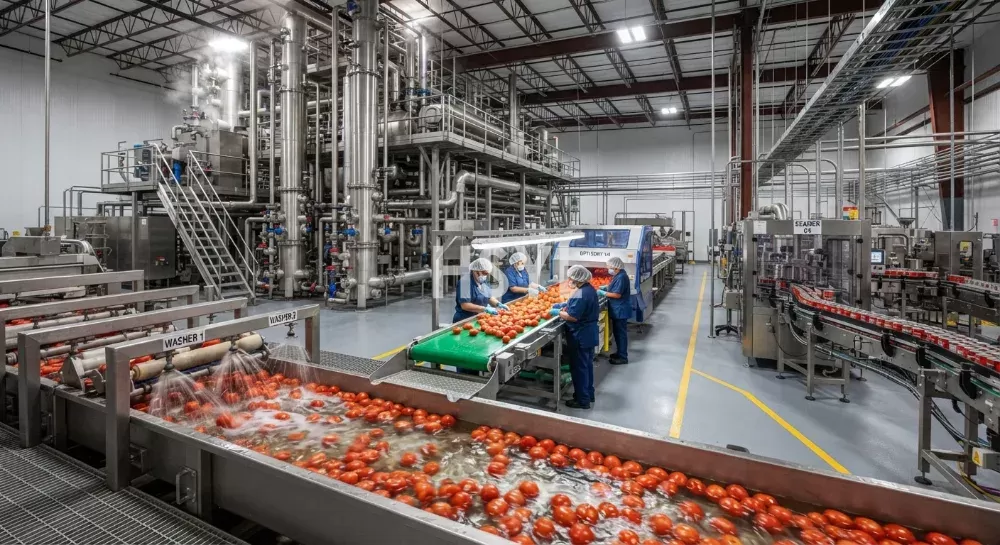
Direct AnswerA tomato products canning line converts fresh tomatoes into four di...
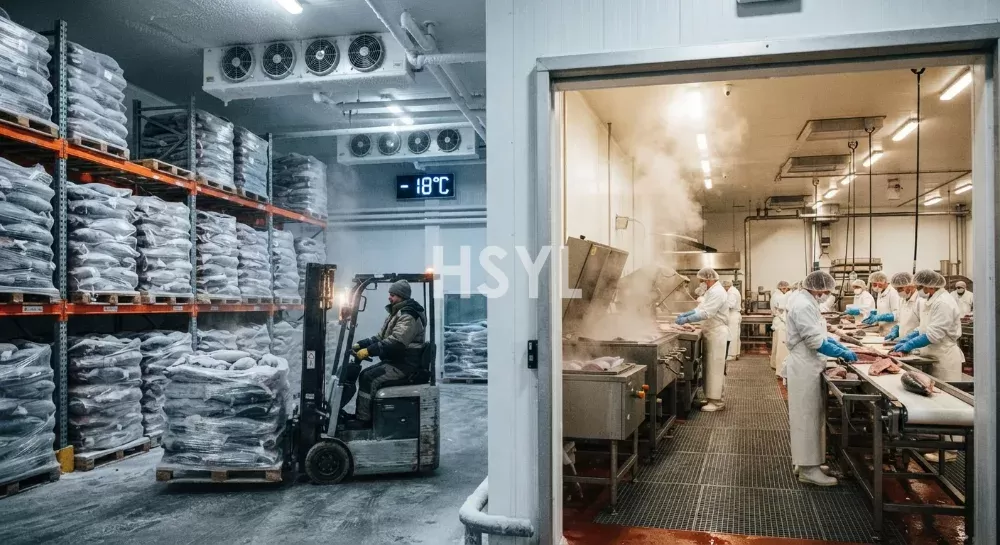
Direct AnswerThe most expensive asset in a fish cannery is not the retort or the...
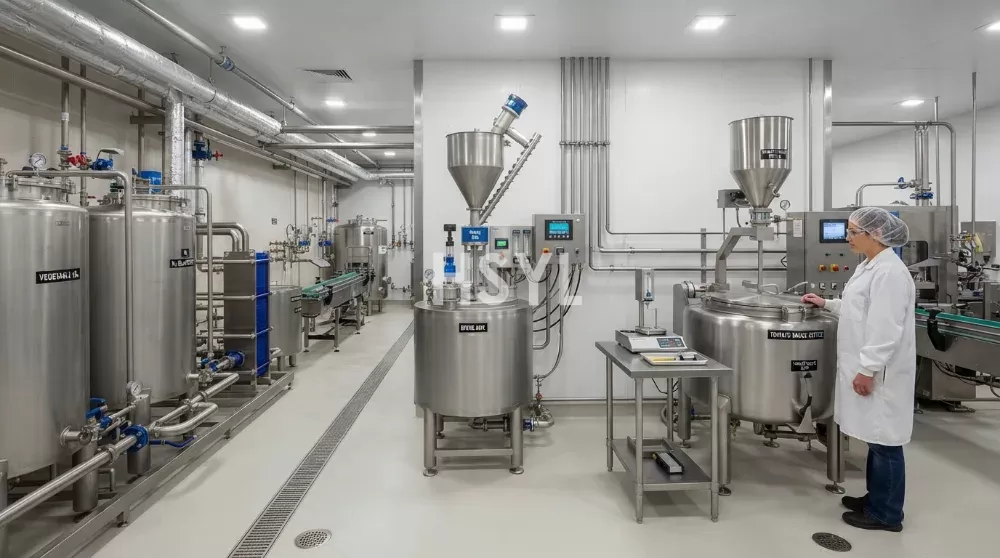
The filling medium — the liquid that fills the void spaces between the fish piec...