
Pneumatic Flange and Can Seam Stripping Gauge: Mass Flow Kinematics & Sizing
Engineering guide for Seam Stripping Gauge focusing on mass flow kinematics & si...
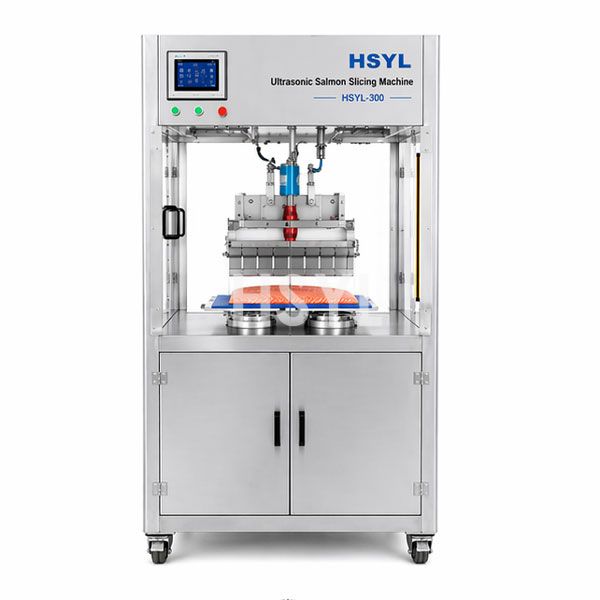
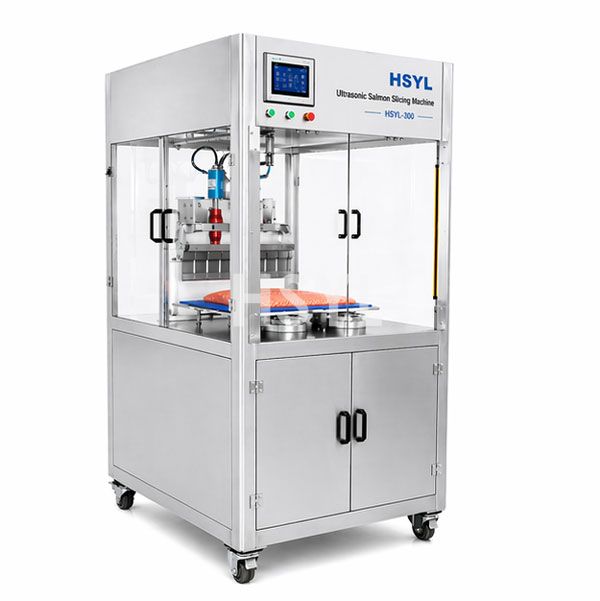
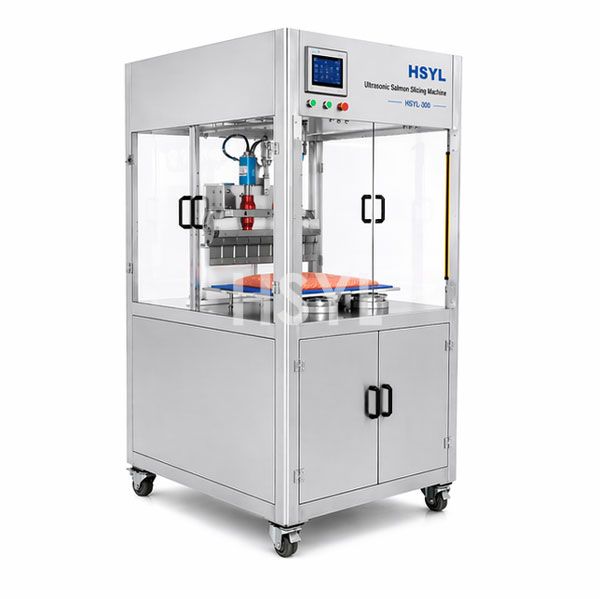

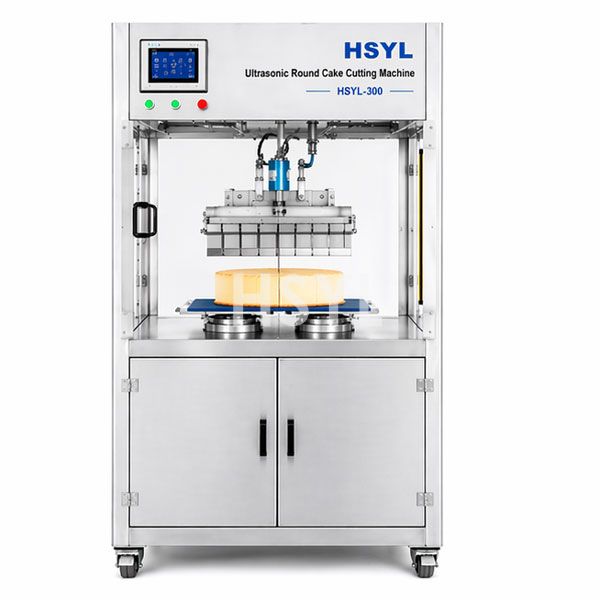
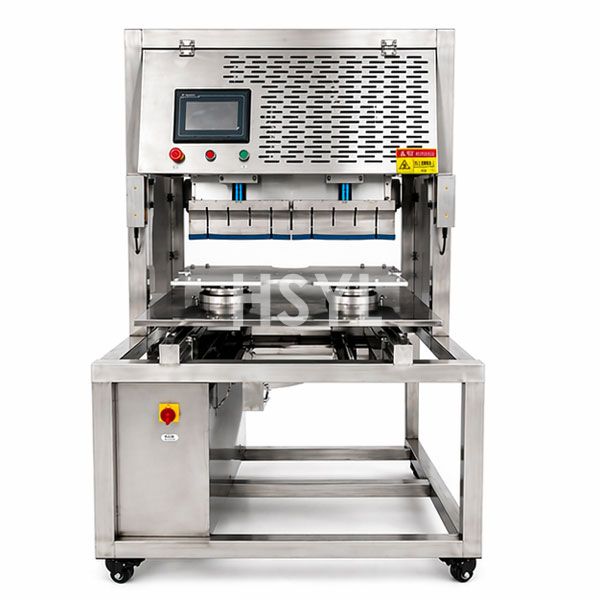
Ultrasonic slicing for chilled and cold-smoked salmon, configured around fillet dimensions, slice presentation and downstream packing requirements.
Oily flesh, soft muscle structure, and tight retail presentation standards make salmon one of the harder products to slice cleanly at industrial speed. This ultrasonic salmon slicing machine is engineered for chilled fresh fillets, cold-smoked sides, and trimmed salmon loins where processors need stable slice thickness, less smear on the cut face, and a cleaner transfer to weighing or packing. By combining a 20 kHz titanium blade with servo-controlled indexing, the machine reduces drag on the product surface and helps keep slice appearance consistent from the first pack to the end of the shift.
| Specification | Standard Configuration |
|---|---|
| Model | HS-USS600 |
| Capacity | 100-240 kg/h |
| Slice Rate | 80-160 slices/min |
| Product Format | Chilled salmon fillets, cold-smoked sides, trimmed loins, portion bars |
| Product Temperature Window | -2°C to 4°C |
| Slice Thickness Range | 2-12 mm |
| Recommended Fillet Length | 250-800 mm |
| Recommended Fillet Width | 80-220 mm |
| Max Product Height | 45 mm |
| Lane Format | Single lane with straight or shingled discharge |
| Ultrasonic Frequency | 20 kHz auto-tuning generator |
| Control System | Siemens PLC, 10 inch HMI, servo indexing, photoelectric product sensing |
| Power | 3.5 kW |
| Voltage | 380V, 50Hz, 3 phase |
| Compressed Air | 0.6-0.8 MPa, 120 L/min |
| Material | SUS304 frame, titanium alloy blade, SUS316L optional for salt-contact parts |
| Dimensions | 2350 x 950 x 1620 mm |
| Weight | 650 kg |
Slice rate and hourly weight output describe different aspects of performance. Confirm both using the same salmon product, slice thickness, cutting angle and discharge arrangement, with loading gaps and routine stops recorded.
Slice appearance: Ultrasonic blade vibration can reduce sticking and dragging at the cut surface. Evaluate edge tearing, surface smearing and slice integrity on representative chilled or cold-smoked salmon.
Thickness control: Controlled product feeding helps repeat the selected cutting pitch. Fillet support and positioning remain important where the loin, belly and tail vary in shape.
Portion weight: Equal slice thickness does not produce identical weights across a naturally tapered fillet. Define any weighing, batching or weight-based portioning requirements separately.
Product support: Match guides and hold-down settings to the fillet profile. The product should remain stable without excessive compression or displacement during cutting.
Discharge presentation: Specify whether slices should leave individually, in groups or in an overlapping arrangement. Confirm the required handling functions in the proposed configuration.
Where skin removal is required, review the upstream automatic fish skinning machine and the transfer arrangement between preparation and slicing.
For broader projects, the fish processing production line provides a starting point for discussing preparation, conveying and downstream handling.
The cutting system uses an ultrasonic generator, piezoelectric transducer stack, booster, and titanium knife to create longitudinal blade vibration at 20 kHz. In practical production terms, that high-frequency oscillation lowers contact resistance between blade edge and salmon flesh. Instead of pushing and dragging the fat layer, the knife separates the product with less deformation at the slice face.
A servo-driven infeed indexes each fillet according to the programmed slice pitch. Photoelectric sensing confirms product position, while the hold-down assembly keeps the loin stable during the cut stroke. This matters on salmon because thickness can change quickly between the back muscle and belly section. The control logic keeps the product feed, blade stroke, and discharge timing synchronized, which helps maintain a more even slice profile across the full fillet length.
The standard control package includes PLC recipes for thickness, stroke frequency, conveyor speed, and discharge spacing. Pneumatic functions are used for guide adjustment and auxiliary stabilization rather than for the primary cut, which keeps motion more repeatable. For plants that need higher presentation consistency, the outfeed can be configured for straight placement, grouped discharge, or shingled arrangement before manual loading or automatic packing.
Define the required slice thickness, face dimensions and presentation on the board or tray. If overlapping slices are required, specify the overlap and grouping arrangement.
Shingled discharge describes how slices overlap. Interleaving sheets, weighing groups and loading finished packs are separate functions that should be identified in the equipment scope.
Provide the required portion drawing and representative fillet dimensions. Thin slices and thicker portions can require different cutting geometry, product support and handling arrangements.
Confirm the available cutting angle and thickness range for the selected configuration. Recipe storage does not by itself establish adjustable-angle cutting or automatic weight control.
Trial the main products in the intended production schedule. Include variation in fillet height, firmness and preparation, then record the adjustments needed between products.
Assess usable slices, head and tail pieces, damaged product and residue separately. This gives a more useful picture of yield than a single headline waste percentage.
Record the product’s actual temperature and firmness at slicing. Use trials to establish conditions that support clean separation and stable transfer without excessive compression or breakage.
The cutting temperature window is an equipment application condition. Storage, handling time and food-safety controls must follow the plant’s product-specific procedures.
For ready-to-eat production, include hygienic zoning, cleaning access and sanitation verification in the equipment review. Ultrasonic slicing is a portioning operation and does not replace the plant’s food-safety controls.
Send HSYL your salmon format, preparation method, fillet dimensions, target slice thickness, cutting angle and pack presentation. Include required output and the layout of adjacent equipment.
The proposal should identify:
The selected machine configuration and supported cutting formats.
Infeed, discharge and downstream handling functions.
Utilities, installation interfaces and cleaning provisions.
Trial products, acceptance criteria and documentation.
Commissioning, training and spare-parts arrangements.
Request a representative cutting trial to assess slice appearance, usable output and transfer into your intended packing workflow.


Engineering guide for Seam Stripping Gauge focusing on mass flow kinematics & si...
Engineering guide for Tuna Oil Doser focusing on mass flow kinematics & sizing: ...

Engineering guide for Basket Shuttle Car focusing on mass flow kinematics & sizi...

Engineering guide for Club Can Seamer focusing on mass flow kinematics & sizing:...