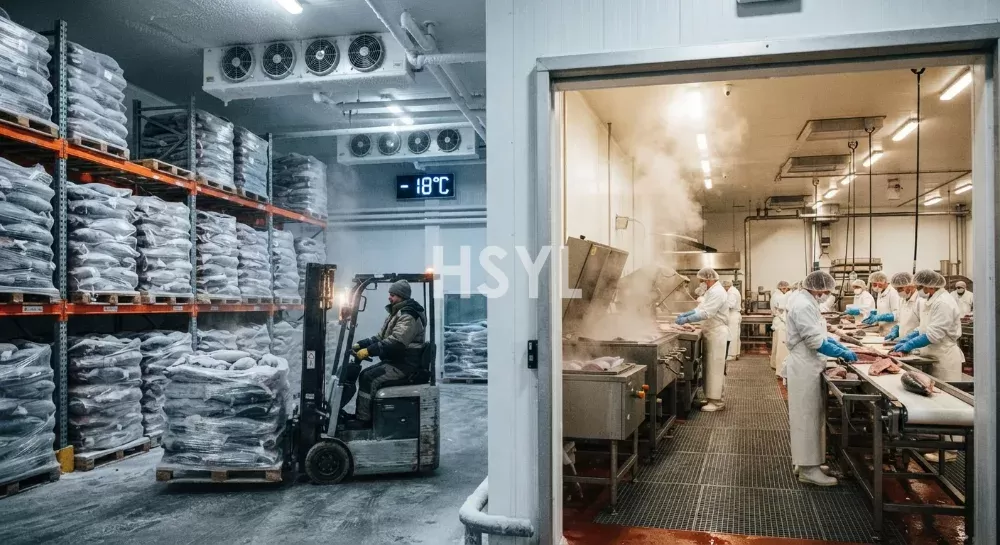
Seasonal Fish Canning: Cold Storage, Multi-Species Rotation and Year-Round Line Utilization
Direct AnswerThe most expensive asset in a fish cannery is not the retort or the...


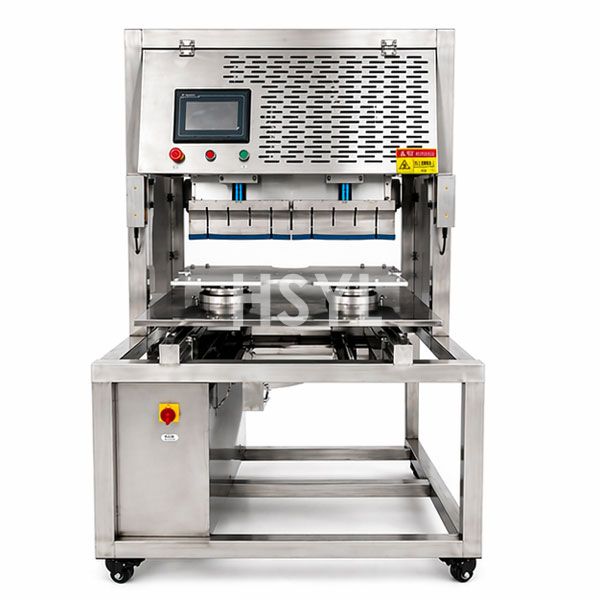
Ultrasonic wrap cutting machine for tortilla wraps and sandwich rolls. Assess straight or diagonal cuts, filling stability and packaging-line integration.
Wrap cutting becomes unreliable when the product is built for shelf appeal rather than mechanical stability. A tortilla may be thin, elastic, and slightly tacky. The filling may include mayonnaise, cream cheese, chicken, tuna, vegetables, or sauces that migrate as soon as a conventional blade starts dragging through the roll. This ultrasonic wrap cutting machine is designed for that exact operating window. It portions chilled wraps, pinwheels, burrito-style rolls, lavash wraps, and sandwich rolls with a cleaner cross-section and less filling displacement.
The machine is intended for ready-to-eat production where the cut face is visible to the buyer and portion repeatability matters at the packaging station. It is especially effective on diagonal half-cuts and multi-piece retail presentations where mechanical blades often compress the wrap, split the tortilla seam, or pull the filling out of position.
| Model | Machine Format | Product Range | Capacity | Approx. Capacity | Installed Power | Air Requirement | Cut Accuracy | Dimensions | Material | Weight |
|---|---|---|---|---|---|---|---|---|---|---|
| UWC-800 | Single-lane servo index | Wrap dia. 25-70 mm, length 100-220 mm | 600-900 pcs/h | 120-240 kg/h | 4.0 kW | 0.5-0.7 MPa, 100 L/min | ±1.5 mm | 2100 x 1200 x 1800 mm | SUS304 frame, titanium blade, food-grade PU conveyor | 690 kg |
| UWC-1800 | Dual-lane servo shuttle | Wrap dia. 25-80 mm, length 110-240 mm | 1,400-1,800 pcs/h | 280-540 kg/h | 5.8 kW | 0.5-0.7 MPa, 160 L/min | ±1.5 mm | 2850 x 1500 x 1880 mm | SUS304 frame, titanium blade, optional SUS316L contact parts | 980 kg |
| UWC-3000 | Inline multi-lane cutting cell | Wrap dia. 30-85 mm, length 120-260 mm | 2,400-3,000 pcs/h | 480-900 kg/h | 8.6 kW | 0.5-0.7 MPa, 240 L/min | ±1.2 mm | 3980 x 1720 x 1940 mm | SUS304 frame, titanium blade, optional SUS316L contact parts | 1420 kg |
Actual output depends on wrap diameter, filling density, tortilla thickness, cut angle, number of pieces per product, and the stability of the infeed orientation.
In chilled ready-to-eat production, the cutter is commonly positioned after assembly and alignment from a Single Row Bread Sandwich Production Line or similar wrap preparation conveyor, then discharged toward a Multifunctional Food Packaging Machine for final pack-out. That placement reduces manual handling between wrapping, portioning, and packaging, which is where tortilla seam breakage and filling shift often start.
The generator supplies energy to a transducer, which converts it into mechanical vibration transmitted through the ultrasonic assembly to the cutting blade. This vibration can reduce resistance and sticking as the blade passes through the tortilla and filling.
Product positioning and support are equally important. The wrap must arrive at the intended orientation, remain stable during the cut and release without disturbing the exposed filling. Guides and hold-down settings should be assessed against the wrap diameter, seam position and filling consistency.
The operating sequence should coordinate:
Infeed and alignment: Present each wrap at the required position and orientation.
Product support: Limit movement during cutting while avoiding excessive compression.
Cutting and withdrawal: Apply settings suited to the tortilla, filling and required cut face.
Discharge: Transfer the portions in the orientation required by the packaging operation.
For diagonal cuts, confirm whether the supplied configuration uses a fixed, manually adjustable or servo-adjustable angle. Stored recipes can recall supported settings, while physical adjustments depend on the machine design.
Specify the included controls, guarding, interlocks and any optional product-rejection functions in the quotation.
This machine is intended for factories where the appearance of the cut face directly influences sell-through. It is well suited to tortilla wraps, lavash wraps, flatbread rolls, chicken Caesar wraps, tuna wraps, breakfast wraps, vegetarian wraps, deli-style sandwich rolls, and pinwheel products supplied into convenience retail, foodservice, airline catering, or central kitchen distribution.
Evaluate cutting at the product temperature used in your actual production process. Tortilla flexibility, filling consistency, sauce distribution and wrap tightness all affect the result, so a single temperature range should not be treated as suitable for every recipe.
Inspect the portions immediately after cutting and again after transfer into the intended tray or packaging format. Check filling displacement, tortilla seam opening, sauce smear and cut-face orientation. Trials should include several consecutive products and representative variations in wrap diameter and filling distribution.
When supplied as part of a broader turnkey project, HSYL can coordinate infeed height, lane count, belt width, product pitch, signal exchange, and discharge orientation so the cutter does not become an isolated machine that disrupts the rest of the ready-to-eat line.
The machine is built for food-plant use rather than light-duty tabletop processing. Product-contact surfaces are stainless steel, transitions are arranged for practical cleaning, and the food zone is designed for routine sanitation under HACCP-based operating procedures. Depending on the customer market and documentation requirement, HSYL can support CE documentation, BRCGS-oriented hygienic design expectations, and installation packages for plants supplying regulated retail and foodservice channels.
Standard electrical supply is 380V, 50Hz, 3-phase, with customization available for 220V, 230V, 400V, 415V, or 480V and either 50Hz or 60Hz. Before shipment, the machine can be factory-tested for servo motion, blade function, safety interlocks, and recipe verification. For international projects, HSYL supports layout confirmation, FAT video review, commissioning guidance, operator training, and spare-parts planning.
If you are evaluating wrap cutting equipment, the most useful data is not only the wrap length. Please provide the tortilla type, finished diameter, filling composition, product temperature at cutting, target cut angle, pieces per wrap, hourly output, and the packaging method after cutting. Those factors determine the correct lane format, blade configuration, and discharge arrangement much more accurately than a generic equipment inquiry.
Send your sample details to request a quotation, line layout, or test-cut video. That is usually the fastest way to confirm whether the machine will maintain cross-section quality through an actual production shift rather than only in a short demonstration.


Direct AnswerThe most expensive asset in a fish cannery is not the retort or the...
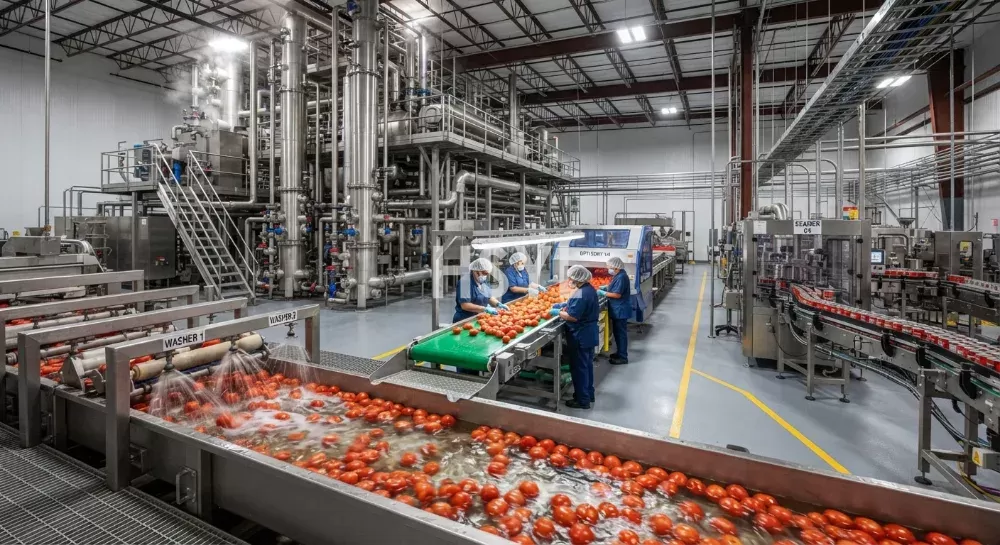
Direct AnswerA tomato products canning line converts fresh tomatoes into four di...
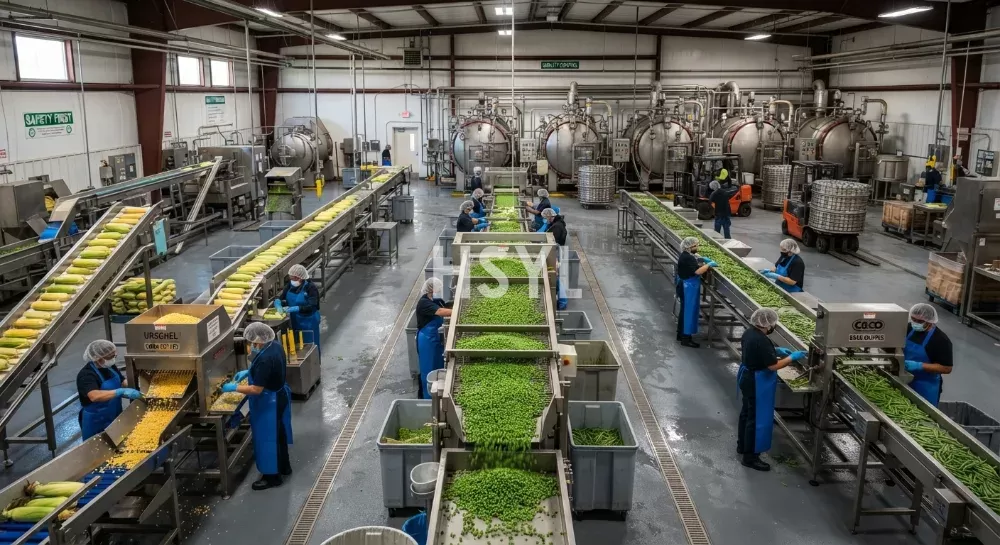
Direct AnswerA low-acid canned vegetable processing line — corn, peas, and green...
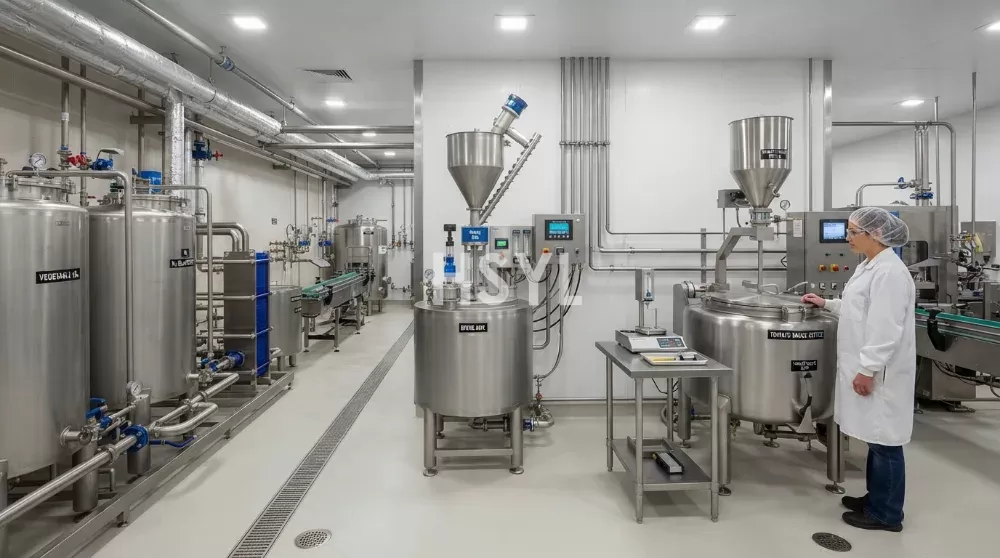
The filling medium — the liquid that fills the void spaces between the fish piec...