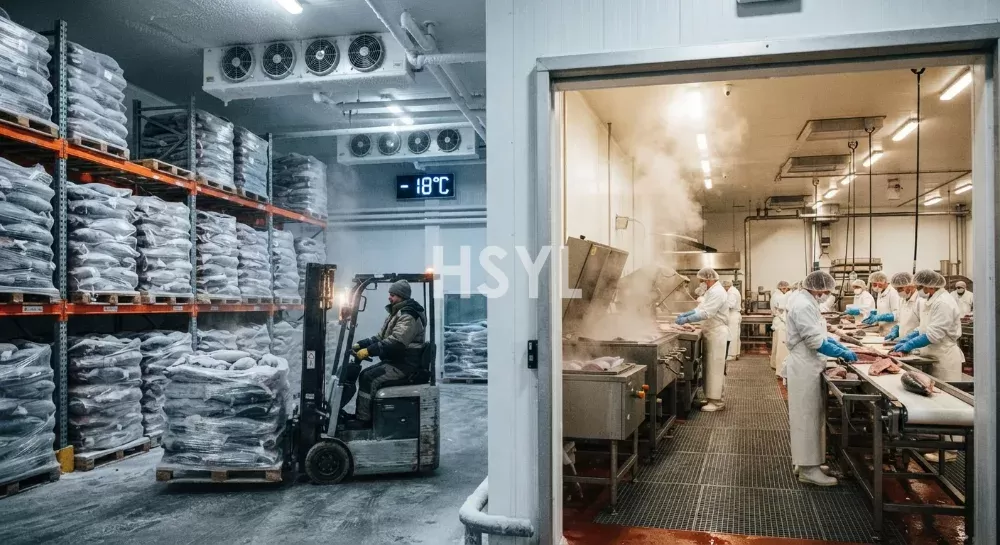
Seasonal Fish Canning: Cold Storage, Multi-Species Rotation and Year-Round Line Utilization
Direct AnswerThe most expensive asset in a fish cannery is not the retort or the...


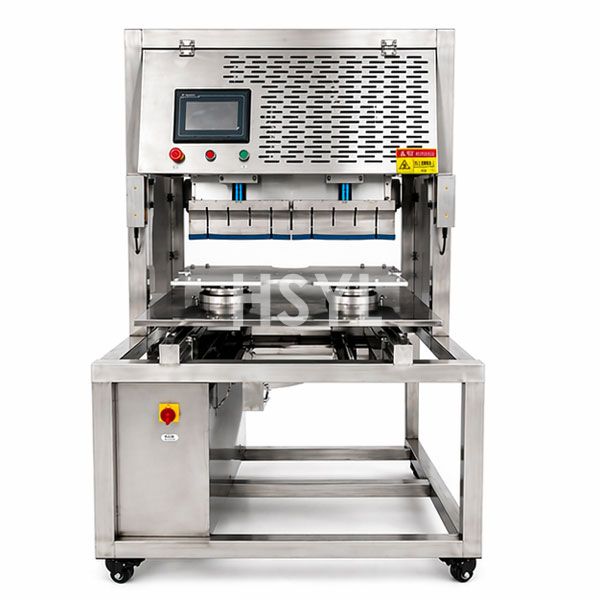
Ultrasonic energy bar cutting machine for dense protein and date-based bars. Stable bar pitch, cleaner cuts, turnkey support. Request quote.
When buyers evaluate an energy bar cutter, the real question is not whether the machine can cut a slab. Almost any machine can do that in a short demonstration. The real question is whether it can hold bar geometry, wrapper stability, and weight control across a long production run on a dense, elastic formula. That is the problem this ultrasonic energy bar cutting machine is designed to solve.
It is intended for manufacturers producing functional bars with higher density and greater internal cohesion than classic granola products. Typical applications include protein bars, date bars, meal replacement bars, layered nutrition bars, and nut-butter based bars. These products are less about visible oat structure and more about resistance, elasticity, and downstream wrapping precision.
| Selection Factor | Why It Matters | Typical Buyer Concern |
|---|---|---|
| Bar density | Dense formulas respond poorly to mechanical compression | Will the sidewall stay straight? |
| Binder behavior | Date paste, protein syrup, and nut butter all cut differently | Will the blade drag or smear? |
| Target pitch | Bar length affects giveaway and wrapper timing | Can the machine hold repeatable cut length? |
| Coatings and layers | Chocolate bottoms and caramel layers are easily damaged | Will coated bars survive transfer? |
| Line integration | The cutter must match discharge and wrapper conditions | Can it run continuously with our packaging section? |
| Model | Machine Format | Max Slab Width | Product Thickness | Capacity | Cutting Speed | Installed Power | Voltage | Dimensions | Material | Weight |
|---|---|---|---|---|---|---|---|---|---|---|
| UEB-450 | Single-lane servo cross-cutter | 450 mm | 12-35 mm | 220-380 kg/h | 70-130 cuts/min | 4.8 kW | 380V / 50Hz / 3Ph, customizable | 2480 x 1280 x 1810 mm | SUS304 frame, titanium blade, food-grade PU conveyor | 790 kg |
| UEB-900 | Dual-lane servo shuttle | 900 mm | 12-40 mm | 420-760 kg/h | 130-210 cuts/min | 7.2 kW | 380V / 50Hz / 3Ph, customizable | 3360 x 1600 x 1890 mm | SUS304 frame, titanium blade, optional SUS316L contact parts | 1210 kg |
| UEB-1300 | Inline multi-lane cutting cell | 1300 mm | 15-45 mm | 820-1100 kg/h | 210-290 cuts/min | 10.4 kW | 380V / 50Hz / 3Ph, customizable | 4460 x 1860 x 1970 mm | SUS304 frame, titanium blade, optional SUS316L contact parts | 1760 kg |
The cutting condition should be established for the actual energy bar formula. Protein blends, date paste, nut butter and coating layers can respond differently as the product cools. Record the product temperature at the cutter and assess edge quality, sticking and shape retention at that condition. Use the trial results to agree on a working temperature range for the product and proposed machine configuration.
The reason ultrasonic cutting works well here is not marketing language. It is a mechanical fact. The blade is driven by a digital ultrasonic generator, piezoelectric transducer, tuned booster, and titanium sonotrode assembly. That vibration reduces friction at the point of penetration. On dense protein or date-based bars, less friction means less forward drag, less compression, and a more stable cut face.
For buyers, the visible result is only part of the benefit. The less obvious benefit is more stable pitch at the wrapper. When bar geometry varies less, downstream timing becomes easier to hold, and line stoppages caused by misfeed or unstable transfer can be reduced.
For slab-based energy bar production, longitudinal slitting sets the bar width, while transverse cutting sets the bar length. A quotation for an ultrasonic cross-cutter should therefore identify whether upstream slitting, edge trimming and lane separation are included or supplied separately.
Tell HSYL whether the incoming product is a full-width slab, pre-slit strips or individual ropes. Include the required finished bar dimensions and the arrangement of any existing slitting equipment. This helps define the cutting section and its connection to the wrapper without duplicating equipment already installed.
This cutter is normally engineered into broader Snack Food Production Solutions and then discharged toward a Multifunctional Food Packaging Machine or similar downstream packer. That is a more useful way to evaluate the machine than treating it as a standalone cutter, because dense nutrition bars often reveal problems only when transfer and wrapping begin.
The servo indexing system, encoder feedback, and PLC logic are used to hold repeatable pitch and synchronize the cut cycle with the line. Product presence sensors confirm the slab position before the stroke. The HMI stores recipes for bar length, conveyor speed, stroke timing, and line interface settings. That allows faster switching between SKUs such as a 45 g sports bar, a 60 g meal-replacement bar, and a layered coated bar.
For many buyers, the purchase decision is influenced as much by operating burden as by cutting quality. Energy bar plants often run allergen-heavy formulations, including peanut, dairy, soy, and plant-protein systems. That makes access for sanitation and predictable maintenance intervals important.
The machine is intended for industrial duty rather than intermittent lab production. Electrical supply is typically 380V, 50Hz, 3-phase, with customization for 220V, 230V, 400V, 415V, or 480V and either 50Hz or 60Hz.
If your product is a dense protein or date-based energy bar, the most useful inputs are slab width, target bar weight, binder type, temperature at cutting, presence of coating layers, desired pitch, hourly output, and wrapper details. Those factors determine whether the machine should be sized around cutting speed, transfer stability, or multi-lane output.
Request a quotation, a layout proposal, or a sample cut trial based on your actual formula. That is the clearest way to confirm whether the machine will hold geometry and downstream stability under real production conditions.


Direct AnswerThe most expensive asset in a fish cannery is not the retort or the...
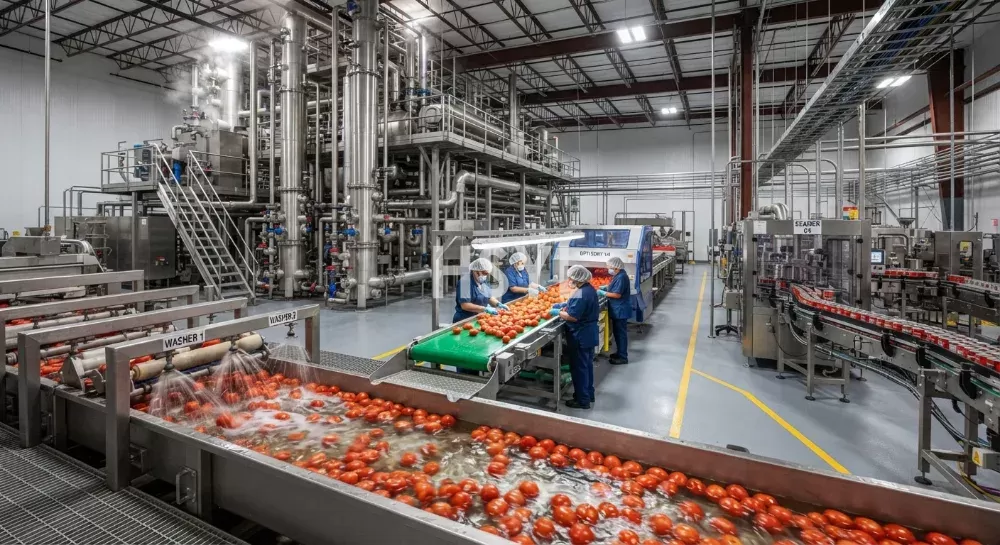
Direct AnswerA tomato products canning line converts fresh tomatoes into four di...
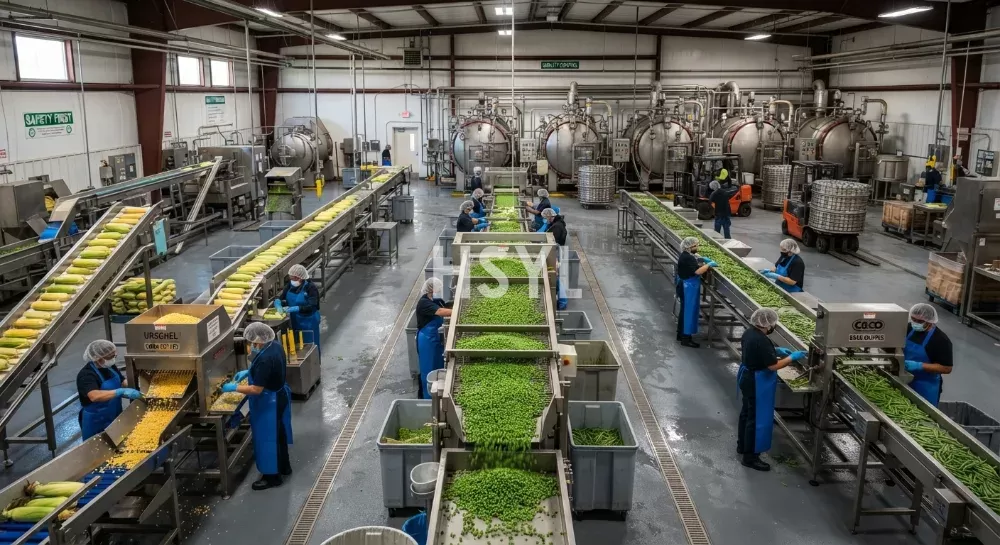
Direct AnswerA low-acid canned vegetable processing line — corn, peas, and green...
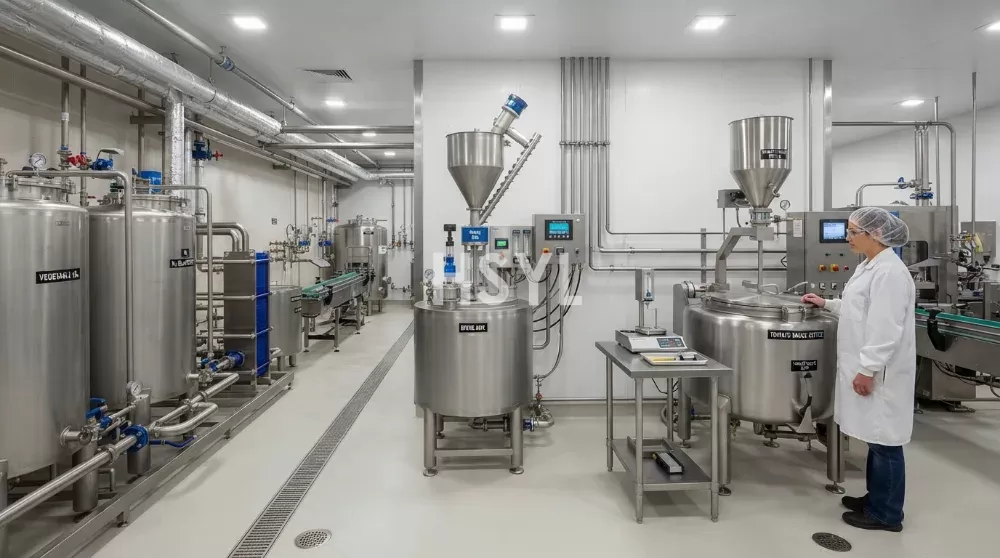
The filling medium — the liquid that fills the void spaces between the fish piec...