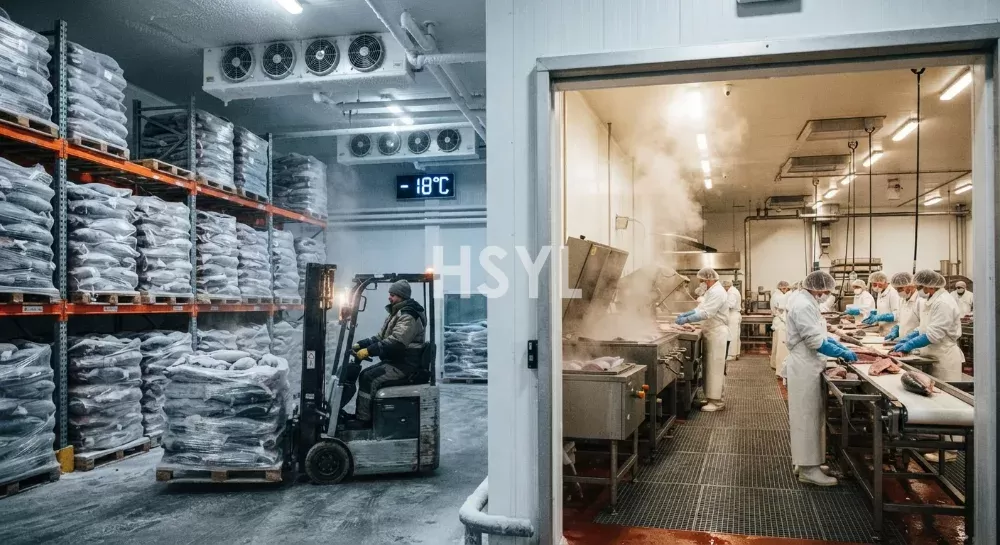
Seasonal Fish Canning: Cold Storage, Multi-Species Rotation and Year-Round Line Utilization
Direct AnswerThe most expensive asset in a fish cannery is not the retort or the...

The HSYL turnkey fish processing production line delivers a continuous 2000-3000 kg/h throughput. Integrates automated descaling, evisceration, and filleting.
The Industrial Automatic Fish Processing Production Line is a comprehensive, centralized mechanical system engineered to handle large-scale aquatic processing continuously. By integrating automated descaling, decapitation, evisceration, filleting, and multi-stage washing into a single synchronized workflow, this turnkey architecture drastically minimizes manual labor dependencies. It enforces strict HACCP sanitary protocols by eliminating cross-contamination points between raw intake and final output, serving as the core infrastructure for commercial seafood facilities focused on yield optimization and throughput standardization.

| Specification Parameter | Technical Data |
|---|---|
| Model Configuration | HSYL-FPL-3000 Turnkey Line |
| Processing Capacity | 2000 - 3000 kg / h |
| Applicable Species | Tilapia, Salmon, Mackerel, Carp, Seabass |
| Raw Material Weight Range | 200 - 3000 g per fish |
| Total Installed Power | Approx. 45 kW |
| Standard Power Supply | 380V / 50Hz / 3 Phase (Customizable) |
| Water Consumption | 15 - 20 m3 / h (with integrated recycling manifold) |
| Line Footprint (L x W x H) | Approx. 18,500 x 3,200 x 2,200 mm |
| Material Grade | SUS304 / 316L Food-Grade Stainless Steel |
| Control Architecture | Siemens PLC & Omron VFD Network |
The operational logic of the HSYL-FPL-3000 follows a strict linear thermodynamic and kinetic flow. Raw chilled fish are loaded onto the primary infeed conveyor, where a continuous overhead spray removes superficial slime. The material enters the automated descaling chamber, utilizing counter-rotating stainless steel wire brushes that strip scales without bruising the underlying dermal layer.
Following scale removal, precision sensors trigger the pneumatic decapitation blades, which execute a V-cut to preserve maximum shoulder meat. The fish are then mechanically centered over the evisceration track. High-speed circular blades open the ventral axis, while a synchronized vacuum manifold extracts the viscera and bloodline. The opened fish proceed through an intense pressurized spray wash before entering the filleting module. Here, highly tensioned parallel blades separate the bilateral muscle blocks from the central skeletal frame. The entire sequence is monitored by optical sensors linked to the central PLC, automatically halting individual modules if misalignments are detected to prevent equipment jamming.
In high-capacity aquaculture processing centers handling tilapia or salmon, sustaining continuous throughput is a primary operational objective. Operating at a standard calibration of 2500 kg per hour, this turnkey setup successfully processes over 20 metric tons of raw material per standard 8-hour shift. The integrated water recycling system filters and reuses mechanical flush water for the initial descaling phase, significantly lowering municipal utility costs for large-scale operations.
When processing fish intended for premium export markets, the physical appearance of the fillet is critical. Because the line relies on synchronized V-belt tension rather than brute compression rollers to move the fish through the cutting stations, cellular bruising is entirely mitigated. The resulting fillets maintain strict geometrical uniformity, which is a mandatory prerequisite when loading raw materials into subsequent automated skinners or precise portioning equipment.
Hongsheng Yuanlin (HSYL) conceptualizes, manufactures, and commissions complex turnkey processing lines according to rigorous CE and OSHA machinery directives. We integrate internationally available pneumatic cylinders, VFDs, and electrical contactors, ensuring your regional maintenance departments can procure replacement parts locally and avoid operational downtime associated with proprietary OEM components.
Prior to shipment, HSYL executes a comprehensive Factory Acceptance Test (FAT) utilizing your specified aquatic species to verify throughput capacity. Furthermore, our deployment protocol includes dispatching senior mechanical engineers to your facility for global site installation, module synchronization, PLC calibration, and rigorous operator training covering blade tensioning and safety interlock management.
To acquire custom 2D/3D facility layout integration blueprints, specific utility consumption calculations, or detailed mechanical schematics regarding the Automatic Fish Processing Production Line, please consult our engineering sales team. Request a formal quotation or arrange a remote video testing session to evaluate the precise processing tolerances on your target species.
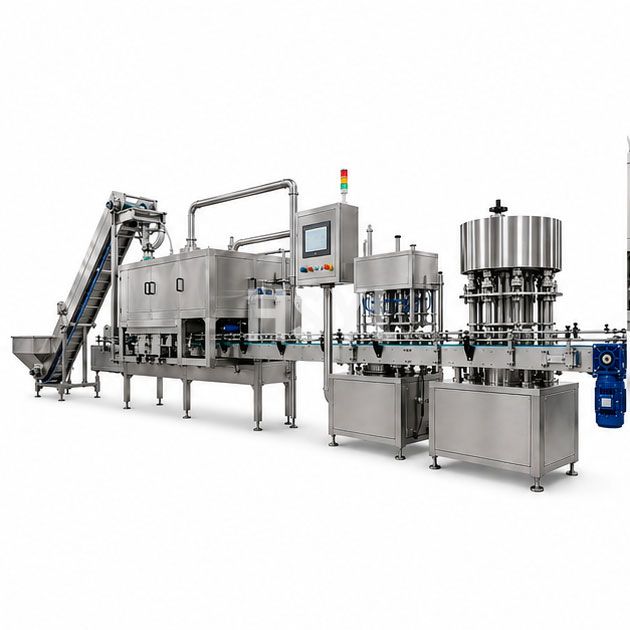


Direct AnswerThe most expensive asset in a fish cannery is not the retort or the...
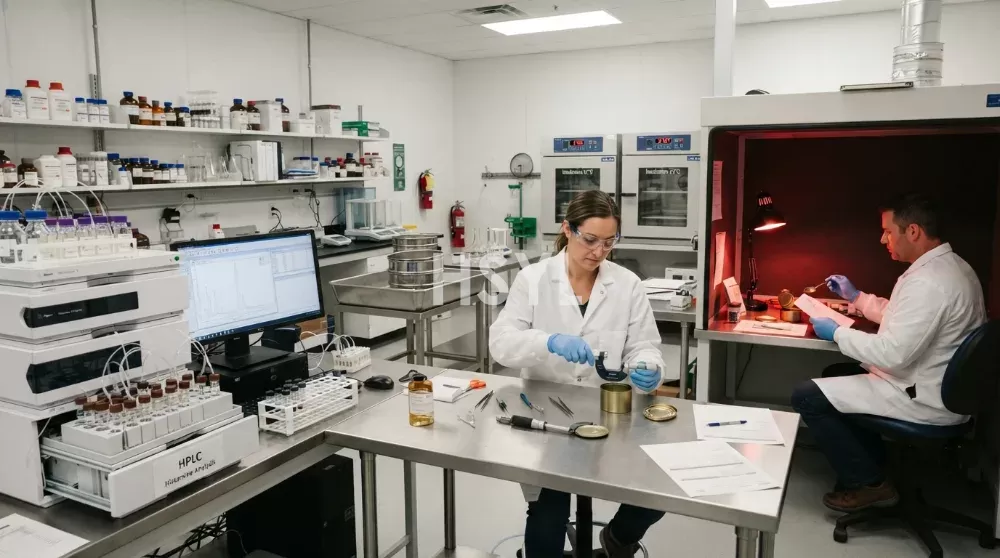
Complete sardine and mackerel canning line: heading and gutting automation, can ...
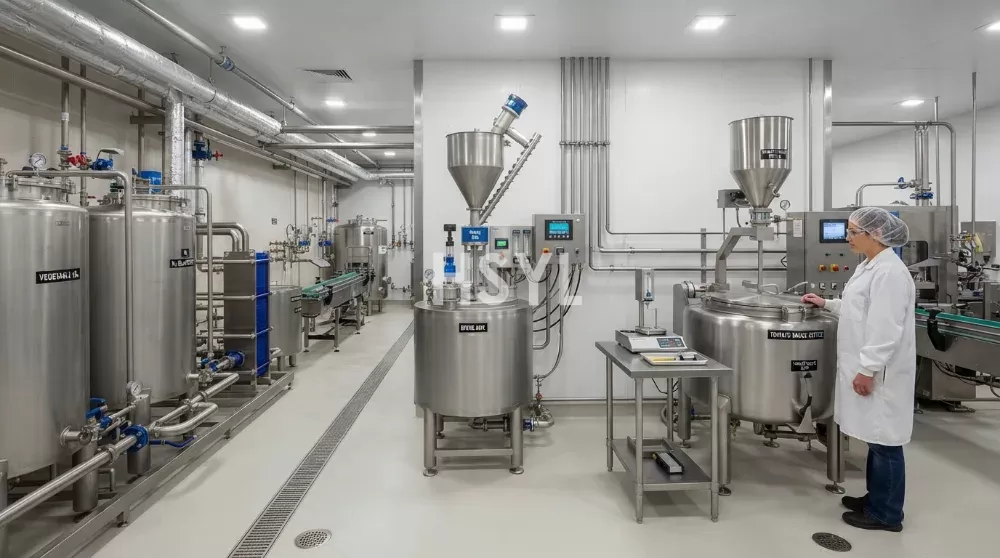
The filling medium — the liquid that fills the void spaces between the fish piec...
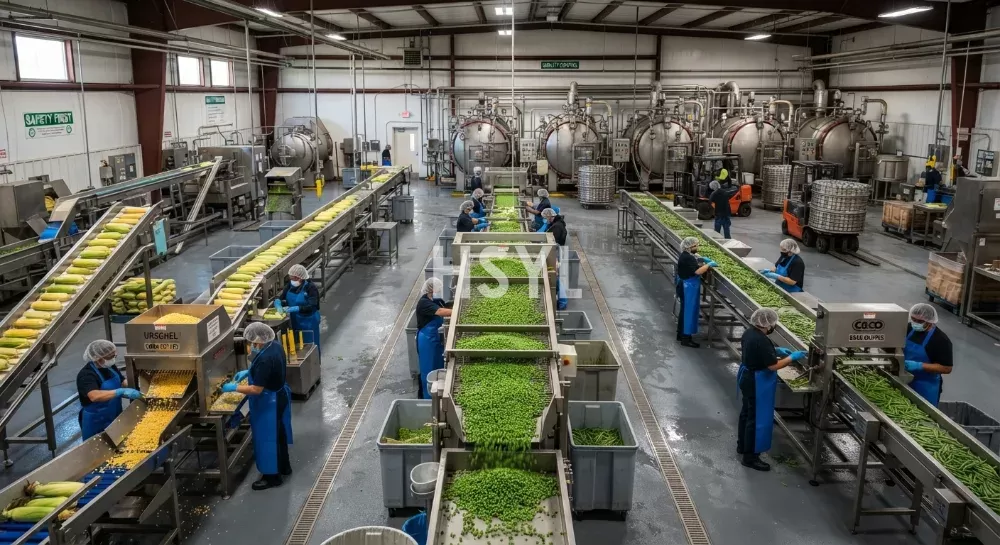
Low-acid canned vegetable processing line for corn, peas, and green beans. Press...