Sardine Canning Production Line

Professional sardine canning production line manufacturer providing automated seafood processing, hygienic design, and customized factory solutions for industrial canned fish production.

Detailed Equipment Introduction
Gain in-depth insights into Sardine Canning Production Line equipment’s working principles, application scenarios, and technical highlights.

Sardine Canning Production Line for Industrial Seafood Processing

The sardine canning production line is a fully integrated, automated solution designed for industrial seafood processors, canned food factories, and large-scale food manufacturers seeking stable quality, high efficiency, and strict food safety control. Engineered specifically for sardine processing, this production line covers the complete workflow from raw fish handling to sealed, sterilized finished cans, supporting consistent output for export-oriented and domestic canned sardine brands.

This sardine canning production line is suitable for processing whole sardines, headed and gutted sardines, or filleted sardines packed in oil, tomato sauce, brine, or specialty marinades. It is widely applied in seafood processing plants aiming to reduce labor dependency, improve yield control, and meet international food safety and hygiene standards while maintaining flexible production capacity.

How the Sardine Canning Production Line Works

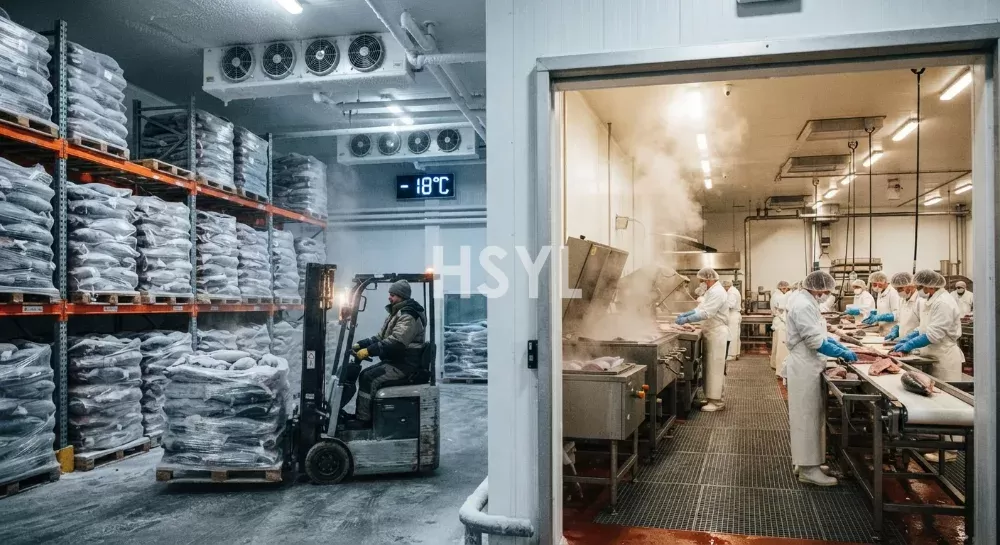
The sardine canning production line is designed as a continuous, modular system that integrates mechanical processing, thermal treatment, and hygienic handling. Raw sardines are received, graded, and pre-treated through washing, deheading, gutting, and trimming as required. Fish portions are then accurately arranged or filled into cans using automated loading systems.

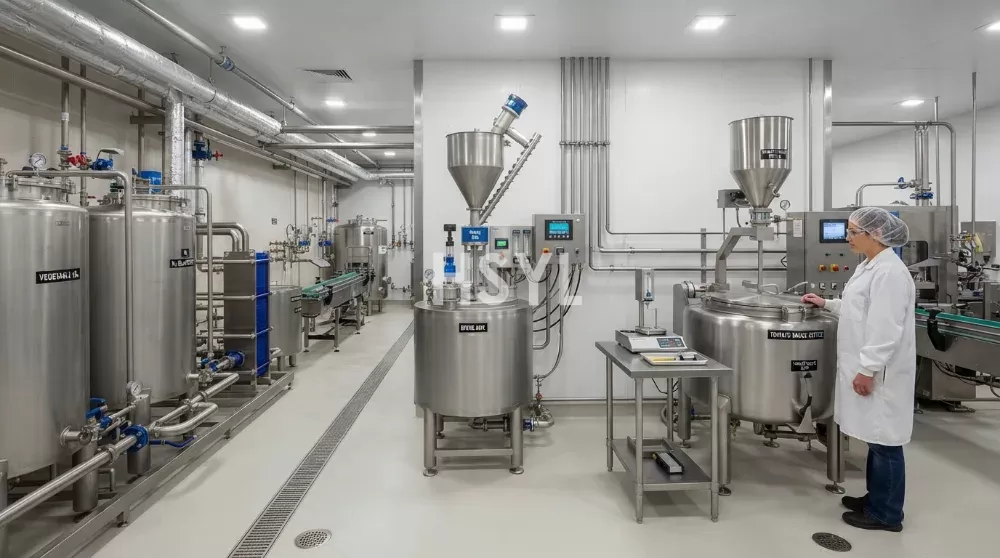
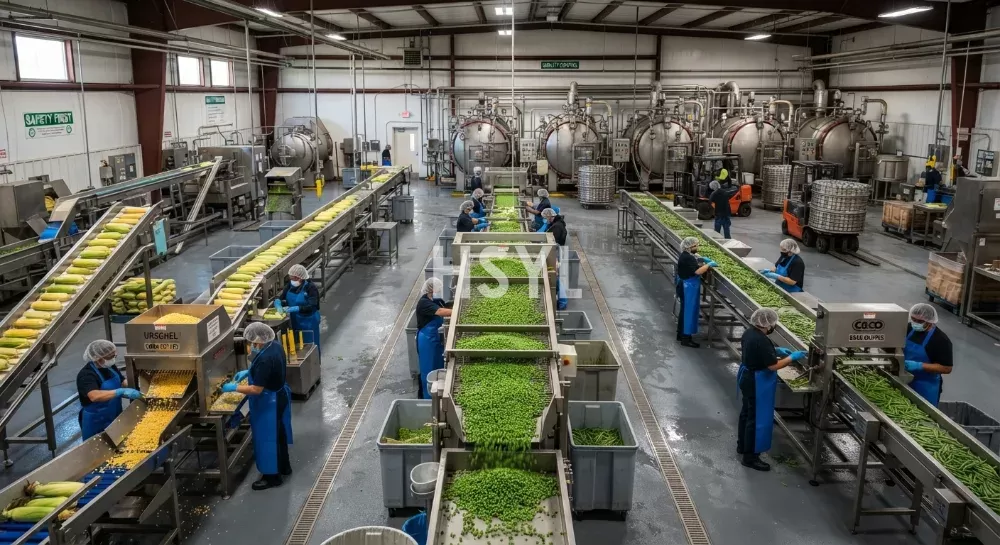
After filling, the sardine canning production line integrates sauce or oil dosing, vacuum sealing, and precise can seaming to ensure airtight packaging. Cans are transferred through retort sterilization systems for thermal processing, followed by cooling, drying, labeling, and packing. Each stage is synchronized to maintain stable throughput, minimize manual intervention, and ensure repeatable product quality.

Food Processing Problems This Sardine Canning Production Line Solves

Seafood processors often face challenges related to labor cost, hygiene control, and inconsistent product quality. The sardine canning production line directly addresses these issues by replacing labor-intensive manual operations with automated and standardized processing modules.

Manual sardine handling can result in yield loss, variable fill weights, and contamination risks. This production line improves raw material utilization, stabilizes portion control, and reduces direct human contact. Capacity bottlenecks caused by manual filling or sealing are eliminated, allowing factories to scale output while maintaining consistent quality and compliance with export regulations.

Key Features & Technical Advantages of the Sardine Canning Production Line

This sardine canning production line is built with industrial-grade components and a focus on long-term reliability. Core processing units are constructed from food-grade stainless steel and designed for continuous operation in high-humidity seafood environments.

Precision filling systems ensure uniform product presentation and weight accuracy. Automated sauce dosing maintains consistent flavor profiles across batches. Integrated control systems enable real-time monitoring of line speed, temperature, and sterilization parameters. The modular design allows future upgrades or capacity expansion without disrupting existing operations.

Applicable Food Products & Processing Scenarios

The sardine canning production line supports a wide range of canned seafood products, including sardines in vegetable oil, olive oil, tomato sauce, chili sauce, and brine. It is also suitable for mackerel, sprat, and similar small pelagic fish with minor configuration adjustments.

This line is applicable for export-focused canneries, OEM seafood manufacturers, private-label production, and vertically integrated fishing and processing enterprises. It supports both standard round cans and customized packaging formats required by different markets.

Capacity Range & Line Configuration Options

The sardine canning production line can be configured to match different factory scales, from medium-capacity regional processors to high-volume industrial canneries. Line layouts can be designed for straight-through or U-shaped factory floors, optimizing space utilization.

Depending on production targets, the line can integrate single-lane or multi-lane filling systems, batch or continuous retorts, and automated palletizing. Capacity adjustments can be achieved by adding parallel modules without redesigning the entire line.

Hygiene Design & Food Safety Considerations

Hygiene is a core design principle of the sardine canning production line. All product-contact parts are manufactured using SUS304 or SUS316 stainless steel, with smooth welds and minimized dead corners to prevent residue accumulation.

The line supports CIP-compatible cleaning where applicable and is designed to align with HACCP-based process control. Controlled zones separate raw material handling from post-sterilization areas to prevent cross-contamination. Thermal processing and sealing parameters are engineered to ensure microbiological safety and extended shelf life.

Automation Level & Labor Reduction Benefits

The sardine canning production line significantly reduces manual labor requirements across cutting, filling, sealing, and packing stages. Automated transfer systems replace manual handling, improving workplace safety and reducing dependency on skilled labor.

Centralized PLC control allows operators to manage the entire line with minimal staff while maintaining consistent performance. Automation improves batch repeatability, reduces rework, and stabilizes production planning for long-term contracts.

Customization & Engineering Support

As an equipment manufacturer with extensive seafood processing experience, we provide full engineering support for sardine canning production line projects. Each line can be customized based on raw material characteristics, target markets, can sizes, and factory layout constraints.

Our engineering team supports process design, equipment selection, integration with upstream fish processing systems, and commissioning. We work closely with clients to ensure the production line aligns with operational goals, regulatory requirements, and future expansion plans.

Standards, Certifications & Compliance

The sardine canning production line is designed following international food processing equipment standards. Equipment structure and electrical systems can be configured to comply with CE requirements for export markets.

The hygienic design supports HACCP implementation and ISO-based food safety management systems. Processing and packaging concepts align with FDA-related principles for canned food production, including thermal processing control and traceability readiness.

Call-to-Action

If you are evaluating a sardine canning production line for a new factory, capacity upgrade, or export-oriented seafood project, our engineering team is available for technical consultation. We provide solution-based support covering process design, equipment configuration, and line integration to ensure your sardine canning production line meets operational, hygiene, and compliance requirements. Contact us to discuss your processing goals and receive a tailored production line proposal.

Frequently Asked Questions

What raw sardine conditions can this sardine canning production line handle?
The line can process fresh or chilled sardines and can be adapted for whole fish, headed and gutted fish, or filleted portions depending on product requirements.
Can the sardine canning production line handle different sauces and oils?
Yes, the filling and dosing systems are designed to accommodate various oils, tomato-based sauces, and specialty marinades with controlled viscosity handling.
Is the sardine canning production line suitable for export-oriented production?
The line is designed to support international food safety standards and stable quality control required for export markets.
How flexible is the line for different can sizes?
The system can be configured for multiple can diameters and heights with changeover solutions integrated into the filling and seaming units.
What level of operator skill is required to run the line?
After training, the line can be operated by a small team using centralized controls, significantly reducing reliance on highly skilled manual labor.
Can this sardine canning production line be expanded in the future?
The modular design allows capacity expansion or additional processing modules to be added as production demand increases.
How is hygiene maintained during continuous production?
The line incorporates hygienic design principles, controlled processing zones, and supports scheduled sanitation procedures aligned with HACCP plans.
Certifications
Internationally recognized certifications guarantee equipment reliability and compliance.
CE Certification

CE Certification

ISO 9001

ISO 9001

FDA Certification

FDA

Halal Certification

Halal Certified

Environmental Certification

Environmental Certification

Patented Technology

Patented Technology

Recommended Integration Solutions
Illustrating the role and position of this equipment within a complete production line

Preparation

Raw material washing, grading, and pre-treatment

Precision Cutting

High-speed precision cutter

Thermal Processing

Cooking, baking, or sterilization

Cooling

Rapid cooling with precise temperature control

Packaging

Automated packaging, sealing, and labeling

Are you ready to customize your next production line?

Get professional customized solutions

Fill in your requirements, and our expert team will tailor the optimal food equipment solution for you.

Format: +[country code][number] (e.g. +8615098926008)

Your information will be kept strictly confidential, and we guarantee a response to your inquiry within 24 hours.