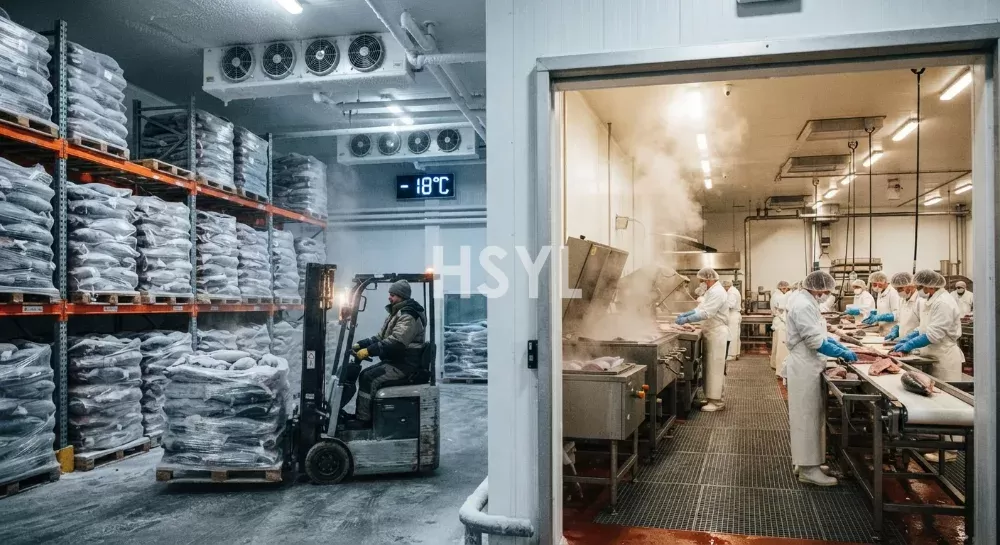
Seasonal Fish Canning: Cold Storage, Multi-Species Rotation and Year-Round Line Utilization
Direct AnswerThe most expensive asset in a fish cannery is not the retort or the...


Factory-direct mackerel canning production line for industrial seafood processors. Custom-designed automated canning solutions with HACCP-oriented hygiene design, stable capacity, and international compliance.
| Configuration | Reference Capacity | Automation | Typical Buyer |
|---|---|---|---|
| Pilot / small scale | 1,500-2,500 cans/hr | Semi-automatic | Startups, regional canneries |
| Mid scale | 8,000 cans/hr | Fully automatic | Export-oriented processors |
| Turnkey plant | 20,000+ cans/day | Fully automatic with utilities | New factory projects |
Detailed model parameters (power, footprint, steam consumption) are confirmed on the model specification sheet against your product and can format.
Our Mackerel Canning Production Line is a fully integrated, industrial-grade solution designed for seafood processors and canned food manufacturers seeking consistent quality, high hygiene standards, and scalable automation in mackerel canning operations. Engineered for continuous factory production, this line covers the complete process from raw fish preparation to sealed, retorted canned mackerel products, supporting both oil-packed and sauce-based applications.
Developed for medium to large-scale processing plants, the mackerel canning production line is widely used in seafood canneries, central kitchens, and export-oriented factories producing canned mackerel fillets, chunks, and ready-to-eat seafood meals. The system is optimized for stable throughput, reduced labor dependency, and compliance with international food safety standards.
The mackerel canning production line integrates multiple processing modules into a synchronized workflow. Raw mackerel is received, sorted, and conveyed into preprocessing units for heading, tailing, cleaning, and optional filleting or portioning. After washing and inspection, the fish is accurately filled into cans or trays, followed by controlled addition of oil, brine, or sauce.
Seaming and sealing systems ensure airtight closure before cans enter retort sterilization. Thermal processing is precisely controlled to achieve commercial sterility while preserving texture and nutritional value. After cooling, the line supports downstream operations such as drying, labeling, coding, and secondary packaging, forming a complete factory-level canning solution.
The line is arranged in three zones: a raw material preparation zone with washdown floors and separate drainage, a filling and seaming zone with restricted access, and a sterilization zone housing the retorts. Finished cans flow through drying and labeling into dry storage, keeping dirty and clean flows separated.
Utilities cover steam, process water, compressed air and power. Exact floor area, man-machine flow direction and utility ratings are confirmed based on the final configuration.
Seafood processors face increasing challenges in labor availability, hygiene control, and yield consistency. Manual or semi-automatic mackerel canning often leads to high labor costs, variable fill weights, and cross-contamination risks. Inconsistent sealing and thermal processing can also compromise shelf life and export compliance.
The mackerel canning production line addresses these issues by standardizing each processing step, reducing manual handling, and ensuring precise control over filling, sealing, and sterilization. Automated workflows minimize product loss, improve batch-to-batch consistency, and enable factories to scale output without proportional increases in labor.
The mackerel canning production line is built with modular engineering and industrial-grade components. Key advantages include stable mechanical performance for oily fish, precise filling accuracy, and compatibility with multiple can formats. The line integrates servo-driven fillers, high-reliability seamers, and retort systems designed for continuous operation.
All critical contact parts are manufactured from food-grade stainless steel, and the control system allows centralized monitoring of temperature, pressure, and line speed. The design prioritizes durability, ease of maintenance, and long-term production stability in demanding seafood processing environments.
Send your product type, target capacity and can format — our engineers return a line configuration and detailed quotation within 24 hours.
This mackerel canning production line is suitable for a wide range of canned seafood products, including canned mackerel in oil, tomato sauce, brine, or flavored sauces. It supports whole fish segments, fillets, chunks, and value-added ready-meal combinations with vegetables or seasonings.
Typical applications include export-focused seafood factories, private-label canned fish production, and integrated processing plants supplying retail and foodservice markets. The line can be configured for traditional round cans, easy-open lids, or specialty packaging formats.
The mackerel canning production line is available in multiple capacity ranges to match different factory scales and production targets. Line configurations can be adapted for small-batch specialty producers or high-volume industrial operations running multiple shifts.
Capacity is determined by filling speed, retort size, and packaging format. Modular design allows future expansion by adding parallel fillers, additional retorts, or automated packaging units without disrupting existing production layouts.
A fully automatic fish canning line delivered for a seafood processor in Algeria covers preparation, filling, seaming and retort sterilization on 125 g cans at 8,000 cans per hour. Read the full configuration and commissioning details in the Algeria 8,000 CPH fish canning project.
For meat applications, the UK turnkey beef canning line is engineered for 15,000 tons per year, FSA and BRCGS compliant — see the UK beef canning line project.
Hygiene is a core design principle of the mackerel canning production line. All product-contact components are fabricated from SUS304 or SUS316 stainless steel, with smooth welds, rounded corners, and open-frame structures to prevent residue buildup.
The line supports CIP-compatible cleaning zones and is engineered according to HACCP-oriented design principles. Separation of raw and cooked product areas, controlled drainage, and easy-access cleaning points help processors maintain strict sanitation and audit readiness.
The mackerel canning production line significantly reduces reliance on manual labor by automating critical steps such as filling, seaming, sterilization, and conveying. Operators are primarily required for monitoring, quality checks, and material replenishment rather than direct handling of product.
Higher automation improves production predictability, lowers long-term operating costs, and reduces the risk of human error. For factories facing labor shortages or rising wage pressures, automation provides a sustainable path to capacity growth.
As an equipment manufacturer, we provide full engineering support for each mackerel canning production line project. Line layouts, processing modules, and control logic are customized based on product recipes, can dimensions, plant space, and local regulatory requirements.
Our engineering team works closely with factory owners and process engineers from concept design through installation and commissioning, ensuring seamless integration with upstream and downstream equipment.
The mackerel canning production line is designed in accordance with international food processing and machinery standards. Equipment can be supplied with CE compliance, and the overall line supports HACCP implementation and ISO-based quality management systems.
Design principles align with FDA-related requirements for thermal processing, material selection, and sanitation, supporting export-oriented seafood manufacturers serving regulated markets.
Many canneries rotate mackerel with sardine on the same core machines — see the sardine line configuration, or the full automatic fish canning line range for other species.
If you are evaluating a reliable, factory-grade mackerel canning production line for your seafood processing operation, our engineering team is available to provide technical consultation and configuration support. Contact us to discuss your product specifications, capacity targets, and plant layout requirements so we can develop a tailored mackerel canning production line solution aligned with your production goals.
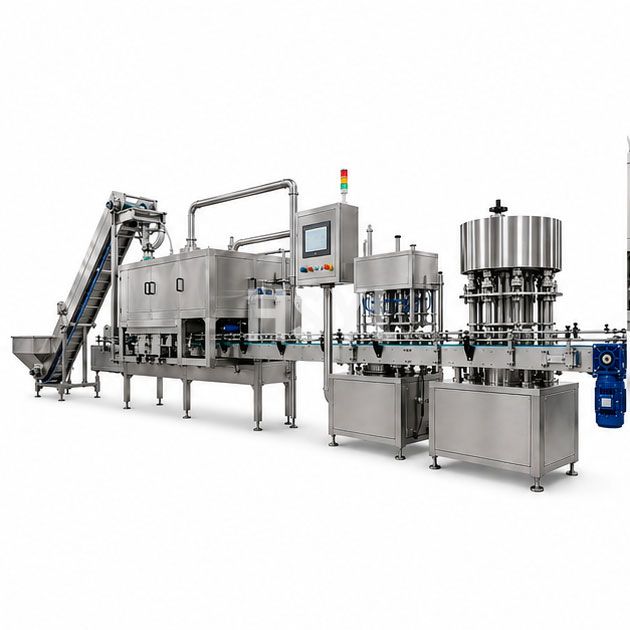


Direct AnswerThe most expensive asset in a fish cannery is not the retort or the...
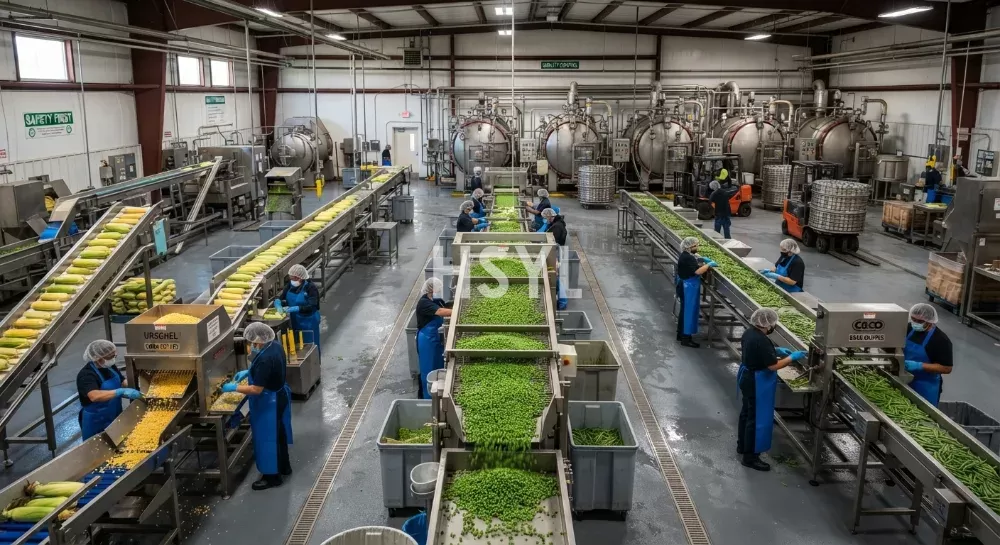
Low-acid canned vegetable processing line for corn, peas, and green beans. Press...
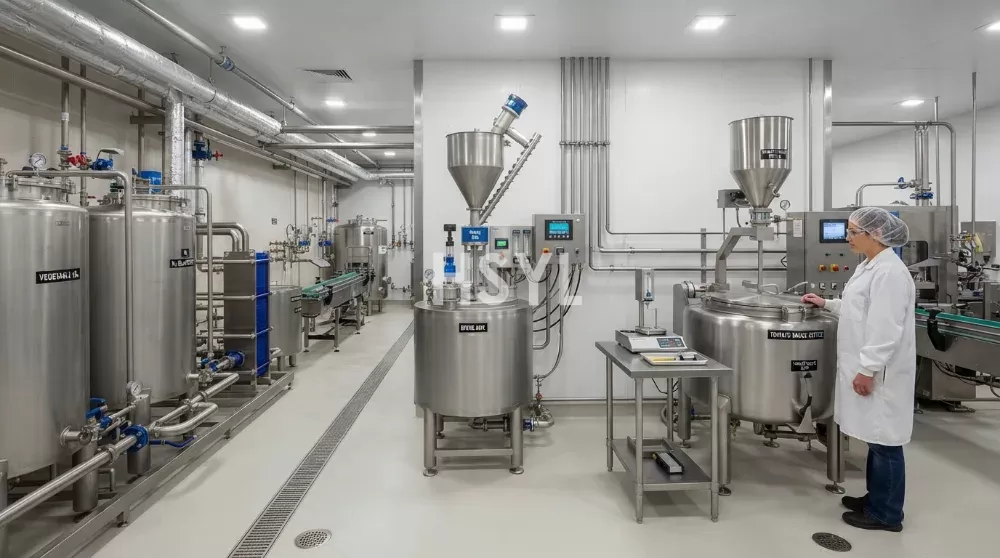
The filling medium — the liquid that fills the void spaces between the fish piec...
Complete sardine and mackerel canning line: heading and gutting automation, can ...