HACCP and the Fish Canning Production Line
A fish canning production line with HACCP is not only about sterilizing cans. It is a full plant strategy that ties together raw fish handling, brine and oil management, can filling, seaming, retorting, cooling and packing.For complete autoclave batch scheduling and facility sanitation planning, refer to our engineering overview on canned fish sterilization process.
For engineers and plant managers, the key question is where the line creates hazards and how the layout, equipment and sanitation design keep those hazards under control.

Where the hazards appear in a fish canning line
There are three broad hazard zones in canned fish production:
- raw material reception and processing, where biological growth and contamination first enter the system
- filling, sealing and retort, where product safety depends on can integrity and thermal process control
- post-sterilization handling, where damaged cans, condensate and washdown can reintroduce defects
HACCP identifies critical control points (CCPs) at those transitions. The production line layout should make those CCPs visible and measurable.
Common CCPs on a fish canning line
| Process section | Typical CCP | What to verify |
|---|---|---|
| Raw fish reception | Temperature and quality check | Cold chain records, separation of suspect loads |
| Cook/pick | Cook temperature and time | Recorders on cooker and pick belt, oil removal |
| Filling/exhausting | Fill weight and headspace | Weigh scales, exhaust pressure and vacuum reports |
| Seaming | Seam profile and tightness | Seam inspection tool, periodic leak test |
| Retort | Thermal process hold | Retort charts, come-up time logs, temperature probe calibration |
Designing the line with HACCP in mind
HACCP-aware line design starts with zoning. Raw fish, wet processing and finished can areas should be separated so the sanitation workflow is one-way.
That means the fish unloading station, cooker and picker should not share the same floor space with the seamer and retort load area, unless there is a physical barrier and a defined clean pathway.
For practical layout examples, engineering teams can compare proposals to the HSYL fish canning process flow practical plant guide.
Why sanitation layout is the hidden cost
Sanitation is one of those parts of a fish canning line that operators feel in hours of downtime, not in purchase price. A line that is hard to wash down will see more stops and more risk of residue buildup.
Look for these design features in a HACCP fish canning line:
- open machine frames and removable guards for fast access
- CIP-compatible pipe loops for filling and brine systems
- dedicated washdown drains under the filler, seamer and retort load zone
- washdown-safe electrical cabinets and zone-specific lighting
Those features do not sound glamorous, but they are what keep a seafood line running at rated throughput.
Retort selection and validation for fish canning
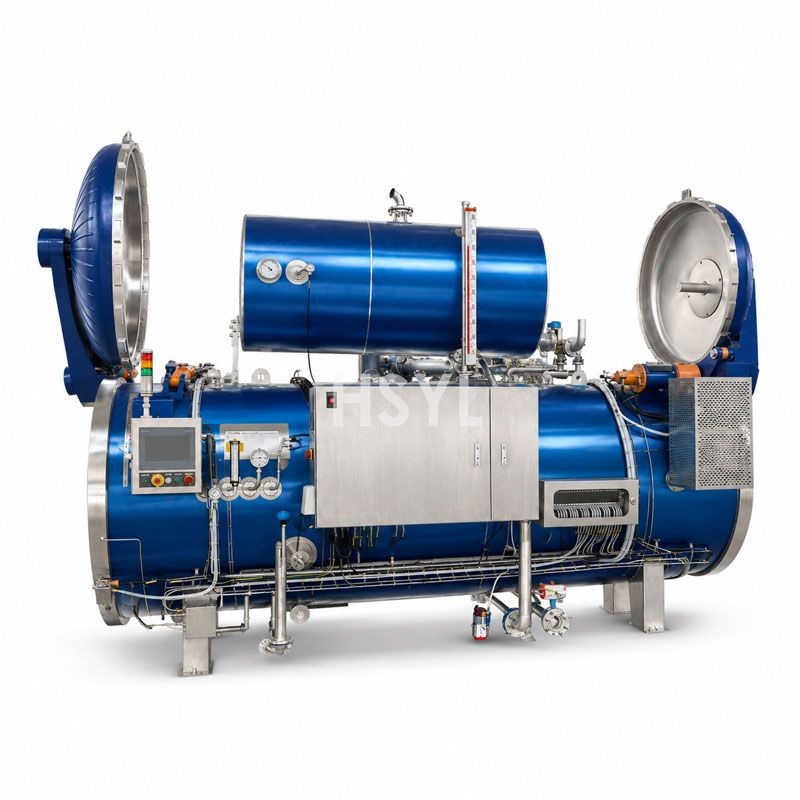
The retort is the critical thermal control module in a canned fish HACCP plan. It must be validated not only for temperature hold, but for the actual can type and pack format that will run on the line.
A common mistake is to approve a retort based on a generic can count rather than a thermal process chart. For seafood, the can size, product density and headspace all affect heat penetration.
If the vendor cannot provide a clear validation path, that is a sign the proposal is incomplete. A more useful comparison is the one between the actual process heating curve and the retort control capability.
Here again, it helps to refer to equipment documentation such as the HSYL retort sterilizer for canned fish to see how the system is intended to integrate with the line.
Fish-specific concerns on filling and exhausting
Many canned fish lines fail because the filler is not matched to the product. Tuna, mackerel and sardine paste all behave differently in the can, and oily fillings can impair headspace control.
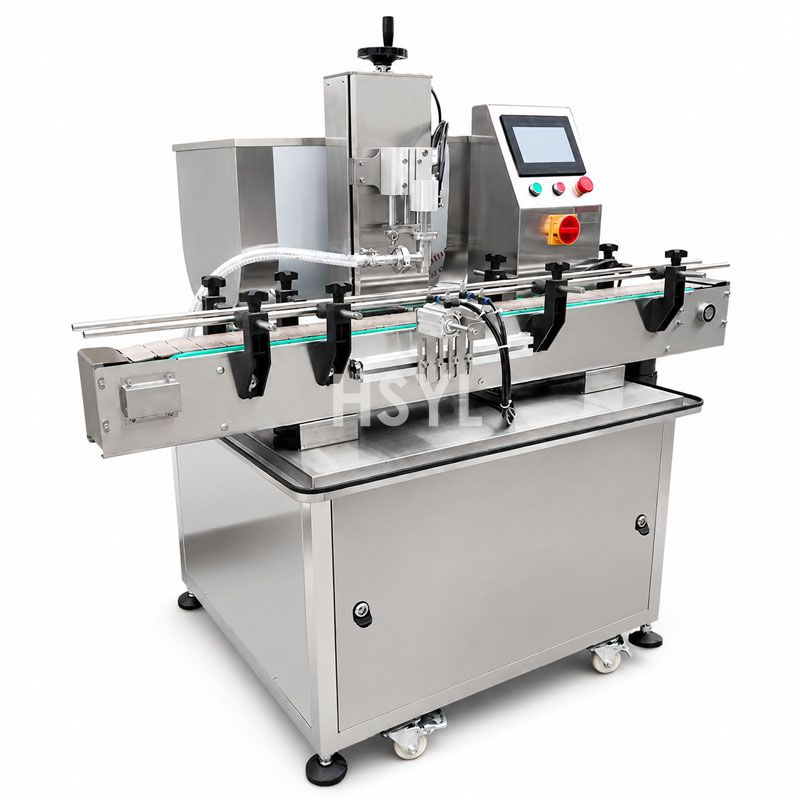
For HACCP, the filler is a control point where errors can cause serious problems later in the line. The line must allow operators to inspect fill weights, adjust exhaust settings, and clean the nozzle section without long disassembly.
It is worth asking whether the proposed filler supports the exact pack style planned for production. If you are evaluating a turnkey offer, verify whether the machine can handle the can diameters and product viscosity your HACCP plan requires.
Integration with quality and inspection systems
In a HACCP fish canning production line, inspection systems are more than convenience. They are part of the process control network.
Typical inspections include:
- metal detection after the can seamer
- vacuum or pressure checks on finished cans
- seal inspection and double seam measurement
- random weight sampling and product appearance review
These functions should be integrated with the line controls so that stops and rejects are traceable back to the CCP where the deviation occurred.
Common procurement mistakes for HACCP fish canning lines
Experienced buyers have seen the same errors repeatedly in fish canning line proposals. Here are the ones to watch for:
- accepting a “standard seafood line” without confirming the target product family
- not verifying equipment compatibility with the plant’s utility and steam system
- ignoring the need for a dedicated clean area after the seamer
- purchasing based on maximum throughput alone, rather than balanced line flow
The most valuable engineering assessment is the one that asks how the line will behave on day two of production, not just during commissioning.
How to use HACCP to improve line reliability
A practical HACCP plan for a fish canning line does three things:
- defines the real hazards in each processing stage
- assigns measurement and monitoring to the equipment supplier or the operator
- creates clear escalation rules for deviations
For example, a seamer should be a CCP with a defined check frequency for seam height and tightness. A retort should have documented temperature probe calibration and a clear acceptance range for each cycle.
Those controls are the difference between a line that meets regulations and a line that runs consistently.
Practical HACCP checklist for fish canning engineers
Use this checklist during layout review and supplier evaluation:
- Does the layout separate raw handling from finished can handling?
- Is there a washdown zone and CIP path for the filler and retort feed?
- Are CCPs defined for filler headspace, seamer integrity and retort thermal curve?
- Can operators inspect and clean the critical contact surfaces without major disassembly?
- Has the line been sized to match retort capacity, not just seamer speed?
- Does the proposal include process validation documentation for the specific can format?
These items are a practical way to move from theory to checklist-based decisions.
Why line balance matters more than top speed
A fish canning line can only be as fast as its slowest control point. If the retort, seamer or filler is out of sync, the line will spend more time stopped than running.
That is why a HACCP-aware engineering team evaluates supplier proposals on cycle time and buffer capacity, not on quoted cans per hour alone.
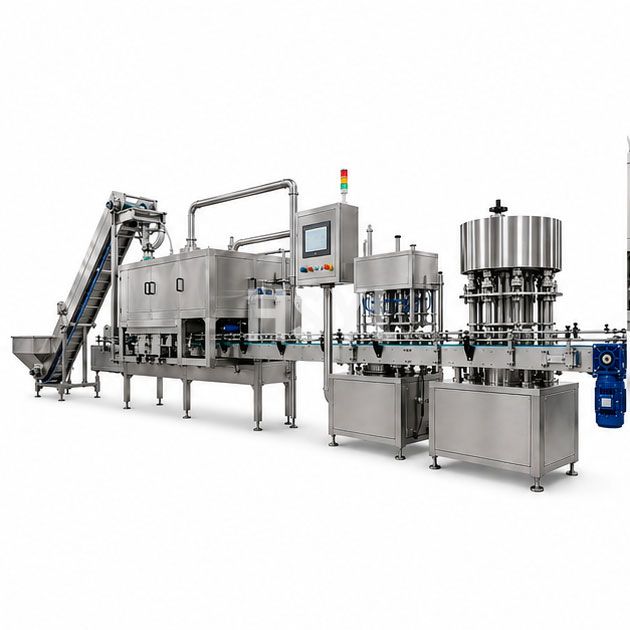
When discussing a line, ask for the material flow diagram and the intended buffer volume between the seamer and the retort. A proper fish canning line usually includes a measured pack and cooling buffer ahead of the retort, so the process does not become a traffic jam.
Realistic validation and commissioning steps
Commissioning a HACCP fish canning line should include dry runs and trial packs before the first commercial run. That means validating the retort cycle with empty or water-filled cans, confirming the filler and seamer settings, and walking the sanitation workflow.
An experienced plant manager will also verify that the quality team has the right sample points and that the documentation supports the HACCP plan for fish canning.
Related Topics
- Fish Canning Process Flow Practical Plant Guide
- Retort Sterilizer for Canned Fish
- Tuna Canned Production Line
Call to Action
For a HACCP-compliant fish canning project, review the proposed line layout, critical control points and sanitation access with an engineering specialist before signing the order. HSYL can help identify the design gaps that affect long-term reliability and food safety.
Frequently Asked Questions
What is the first step in applying HACCP to a fish canning line?
Which stations are usually critical control points in fish canning?
How should a fish canning line be laid out for HACCP?
What documentation is needed for HACCP validation?
Why is retort validation important for canned fish?
Related Articles


Get professional consultation
Do you have any questions or need technical support regarding the content of this article? Fill out the form below, and our expert team will provide you with professional solutions.