Lightweight containers need a stability review when they pass through a basket washer. A holder must keep the intended orientation without creating unacceptable contact shadows, deformation or handling work. Container stability and cleaning access should be assessed together.
When discussing a basket washing machine, supply the actual basket range and ask which holding arrangement is proposed. A generic statement that the machine accepts baskets does not establish compatibility with a particular light or flexible container.
Describe the empty container
Record dimensions, empty mass, material, wall structure and condition. Include relevant variation from repeated use. A basket containing product during normal operations may be much lighter when it reaches the washer, so use its actual washing condition.
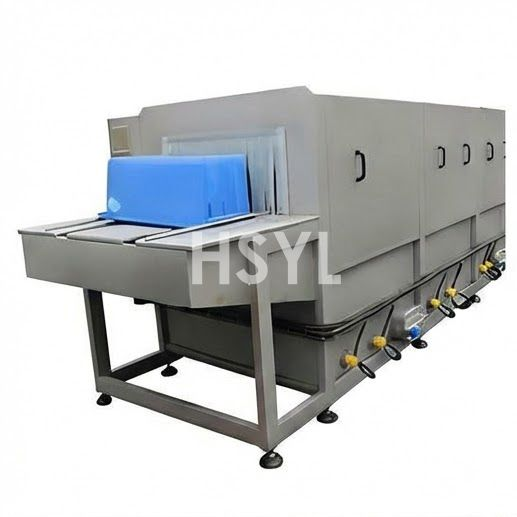
Review restraint and release
Ask how the holder controls lift, rotation and movement through transfers. Check loading, unloading and any adjustment between basket families. The method should be evaluated under authorized operating conditions without reaching into moving equipment.
| Review area | Evidence required |
|---|---|
| Contact locations | Where the fixture touches the basket |
| Movement | Observed stability through the route |
| Surface exposure | Assessment behind contacts and guides |
| Output condition | Deformation, marks or retained residues |
Check the surfaces behind the restraint
Stable transport does not by itself demonstrate adequate cleaning. Mark fixture contact points on an inspection map and examine them using the agreed method. A larger restraint may improve transport while reducing access to a surface that matters to the factory.
The hygienic equipment review is useful when evaluating holder construction, joints and cleaning access. Include the holder itself in the cleaning procedure and consider where removed fixtures are stored.
Compare handling as well as machine operation
Record whether operators can orient and fit baskets consistently within the proposed work arrangement. Include fixture changes and inspections in the usable washing-time assessment. Avoid selecting a holder from an ideal demonstration that requires impractical manual preparation for every container.
Agree a trial outcome covering stability, accepted surface condition, physical condition and handling effort. Keep the tested basket references and fixture drawings identifiable so that later changes do not silently expand the demonstrated scope.
Frequently Asked Questions
Does a heavier holder always solve basket movement?
Can the same fixture cover several basket models?
Related Articles



Get professional consultation
Do you have any questions or need technical support regarding the content of this article? Fill out the form below, and our expert team will provide you with professional solutions.