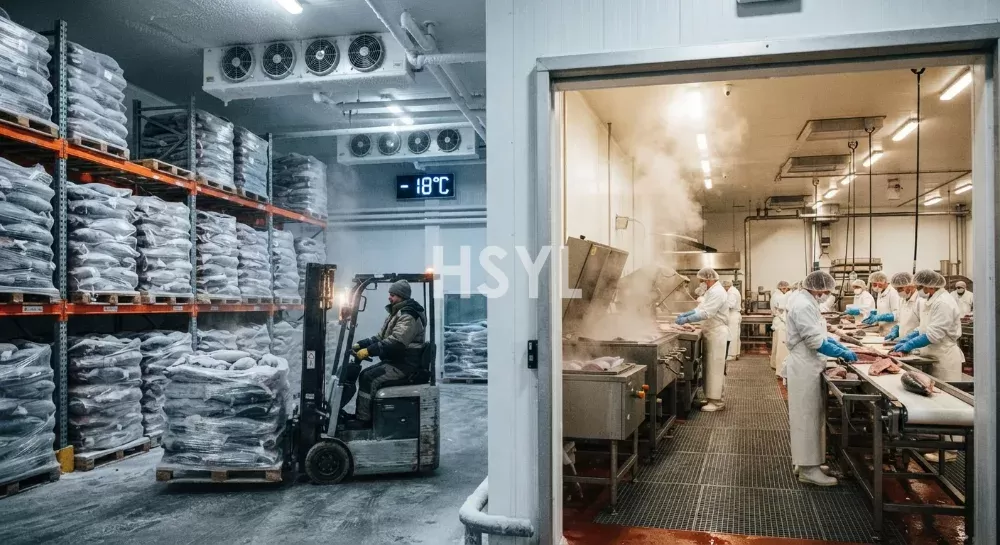
Seasonal Fish Canning: Cold Storage, Multi-Species Rotation and Year-Round Line Utilization
Direct AnswerThe most expensive asset in a fish cannery is not the retort or the...


Heavy-duty automatic basket washing machine for space-constrained food plants. Processes 2000 baskets/hour with a 2-meter footprint using vertical loop washing architecture.
Maximizing throughput in facility layouts with strict spatial limitations requires non-traditional mechanical engineering. Standard horizontal washing tunnels processing 2,000 units per hour typically demand over 6 meters of floor space. The AutoBasket-2000 bypasses this limitation by utilizing a multi-tier vertical looping architecture. By folding the washing, rinsing, and drying stages into a vertical 2.5m-high chassis, this equipment delivers massive sanitation capacity within a mere 2-meter physical length. It is specifically calibrated for meat, poultry, and automated bakery lines where fat, blood, and protein adhesion dictate aggressive thermal and mechanical scrubbing protocols.
| Parameter | Specification |
|---|---|
| Model Designation | AutoBasket-2000 (Vertical Loop Series) |
| Processing Capacity | 2000 baskets/hour (Dependent on soil level) |
| Main Drive & Pump Power | 3.5 kW (380V / 50Hz / 3-Phase standard) |
| Dimensions (L x W x H) | 2000 mm x 1500 mm x 2500 mm |
| Net Weight | 800 kg |
| Thermal Source Requirements | Industrial Steam (0.3 - 0.6 MPa) or External Electric Boiler |
| Wash Temperature | 65°C to 85°C (PID digitally regulated) |
| Material Construction | SUS304 Food-Grade Stainless Steel (3mm gauge) |
Traditional continuous washing relies on horizontal exposure time. Our engineers remapped the exposure algorithm to utilize gravity and vertical stacking, generating intense shear forces over a highly condensed footprint. This design resolves specific logistical bottlenecks encountered in high-yield processing corridors.
Achieving a fully Turnkey sanitation flow often requires this unit to interface directly with primary processing nodes. For instance, when placed at the terminus of heavy poultry slaughtering equipment lines, the AutoBasket-2000 instantly receives and sanitizes blood-stained turnover baskets before organic matter can coagulate, returning them directly to the evisceration floor without manual staging delays.
The core innovation allowing 2,000 BPH throughput within a 2-meter length is the SUS304 dual-pitch vertical chain transmission. Driven by a 1.5 kW variable frequency gearmotor, this chain grips the baskets via high-friction polymer lugs, lifting them through a highly concentrated spray mist.
The primary hydraulic force is generated by a heavy-duty 2.0 kW stainless steel centrifugal pump. Because the track is vertical, the pump manifolds are extremely short, eliminating pressure drop. The nozzles hit the basket surfaces at a targeted 4.0 bar pressure. A continuous 100-micron rotary wedge wire filter extracts heavy particulate matter (bone shards, plastic labels, fat clumps) from the main holding tank, preventing nozzle blockages and maintaining the mechanical force of the water columns.
Industrial facility managers evaluate equipment based on utility consumption versus yield. The nominal 3.5 kW electrical rating strictly covers mechanical conveyance and fluid pumping. To reach the necessary 85°C wash temperatures required for pathogen destruction (Salmonella/Listeria), the machine integrates an internal steam-to-water corrugated plate heat exchanger. This allows high-capacity plants to utilize their existing central steam boilers, shifting the heavy thermal load away from the electrical grid and ensuring instantaneous water temperature recovery even when processing 33 baskets every minute.
The machine supports dynamic width adjustments. By adjusting calibrated hand-cranks on the exterior panel, maintenance crews can modify the internal guide rails to process 600x400mm deep meat crates on the morning shift, and narrow 400x300mm bakery trays during the afternoon shift, taking less than 5 minutes for mechanical changeovers.
We manufacture this equipment adhering to European EHEDG hygienic design principles. There are no dead-legs or horizontal flat surfaces within the internal chamber where stagnant water can pool. Continuous TIG welding is applied to all internal basin joints, followed by chemical passivation to restore the chromium oxide layer of the SUS304 steel. Comprehensive documentation packages, including FAT (Factory Acceptance Test) results, welding certificates, and electrical schematics, are provided to support site HACCP integration and third-party facility audits globally.


Direct AnswerThe most expensive asset in a fish cannery is not the retort or the...
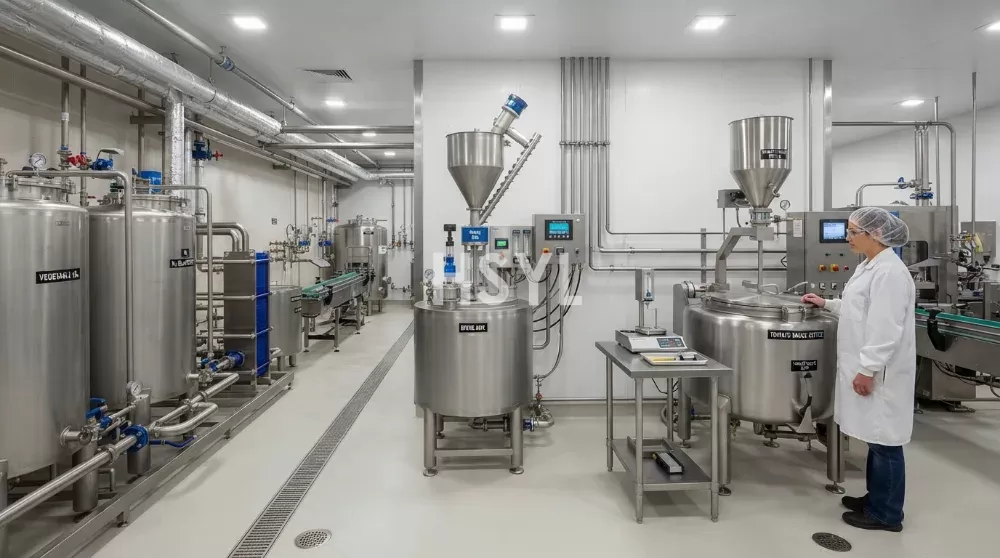
The filling medium — the liquid that fills the void spaces between the fish piec...
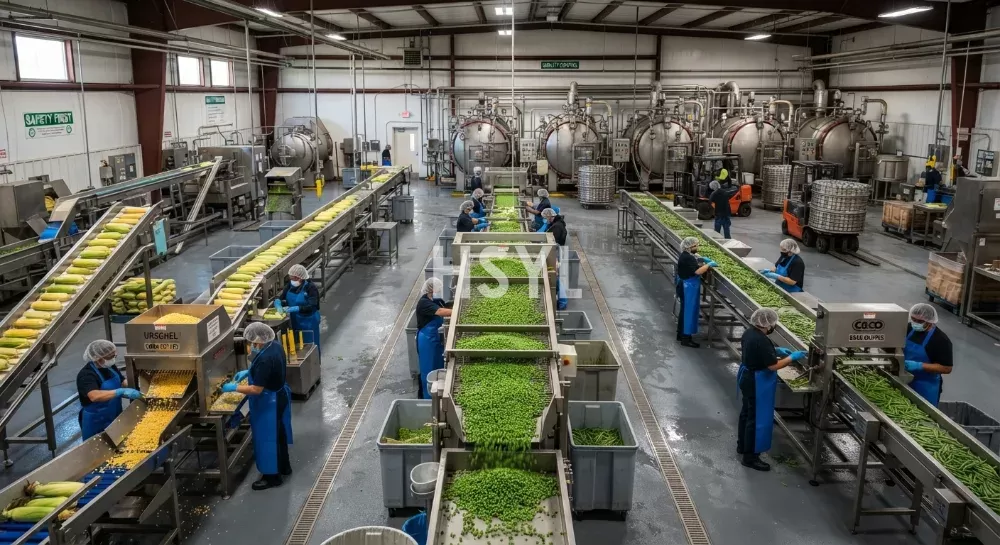
Direct AnswerA low-acid canned vegetable processing line — corn, peas, and green...
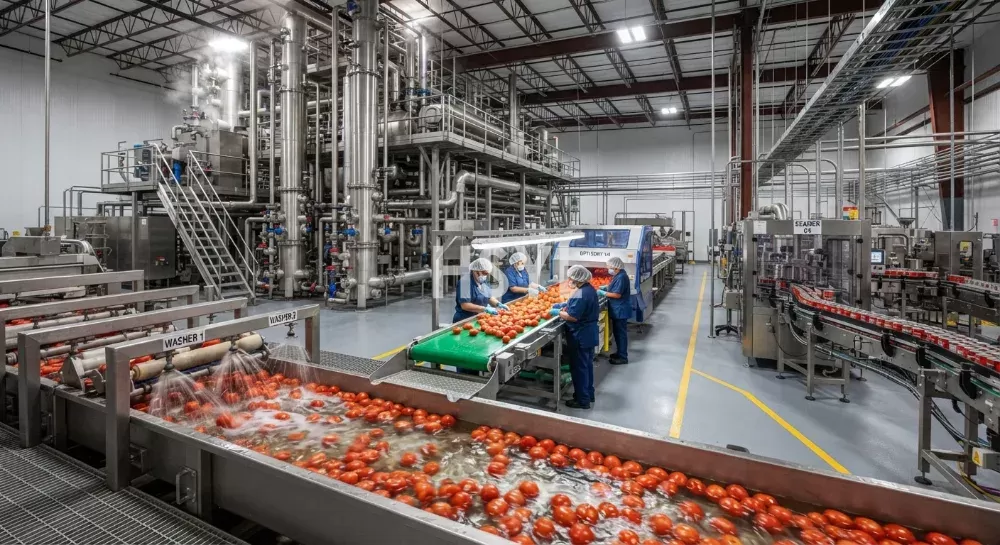
Direct AnswerA tomato products canning line converts fresh tomatoes into four di...