In my eighteen years navigating food processing floors between Chicago and the industrial hubs of the Midwest, I have seen seasoned plant managers make the same mistake repeatedly: they buy for the throughput they want tomorrow, without accounting for the operational reality of today. When it comes to ultrasonic cutting technology, the fork in the road is almost always the choice between an inline system and a batch machine. The "best" machine is a myth; there is only the machine that matches your specific Volume-Variety balance.

Ultrasonic cutting has replaced traditional mechanical saws and reciprocating knives in many of the facilities I consult for. The secret is the 20kHz or 35kHz vibration that creates a nearly frictionless surface. But how you deploy that vibration—whether as a standalone station or a component of a continuous line—determines your long-term lifecycle cost and OEE (Overall Equipment Effectiveness).

Understanding the Batch Approach: The Versatility Powerhouse

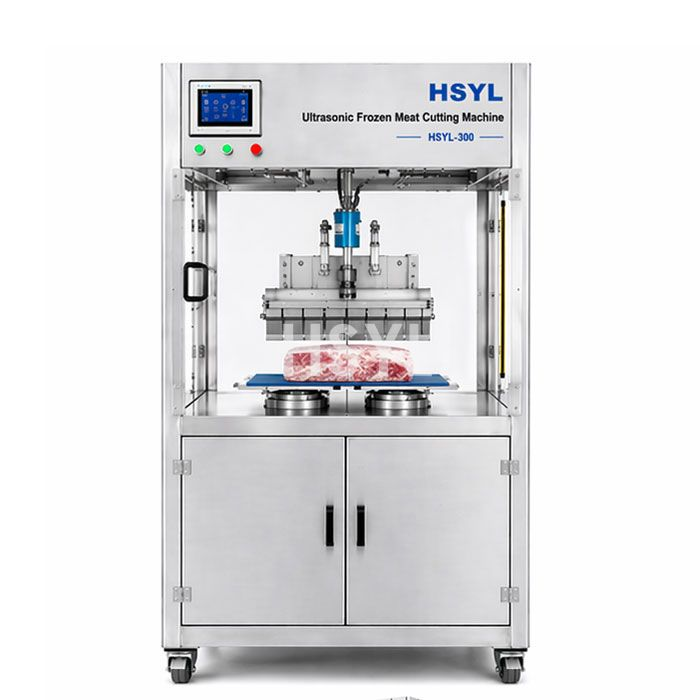
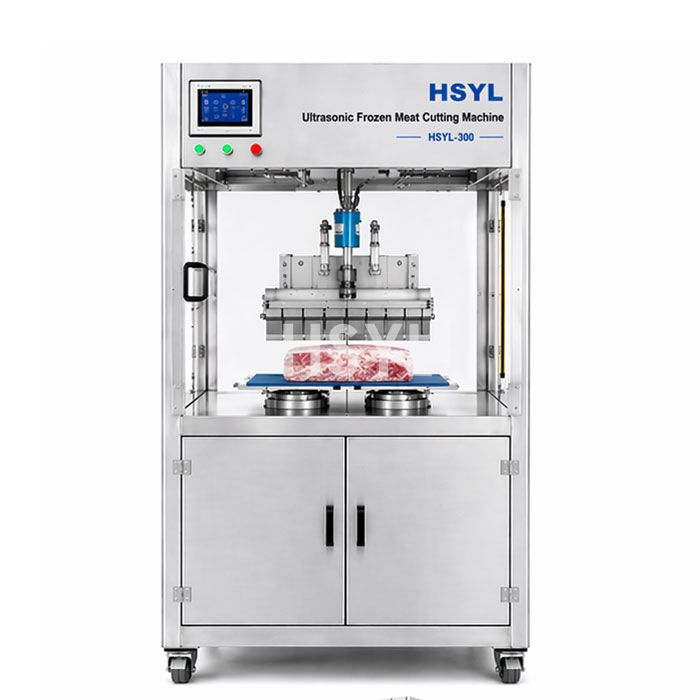
A batch ultrasonic cutting machine is essentially a standalone unit. Product—whether it is a frozen meat block, a slab of fudge brownie, or a round cheesecake—is loaded into the cutting chamber, either manually or via a semi-automated sliding tray. The cutting head (the sonotrode and titanium blade) then executes a pre-programmed sequence: X-Y grids, radial wedges, or specific geometric patterns.

From an engineering perspective, the batch cutter is a "flexibility first" asset. Since the product is stationary during the cut, the machine can handle complex shapes and varying densities without the mechanical headache of tracking a moving conveyor belt. If you are a high-end bakery producing 15 different SKUs of cheesecakes and brownies every shift, a batch machine is almost certainly your best starting point.

The trade-off is labor intensity. A batch machine requires an operator to load and unload. Even with dual-tray models that allow for loading one side while the other is cutting, you are limited by the human factor. In my experience, a batch machine usually hits a ceiling at 40 to 120 units per hour, depending on the complexity of the cut pattern.

Scaling to Inline: The Continuous Flow Logic

Once your volume exceeds the capacity of two operators running batch machines, it is time to look at an inline ultrasonic cutting machine. These systems are integrated directly into your production line, usually immediately after a cooling tunnel and before the primary packaging stage. The product moves on a continuous conveyor, and the ultrasonic bridge performs "cutting on the fly."

The primary advantage here is throughput and labor reduction. A well-integrated inline system can process 60, 100, or even 200 pieces per minute without a dedicated operator touching the product. This removes the "human-induced variability" from the process. However, the engineering complexity increases. You must synchronize the belt speed with the blade stroke, ensuring that the ultrasonic bridge tracks the product perfectly to avoid slanted cuts or "blade dragging."

For those interested in the technical nuances of how these systems compare to mechanical alternatives, I recommend reviewing our analysis on ultrasonic vs mechanical cutting in bakery processing. It breaks down the physics of "yield recovery" which is the real profit driver in high-speed lines.

Inline vs Batch Ultrasonic Cutting | Selection Guide for Plants image 1

Technical Comparison: Operational Trade-offs

CharacteristicBatch Ultrasonic MachineInline Ultrasonic Line
Primary DriverFlexibility and SKU VarietyVolume and Labor Efficiency
ThroughputLow to Medium (Manual loading)High (Continuous belt flow)
FootprintCompact, standalone unitLarge, requires line integration
Changeover TimeMinimal (Software based)Moderate (Mechanical alignment)
SanitationManual washdown of trays/bladeRequires integrated CIP/belt wash
CAPEXLower initial investmentSignificant capital expenditure

Sanitation and Maintenance Realities

In any food plant, sanitation is the invisible cost that kills your margin. A batch cutter is relatively easy to clean because the trays and blade assembly are easily accessible. You can stop the machine, perform a deep clean, and be back in production within 15 minutes. This is ideal for dairy-based products where microbial growth is a high-risk factor.

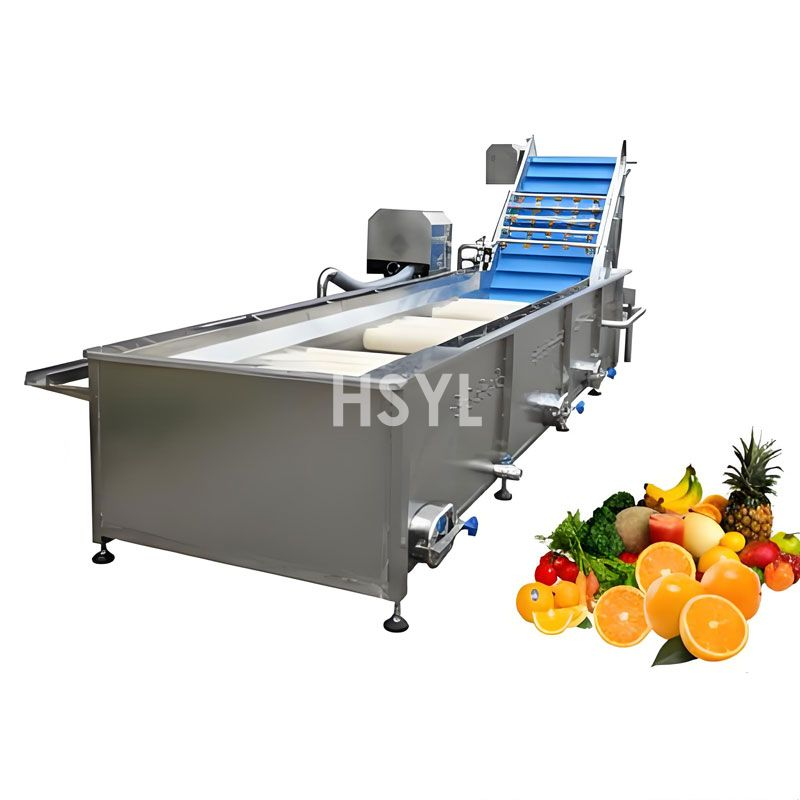
An inline system presents a different challenge. The conveyor belt—often 600mm to 1000mm wide—becomes a sanitation focal point. Since the belt is constantly moving through a cutting zone, any fat or sugar residue can become "smeared" across the entire length of the production line. This is why we almost always specify a continuous belt washing station for inline cutters. These stations use a combination of hot water, specialized detergents, and high-pressure air knives to clean and dry the belt on every return stroke.

Maintenance of the ultrasonic transducer and generator is similar for both. However, because an inline machine is a critical "link" in a longer chain, a transducer failure in an inline setup results in a total production stoppage for the whole plant. For this reason, I always advise our clients to keep a pre-tuned spare sonotrode and transducer on the shelf. This brings the mean time to repair (MTTR) down from hours to minutes.

The Integration Bottleneck: Upstream and Downstream

When you move to an ultrasonic cutting production line, the "cutting" part is often the simplest piece of the puzzle. The real engineering happens at the transfer points. If your brownies are coming out of a cooling tunnel at -2°C, are they positioned correctly for the slicer? Are they "v-tracked" or guided by side-rails?

Downstream integration is even more critical. When you cut 120 pieces a minute, you have a "portioning explosion" that your packaging machine must handle. You need row distribution systems or robotic pick-and-place stations to feed the cut pieces into primary flow-wrappers or tray sealers. If your downstream equipment cannot handle the speed of the inline cutter, your expensive automation is effectively useless.

Which One Should You Choose?

As a rule of thumb, if your production involves less than 5,000 units per shift across 10 different flavors, stick with a high-quality batch ultrasonic machine. You will appreciate the ability to switch from a round cake to a square brownie in the time it takes to touch two buttons on the HMI.

If you are producing 20,000+ units of a single product SKU daily and your labor costs are creeping above 15% of your COGS, that is a clear signal to move toward an inline system. For a deeper dive into the specific equipment types available for these different scales, see our technical guide on choosing industrial bakery cutting equipment.

Conclusion

Evaluating inline vs batch is not just about counting pieces per hour. It is a fundamental choice about your business model. One prioritizes the ability to react to a diverse market; the other prioritizes the efficiency of dominating a specific niche at scale. At HSYL, we often start clients with a modular batch solution that can be repurposed or integrated into a future automated line as they grow. This "future-proofing" approach is how we help plants manage their CAPEX while preparing for industrial-scale demand.

Related Topics-Explore More Engineering Insights

Call to Action-Discuss Your Production Scale-Up with Our Engineering Team

Deciding between inline integration and batch modernization requires an honest look at your current OEE and future SKU roadmap. At HSYL, we don't just sell machines; we architect production solutions that balance CAPEX with operational reality. Contact us today to discuss your product characteristics, floor layout, and throughput targets. We can help you determine the exact point where automation pays for itself.