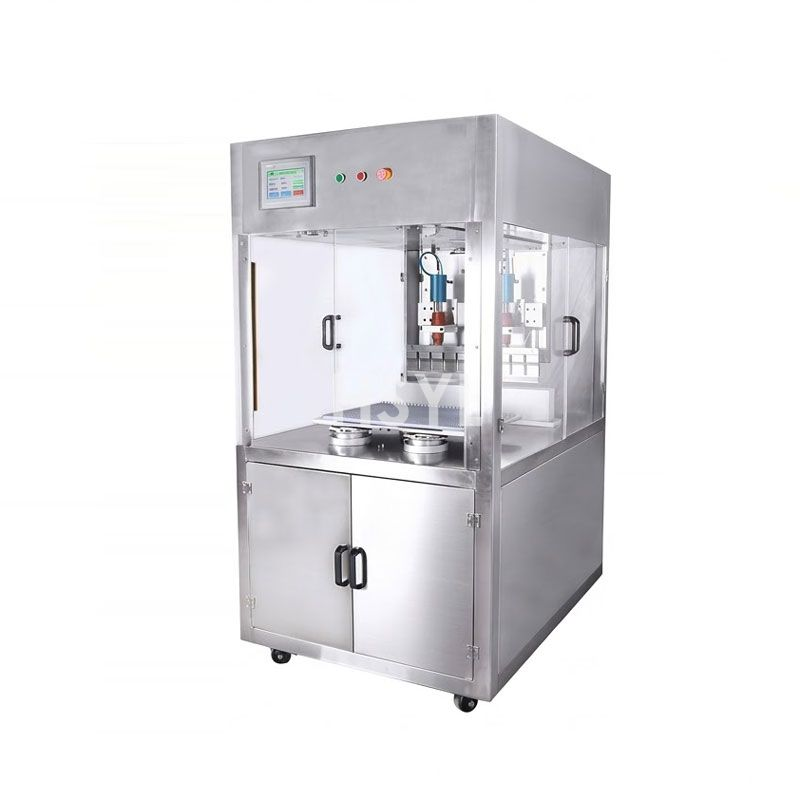
In the eighteen years I have spent walking factory floors from Nebraska to Ohio, I have seen multimillion-dollar ultrasonic cutting systems relegated to "scrap" status simply because the engineering team could not solve basic quality defects. In a high-stakes B2B food processing environment, an "ugly" cut is more than an aesthetic failure; it is a direct hit to your yield and retail acceptance rates. If your brownies are smearing or your salmon is tearing, your ROI is hemorrhaging.

The "Perfect Cut" is a balance of frequency, amplitude, and feed speed. When this balance is lost, you encounter the four horsemen of industrial slicing: smearing, tearing, topping shift, and layer collapse. As an engineer who has spent weeks on-site tuning these parameters, I can tell you that these issues are rarely the fault of the blade itself, but rather a failure to account for the product's physical behavior under high-frequency vibration.

Defect 1: Smearing—The Sugar and Fat Trap

Smearing is most frequently seen in the bakery and confectionery sectors. It occurs when a dark layer (like a chocolate brownie base) is dragged into a lighter layer (like cream cheese or frosting). In traditional mechanical cutting, this is caused by surface friction. In ultrasonic cutting, smearing happens when the blade surface is not vibrating at a high enough amplitude to create the "air-gap" effect.

When the amplitude is too low, the blade behaves like a regular knife. If your product is high in sugar or fats, it will bond to the titanium surface. The next slice then carries that residue into the center of the cake. The engineering fix is often counter-intuitive: you may need to increase the amplitude while decreasing the vertical feed speed. This gives the ultrasonic energy more time to "shear" the fat molecules before the physical mass of the blade passes through.

For a detailed comparison of how these physics differ from traditional methods, our guide on ultrasonic vs mechanical cutting in bakery processing offers a deeper dive into the molecular interaction at the blade edge.

Defect 2: Tearing—When the Mechanical Limit is Reached

Tearing is the primary defect in frozen meat and fish processing. Instead of a clean, laser-sharp edge, the product looks "shredded." This typically happens when the feed rate (measured in mm/s) outpaces the ability of the ultrasonic generator to maintain resonance. When the blade hits a dense pocket of ice or connective tissue, the resistance causes the sonotrode's frequency to "drift."

If the generator's Automatic Frequency Tracking (AFT) is too slow, the blade stalls for a millisecond. In that millisecond, the machine's servo motor is still pushing down, and the blade tears the frozen fibers rather than slicing them. Modern "Smart Generators" with torque feedback are the market response to this, as they can pump more current into the transducer the moment resistance is detected, maintaining resonance through the toughest part of the cut.

Defect 3: Topping Shift and Inclusion Displacement

In the US market, particularly in the premium snack bar and cheesecake niches, toppings (whole nuts, fruit compotes, chocolate chunks) are a major branding element. "Topping Shift" is when the blade pushes the topping into the substrate, or worse, drags it 2 inches down the line. This is a mechanical pressure issue.

The problem usually lies in the "Approach Speed" of the cutting bridge. If the blade hits the topping before the ultrasonic vibration has had a chance to "soften" the interface, it will act as a physical hammer. We solve this by implementing a multi-stage feed profile in the PLC: the blade approaches the product rapidly, slows down 5mm before contact to allow the ultrasonic "shearing" to begin, and then accelerates through the core of the product. This ensures precision without sacrificing overall throughput.

This level of precision is why precision cutting is critical for food safety and hygiene; a displaced topping can create a "dead zone" for microbial growth or tear a packaging film downstream.

Defect 4: Layer Collapse—Managing the Compression Force

Layer collapse is the nemesis of mousse cakes and multi-layer cream sandwiches. You see it when the bottom third of the cake is compressed by the downward force of the cut. This is often a sign that your Wait-Time at Bottom or Retraction Speed is misaligned. If the blade is retracted too quickly while the vacuum is still present at the cutting face, it creates a "suction" that pulls the delicate layers upwards and then collapses them.

In our ultrasonic cheesecake cutting machine designs, we utilize a pressure-compensated belt system. We ensure the conveyor provides enough support to the base while the sonotrode's stroke is calibrated to stop exactly 0.5mm before touching the belt. This "Near-Contact" strategy prevents the final "smush" that ruins a perfect layered presentation.

Ultrasonic Cutting Defects: Smearing, Tearing, Topping Shift, Layer Collapse image 1

Engineering Checklist for Troubleshooting Your Line

1. Check the Amplitude Under Load

Measure the amplitude while the blade is in the air vs. while it is in the product. If the drop is more than 20%, your transducer is under-powered for that specific viscosity.

2. Analyze the Blade Temperature

If the blade feels "hot" after 30 minutes of production, your Duty Cycle is too high, or you have a tuning mismatch. A hot blade will exacerbate smearing by melting fats in the product.

3. Review the "Approach-to-Cut" Distance

Ensure the ultrasonic energy is active at least 10mm before the blade makes physical contact with the product surface.

4. Evaluate Moisture Loss at the Cut Surface

If the cut looks "dry" or "chalky," the ultrasonic energy might be too high, causing microscopic local heating (cavitation) that dries out the product. Lower the amplitude for delicate, high-moisture bakery items.

Market Trends: The Shift Toward Predictive Quality Control

The market is moving away from manual tuning. We are seeing a surge in AI-integrated generators that can detect a "smear risk" or "tear risk" before it happens by monitoring the phase angle of the ultrasonic wave. If the wave becomes "jagged," it signifies a high-resistance event, and the machine can automatically slow the belt or increase the power to compensate. For plant managers, this means less operator dependency and a higher OEE across multiple shifts.

Summary for Plant Operations

As an engineer, I tell my team that "tuning a slicer is tuning a musical instrument." If you treat the machine as a blunt tool, it will bite back with defects. Smearing, tearing, and collapse are simply the product's way of telling you that the vibrational physics are out of sync with its structural reality. Identifying these defects early and understanding their root mechanical causes is the difference between a high-yield operation and one that is constantly re-working its output.

Related Topics-In-Depth Technology Comparisons

Call to Action-Optimization Audit for Your Processing Line

If you are struggling with high reject rates due to smearing, tearing, or layer collapse, it's time for an engineering audit. At HSYL, we specialize in solving "un-tunable" cutting problems through vibrational analysis and proper component selection. Contact our technical team today to discuss your product characteristics and how we can optimize your generator settings to maximize your factory's yield.