Filling chunky soups and stews is one of the most underestimated challenges in industrial food production. Unlike homogeneous liquids, these products combine liquid phases with suspended solids—vegetable pieces, meat cubes, beans, grains—each with different densities, sizes, and flow behaviors. For factory owners, production managers, and engineers, the choice of filling technology directly affects yield, hygiene, throughput stability, and long-term operating costs. This is where the debate around Overcoming Challenges in Filling Chunky Soups and Stews: Piston vs. Volumetric Fillers becomes highly relevant in real production environments.
In high-volume soup and ready-meal factories, inaccurate filling leads to giveaway, clogged valves cause downtime, and poor handling of particulates results in inconsistent product appearance. Selecting the right filler is not a marketing decision; it is an engineering decision tied to product rheology, line layout, sanitation requirements, and future capacity planning. This article examines how piston fillers and volumetric fillers work, the problems they solve, and how industrial buyers should evaluate them for chunky soup and stew applications.

Understanding the Nature of Chunky Soups and Stews in Industrial Filling
Before comparing filling technologies, it is essential to understand the product itself. Chunky soups and stews are multiphase foods. They may include broth or sauce with suspended solids ranging from soft vegetables to fibrous meats. These inclusions can settle, bridge, shear, or deform under pressure.
From an engineering standpoint, the main challenges include maintaining a consistent solids-to-liquid ratio, preventing particle damage, and ensuring repeatable fill weights at production speeds. Any filling solution must manage these variables under continuous operation.
What Are Piston Fillers and How Do They Work?
Engineering Principle of Piston Filling
Piston fillers operate on a positive displacement principle. A piston draws product into a cylinder during the intake stroke and then pushes a fixed volume through a valve and nozzle during the discharge stroke. The volume is mechanically defined by the piston diameter and stroke length.
For chunky soup filling, the key advantage is that solids and liquids are displaced together as a single mass. As long as particle size is compatible with valve geometry, the system can deliver highly repeatable fills.
Key Components Relevant to Chunky Products
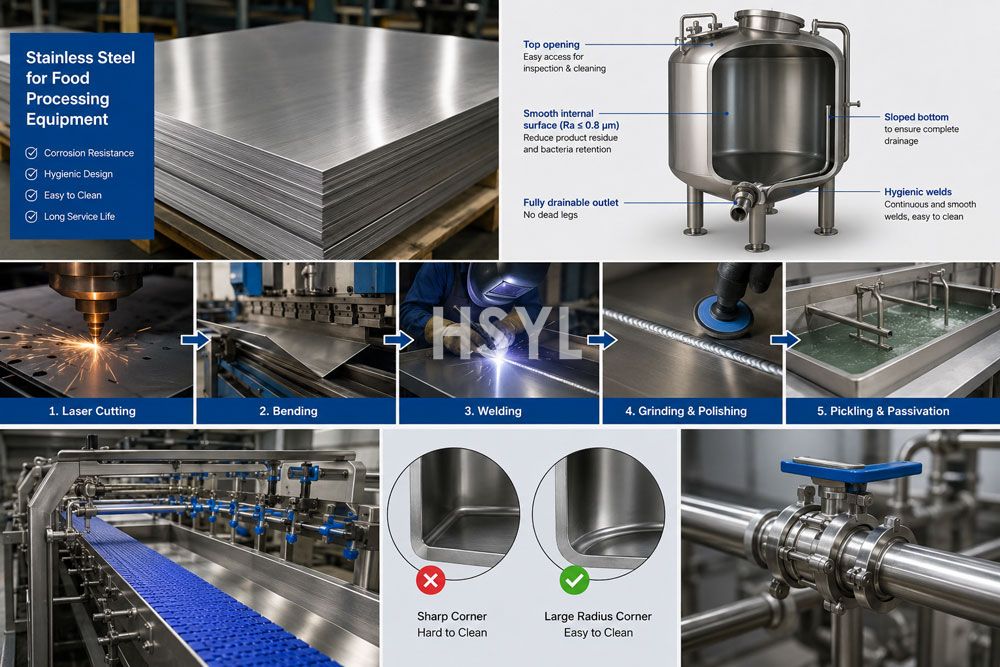
Industrial piston fillers for soups typically use large-bore cylinders, rotary or ball valves, and short product paths to reduce shear. Hygienic design principles are critical, with polished stainless-steel contact surfaces and tool-free disassembly for cleaning.
Because the fill volume is mechanically controlled, piston fillers are less sensitive to viscosity changes caused by temperature fluctuations or formulation variations.
What Are Volumetric Fillers and How Do They Work?
Operating Concept of Volumetric Filling
Volumetric fillers measure product by volume using flow meters, timed flow, or chamber-based systems rather than direct mechanical displacement. In liquid applications, they rely on consistent flow characteristics to achieve accurate fills.
When applied to chunky soups and stews, volumetric fillers must manage variable flow rates caused by particle movement and potential blockage.
Design Considerations for Chunky Applications
Some volumetric systems incorporate augers, impellers, or agitation to keep solids suspended. Others use oversized valves and gentle pumping mechanisms. However, the inherent reliance on flow behavior means that changes in product composition can directly affect accuracy.
Volumetric fillers are often favored in applications where flexibility and speed are prioritized over absolute precision.
Why Overcoming Challenges in Filling Chunky Soups and Stews: Piston vs. Volumetric Fillers Matters to Industry
Labor Cost and Manual Intervention
Inadequate filling technology increases labor requirements. Operators must constantly adjust settings, clear blockages, or manually rework underfilled or overfilled containers. Piston fillers, once properly set, tend to require less ongoing intervention for chunky products.
Volumetric fillers may demand closer monitoring when product characteristics vary, increasing operator workload in multi-recipe environments.
Yield Loss and Giveaway Control
Yield loss is a hidden cost in soup production. Even a few grams of overfill per container can translate into tons of product loss annually. Piston fillers excel in controlling giveaway because each stroke delivers a fixed volume regardless of flow resistance.
Volumetric fillers can be accurate under stable conditions, but solids distribution variability may result in inconsistent weights, especially at higher speeds.
Hygiene and Food Safety Risks
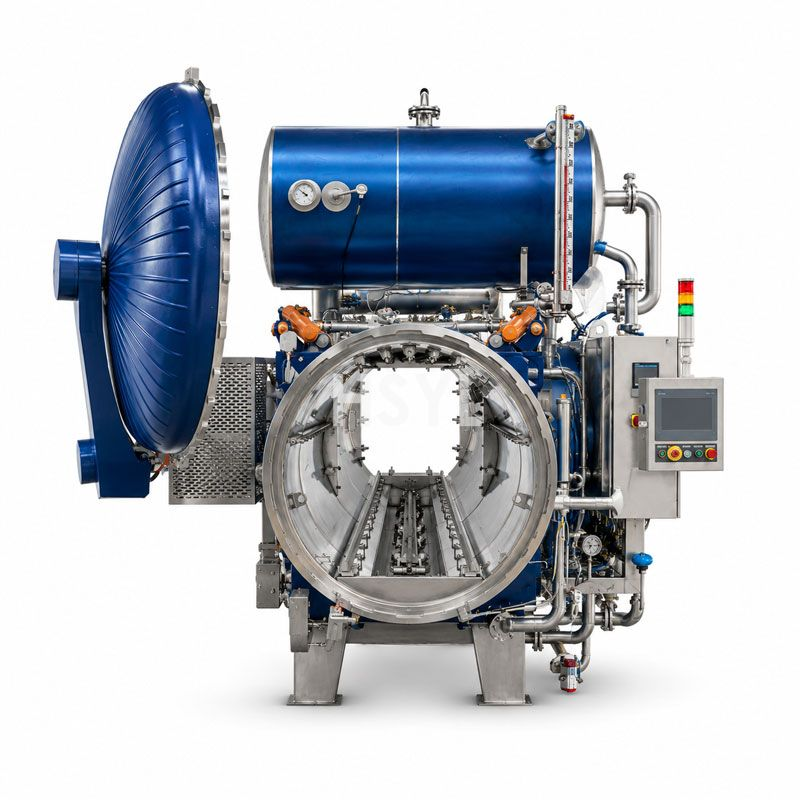
Chunky soups are often processed as low-acid or retort products, making hygiene non-negotiable. Dead zones, complex flow paths, and difficult-to-clean components increase contamination risk.
Well-designed piston fillers feature minimal internal cavities and full CIP/SIP compatibility. Volumetric systems vary widely in hygienic performance, depending on their measurement technology and valve design.
Inconsistency and Brand Risk
Inconsistent fill appearance—too many solids in one container, too few in another—can erode brand trust. Piston fillers inherently move a representative cross-section of product, supporting consistent visual quality.
Volumetric fillers may struggle to maintain solids distribution unless supported by effective upstream mixing and agitation.
Scalability and Line Expansion Challenges
As demand grows, production lines must scale without compromising quality. Piston fillers scale predictably by increasing cylinder size or number of filling heads. Volumetric fillers can scale in speed but may require more complex control systems to maintain accuracy with chunky products.
Key Features and Technical Advantages of Piston Fillers for Chunky Soups
Positive Displacement Accuracy
The defining advantage of piston fillers is repeatability. Each cycle delivers the same volume, independent of viscosity or particle load, making them ideal for soups with variable formulations.
Gentle Product Handling
Large-diameter valves and smooth internal transitions reduce shear forces, preserving the integrity of vegetables and meat pieces. This is particularly important for premium soups where particle appearance matters.
Mechanical Simplicity and Reliability
From an engineering perspective, piston fillers are mechanically straightforward. Fewer sensors and electronic measurement devices mean fewer failure points in harsh production environments.
Integration with High-Care and Retort Lines
Piston fillers integrate well with retort baskets, aseptic fillers, and high-care zones due to their predictable discharge and robust sealing options.
Key Features and Technical Advantages of Volumetric Fillers for Chunky Soups
Flexibility Across Container Sizes
Volumetric fillers can switch between container sizes quickly through parameter changes rather than mechanical adjustments, which is attractive in short-run or private-label production.
High-Speed Capability
In applications where product consistency is well controlled, volumetric fillers can achieve high line speeds, supporting large-scale operations with standardized recipes.
Lower Initial Mechanical Complexity
Some volumetric systems have fewer moving parts in direct contact with product, which can simplify maintenance in certain configurations.
Typical Applications and Production Scenarios
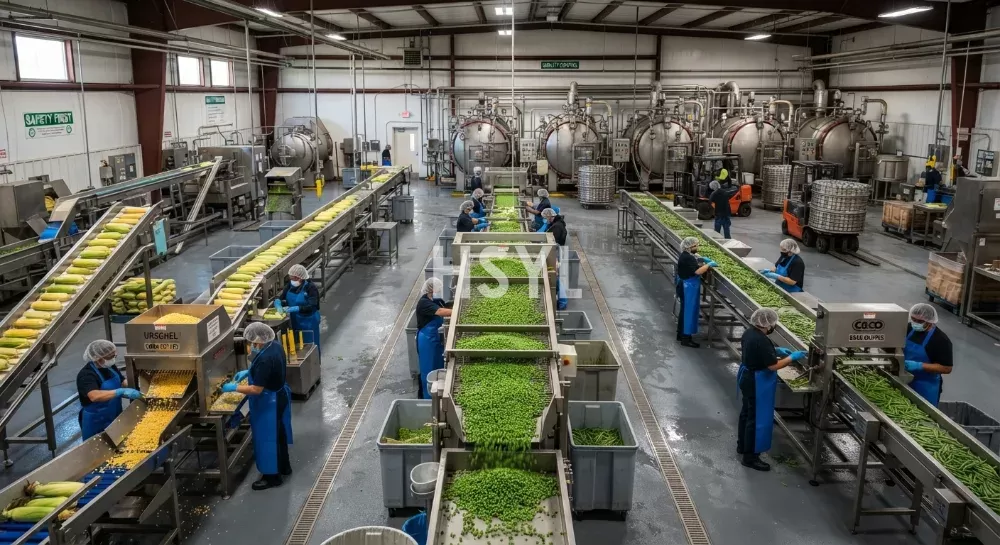
In industrial soup factories producing consistent, high-particulate products such as beef stew or vegetable chowder, piston fillers are commonly used on glass jar, can, and pouch lines. They perform reliably under retort conditions and support strict fill-weight control.
Volumetric fillers are more often applied in applications with smaller particulates or semi-homogeneous products, such as creamy soups with diced vegetables, where flow behavior is more predictable.
Hybrid lines also exist, where volumetric pre-filling is combined with check-weighing and correction systems, but this adds complexity and cost.
Capacity Options and Selection Guidance for Buyers
Throughput Considerations
When evaluating Overcoming Challenges in Filling Chunky Soups and Stews: Piston vs. Volumetric Fillers, buyers should start with required throughput. Piston fillers can be configured from low-speed pilot lines to multi-head systems exceeding industrial demands.
Volumetric fillers may offer higher nominal speeds but require stable product conditions to sustain them without accuracy loss.
Line Layout and Footprint
Piston fillers typically have a larger footprint due to cylinders and drive mechanisms. Volumetric fillers can be more compact, which matters in space-constrained facilities.
Future Expansion Planning
If future recipes include larger particulates or higher solids content, piston fillers provide greater flexibility without major redesign. Volumetric fillers may require upgrades to pumps, valves, or control systems.
Buyer Benefits from the Right Filling Technology
Improved Operational Efficiency
Reliable filling reduces downtime, rework, and operator intervention. Piston fillers offer predictable performance that simplifies daily operations.
Labor Reduction
Automation stability directly reduces labor dependency. Fewer manual adjustments translate into lower staffing requirements and reduced training complexity.
Enhanced Product Quality
Consistent fill weights and uniform solids distribution protect brand image and meet regulatory requirements.
Long-Term ROI and Scalability
Although piston fillers may have higher upfront costs, their durability and adaptability often result in lower total cost of ownership over the equipment lifecycle.
Customization and Engineering Support
No two soup products are identical. Successful filling systems are the result of collaboration between equipment manufacturer and processor. Custom valve designs, tailored cylinder sizes, and optimized hopper agitation are common adaptations for chunky soups.
Integration with upstream cooking kettles and downstream sealing or retort systems requires engineering coordination. Manufacturers with real implementation experience can anticipate issues such as particle segregation, air entrapment, and thermal expansion effects.
Standards, Certifications, and Compliance
Industrial filling equipment for soups must comply with CE requirements for machinery safety, HACCP principles for food safety, and ISO quality management systems. For products destined for the US market, FDA-oriented hygienic design principles are essential.
Materials selection, surface finishes, and cleanability are not optional features but baseline requirements for compliance and audit readiness.
Conclusion: Making the Right Choice for Chunky Soup Filling
Successfully Overcoming Challenges in Filling Chunky Soups and Stews: Piston vs. Volumetric Fillers requires an engineering-driven evaluation, not a one-size-fits-all answer. Piston fillers offer unmatched accuracy and robustness for high-particulate products, while volumetric fillers provide flexibility and speed under controlled conditions.
For processors planning new lines or upgrading existing ones, a detailed process review—including product testing, capacity modeling, and hygienic design assessment—will clarify the optimal solution. Engaging with experienced equipment engineers early in the project can help align filling technology with production goals, regulatory requirements, and long-term growth strategies.
Frequently Asked Questions
What is the biggest challenge in filling chunky soups accurately?
Are piston fillers suitable for large particulates like meat cubes?
Can volumetric fillers handle recipe changes easily?
Which filler type offers better hygiene for retort products?
Is one system more energy efficient than the other?
How do I choose between piston and volumetric fillers?
Related Articles
Get professional consultation
Do you have any questions or need technical support regarding the content of this article? Fill out the form below, and our expert team will provide you with professional solutions.