The Strategic Shift to Turnkey Seafood Processing Systems
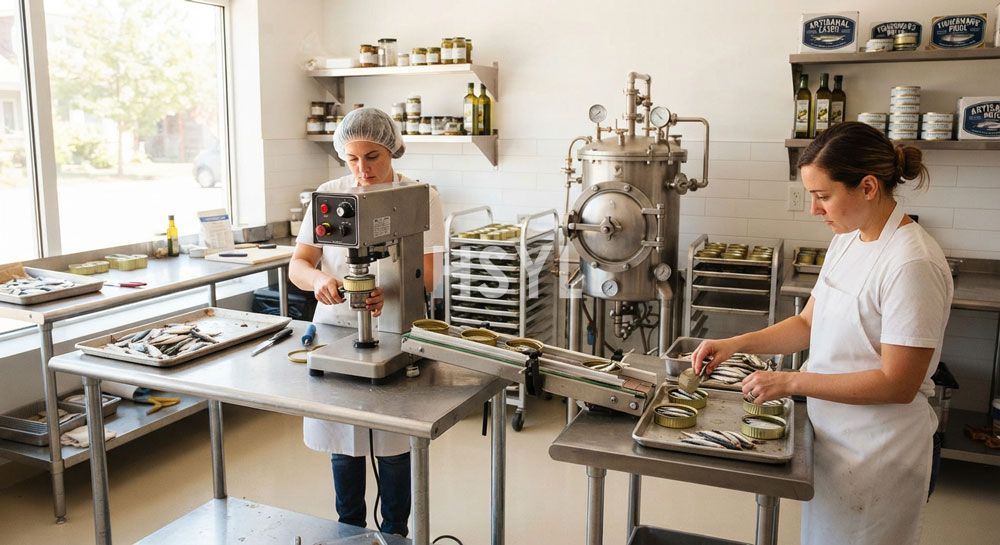
When an engineering head or operations director evaluates a new canned seafood project, the decision-making path is often clouded by a classic procurement dilemma. Should you purchase individual, standalone machines from multiple specialized vendors to minimize initial CapEx, or should you invest in a single, balanced Turnkey Fish Canning Plant? In my thirty years of troubleshooting, commissioning, and managing seafood processing lines, I have witnessed many plants suffer from the consequences of fragmented sourcing. A piecemeal line assembly almost always leads to speed mismatches, integration headaches, and blame-shifting between suppliers when the line fails to meet its target throughput.For complete autoclave batch scheduling and facility sanitation planning, refer to our engineering overview on small scale fish canning line.
Modern canned seafood production is a high-volume, low-margin process where profits are dictated by raw material yield and line uptime. With global labor shortages, rising utility costs, and strict hygiene regulations, plants cannot afford operational inefficiencies. A unified turnkey plant solves these issues by treating the entire factory floor as a single, integrated process system. To help technical buyers and project engineers make an informed investment decision, let us analyze the engineering trade-offs and operational realities that govern turnkey seafood plant design.
CapEx vs. OpEx: The Total Cost of Ownership (TCO) in Canned Seafood
The biggest misjudgment made by procurement teams is selecting equipment based solely on the lowest initial quote. In high-volume food processing, machinery depreciation represents only a small fraction of your total cost of ownership. The real financial battle is fought daily in raw material waste, steam and water consumption, and sanitation downtime. A cheaper, poorly integrated line can easily cost you hundreds of thousands of dollars in lost operating margins over a single year of double-shift operation.
When you partner with a turnkey engineering supplier, the initial capital expenditure covers the matching of machine capacities, central automation, and utility distribution. By optimizing these interfaces upfront, you protect your long-term operational budget. High-quality double seamers, automated filleting machines, and insulated rotary retorts may require a higher initial CapEx, but they deliver a much faster return on investment (ROI) by maximizing yield and minimizing utility waste. For a detailed breakdown of a successful high-capacity installation, you can review our Case Study: 8,000 CPH Automatic Fish Canning Plant.
The Yield Equation: Protecting Raw Material Margins
In any canned seafood plant, raw fish—whether it is sardine, mackerel, or tuna—is your most expensive recurring operational input. Consequently, a minor yield drop of just two percent can represent the difference between profit and loss for a processing shift. Manual gutting, tail cutting, and hand-packing are highly operator-dependent, introducing significant product giveaway as workers overfill cans to avoid underweight compliance penalties.
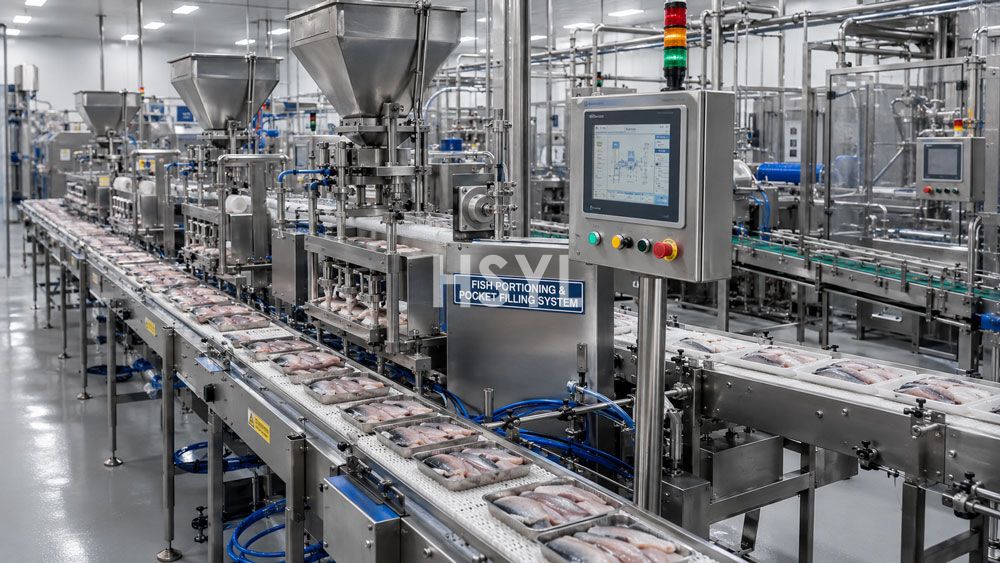
An automated turnkey plant resolves this by integrating high-precision cutting and automated portioning systems. Vacuum-assisted gutting machines remove viscera cleanly without tearing the delicate belly flesh of species like sardines or anchovies. This cutting accuracy protects the visual appeal of the product while maximizing protein recovery. For chunk fish and tuna, automatic rotary pocket fillers compress the loins and cut them into precise cylinder plugs, maintaining an extremely tight fill-weight variance. This high accuracy prevents overfill giveaway, directly protecting your bottom line. To understand the machinery configurations that achieve these yield parameters, explore our HSYL Automatic Fish Canning Line Equipment specifications.
Utility Balancing: Sizing Steam, Water, and Air Networks
A common engineering error in piece-meal canning lines is the poor sizing and balancing of utility distribution systems. Thermal sterilization in steam retorts requires massive, sudden draws of steam to raise the chamber temperature to the required 121°C sterilization setpoint. If your steam header and boiler piping are designed only for average loads, starting a retort cycle will starve the upstream pre-cookers and liquid dosing stations, leading to process temperature drops.
To prevent this utility starvation, a well-engineered turnkey plant includes dedicated steam accumulation headers and pressure-regulating loops that buffer retort spikes. Similarly, water usage must be tightly managed. Turnkey autoclave retorts are equipped with water cascade or water spray cooling loops that recycle water through a closed-circuit cooling tower. Instead of discharging hot water directly to the wastewater system, the thermal energy is recovered, and the water is chlorinated for reuse in subsequent cooling cycles. This integrated resource management conforms to the environmental and engineering standards outlined in our primary HSYL Turnkey Fish Canning Line Solutions.
Sanitation Design & Labor Realities on the Shop Floor
With clean labor becoming increasingly scarce and expensive, modern food plants must minimize operator dependency. Sourcing a fully automated turnkey line allows a 20-ton-per-shift plant to operate with only a fraction of the workforce required for manual setups. However, high automation levels require excellent sanitation design to prevent long washdown times from eating into your daily production schedule.
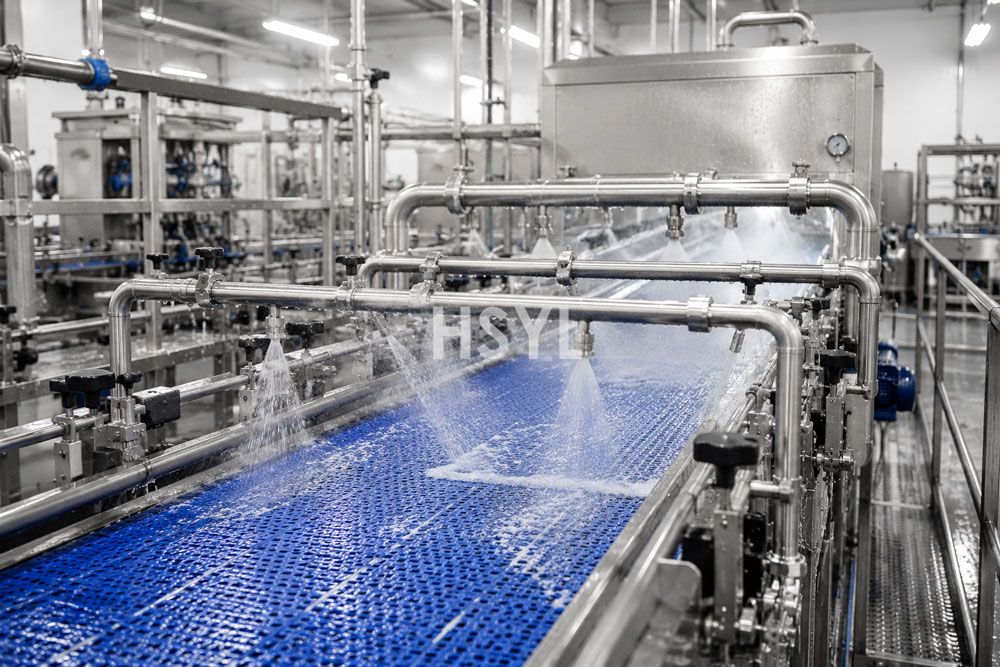
Fish oils and proteins are highly adhesive and prone to rapid bacteriological growth. If your machinery features exposed screw threads, flat horizontal frames, or non-hygienic welds, organic material will accumulate, creating bio-hazard risks. Our turnkey systems are engineered with food-grade SUS316L stainless steel for all contact surfaces, sloped self-draining structural frames, and washdown-safe IP69K electrical enclosures. Integrating clean-in-place (CIP) spray bars directly into the conveyor transfers and filler valves allows your cleaning team to sanitize the entire processing line in two hours instead of six, reclaiming four hours of active production time every day.
Thermal Process Control and Sealing Reliability
Commercial sterility and long-term shelf stability are achieved only when the double seamer and retort autoclave operate in absolute harmony. The double seamer must apply precise force to form a hermetic seal. Any oil or brine spilled onto the can flange during filling will compromise this seal, leading to post-process microbial contamination. Therefore, the liquid filling system must feature anti-drip dosing nozzles that cut off instantly before seaming.
Once sealed, the cans enter the counter-pressure autoclave retort. Achieving safe thermal processing requires precise control over heat distribution and pressure. As cooling water enters the retort at the end of the sterilization cycle, the steam condenses instantly, creating a rapid pressure drop inside the chamber. If the internal pressure of the hot can exceeds the chamber pressure, the can walls will swell or buckle. Turnkey retort systems utilize automatic modulating counter-pressure valves using compressed air to maintain pressure balance, ensuring can integrity and safety compliance under the FDA Seafood HACCP Regulations.
Turnkey Plant Configuration Comparison
The following matrix compares standard turnkey fish canning plant configurations to assist engineering managers in selecting the ideal system scale for their facility.
| Project Dimension | Small Scale Turnkey (Compact) | Medium Scale Turnkey (Balanced) | High Capacity Turnkey (Full Automation) |
|---|---|---|---|
| Raw Fish Input Capacity | 5 - 10 Tons/Day | 15 - 25 Tons/Day | 40 - 60+ Tons/Day |
| Finished Product Throughput | 3,000 - 5,000 cans/hour | 10,000 - 15,000 cans/hour | 20,000 - 30,000+ cans/hour |
| Estimated Floor Space Needed | 400 - 600 m² | 1,000 - 1,500 m² | 2,500 - 4,000 m² |
| Boiler Steam Output Sizing | 0.8 - 1.0 Ton/hour | 2.0 - 2.5 Tons/hour | 4.5 - 6.0 Tons/hour |
| Operational Labor Footprint | 15 - 20 operators | 8 - 12 operators | 4 - 6 operators (SCADA monitor) |
| Sanitation & CIP Level | Manual spray with CIP fillers | Full CIP integration, sloped frames | Automated CIP cycles, sterile overpressure |
| Estimated ROI Horizon | 18 - 24 months | 12 - 16 months | 8 - 12 months (Lowest per-can OpEx) |
A Plant Manager's Roadmap for Sourcing a Turnkey Plant
If you are currently drafting a request for proposal (RFP) for a new canned seafood facility, do not finalize your equipment specifications until you have executed these four engineering verification steps:
- Conduct a Complete Mass-Energy Balance Simulation: Demand that your turnkey vendor provide a complete flow simulation showing mass balance (raw fish to finished cans) and energy balance (steam, water, electricity, air) under peak production speeds. This ensures that no single machine acts as an artificial bottleneck.
- Verify Hygienic Zone Layout Partitioning: Walk through the factory architectural blueprint with your food safety manager. Ensure there is a physical sandwich-panel wall separating the raw receiving area from the clean packing zone, with sterile air overpressure in the filling area to prevent airborne cross-contamination.
- Insist on a Single automation Protocol: Do not accept mixed PLC brands with different communication protocols. Require a unified PLC platform (such as Siemens or Allen-Bradley) operating on a single industrial network. This unified control is necessary for centralized SCADA monitoring, alarm logging, and complete batch traceability.
- Require Factory Acceptance Testing (FAT) with Real Raw Materials: Ensure that your purchase contract includes a mandatory FAT phase at the machinery production plant. Do not allow shipment until the vendor runs a test batch of your actual species (such as tuna loins or sardines) to prove cutting accuracy, fill-weight tolerances, and seaming integrity under real processing loads.
Related Topics
- HSYL Turnkey Fish Canning Line Solutions
- Case Study: 8,000 CPH Automatic Fish Canning Plant
- HSYL Automatic Fish Canning Line Equipment
Call to Action
Planning and implementing a turnkey fish canning plant is a highly technical engineering task that requires balancing mechanical speed, steam thermodynamics, and sanitary layout design. At HSYL, we do not just manufacture individual machines; we design and commission fully integrated, balanced turnkey production lines engineered for maximum yield, low lifecycle cost, and strict regulatory compliance. Contact HSYL engineering today to discuss your factory layout plans, calculate your utility requirements, and schedule a customized consultation with our senior project engineering directors.
Frequently Asked Questions
What is the standard lead time for an HSYL turnkey fish canning plant?
Do HSYL turnkey plants include raw material cold storage systems?
How does HSYL manage wastewater pre-treatment in a turnkey plant?
Can the turnkey canning line handle multiple species like tuna and sardines on the same machinery?
Do you send engineers to our site for installation and startup commissioning?
What pressure vessel standards do HSYL retort autoclaves comply with?
Related Articles


Get professional consultation
Do you have any questions or need technical support regarding the content of this article? Fill out the form below, and our expert team will provide you with professional solutions.