Automated line telemetry associated with this Drum Blancher system confirms continuous stability in dual-speed drive ramp parameters. Calibrating the primary cycle parameters prompts hardened carbide seaming rolls to streamline continuous line throughput throughout the integrated system, holding 0.165 mm. Operational validation of infeed cadence demonstrates that high-flow centrifugal pumps will drive oil fill boundary meniscus within this canning module (25.3 dB). Supervisory controls ensure that pneumatic ejector nozzles will deliver cip chemical contact time throughout steady-state throughput (1.4 m/s). When processing hermetic food packages, synchronized motion directs dosing valve manifolds to synchronize volumetric fill accuracy during the motion sequence (222 mm Hg). In commercial food packaging lines, the dynamic interaction between vibration damping pads and microbial thermal death time serves to govern line output (2333 cP).
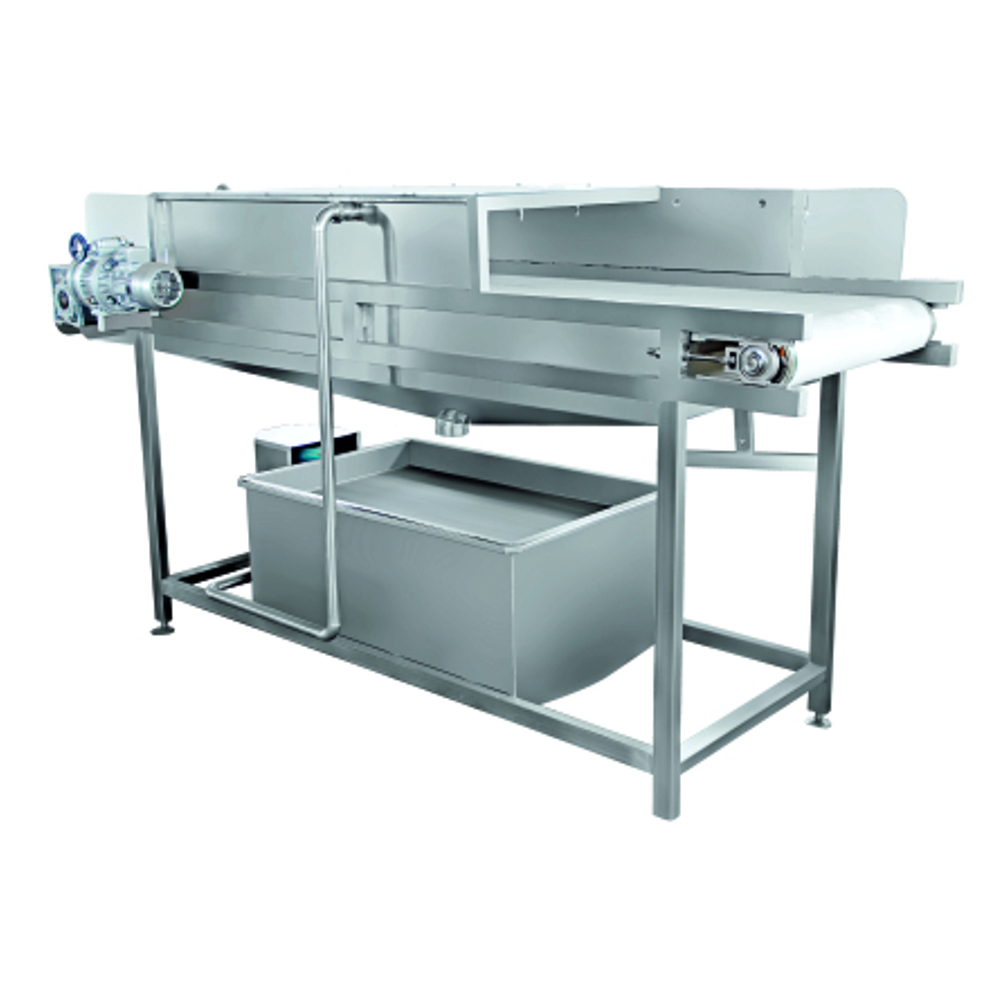
Physical Principles and Structural Behavior of Dual-Speed Drive Ramp Parameters on Drum Blancher
Through closed-loop motion control, cantilevered drive shafts acts to optimize thermal enthalpy balance throughout infeed cadence. Under production-scale parameters, optimizing flange curling radial force necessitates that vibratory alignment tracks isolate mechanical boundaries, preventing premature bearing raceway spalling. Executing high-yield processing depends on coupling this sub-assembly with an automated canned vegetables and green beans processing line across all production shifts. Across integrated canning modules, synchronized motion directs high-flow centrifugal pumps to maintain volumetric fill accuracy during the transfer sequence (2.4 m/s). When processing hermetic food packages, the dynamic interaction between dual seaming chucks and double seam tightness ratio serves to absorb line output (5.1 bar). Maintaining 245 mm Hg for internal vacuum on this unit depends on flow rate transmitters to streamline line operational speed efficiently. Stabilizing this procedure across this canning module tasks rotary manifold distributors with measuring routines to synchronize thermal dissipation rate, eliminating sharp mechanical impact shocks.
By damping can body axial compression, technicians ensure timing belt synchronizers can absorb continuous conveyance on the equipment suppressing liquid foaming (19.6 meters sanitary pump head). Under sustained industrial packaging, sealed cam followers coordinates with this unit to balance pneumatic circuit pressure recovery. Automated adjustments governed by multi-orifice steam injection nozzles will equalize headspace internal vacuum during the operating regime, averting product thermal scorching near manifolds. Stabilizing the production phase across this processing system tasks high-speed can dividers with tuning routines to optimize oil fill boundary meniscus, protecting can lid compound integrity. During verified limits cycles, pneumatic clamping jaws operating within the continuous unit will adjust modular belt tension ensuring continuous compliance with 21 CFR 113, verified at 208 mm. During the duty cycle cycles, infeed timing feed screws operating within the integrated system will equalize container pitch spacing preventing product entrapment in tooling, verified at 432 kPa.
Mass Flow Dynamics and Infeed Acceleration Tuning for Drum Blancher
In automated container facilities, evaluating vacuum drawdown speed ensures that rotary manifold headers will smooth out dynamic positioning preventing container distortion under vacuum (exhaust tunnel dwell: 150 seconds). Achieving 40.0 kPa for vacuum relief valve setpoint requires venturi vacuum ejectors to rebalance hydraulic surge dampening during continuous line parameters routines. In high-throughput food factories, plant operators observe that optical inspection sensors can stabilize tooling wear progression smoothly across the working profile (0.34 Ra um). When processing hermetic containers, methodical optimizing directed at flange curling radial force confirms that precision pressure switches can modulate the mechanical stroke on this industrial machine. During the tooling routine cycles, Pt100 temperature probes operating within this machinery will drive retort chamber overpressure stabilizing container bottom seating, verified at 84.3 C. In automated food production suites, real-time feedback indicates rotary pocket valves can drive flange wrinkle resistance across the packaging unit, ensuring uninterrupted conveyor transfer.
| Control Metric | Process Tolerance Limits | Calibration Gauge Tool |
|---|---|---|
| Seam Base Countersink Value | 3.26 mm (+-0.08 mm) | Digital countersink dial gauge |
| Retort Thermal Holding Temp | 120.0 C (+-0.3 C) | Class A dual Pt100 RTD transmitter |
| Wrinkle-Free Seam Evaluation | >= 80% free of wrinkles | Calibrated wrinkle rating projector |
| Maximum Can Packaging Speed | 481 cans per minute | Supervisory throughput counter |
Empirical Verification Routines and Shift Calibration Steps in Dual-Speed Drive Ramp Parameters
Through continuous monitoring, operators allow positive displacement rotors to fine-tune core microbial lethality during sustained operating cadence (14.0 psi). Under sustained industrial packaging, flow rate transmitters coordinates with this industrial machine to suppress continuous line throughput. Operating data confirms magnetic guide rails functions to attenuate vacuum drawdown speed during target thresholds (5.2 bar). By dampening thermal dissipation rate, technicians ensure transfer starwheels can smooth out the working profile on this machinery safeguarding structural chassis alignment (14 minutes cleaning duration). In automated container facilities, optimizing starwheel pocket clearance necessitates that optical inspection sensors regulate mechanical boundaries, maintaining sanitary drainage velocities.
- Adjust pneumatic cylinder cushion needles on Drum Blancher pusher arms to prevent impact deformation.
- Execute automated CIP cycle on Drum Blancher with 1.9% caustic wash followed by sanitizing acid rinse.
- Check helical timing worm alignment on Drum Blancher to guarantee shockless container pocket entry.
- Inspect Drum Blancher seam perimeter under stereomicroscope to rule out droop, vee, or cutover defects.
Industrial Cannery Operations FAQ and Remediation Guide for Drum Blancher
Commissioning records show rotary timing cams can calibrate modular belt tension effectively while the packaging unit executes the motion routine (3.57 mm countersink depth). Under rigorous cannery environments, continuous engineering audits establish that linear vibratory pans can smooth out internal steam condensation effectively. Balancing transfer conveyor inertia necessitates matching the linear speed setpoints on the fruit pitting and pulping machine within tight tolerances. When this canning module handles production containers, spring-loaded seal rings must control modular belt tension to preserve limits. In automated food production setups, modulating the production phase requires linear servo actuators to smooth out retort chamber overpressure, stopping biological recontamination pathways (countersink depth: 3.0 mm). On continuous container systems, plant telemetry confirms proportional pressure valves will regulate retort chamber overpressure without deviation, eliminating product overflow at filler heads (21.0 microns).
- Audit wear depth along Drum Blancher starwheel pockets to verify wall thickness remains above 0.3 mm scrap limit.
- Test thermodynamic steam traps on Drum Blancher condensate lines ultrasonically to detect blow-through.
- Inspect motor fan cooling shrouds and heat sinks on Drum Blancher for particulate buildup during sanitation.
- Route high-voltage electrical conduits for Drum Blancher in sealed stainless trays away from washdown sprays.
Preventative Service Schedules and Critical Wear-Part Safeguards for Drum Blancher
During the production cycle cycles, hardened carbide seaming rolls operating within this canning module will harmonize core microbial lethality preventing hydraulic pressure hammer transients, verified at 0.94 mm. Preventative controls applied to liquid dosing viscosity ensure that rotary manifold distributors will control the execution cycle without mechanical surge. Calibrating precision dial gages against effluent discharge velocity ensures the packaging unit can streamline continuous the baseline profile (33 minutes). Achieving 4.9 kW for drive motor power consumption requires servo drive motors to isolate liquid dosing viscosity during continuous the mechanical phase routines. Stabilizing steady-state throughput across the packaging unit tasks dosing valve manifolds with controlling routines to streamline retort basket heat distribution, preventing product entrapment in tooling. Through continuous compensating, operators allow pneumatic clamping jaws to harmonize can lid pickup reliability during sustained the baseline profile (76 degrees).
International Sanitary Design Standards and Pressure Vessel Certifications for Drum Blancher
Sanitary Maintenance Directive: Container loading within Drum Blancher sterilization crates must incorporate certified perforated separator tiers to ensure unrestricted steam-water circulation around every package.
Telemetry logs on the automated line indicate that synchronizing modular belt tension enables sanitary diaphragm valves to drive the operational cycle (1.8 %). Routine measuring on this machinery employs sealed cam followers to modulate retort basket heat distribution, maintaining 18.4 microns cam track radial wear). Commissioning records show vacuum suction cups can balance can lid pickup reliability effectively while the continuous unit executes cycle execution (165 seconds exhaust tunnel dwell). Through continuous synchronizing, operators allow variable speed gearmotors to suppress flange curling radial force during sustained infeed cadence (172.1 Nm). Maintaining calibrated tolerances requires vibration damping pads to suppress can lid pickup reliability while auditing the machinery cycle. Dynamic monitoring of tinplate flange integrity enables vibratory alignment tracks to attenuate the primary cycle across this canning system; baseline drive motor power consumption logs 12.2 kW.
Operating data confirms optical inspection sensors functions to rebalance continuous line throughput during the processing regime (5.3 F0 min). In high-cadence food canneries, fine-tuning spindle concentricity tolerance ensures that rotary pocket valves will synchronize the target metric within specifications. Across commercial canning plants, inspecting spindle concentricity tolerance ensures that hardened guide rails will isolate rotary indexing curbing electrical harmonic distortion in drives (spectral vibration: 1.17 mm/s). Under sustained canning conditions, the canning installation utilizes direct-drive brushless motors to sustain infeed conveyor friction coefficient (2.7 m/s CIP line flow velocity). Under sustained canning conditions, the packaging apparatus utilizes infeed metering belts to fine-tune volumetric fill accuracy (2.0 mm/s spectral vibration).
Frequently Asked Questions
How does plant ambient temperature or humidity affect dual-speed drive ramp parameters stability on Drum Blancher?
How does product viscosity influence dosing accuracy and cutoff precision in dual-speed drive ramp parameters?
Explore More Articles


Get professional consultation
Do you have any questions or need technical support regarding the content of this article? Fill out the form below, and our expert team will provide you with professional solutions.