A crate washer layout needs to explain how containers arrive and how accepted clean containers return to use. Placing the machine on a floor plan does not define that handoff or the status of containers waiting around it.
Draw the surrounding work, including sorting, loading, unloading, assessment, rejected containers and machine service access. The factory's qualified hygiene review should establish the actual zoning and controls.
Start at dirty-container receipt
Identify where used crates are collected, held and sorted. Record the intended container range and relevant incoming condition. Include the route for unsuitable containers under the plant's procedure.
Consider the supporting work at the same time as throughput. A washer can wait for sorted crates while the gross return volume appears high. Material collection and presentation therefore belong in the layout discussion.
Mark the clean handoff
State where containers are assessed and who authorizes their next use. Distinguish accepted containers from those requiring further work or a decision. Physical location, identification and records should tell the same story.
| Route to review | Layout question |
|---|---|
| Used crates | How do they reach sorting and loading? |
| Accepted clean crates | How do they leave the station and return to use? |
| Staff and tools | How are the approved hygiene arrangements maintained? |
| Residues and waste | How are they removed under the selected method? |
| Maintenance | Can the equipment be isolated, opened and serviced as required? |
Do not assume that a universal straight-line arrangement suits every room. Evaluate the actual building and operating method.
Include the washer's own work
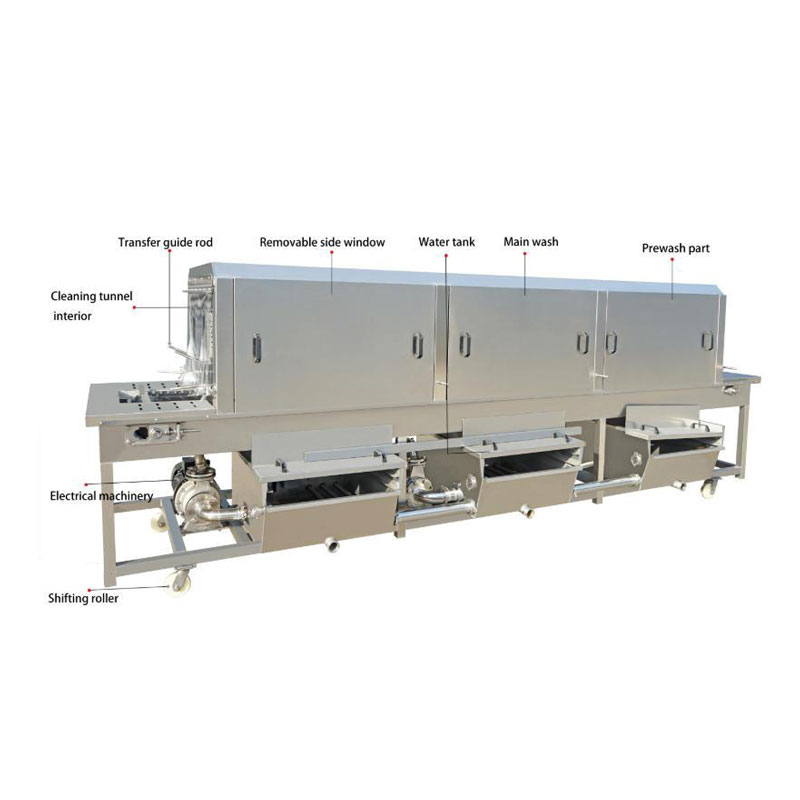
The automatic crate washer requires the specified services and its approved cleaning and maintenance tasks. Include working envelopes, component handling and drainage in the layout rather than only the machine footprint.
EHEDG's equipment test-method information distinguishes assessed suitability from performance in every specific application. A product or test reference does not remove the need to evaluate the factory's real cleaning task and layout.
Walk a complete operating cycle
Observe receipt, a normal washing period, a format change where applicable and the approved end-of-operation work. Include the containers, people, tools and waste actually present during those tasks.
The manual-versus-automatic crate washing guide covers work and cost boundaries. The cleanability review helps examine equipment evidence, while factory planning connects the station with the building and utilities.
Record the reasons for layout decisions and remaining conditions. The accepted arrangement should support a clear container-status handoff and practical daily work, not simply an attractive plan drawing.
Frequently Asked Questions
Should a clean-looking crate automatically enter the clean return route?
Can loading and unloading share the same space?
Does higher washer speed resolve a collection bottleneck?
Related Articles


Get professional consultation
Do you have any questions or need technical support regarding the content of this article? Fill out the form below, and our expert team will provide you with professional solutions.