The Engineering Economics of Canned Beans Processed Food: 2026 Market Trends & Production Line ROI
- Global market valuation for canned beans is projected to reach $9.05 billion by 2034, heavily influencing the demand for agile, multi-format processing lines.
- Shifting operational focus from filler output (CPM) to pre-treatment hydration uniformity can reduce retort steam consumption by up to 18%.
- Implementing continuous rotary retorts with automated CIP cleaning protocols minimizes batch-to-batch cross-contamination risks and elevates OEE.
- Mid-to-high capacity automated lines (400-600 CPM) currently demonstrate an average ROI of 14 to 18 months when calculating total water recycling and labor reduction metrics.
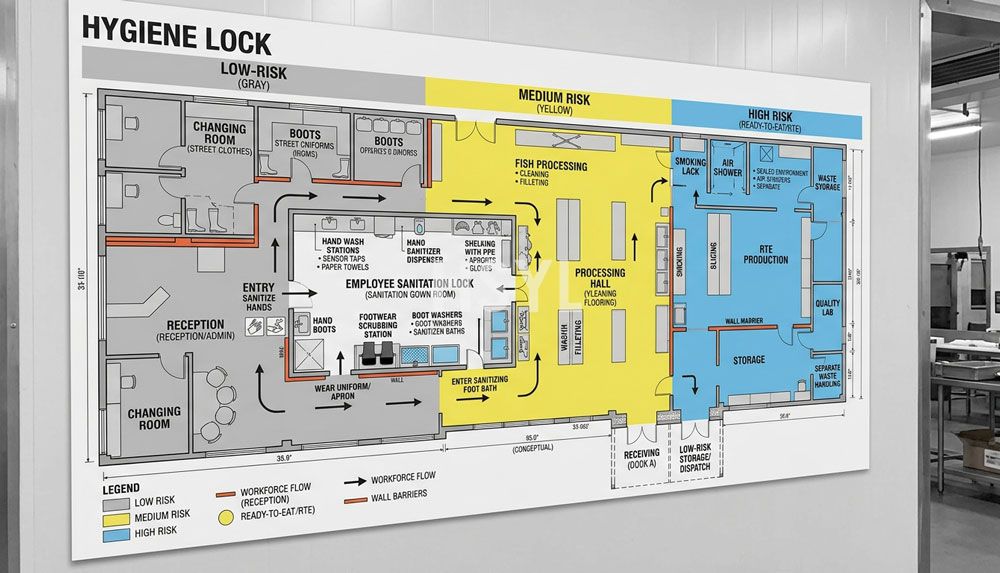
For complete autoclave batch scheduling and facility sanitation planning, refer to our engineering overview on how much does a fruit.
As a senior engineer at HSYL with two decades of experience designing and commissioning thermal processing lines, I spend extensive time inside production facilities analyzing the operational friction that degrades profit margins. In the sector of canned beans processed food, plant managers frequently misdiagnose their capacity bottlenecks. The standard industry assumption dictates that upgrading the double seamer or the volumetric filler will linearly increase output. However, field data extracted from over 50 commissioned turnkey projects indicates that approximately 65% of yield loss occurs upstream during the soaking, hydration, and blanching phases.
When legumes are inconsistently hydrated, the resulting starch gelatinization during retort sterilization forces operators to extend thermal cycles. This reactionary adjustment inflates energy expenditures and compromises the textural integrity of the final product. This technical breakdown explores the intersection of mechanical design, 2026 market demand, and capital investment recovery for industrial bean canning operations, providing a data-driven roadmap for equipment selection and process optimization.
Macro-Economic Indicators: The 2026 Trajectory for Canned Legumes
The commercial landscape for shelf-stable legumes is expanding under the pressure of shifting dietary preferences and supply chain consolidation. Industry analytics value the global canned beans market at approximately USD 7.12 Billion in 2025, with projections indicating a steady climb to USD 9.05 Billion by 2034. This represents a Compound Annual Growth Rate (CAGR) of 2.7%. While these macro figures suggest stability, the micro-trends dictate immediate modifications to processing equipment.
Consumer demand is heavily skewing toward low-sodium, organic, and BPA-free packaged goods. Specifically, organic and functional product diversification now accounts for 22% to 36% of new product launches in North American and European markets. For the processing floor, this translates into an absolute necessity for equipment agility. Dedicated, single-recipe lines are becoming obsolete. Modern facilities require processing hardware capable of executing rapid changeovers between brine, tomato sauce, and specialized organic liquid formulations without triggering extensive downtime or requiring complex manual recalibration.
Operational Expenditure (OpEx) Distribution
Financial audits of high-volume plants reveal that raw materials, primarily dried beans, account for 70% to 80% of total operating expenses. Consequently, mechanical inefficiencies that lead to physical product damage directly erode the 30% to 40% gross profit margins typical of this sector. Equipment selection must therefore prioritize raw material preservation over raw speed.

Thermal Lethality and the Hydration Bottleneck
The most severe engineering miscalculation in legume processing is treating hydration as a passive storage phase rather than an active thermodynamic process. The cellular structure of navy, black, and kidney beans requires precise temperature gradients to ensure uniform moisture absorption. If the moisture variance across a batch exceeds 4% prior to filling, the subsequent retort sterilization phase becomes highly inefficient.
To combat this, contemporary blanching systems utilize continuous rotary drums constructed from SUS316L stainless steel to withstand the high chloride concentrations often present in the water supply and brine mixtures. These units deploy multi-zone temperature control. By gradually elevating the water temperature rather than shocking the raw material with boiling water, the cellular walls of the beans expand uniformly, preventing skin splitting and limiting the leaching of complex carbohydrates into the blanching water. Our engineering team calculates that every 1% reduction in moisture variance before the volumetric filler increases retort sterilization throughput by 3.2%.
The Mechanics of Agitation and Transfer
Transferring hydrated beans between the blancher and the filler introduces mechanical shear risks. Traditional centrifugal pumps cause high impact damage. Transitioning to single-vane positive displacement pumps, while strictly regulating the pump impeller RPM, maintains the structural integrity of the beans. This ensures the yield rate remains above the industry benchmark of 98.5%.
Hermetic Sealing: Double Seaming Integrity and Vacuum Control
Once the beans and liquid medium are deposited into the container, the double seaming operation becomes the final barrier against microbial ingress. The integrity of the double seam is non-negotiable, directly impacting the shelf life and compliance with stringent food safety regulations. Seaming machines must achieve precise overlap, tightness, and thickness tolerances, often measured in micrometers.
High-speed seamers operating at 400 to 600 cans per minute utilize synchronous servo-motor drives to maintain Chuck and Roll alignment. Additionally, establishing a proper headspace vacuum prior to seaming is critical. This is typically achieved via steam flow exhaust systems that inject a precise volume of steam into the headspace just milliseconds before the lid is applied. As the steam condenses, it forms a vacuum, drawing the can ends inward and significantly reducing the dissolved oxygen content, thereby preventing internal corrosion and preserving the product's color.
Failure to maintain double seaming integrity not only leads to spoilage but can result in catastrophic product recalls. All automated seaming stations must be integrated with real-time OEE tracking systems and vision inspection cameras that reject anomalous cans automatically, ensuring full compliance with FDA Food Safety Modernization Act (FSMA) standards regarding preventive controls.
Retort Sterilization: Balancing F0 Values and Organoleptic Quality
The thermal processing of low-acid canned foods (pH above 4.6) is strictly regulated to achieve commercial sterility, primarily targeting the destruction of Clostridium botulinum spores. The target lethality, expressed as the F0 value, typically ranges from 3.0 to 6.0 minutes depending on the specific bean variety and liquid medium viscosity.
Static steam retorts often struggle with heat penetration rates when processing dense packs like baked beans in heavy tomato sauce. The outer layers of the can overcook while the geometric center slowly reaches the target temperature. To resolve this thermal disparity, modern lines deploy continuous rotary retorts or water cascade retorts with end-over-end agitation. The rotation of the can forces the headspace bubble to move through the product, inducing convective heat transfer.
This forced convection reduces the total process time by up to 35% compared to static retorts, preserving the nutritional profile and texture of the plant-based protein. Additionally, water cascade systems equipped with advanced heat exchangers allow for the recovery and reuse of cooling water, driving down utility costs and supporting corporate sustainability mandates.

Lifecycle Cost Analysis: TCO and Capital Recovery
Procurement directors must evaluate equipment through the lens of Total Cost of Ownership (TCO) rather than initial capital expenditure. The integration of closed-loop water systems, variable frequency drives (VFDs), and automated CIP protocols drastically shifts the OpEx curve.
| Operational Metric | Conventional Batch Processing Line | HSYL Automated Continuous Line (Industry 4.0) | Financial Impact / ROI Contribution |
|---|---|---|---|
| Labor Requirement | 6 to 8 operators per shift | 2 to 3 operators per shift | Reduces labor overhead by approx. 60% |
| Steam Consumption | High (Constant venting and purging) | Optimized via regenerative heat exchangers | Lowers thermal energy costs by 15% to 20% |
| CIP Cleaning Protocol | Manual disassembly, Over 4 hours downtime | Automated sequence, Under 1 hour downtime | Increases available production time, boosting OEE |
| Water Recycling Rate | Under 10% (Single-pass cooling) | Over 75% (Cooling tower integration) | Mitigates municipal utility expenses and effluent fees |
| Average ROI Timeline | 36 to 48 months | 14 to 18 months | Accelerated capital recovery through yield preservation |
How Plant Managers Can Extend Equipment Lifespan and Maximize Yield
For facility managers and maintenance engineers overseeing the production floor, proactive mechanical intervention is the only defense against unplanned downtime. Implementing the following three protocols will immediately stabilize production metrics and mitigate cross-contamination risks:
- Conduct Weekly Volumetric Calibration: Do not rely solely on the HMI readouts. Physically sample and weigh the filler output across all nozzles at the start of the week. A variance of just two grams per can on a 500 CPM line translates to massive raw material giveaway or non-compliant underfills over a standard shift.
- Audit the CIP Fluid Velocity: The effectiveness of a CIP cleaning protocol is heavily dependent on fluid dynamics. Ensure that the sanitizing solutions circulating through the blanchers, fillers, and piping maintain a minimum velocity of 1.5 meters per second. Flow rates below this threshold fail to create the turbulent flow necessary to scour starch biofilms from the SUS316L surfaces.
- Inspect Seamer Chucks and Rolls for Micro-Fractures: The tooling on a double seamer is subjected to millions of repetitive impacts. Establish a preventative maintenance schedule that involves measuring the groove profiles of the seaming rolls every 500 operational hours. Worn tooling directly compromises the double seaming integrity, leading to micro-leaks that bypass standard vacuum checks.
Future-Proofing the Processing Facility
The processing of canned legumes is transitioning from a high-volume, low-margin endeavor into a precision engineering discipline. As market demands pivot towards complex formulations and stringent sustainability targets, the mechanical infrastructure must adapt. Relying on legacy batch systems restricts agility and hemorrhages operating capital through utility waste and product degradation.
By prioritizing hydration thermodynamics, ensuring absolute double seaming integrity, and leveraging automated thermal processing, food manufacturers can secure their profit margins against volatile raw material costs. Investing in continuous, data-driven machinery is the baseline requirement for maintaining market share in the 2026 landscape.
Related Topics
To further explore how engineered solutions can stabilize your production metrics, review these related resources from our technical library:
- Discover comprehensive turnkey food processing equipment solutions designed for high-capacity continuous manufacturing.
- Read our engineering breakdown on food processing line solutions to understand how PLC automation reduces utility loads.
Consult with HSYL Engineering
Are you evaluating the thermal efficiency of your current legume processing line or planning a new facility layout? The engineering team at HSYL provides comprehensive spatial analysis and energy auditing to design systems that align precisely with your output targets. Contact our technical department today to request a customized production line layout and operational ROI projection.
Frequently Asked Questions
How often should double seaming rolls be inspected on a bean canning line
What is the optimal blanching temperature for industrial navy beans
How does water hardness affect canned beans processed food quality
What is an acceptable F0 value for canned beans
Related Articles



Get professional consultation
Do you have any questions or need technical support regarding the content of this article? Fill out the form below, and our expert team will provide you with professional solutions.