In modern food processing facilities, conveyor systems are the backbone of continuous production. Knowing how to clean industrial food conveyor belts properly is not just a sanitation task—it is a critical operational discipline that directly affects food safety, product quality, equipment lifespan, and regulatory compliance. For factory owners, production managers, and engineering teams, conveyor belt cleaning sits at the intersection of hygiene management, downtime control, and total cost of ownership.
Industrial food conveyor belts operate in demanding environments: moisture, proteins, sugars, fats, acids, and temperature fluctuations all contribute to contamination risks and accelerated wear. Improper cleaning methods can lead to microbial growth, cross-contamination, premature belt failure, and unplanned shutdowns. Conversely, well-designed cleaning processes reduce risk, stabilize output quality, and support scalable production.

This article provides a practical, engineering-driven explanation of how to clean industrial food conveyor belts properly, written from the perspective of an equipment manufacturer with real factory implementation experience. It focuses on industrial realities—not theory—helping buyers and operators make informed decisions aligned with long-term production goals.
What Industrial Food Conveyor Belt Cleaning Is and How It Works
Industrial food conveyor belt cleaning refers to the systematic removal of food residues, biofilms, allergens, and microorganisms from belt surfaces and associated components during production breaks or changeovers. Unlike general equipment washdown, conveyor belt cleaning must account for belt material properties, belt construction, tension systems, drive components, and the surrounding line layout.
From an engineering standpoint, proper cleaning is a combination of four elements: mechanical action, chemical action, temperature, and time. Mechanical action comes from sprays, brushes, scrapers, or manual tools. Chemical action is provided by approved detergents or sanitizers. Temperature influences fat removal and microbial reduction. Time ensures sufficient contact for effective soil breakdown.
Industrial conveyor belts vary widely—PU, PVC, modular plastic, stainless steel mesh—and each responds differently to cleaning methods. Flat belts with fabric reinforcement may trap moisture if over-saturated. Modular plastic belts can harbor residue in hinge points if not properly flushed. Metal belts tolerate higher temperatures but require corrosion-conscious chemical selection. Effective cleaning processes are therefore tailored, not generic.
Why Cleaning Industrial Food Conveyor Belts Matters in Real Production
In real factories, conveyor belts run for hours or days with minimal interruption. Even small sanitation failures can propagate across large production volumes. Residues left on belts can re-contaminate finished products, compromise shelf life, and trigger quality claims or recalls.
Improper cleaning also impacts operational reliability. Excess water ingress into bearings, motors, or belt fabrics can shorten component life. Aggressive chemicals can embrittle plastics or degrade belt surfaces, increasing friction and energy consumption. From an engineering view, cleaning must protect both hygiene and mechanical integrity.
Understanding how to clean industrial food conveyor belts properly means balancing food safety requirements with equipment preservation and production efficiency.
Industry Problems This Equipment and Process Solves
Labor Cost and Manual Dependency
Manual belt cleaning is labor-intensive and inconsistent. Operators may miss critical areas, apply incorrect chemicals, or vary contact times. Automated or semi-automated cleaning systems reduce reliance on manual labor while delivering repeatable results, lowering long-term operating costs.
Yield Loss and Product Waste
Residue buildup on belts leads to product sticking, tearing, or deformation, especially in sticky or high-moisture foods. Clean belts maintain predictable friction coefficients, supporting stable transfer and minimizing product loss.
Hygiene and Food Safety Risks
Food residues combined with moisture create ideal conditions for microbial growth. Inadequate cleaning increases the risk of pathogens and allergens, exposing manufacturers to regulatory and brand risks. Proper conveyor belt cleaning directly supports HACCP programs and preventive controls.
Inconsistency Between Shifts or Plants
Without standardized cleaning procedures, sanitation quality varies by operator or shift. Engineered cleaning methods standardize outcomes across production lines and facilities.
Scalability Challenges
As production capacity increases, manual cleaning methods become a bottleneck. Properly designed conveyor belt cleaning systems scale with throughput and line length, supporting future expansion.
Key Features and Technical Advantages of Proper Cleaning Systems
From an engineering perspective, effective conveyor belt cleaning systems share several technical characteristics.
First, targeted spray coverage ensures that belt surfaces, edges, and return paths are cleaned uniformly. Poorly designed spray manifolds leave shadow zones that accumulate residue over time.
Second, controlled water pressure and flow rates prevent excessive splashing and water ingress into mechanical components. High pressure is not inherently better; correct pressure matched to soil type and belt material is what delivers results.
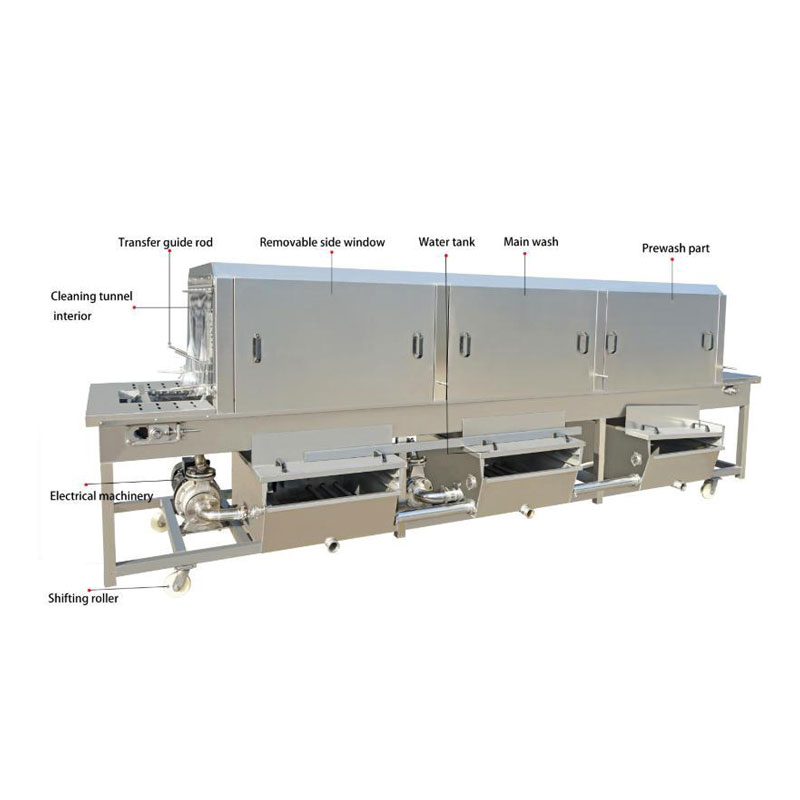
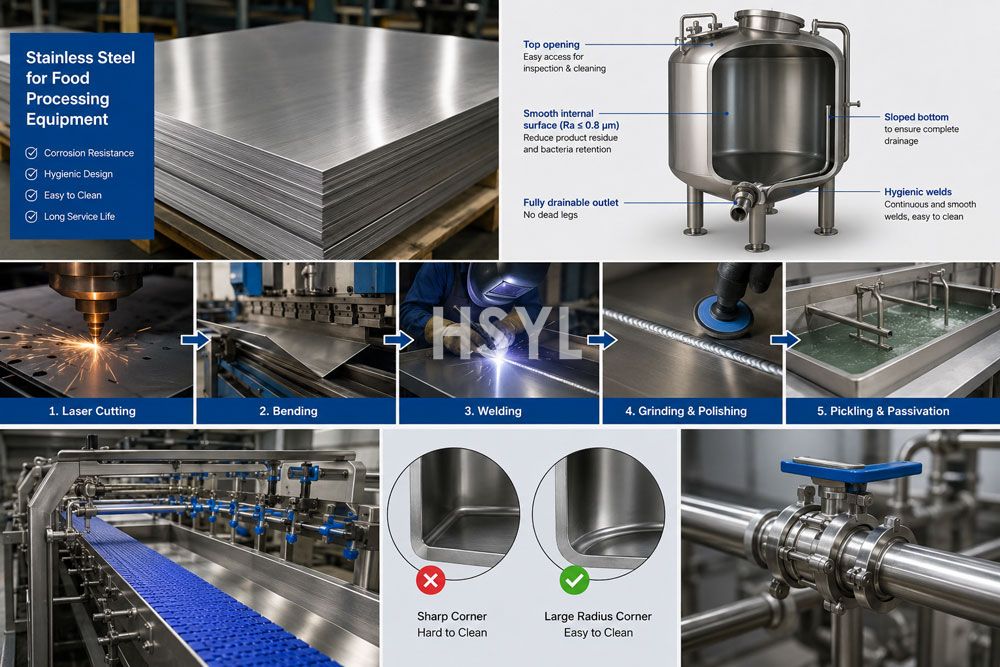
Third, material compatibility is critical. Cleaning components in contact with belts must be food-grade and resistant to chemicals and temperature cycles. Stainless steel frames, FDA-compliant plastics, and sealed bearings are standard in hygienic designs.
Fourth, integration with line controls allows cleaning cycles to align with production schedules. Automated start-stop sequences, interlocks, and CIP integration reduce operator error and downtime.
Typical Applications and Production Scenarios
Understanding how to clean industrial food conveyor belts properly requires context. Different food sectors present distinct challenges.
In meat and poultry processing, belts handle proteins and fats that require effective degreasing without driving contaminants deeper into belt structures. Sanitation often occurs multiple times per shift, demanding fast, repeatable processes.
In bakery and snack production, sugars and starches can caramelize or harden, requiring controlled temperature and mechanical action to avoid belt damage. Dry cleaning methods may be preferred in some stages.
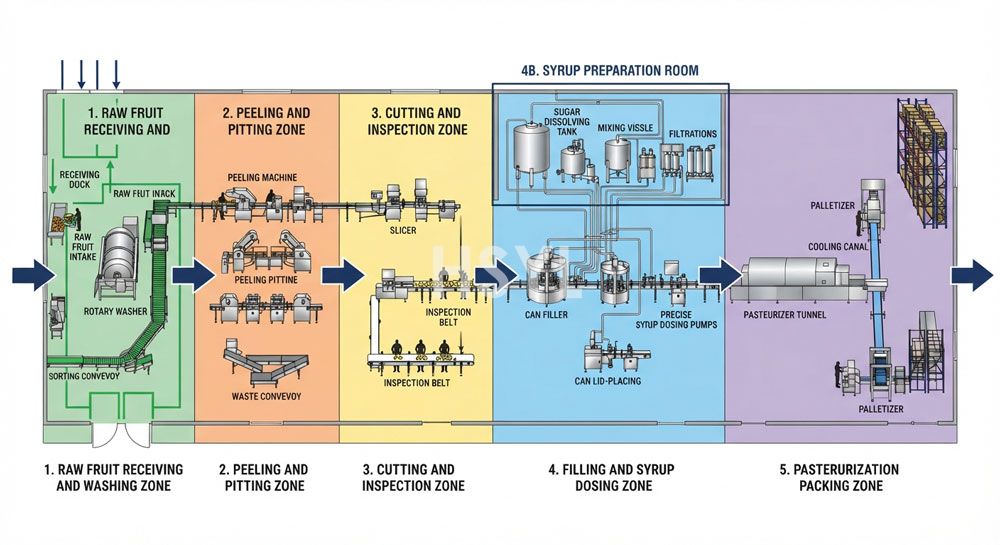
In fruit and vegetable processing, moisture is unavoidable, but organic matter can lodge in belt joints and under supports. High-volume flushing combined with proper drainage design is essential.
In ready-meal and frozen food lines, allergen control becomes a priority. Cleaning procedures must ensure complete removal of residues between product changeovers.
Capacity Options and Selection Guidance
Cleaning capacity should match conveyor width, length, speed, and soil load. Oversized systems waste water and chemicals; undersized systems leave residues.
Buyers should evaluate cleaning solutions based on line layout and throughput rather than nominal belt width alone. Long conveyors with multiple transfers require zoned cleaning approaches. High-speed belts may need longer contact times or multiple cleaning passes.
Future expansion should also be considered. Designing cleaning systems with modular spray sections or adjustable manifolds allows capacity increases without complete redesign.
From an engineering standpoint, selecting the right cleaning approach is about system integration, not isolated components.
Buyer Benefits of Proper Conveyor Belt Cleaning
Improved Operational Efficiency
Clean belts reduce friction variability, improving transfer reliability and reducing jams or misalignment issues. Predictable belt behavior simplifies line tuning and maintenance planning.
Reduced Labor and Downtime
Automated or well-designed cleaning processes shorten sanitation windows and reduce manual intervention. This translates directly into higher available production time.
Consistent Product Quality
By minimizing contamination and residue transfer, proper belt cleaning supports uniform product appearance, texture, and shelf life.
Long-Term ROI and Scalability
Protecting belt materials and mechanical components extends equipment life. Over time, reduced maintenance, fewer replacements, and lower recall risk deliver measurable ROI.
Customization and Engineering Support
No two production lines are identical. Effective conveyor belt cleaning solutions are often customized based on product type, belt material, plant layout, and regulatory environment.
Engineering support plays a key role in process adaptation. This includes selecting appropriate cleaning agents, designing spray geometry, integrating drainage, and validating cleaning effectiveness during commissioning.
Experienced manufacturers collaborate with plant teams to align cleaning systems with real operating conditions rather than theoretical assumptions.
Standards, Certifications, and Compliance Considerations
Proper conveyor belt cleaning supports compliance with multiple standards and guidelines. CE conformity ensures mechanical and electrical safety. HACCP principles rely on effective sanitation as a preventive control. ISO management systems emphasize documented and repeatable cleaning procedures.
In facilities supplying the US market, FDA-oriented hygienic design principles influence equipment selection and cleaning validation. Smooth surfaces, cleanable geometries, and material traceability all support effective sanitation.
Understanding how to clean industrial food conveyor belts properly is inseparable from understanding the regulatory context in which the equipment operates.
Conclusion and Professional Call to Action
Understanding how to clean industrial food conveyor belts properly is a foundational requirement for any food processing operation aiming for consistent quality, regulatory compliance, and scalable growth. Effective cleaning is not about using more water or stronger chemicals—it is about applying engineered solutions that align with belt materials, production demands, and hygiene objectives.
For manufacturers planning new lines or upgrading existing facilities, evaluating conveyor belt cleaning as part of the overall process design pays long-term dividends. Engaging in early-stage discussions around capacity, layout, and sanitation strategy helps ensure that cleaning systems support production rather than constrain it.
If you are assessing conveyor hygiene challenges, line upgrades, or capacity expansion, a technical review of your current cleaning approach can clarify risks and opportunities before they impact output.
Get professional consultation
Do you have any questions or need technical support regarding the content of this article? Fill out the form below, and our expert team will provide you with professional solutions.