Introduction: Why Washing and Peeling Define Final Yield in Food Processing
In fruit and vegetable processing, washing and peeling are not auxiliary steps—they are decisive operations that directly affect final yield, product appearance, microbial safety, water consumption, and operating cost.
For many processors, yield losses of 3–8% occur not during cutting or packaging, but during inefficient washing, over-peeling, excessive abrasion, or poor debris removal. These losses accumulate silently, reducing margins batch after batch.

Modern food washing machines and peeling equipment are no longer simple mechanical devices. They are process-engineered systems integrating:
Controlled mechanical action
Hydrodynamic and pneumatic cleaning principles
Surface-specific peeling methods
Closed-loop water recovery
Hygienic design and CIP compatibility
This article provides a technical and practical selection guide for food processors seeking to maximize usable product yield while minimizing water, energy, and labor costs.
1. The Role of Washing and Peeling in Overall Processing Efficiency
1.1 Yield Loss Starts Earlier Than Most Plants Realize
Yield loss often begins before thermal processing or slicing. Typical root causes include:
Excessive mechanical abrasion
Uneven peeling depth
Incomplete soil and debris removal
Rewashing due to poor first-pass cleaning
Cross-contamination requiring product rejection
A properly designed washing and peeling line can increase net yield by 2–5%, which, for medium-scale processors, often translates into hundreds of thousands of dollars annually.
1.2 Quality, Safety, and Compliance
Effective washing and peeling are also essential for:
Meeting microbiological safety standards
Reducing pesticide residue
Improving visual quality and shelf life
Ensuring consistency for downstream automation
Regulatory audits increasingly focus on wash water quality, cross-contamination control, and sanitation design, making equipment selection more critical than ever.
2. Food Washing Principles: How Modern Cleaning Systems Work
Different products require different washing forces. Over-cleaning damages products; under-cleaning compromises safety.
2.1 Bubble Washing (Air Agitation Cleaning)
Bubble washing machines use compressed air injected into water tanks to create turbulence. Rising bubbles gently lift and separate products while dislodging soil and light contaminants.
Best suited for:
Leafy vegetables
Soft fruits (berries, tomatoes)
Pre-cut vegetables
Advantages:
Gentle handling
Low mechanical damage
Uniform cleaning
Limitations:
Less effective for heavy soil or sticky residues
Requires upstream soil removal for root crops
Bubble washing is often used as a primary wash stage or combined with spray systems for higher cleaning efficiency.
2.2 Spray Washing Systems
Spray washers rely on high-pressure water jets directed at products on conveyors or rotating drums.
Key parameters:
Nozzle type and angle
Water pressure
Spray coverage time
Applications:
Root vegetables
Firm fruits
Crates, trays, and containers
Spray washing is particularly effective for removing surface soil and sand but must be carefully controlled to avoid product damage.
2.3 Vibratory Washing and Dewatering
Vibratory washing systems combine oscillation and water flow to clean and transport products simultaneously.Benefits:
Continuous processing
Efficient debris separation
Integrated dewatering
They are often installed after primary washing to remove residual water and small contaminants before peeling or cutting.
2.4 Combined Washing Systems for Maximum Efficiency
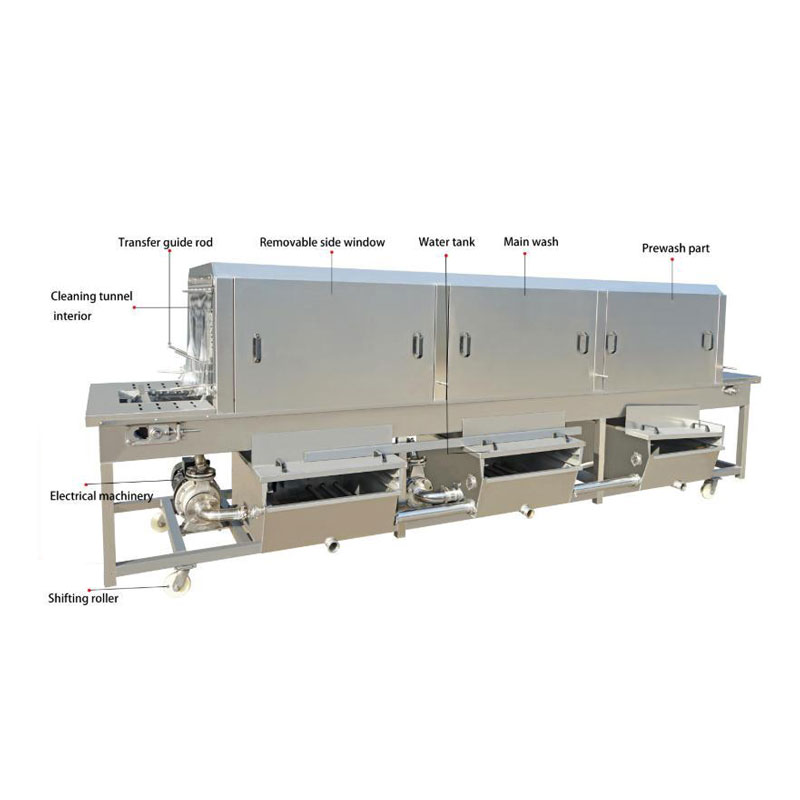
Most industrial lines use multi-stage washing:
Pre-wash (soil removal)
Primary wash (bubble or spray)
Rinse and sanitation
Dewatering
This staged approach minimizes water usage and improves cleaning consistency.
3. Peeling Technologies: Choosing the Right Method for Each Product
Peeling accounts for a significant portion of yield loss if not properly controlled. The goal is complete skin removal with minimal flesh loss.
3.1 Abrasive Peeling
Abrasive peelers use rotating drums lined with abrasive surfaces.
Ideal for:
Potatoes
Carrots
Beets
Pros:
High throughput
Simple operation
Low chemical use
Cons:
Higher flesh loss if over-processed
Surface wear requires regular replacement
Modern abrasive peelers allow adjustable peeling time and abrasion intensity, significantly improving yield control.
3.2 Knife Peeling
Knife peeling systems use mechanical blades to remove skins precisely.
Best for:
Apples
Pears
Mangoes
Advantages:
Very high yield
Smooth surface finish
Challenges:
Requires uniform product size
Higher maintenance
Knife peeling is often selected when appearance and yield are top priorities.
3.3 Steam Peeling
Steam peeling exposes products to high-pressure steam, loosening skins before removal.
Key benefits:
Minimal flesh loss
Excellent for irregular shapes
No chemical usage
Typical applications:
Tomatoes
Peaches
Bell peppers
Steam peeling requires higher initial investment but delivers exceptional yield and product quality.
3.4 Chemical Peeling (Limited Use)
Chemical peeling uses alkaline solutions to loosen skins.
Due to environmental and regulatory constraints, this method is declining and often replaced by steam or mechanical alternatives.
4. Water Recycling and Energy-Saving Solutions
Water usage is one of the largest operating costs in washing lines.
4.1 Closed-Loop Water Systems
Modern washing equipment integrates:
Filtration systems
Sedimentation tanks
UV or ozone disinfection
These systems allow reuse of up to 70–80% of wash water, dramatically reducing consumption.
4.2 Smart Water Flow Control
Advanced systems adjust water flow based on:
Product load
Turbidity sensors
Line speed
This prevents unnecessary water usage during low-load operation.
4.3 Energy Efficiency in Washing Equipment
Energy-saving strategies include:
Variable frequency drives (VFDs)
Optimized pump selection
Heat recovery from hot wash water
Combined, these measures reduce total operating cost and improve sustainability metrics.
5. Hygienic Design, Cleaning, and CIP Integration
5.1 Hygienic Equipment Construction
High-quality washing and peeling equipment should feature:
Stainless steel frames (AISI 304 or 316)
Smooth welds
No dead zones
This minimizes microbial buildup and simplifies cleaning.
5.2 CIP-Compatible Systems
CIP (Clean-in-Place) capability allows:
Automated cleaning cycles
Reduced downtime
Consistent sanitation
For high-volume plants, CIP integration is no longer optional—it is a baseline requirement.
6. Maintenance and Inspection: Protecting Yield Over Time
Poor maintenance gradually erodes yield advantages.
6.1 Wear Parts Monitoring
Key components to inspect regularly:
Abrasive liners
Spray nozzles
Bearings and seals
Timely replacement prevents over-peeling and uneven cleaning.
6.2 Preventive Maintenance Planning
A structured maintenance plan reduces:
Unexpected downtime
Product loss
Repair costs
Modern equipment suppliers increasingly offer predictive maintenance support using sensor data.
7. How to Select the Right Washing and Peeling Equipment Supplier
When evaluating suppliers, consider:
Process engineering capability
Customization options
Local service support
Water and energy efficiency data
Avoid selecting equipment based solely on purchase price. Total cost of ownership and yield performance matter far more.
Conclusion: Turning Washing and Peeling into a Competitive Advantage
Food washing and peeling equipment has evolved from basic machinery into highly engineered systems that directly influence profitability.
By selecting the right cleaning principles, peeling technologies, water-saving solutions, and maintenance strategies, processors can:
Increase usable yield
Reduce waste and rework
Lower water and energy costs
Improve product quality and compliance
In a competitive market, efficient washing and peeling are no longer cost centers—they are yield optimization tools.
Related Articles


Get professional consultation
Do you have any questions or need technical support regarding the content of this article? Fill out the form below, and our expert team will provide you with professional solutions.