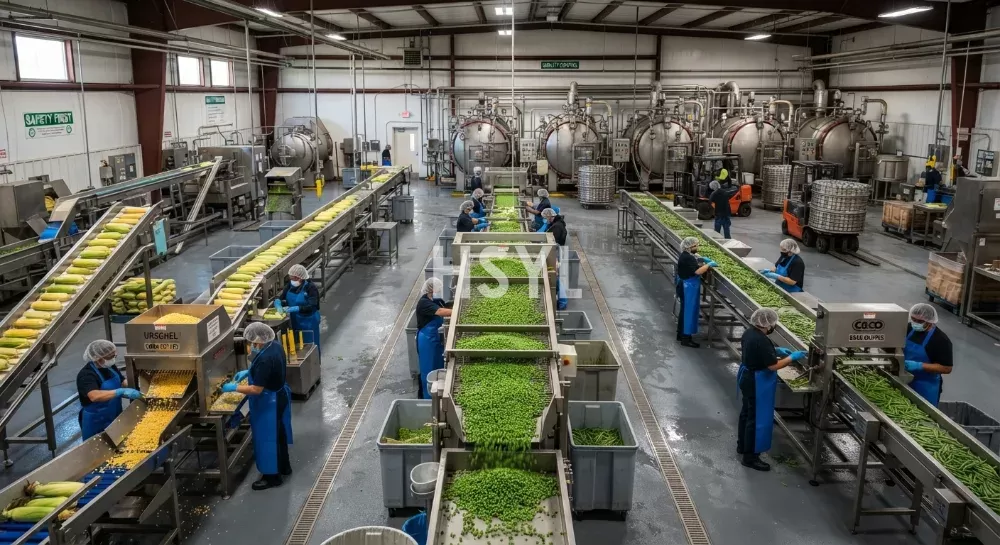
Low-Acid Canned Vegetables: Corn, Peas and Green Beans Processing Line
Direct AnswerA low-acid canned vegetable processing line — corn, peas, and green...


Factory-direct thick sauce filling production line manufacturer. 500–10,000 kg/h capacity, SUS304/316 sanitary design, turnkey automation. Contact us for a quote.
The Thick Sauce Filling Production Line is a fully integrated industrial solution engineered for precise, hygienic, and high-throughput filling of viscous sauces and paste-based products. As a direct manufacturer and OEM factory, we design and produce complete filling systems that enable sauce producers to scale efficiently while maintaining consistent quality and food safety compliance.
This production line is specifically developed for high-viscosity and particulate-containing products such as chili sauce, tomato paste, curry sauce, peanut butter, mushroom sauce, bean paste, and compound seasoning sauces. Typical production capacity ranges from 500 kg/h for small and mid-sized factories to over 10,000 kg/h for large-scale industrial sauce manufacturers operating continuous lines.
The system is designed for condiment factories, central kitchens, ready-meal producers, and export-oriented food processing plants seeking reduced labor dependency, stable throughput, and reliable automation from a factory-direct equipment partner.
The Thick Sauce Filling Production Line is built around controlled material flow, pressure stability, and low-shear handling to preserve sauce texture and particulate integrity.
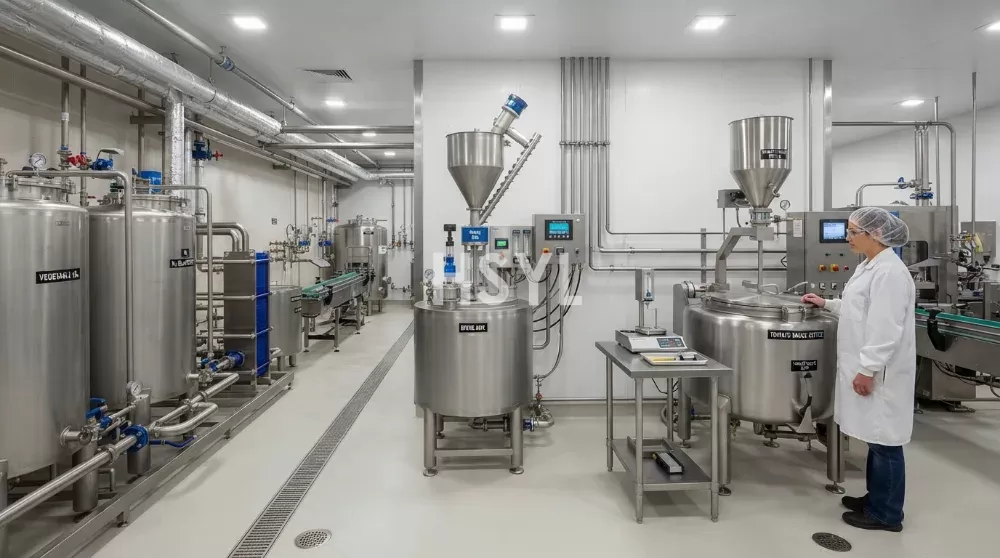
Raw or cooked sauce is first transferred into a sanitary buffer hopper equipped with level sensors and slow-speed agitators. This prevents phase separation and sedimentation while maintaining uniform density. From the hopper, material is conveyed using a screw propulsion system or servo-driven piston assemblies, selected according to sauce viscosity, particle size, and required throughput.
Screw propulsion ensures continuous, non-pulsating transfer of viscous materials, making it ideal for thick sauces with suspended solids such as diced vegetables, beans, or spices. The screw geometry and rotation speed are optimized to control retention time and minimize shear stress, preventing texture degradation.
In upstream raw material preparation stages, abrasive rollers and brush friction units can be integrated for root vegetables and solid ingredients. Abrasive rollers remove surface impurities and residual skins with high abrasion resistance, while brush friction provides gentle cleaning to reduce yield loss. This combination ensures clean, uniform inputs before cooking, grinding, or blending.
During filling, servo motors precisely regulate piston stroke or screw rotation, maintaining stable pressure at each filling nozzle. Bottom-up filling and anti-drip valve design minimize air entrapment, splashing, and product waste, ensuring clean container rims and consistent fill levels across all units.
Labor costs in traditional sauce filling operations are driven by manual filling, frequent adjustments, and intensive quality inspection. This automated filling production line can reduce labor requirements by approximately 40%–65%, depending on capacity and automation level.
Yield loss caused by overfilling, dripping, and inconsistent portion control is significantly reduced. Compared to manual or semi-automatic systems, material loss can typically be lowered by 3%–7%, directly improving raw material utilization and overall profitability.
Hygiene risks associated with open handling, frequent product contact, and inconsistent cleaning are minimized through enclosed transfer systems, sanitary design, and CIP compatibility. This reduces cross-contamination risk and supports compliance with international food safety standards.
Inconsistency in fill weight, appearance, and particle distribution is eliminated through servo-controlled filling and synchronized conveyors, delivering uniform, market-ready products suitable for retail branding and automated downstream packaging.
All product-contact components are manufactured from SUS304 stainless steel, with SUS316 available for high-salt, high-acid, or aggressive formulations. This ensures excellent corrosion resistance, abrasion resistance, and long service life under demanding production conditions.
Industrial-grade motors and servo drives are selected for continuous-duty operation, providing stable torque output, low vibration, and high durability during long production runs with viscous products.
The line can incorporate water recycling and filtration systems for upstream washing and cleaning processes, reducing total water consumption by up to 30% while maintaining sanitation efficiency.
Modular architecture allows flexible configuration of filling heads, nozzle types, and conveyor layouts. This enables fast changeover between container sizes and product formulations, minimizing downtime and improving overall equipment effectiveness.
| Model Name | Capacity (kg/h) | Power (kW) | Dimensions (mm) | Water Consumption |
|---|---|---|---|---|
| TSF-800 | 500–1,000 | 15 | 4500 × 1800 × 2300 | 0.6–1.0 m³/h |
| TSF-3500 | 2,500–4,000 | 32 | 7200 × 2600 × 2800 | 1.5–2.2 m³/h |
| TSF-10000 | 8,000–10,000 | 62 | 10500 × 3600 × 3200 | 3.0–4.0 m³/h |
The Thick Sauce Filling Production Line is suitable for a broad range of viscous and paste-based products, including chili sauce, tomato ketchup, pasta sauce, curry sauce, barbecue sauce, mushroom sauce, peanut butter, sesame paste, and bean-based sauces.
Upstream processing may involve root vegetables such as potatoes, carrots, taro, onions, garlic, and ginger, which are cleaned, peeled, cut, cooked, and blended prior to filling.
Typical application scenarios include condiment manufacturing plants, central kitchens, ready-meal factories, frozen French fries lines expanding into sauce production, and food brands operating private-label or contract filling facilities.
The production line is engineered in strict accordance with HACCP principles and FDA-aligned sanitary design requirements. All product-contact welds are continuously welded and polished to eliminate crevices and dead zones where microorganisms could accumulate.
Tool-free disassembly and quick-release clamps provide easy access for daily cleaning, inspection, and maintenance. CIP-ready piping and filling components allow automated internal cleaning, reducing downtime and ensuring consistent sanitation results.
Only food-grade seals, gaskets, and lubricants are used throughout the system. Material certificates, surface finish documentation, and traceability records can be supplied to support third-party audits and export compliance.
The Thick Sauce Filling Production Line is designed for seamless integration into a complete automated food processing workflow. A typical configuration includes raw material feeding, washing and peeling, cutting, cooking and mixing, sauce filling, capping or sealing, labeling, and packing.
A centralized PLC control system synchronizes all equipment, enabling real-time monitoring of throughput, pressure, temperature, and system status. The line can be integrated with upstream cookers and mixers and downstream cartoners or palletizers, creating a highly efficient, low-labor production environment.
As a direct factory and OEM manufacturer, we provide full customization and engineering support for thick sauce filling projects. Equipment configuration, filling technology, and layout design are tailored to specific product characteristics and factory constraints.
We support voltage and electrical standard customization for North America, Europe, the Middle East, and other global markets. Our engineering team provides layout drawings, utility requirement documentation, and commissioning support to ensure smooth installation and rapid production ramp-up.
Work directly with a factory that specializes in viscous product handling and industrial automation. Contact our engineering team today to discuss your thick sauce filling project, request a factory quote, or receive a customized production line solution engineered for your facility.


Direct AnswerA low-acid canned vegetable processing line — corn, peas, and green...
The filling medium — the liquid that fills the void spaces between the fish piec...
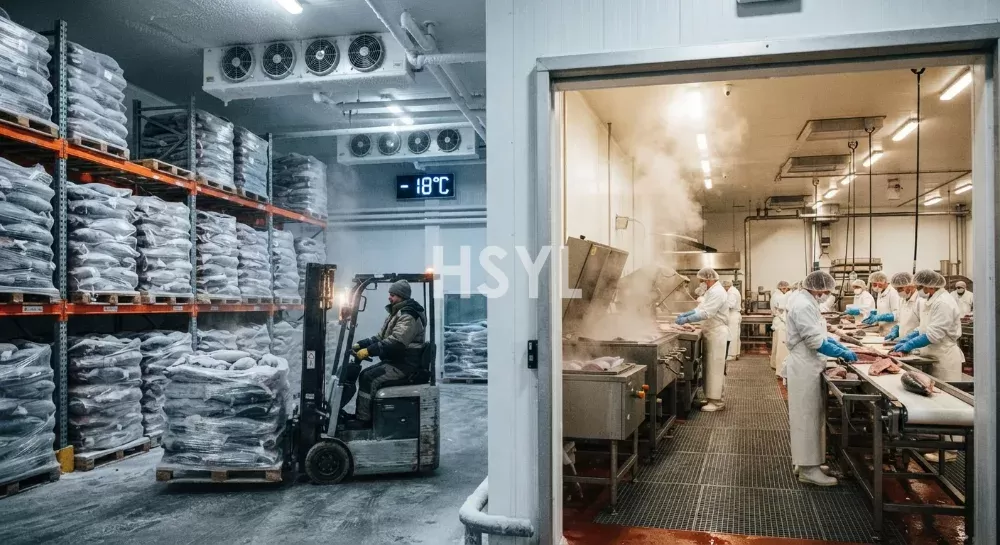
Direct AnswerThe most expensive asset in a fish cannery is not the retort or the...
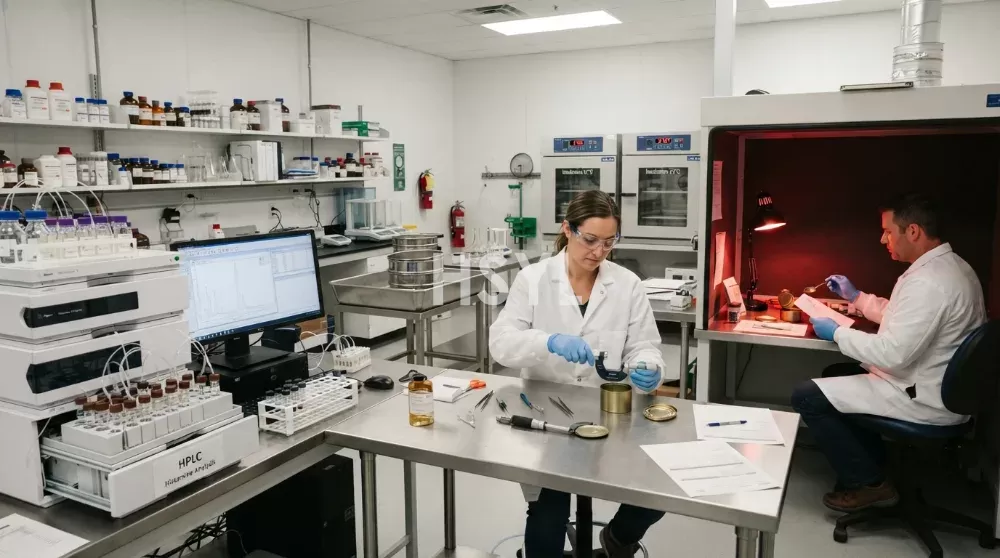
A sardine and mackerel canning line processes small pelagic fish — typically 10–...