Introduction

The global food industry is undergoing a fundamental transformation. Rising labor costs, increasing food safety regulations, and growing pressure for consistent product quality are forcing manufacturers to rethink traditional production models. Manual, labor-intensive food production lines are becoming increasingly difficult to sustain—both economically and operationally.

As a result, food production line automation and conveyor system optimization are no longer optional upgrades. They are strategic investments that directly affect productivity, operational stability, and long-term competitiveness.

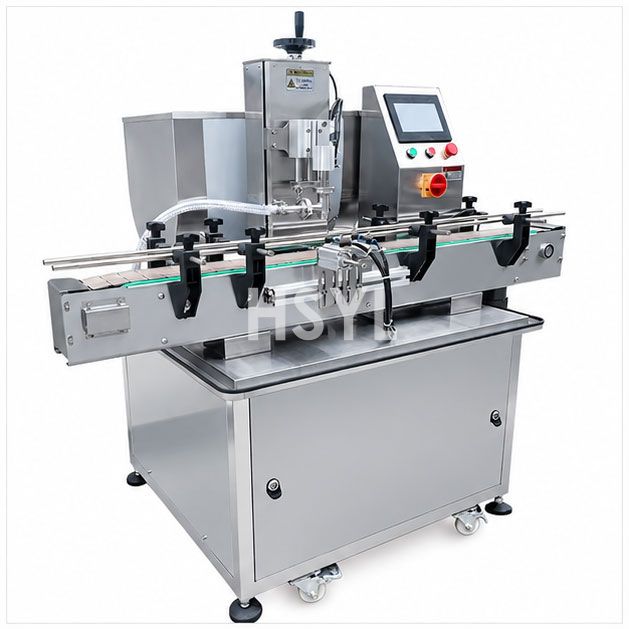
Food Production Line Automation & Conveyor Optimization for Higher Efficiency(图1)

This article provides a comprehensive, practical guide to food production line automation and material flow optimization. It explains where automation creates real value, how different conveyor belt systems should be selected, why buffering and flow control are critical to line stability, and how data acquisition and SCADA systems enable data-driven decision-making.

The content is written for:

  • Factory owners and investors

  • Procurement and operations managers

  • Automation and industrial engineers

Why Food Production Lines Must Move Toward Automation

Rising Labor Costs and Workforce Instability

Labor has historically been one of the largest cost components in food manufacturing. In recent years, this cost has increased significantly due to:

  • Labor shortages

  • High employee turnover

  • Increasing minimum wages

  • Greater training and compliance requirements

Manual production lines rely heavily on operators to maintain rhythm and consistency. When staffing fluctuates, production efficiency drops immediately.

Automation reduces dependency on manual labor, stabilizes output, and protects factories from workforce volatility.

Food Safety and Consistency Challenges

Human involvement increases variability and contamination risk:

  • Inconsistent handling of products

  • Cross-contamination risks

  • Difficulty maintaining hygiene discipline across shifts

Automated production lines:

  • Reduce direct product contact

  • Improve repeatability

  • Support standardized sanitation procedures

This is especially critical in sectors such as dairy, ready meals, meat processing, and sauces.

Manual Lines Create Invisible Efficiency Losses

Many food factories underestimate the true cost of manual operations:

  • Micro-stoppages

  • Waiting time between processes

  • Product accumulation

  • Unbalanced production rhythms

These inefficiencies often remain hidden until automation exposes them through data.

Core Value Points of Food Production Line Automation

Automation delivers value far beyond simple labor reduction.

Productivity Increase Through Line Balancing

Automation enables line balancing, where each process operates at a synchronized rhythm. Instead of accelerating one machine, automation optimizes the entire system.

Benefits include:

  • Reduced bottlenecks

  • Higher overall equipment effectiveness (OEE)

  • More predictable daily output

A well-balanced automated line often increases output 20–40% without increasing nominal machine speed.

Workforce Structure Optimization

Automation does not eliminate labor—it changes its structure.

Traditional LineAutomated Line
High number of operatorsFewer, skilled technicians
Manual handlingMonitoring and control
Reactive problem-solvingPreventive maintenance

This shift improves:

  • Safety

  • Skill level

  • Employee retention

Quality Consistency and Traceability

Automation supports:

  • Repeatable process parameters

  • Automated quality checkpoints

  • Digital production records

Combined with SCADA systems, this creates full traceability, a growing requirement in global food markets.

Conveyor Systems: The Backbone of Food Production Automation

While machines perform processing tasks, conveyor systems connect the entire production line. Poor conveyor design can undermine even the most advanced equipment.

Role of Conveyor Systems in Food Production

Conveyor systems:

  • Control material flow

  • Define line rhythm

  • Enable automation integration

  • Reduce manual handling

In many factories, conveyors represent the highest leverage point for productivity improvement.

Types of Conveyor Belt Systems and Their Applications

Selecting the right conveyor system depends on product characteristics, hygiene requirements, and process layout.

Belt Conveyor Systems

Belt conveyors are the most widely used type in food factories.

Advantages

  • Simple design

  • Cost-effective

  • Suitable for packaged and boxed products

Typical applications

  • Packaging lines

  • Secondary packaging

  • Palletizing zones

Limitations

  • Limited hygiene in wet zones

  • Not ideal for loose or sticky products

Modular Plastic Belt Conveyors

Modular belt conveyors are increasingly popular in food processing environments.

Advantages

  • Excellent hygiene

  • Easy cleaning

  • Resistance to moisture and chemicals

Typical applications

  • Meat and poultry

  • Seafood processing

  • Ready-to-eat foods

They are particularly suitable for frequent washdown environments.

Roller Conveyor Systems

Roller conveyors are commonly used in logistics and secondary packaging.

Advantages

  • Low energy consumption

  • Gravity-driven options

  • Easy integration with palletizers

Typical applications

  • Cartons

  • Crates

  • Pallet handling

They are not suitable for uncontained food products.

Chain and Mesh Belt Conveyors

These conveyors are designed for harsh process conditions.

Advantages

  • High temperature resistance

  • Robust structure

Typical applications

  • Baking ovens

  • Cooling tunnels

  • Frying lines

Conveyor System Comparison

Conveyor TypeHygiene LevelTypical ProductsInvestment Cost
Belt conveyorMediumPackaged foodsLow
Modular beltHighFresh foodsMedium
Roller conveyorLow–MediumCartons, palletsLow
Chain / meshMediumBaked or fried foodsMedium–High

Material Flow Optimization in Food Production Lines

What Is Material Flow?

Material flow refers to how products move through the production line, from raw material intake to final packaging.

Poor material flow leads to:

  • Accumulation

  • Starvation of downstream equipment

  • Frequent line stoppages

Push vs Pull Production Logic

  • Push systems produce continuously, regardless of downstream status

  • Pull systems adjust output based on real-time demand

Modern automated food lines increasingly use hybrid systems, combining push efficiency with pull responsiveness.

Typical Material Flow Bottlenecks

Common bottlenecks include:

  • Filling faster than packaging

  • Thermal processing slower than upstream operations

  • Manual inspection points

Identifying these bottlenecks is essential before automation investment.

Buffering and Flow Control Strategies

Why Buffers Are Essential in Automated Lines

Buffers act as shock absorbers between processes with different speeds or availability.

Without buffers:

  • A single stoppage can shut down the entire line

  • Operators must intervene manually

  • Equipment wear increases

Common Buffer Solutions

Accumulation Conveyors

  • Allow products to queue without pressure

  • Widely used before packaging

Spiral Buffers

  • Compact, vertical storage

  • Ideal for space-limited factories

Table or Lane Buffers

  • Simple and cost-effective

  • Often used in semi-automated lines

Buffer Control Logic

Effective buffering requires:

  • Sensors for product presence

  • Speed control of conveyors

  • Communication with PLC systems

Smart buffering significantly improves line stability and uptime.

Automation Control Systems: PLC and SCADA

Role of PLCs in Food Production Lines

Programmable Logic Controllers (PLCs) manage:

  • Machine coordination

  • Conveyor synchronization

  • Safety interlocks

They ensure the line operates as a single integrated system rather than isolated machines.

SCADA: Turning Production Into Data

SCADA (Supervisory Control and Data Acquisition) systems collect and visualize data such as:

  • Throughput

  • Downtime causes

  • Energy consumption

  • Alarm history

This data transforms automation from a control tool into a management platform.

Benefits of Data-Driven Production

With SCADA:

  • Problems are identified early

  • Decisions are based on facts

  • Continuous improvement becomes measurable

For factory owners, this means visibility instead of guesswork.

Automation Strategies for Different Types of Food Factories

Small and Medium-Sized Food Plants

Recommended approach

  • Partial automation

  • Focus on bottleneck processes

  • Fast ROI (12–24 months)

Examples:

  • Automated feeding

  • Simple conveyor integration

Established Large-Scale Factories

Recommended approach

  • Conveyor system redesign

  • Buffer optimization

  • SCADA implementation

Goal: maximize existing asset utilization.

New Greenfield Food Factories

Recommended approach

  • Integrated automation planning

  • Digital layout simulation

  • Scalable system architecture

This avoids costly retrofits later.

Common Mistakes in Automation and Conveyor System Projects

  1. Automating individual machines without considering material flow

  2. Underestimating buffer requirements

  3. Ignoring hygiene and cleanability

  4. Adding SCADA after problems occur

  5. Selecting suppliers based on price alone

Avoiding these mistakes significantly improves project success.

How to Evaluate Automation and Conveyor System Suppliers

Key evaluation criteria:

  • Food industry experience

  • Ability to design complete systems

  • Understanding of hygiene standards

  • Local service and support capability

A supplier should function as a process partner, not just an equipment vendor.

The Future of Food Production Automation

Emerging trends include:

  • Smart conveyors with embedded sensors

  • Predictive maintenance

  • AI-driven production optimization

  • Integration with ERP and MES systems

Automation is evolving from mechanical efficiency to intelligent production ecosystems.

Conclusion

Food production line automation and conveyor system optimization are not about replacing people with machines. They are about creating stable, efficient, and data-driven production environments that meet modern food industry demands.

By focusing on:

  • Material flow optimization

  • Proper conveyor system selection

  • Strategic buffering

  • PLC and SCADA integration

Food manufacturers can achieve higher productivity, lower labor dependency, and better long-term competitiveness.

Successful automation is not defined by how advanced the equipment looks, but by how smoothly the entire production line works together.