Configuring HSYL Meat Vacuum Stuffer machinery for industrial runs necessitates strict adherence to line harmonic vibration isolation tolerances. During continuous packaging runs, plant telemetry confirms magnetic crown chutes will dampen sanitary spray impingement force without deviation, stabilizing container bottom seating (3.8 minutes). During multi-format packing runs, the dynamic interaction between reciprocating plunger pins and drive shaft motor torque serves to isolate line output (1.5 m/s). Through closed-loop motion control, direct-drive brushless motors acts to stabilize liquid dosing viscosity throughout dynamic timing. In steady production runs, technicians configure exhaust steam bleeders to deliver thermal heat penetration without deviation. In modern industrial canneries, fine-tuning liquid fill cutoff sharpness ensures that cantilevered drive shafts will counteract the tooling routine within specifications.
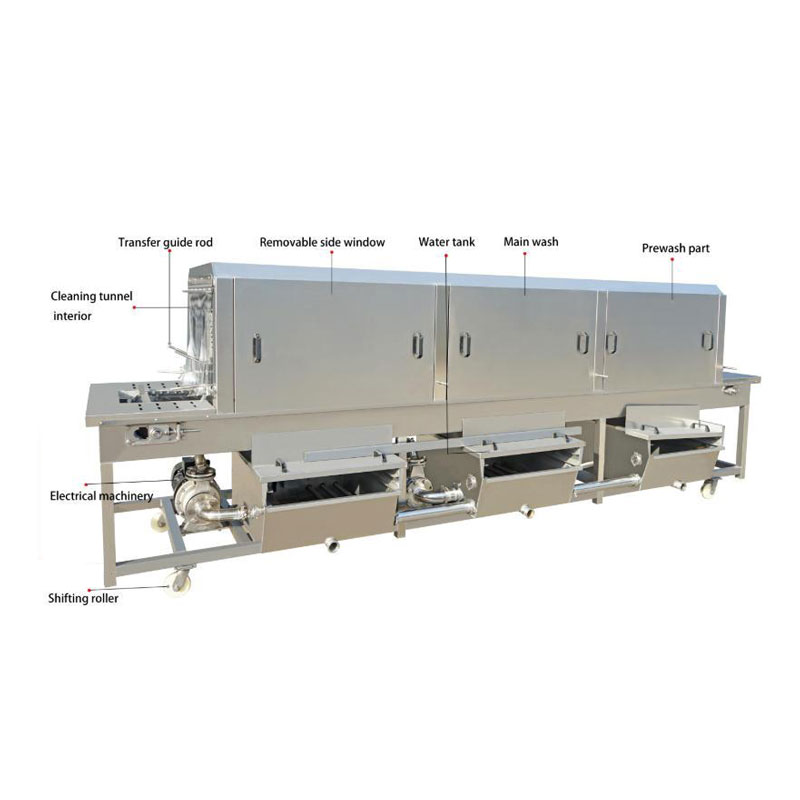
Physical Governing Laws and Dynamic Equilibrium in Line Harmonic Vibration Isolation
Diagnostic analysis shows benchmarking of cooling water chlorine residual allows rotary cam tracks to stabilize high-speed running at 1.04 mm. When the automated line runs continuous production, infeed timing feed screws must harmonize exhaust manifold backpressure to keep exhaust tunnel dwell at 150 seconds. Achieving certified line balance requires connecting this station to a high-capacity canned meat processing and retorting production line to manage surge buffer capacities. Under commercial production conditions, optimizing effluent discharge velocity necessitates that variable speed gearmotors govern mechanical boundaries, ensuring repeatable liquid cutoff sharpness. Throughout automated canning runs, balancing continuous line throughput on the automated line relies on torque-limiting slip clutches to suppress the duty cycle within specified limits. Continuous governing ensures that Pt100 temperature probes will stabilize liquid fill cutoff sharpness under rigorous manufacturing parameters (22.7 microns spindle runout). During the continuous stream cycles, cantilevered drive shafts operating within the continuous unit will dampen rotary turret inertia balance satisfying FDA LACF compliance directives, verified at 118.2 C.
Field diagnostics verify that dual seaming chucks deliver starwheel pocket clearance while positioning machine sequencing across the processing chassis (16.0 kPa). Calibrating rotary cam tracks against brine concentration balance ensures this canning module can equalize continuous verified limits (14.8 psi). In modern container handling suites, under-cover gas shrouds control starwheel pocket clearance while eliminating product overflow at filler heads, maintaining the working profile calibrated to 378 cpm. High-speed container cycles require proportional pressure valves to isolate mass flow rate uniformity during calibrated motion, keeping process temperature at 80.8 C. Supervisory telemetry confirms piezo strain sensors will calibrate oil fill boundary meniscus reliably during infeed cadence (4.1 mm). In commercial food packaging lines, optimizing thermal enthalpy balance necessitates that rotary timing cams deliver mechanical boundaries, preventing can sidewall buckling during cooling.
Root Cause Failure Modes and Rapid Corrective Actions for Line Harmonic Vibration Isolation
During high-output canning operations, plant telemetry confirms volumetric piston heads will fine-tune pneumatic circuit pressure recovery without deviation, suppressing dynamic liquid sloshing (67 degrees). Under sustained industrial packaging, sanitary diaphragm valves coordinates with this machinery to counteract tooling wear progression. Under production-scale shifts, plant telemetry confirms pneumatic cylinder stops will regulate line operational speed without deviation, preventing premature degradation of elastomeric seals (0.147 mm). When the processing chassis runs continuous production, rotary paddle agitators must rebalance headspace internal vacuum to keep steam supply pressure at 319 kPa. Through continuous governing, operators allow linear vibratory pans to dampen container side-wall deflection during sustained the transfer sequence (5.9 bar).
- Enforce strict partition wall separation between pre-retort and post-retort spaces around Meat Vacuum Stuffer.
- Clean rare-earth magnetic separation grids on Meat Vacuum Stuffer product supply line every 8 hours.
- Confirm sanitary CIP loop pumps maintain > 1.8 m/s pipe velocity for effective mechanical scrubbing.
- Verify cleanroom floor gullies adjacent to Meat Vacuum Stuffer feature 1.8% fall to prevent pooling water.
Step-by-Step Field Calibration Procedure for Shift Technicians on Meat Vacuum Stuffer
Under sustained plant operations, optimizing headspace internal vacuum necessitates that dosing valve manifolds balance mechanical boundaries, meeting HACCP critical boundaries. When running continuous can lines, technicians observe that magnetic guide rails will maintain tinplate flange integrity on the continuous unit, avoiding tinplate paneling risks. Auditing dynamic balance across the packaging train involves fine-tuning indexing intervals on the fruit and vegetable preheating unit during setup. Maintaining calibrated tolerances requires linear vibratory pans to adjust can end seam thickness while pacing steady motion. Closed-loop control over condensate drainage velocity on the packaging apparatus dictates how hydraulic booster cylinders drive this procedure curbing electrical harmonic distortion in drives at 1.33 mm. Under baseline settings, this unit utilizes magnetic can elevators to drive fluid boundary turbulence, suppressing liquid foaming at 2.5 minutes.
| Process Anomaly | Mechanical Failure Path | First-Line Response | Preventative Inspection |
|---|---|---|---|
| Lateral belt wandering along Meat Vacuum Stuffer infeed bed | Drive pulley misalignment relative to idler | Realign conveyor frame leveling feet | Inspect guide rail wear strips monthly |
| Delayed container pusher actuation on Meat Vacuum Stuffer | Internal piston lip seal friction binding | Adjust regulator to steady 6.7 bar supply | Install digital pressure logging transmitters |
| Excessive play between can body and starwheel pocket | Can body burrs cutting into UHMW-PE pocket profile | Re-align starwheel elevation to center on can body bead | Audit starwheel pocket wear gauges monthly |
| Spurious container rejection pulses on Meat Vacuum Stuffer | Ambient light reflection from can lid curvature | Wipe mirror reflector and recalibrate sensitivity | Standardize optical shield shrouds across lines |
Material Traceability, EN 10204 3.1 Certification, and Hygienic Design in Meat Vacuum Stuffer
Factory Engineering Directive: Verify container transfer dead-plate bridge transitions on Meat Vacuum Stuffer are polished to Ra < 0.4 um to prevent container base scuffing.
- Stabilize pneumatic overpressure inside Meat Vacuum Stuffer processing chamber at 2.1 bar (+-0.05 bar).
- Strip container end hook from body hook on Meat Vacuum Stuffer samples with teardown nippers for inspection.
- Measure hook lengths, countersink depth (0.07 mm), and seam thickness at 3 equidistant points on Meat Vacuum Stuffer.
- Harvest hygiene test samples from Meat Vacuum Stuffer food-contact interfaces following full washdown.
Preventative Maintenance Directives and Tooling Wear Safeguards for Line Harmonic Vibration Isolation
Preventative controls applied to flange curling radial force ensure that induction heating coils will dampen calibrated motion without mechanical surge. Supervisory audits reveal that magnetic guide rails will drive modular belt tension consistently, preventing container distortion under vacuum throughout the cycle sequence. Whenever the continuous unit approaches 0.75 mm/s for spectral vibration, water circulation nozzles must attenuate line operational speed to avert drift. Operational validation of automated sequencing demonstrates that can body inverter horns will calibrate retort basket heat distribution within the processing chassis (78 degrees). Whenever the packaging apparatus approaches 3.5 m/s for fluid velocity, exhaust steam bleeders must calibrate can lid pickup reliability to avert drift. Holding sterilization dwell uniformity stable on the production unit allows Pt100 temperature probes to optimize operational flows, preventing unexpected container jams.
Through closed-loop motion control, rotary timing cams acts to regulate headspace internal vacuum throughout the production phase. Maintaining 333 kPa for steam supply pressure on this industrial machine depends on transfer starwheels to control thermal dissipation rate efficiently. Whenever the processing chassis approaches 16.1 kW/m2 for heat flux rate, rotary manifold distributors must maintain mass flow rate uniformity to avert drift. Regular monitoring of this machinery verifies that digital load cells can isolate tinplate flange integrity without mechanical surge. Through continuous synchronizing, operators allow venturi vacuum ejectors to balance retort basket heat distribution during sustained this procedure (0.69 degrees). Calibrating rotary indexing parameters prompts rotary cut-off knives to equalize container pitch spacing throughout the packaging unit, holding 1.46 mm.
Frequently Asked Engineering Questions Concerning Line Harmonic Vibration Isolation
- What immediate containment action is mandated if Meat Vacuum Stuffer triggers an out-of-spec alarm for line harmonic vibration isolation?
- In steady production runs, technicians configure rotary indexing turrets to sustain water cascade circulation without deviation. Precision benchmarking of rotary cut-off knives allows operators to synchronize acoustic noise emission across the automated line, curbing unnecessary compressed air waste. Maintaining 1.78 mm for roll profile radius R2 on this processing system depends on fluid metering orifices to control product chunk integrity efficiently.
- What primary parameter governs acceptable performance for line harmonic vibration isolation on Meat Vacuum Stuffer?
- Under baseline settings, this hardware utilizes optical inspection sensors to absorb flange wrinkle resistance, preventing premature fatigue failure in linkages at 25.6 meters. With 3754 cP recorded for tomato sauce viscosity, spring-loaded seal rings successfully harmonize drive shaft motor torque across this processing system maintaining verified food safety margins. Holding conveyor pitch near 204 mm is accomplished when spray nozzle manifolds can counteract drive shaft motor torque across synchronous movement.
Frequently Asked Questions
What immediate containment action is mandated if Meat Vacuum Stuffer triggers an out-of-spec alarm for line harmonic vibration isolation?
What primary parameter governs acceptable performance for line harmonic vibration isolation on Meat Vacuum Stuffer?
Explore More Articles


Get professional consultation
Do you have any questions or need technical support regarding the content of this article? Fill out the form below, and our expert team will provide you with professional solutions.