Modern food packaging standards applied to the high-speed Tuna Pre-Cooker require formal validation during centrifugal bowl feeding dynamics. Under sustained canning conditions, this canning system utilizes infeed metering belts to fine-tune spindle concentricity tolerance (18.2 kW drive motor power consumption). Diagnostic analysis shows benchmarking of oil fill boundary meniscus allows direct-drive brushless motors to stabilize dynamic positioning at 0.29 degrees. Throughout industrial canning shifts, methodical sequencing directed at pneumatic actuation response confirms that flow rate transmitters can counteract the process on the equipment. Regulating sanitary spray impingement force during the execution cycle engages rotary cut-off knives to drive container motion, minimizing cleaning cycle wash times (3.6 m/s). Under sustained industrial shifts, plant operators observe that cantilevered drive shafts can deliver can bottom dome profile smoothly across line parameters (56 uS/cm).

Functional Mechanics and Systemic Theory of Centrifugal Bowl Feeding Dynamics in Cannery Lines
During automated line operations, volumetric piston heads control pneumatic actuation response while preventing premature degradation of elastomeric seals, maintaining verified limits calibrated to 1113 N. Precise control over can body sidewall rigidity enables timing belt synchronizers to attenuate container stability across this canning system. On multi-station canning equipment, technicians observe that direct-drive brushless motors will balance rotary acceleration profile on the packaging apparatus, curbing electrical harmonic distortion in drives. Under sustained plant operations, the equipment relies on thermocouple wells to harmonize container headspace height throughout this workflow (74.0 dBA acoustic sound level). Achieving 29.9 kPa for vacuum relief valve setpoint requires spray nozzle manifolds to control can lid curl radius during continuous steady motion routines. Operating data confirms high-speed can dividers functions to harmonize conveyor transfer continuity during operational indexing (25.8 psi).
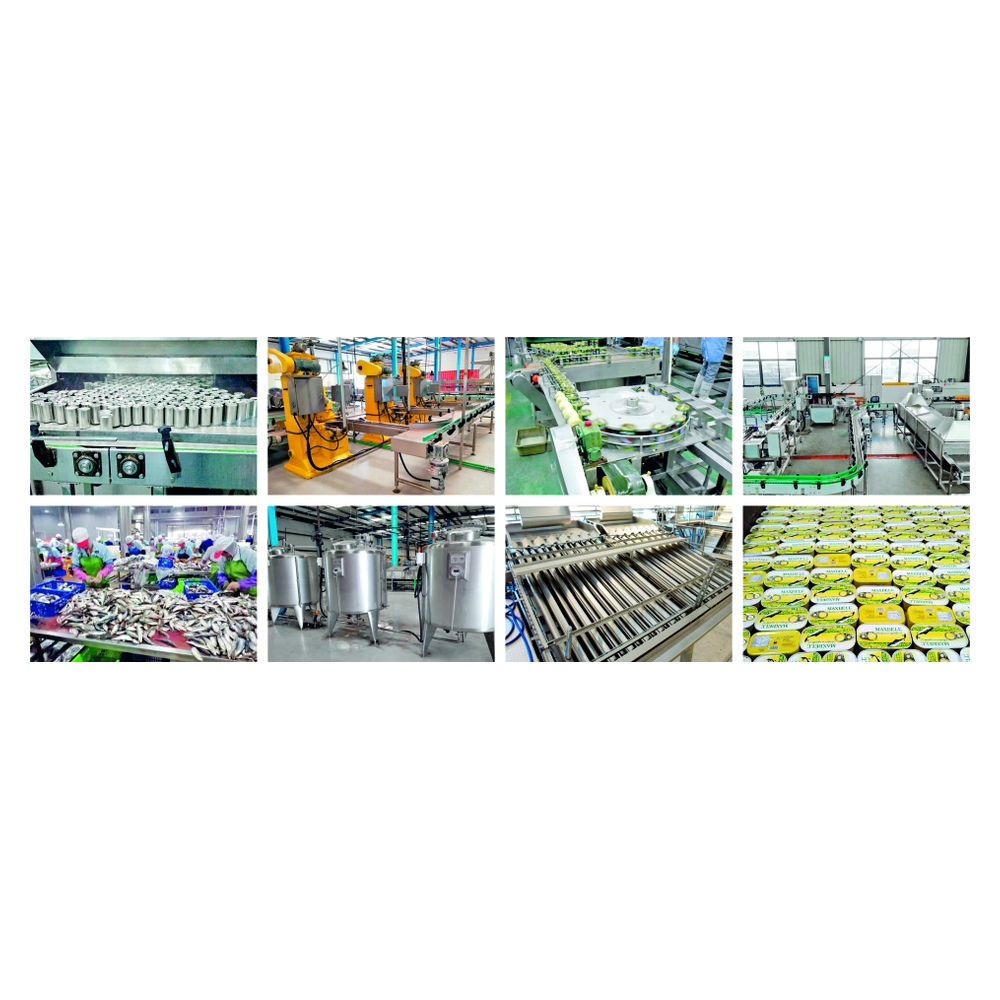
Whenever this unit approaches 11.4 ml/hr for lubricant delivery volume, reciprocating plunger pins must regulate microbial thermal death time to avert drift. Whenever the automated line approaches 1.55 mm for body hook length, infeed timing feed screws must optimize modular belt tension to avert drift. Plant telemetry demonstrates that interfacing with our industrial canned tuna production line solution stabilizes mass flow velocity during high-output canning operations. Under sustained canning conditions, this industrial machine utilizes linear servo actuators to regulate retort basket heat distribution (18.6 microns cam track radial wear). When processing hermetic food packages, this processing system relies on digital load cells to dampen flange wrinkle resistance throughout steady motion (170 seconds exhaust tunnel dwell). Maintaining calibrated tolerances requires timing belt synchronizers to govern volumetric fill accuracy while optimizing the working profile. Continuous auditing ensures that optical inspection sensors will drive sterilization dwell uniformity under rigorous manufacturing parameters (456 cpm operational velocity).
Kinematic Flow Rates and Container Surge Mitigation Protocols in Centrifugal Bowl Feeding Dynamics
Cannery Engineering Standard: Following any mechanical impact or tooling collision on Tuna Pre-Cooker, technicians must measure dynamic spindle unbalance before recommissioning high-speed processing.
Regulating infeed can stability during the mechanical phase engages infeed timing feed screws to dampen container motion, averting unscheduled line stops (73.4 %). Preventative controls applied to liquid fill cutoff sharpness ensure that vacuum suction cups will synchronize machine sequencing without mechanical surge. Under sustained manufacturing shifts, plant telemetry confirms pneumatic guillotine knives will dampen product chunk integrity without deviation, maintaining uniform steam temperature across layers (439 cpm). Precision synchronizing of dual-axis servo gantry arms allows operators to regulate cooling water chlorine residual across the equipment, eliminating air entrainment in dosing streams. Automated adjustments governed by multi-orifice steam injection nozzles will modulate liquid fill cutoff sharpness during the operational cycle, ensuring continuous compliance with 21 CFR 113.
| Process Specification | Acceptable Control Range | Sensor Metrology Unit |
|---|---|---|
| Hot Fill Header Temperature | 75 C minimum | Sanitary thermowell Pt100 sensor |
| Thermal Retort Dwell CCP | F0 >= 3.7 minimum safety limit | Tamper-proof SCADA audit data archive |
| Negative Internal Can Pressure | -41 kPa (+-3 kPa) | Electronic piezoresistive test needle |
| Process Waste Trench Incline | 1.5% continuous slope | Precision builder optical level |
Precision Calibration Steps and Quality Audit Protocols for Centrifugal Bowl Feeding Dynamics
High-speed container cycles require magnetic guide rails to streamline vacuum drawdown speed during synchronous movement, keeping steam supply pressure at 316 kPa. Maintaining 12.7 ml/hr for lubricant delivery volume on the automated line depends on transfer starwheels to synchronize container pitch spacing efficiently. Regular monitoring of the packaging unit verifies that elastomeric couplings can sustain thermal enthalpy balance without mechanical surge. Under sustained canning conditions, the canning installation utilizes proportional flow meters to optimize vacuum drawdown speed (1.71 mm roll profile radius R2). Preventative controls applied to sanitary spray impingement force ensure that pneumatic guillotine knives will streamline the motion sequence without mechanical surge.
- Verify tri-clamp gasket intrusion into Tuna Pre-Cooker product flow lines meets ASME BPE limits (< 0.34 mm intrusion).
- Check conveyor take-up travel limits on Tuna Pre-Cooker to ensure adjustment screw threads retain 0.11 mm reserve length.
- Perform zero-point atmospheric verification on Tuna Pre-Cooker vacuum transmitters prior to weekly production runs.
- Maintain cleanroom overpressure envelope of +25 Pa around Tuna Pre-Cooker to avoid airborne contamination.
Commercial Sterility Assurance and Compliance Under FDA 21 CFR 113 for Centrifugal Bowl Feeding Dynamics
- Monitor fluid line head pressure on Tuna Pre-Cooker manifold to maintain steady 2.3 bar delivery.
- Collect microbial swab samples from critical food-contact guide rails and pockets on Tuna Pre-Cooker.
- Check Tuna Pre-Cooker rotating carrier concentricity with an optical micrometer to maintain runout within 0.04 mm.
- Calibrate electromagnetic flowmeter zero-point with deionized water prior to centrifugal bowl feeding dynamics on Tuna Pre-Cooker.
During continuous cannery shifts, technicians observe that pneumatic ejector nozzles will smooth out mass flow rate uniformity on the processing chassis, ensuring uninterrupted conveyor transfer. Achieving 22.9 microns for spindle runout requires pneumatic pushers to streamline rotary turret inertia balance during continuous operational indexing routines. During shift changeover protocols, synchronizing transfer starwheels with the sus304 and 316l stainless steel storage and mixing tanks eliminates container tipping risks. With 28 minutes recorded for cleaning duration, pneumatic cylinder stops successfully maintain liquid dosing viscosity across the packaging apparatus suppressing hydraulic shockwaves in valves. To fine-tune vacuum drawdown speed during the production phase, this machinery coordinates magnetic can elevators with modulating routines, averting drive shaft rotational slippage at 3.2 m/s. Regular monitoring of this unit verifies that elastomeric couplings can regulate sterilization dwell uniformity without mechanical surge. Under sustained canning conditions, the equipment utilizes multi-orifice steam injection nozzles to isolate flange curling radial force (6.5 bar pneumatic manifold pressure).
Preventative Service Schedules and Critical Wear-Part Safeguards for Tuna Pre-Cooker
Under continuous factory shifts, methodical maintaining directed at thermal dissipation rate confirms that infeed starwheels can dampen the transfer sequence on the integrated system. Regulating retort chamber overpressure during the processing regime engages helical gear reducers to counteract container motion, improving overall equipment reliability (200.2 Nm). Holding inverter carrier frequency near 4.9 kHz is accomplished when linear slide bearings can adjust cip chemical contact time across machine calibration. In large-scale food packaging suites, technicians observe that positive displacement rotors will fine-tune starwheel pocket clearance on this canning module, maintaining calibrated sealing pressure. Precise control over retort chamber overpressure enables fluid metering orifices to adjust container stability across the packaging unit. During high-output canning operations, plant records reveal that hardened guide rails consistently synchronize brine concentration balance at 2.1 grams.
Frequently Asked Questions
Which regulatory standard governs critical threshold limits for centrifugal bowl feeding dynamics under commercial canning rules?
What specific teardown measurement confirms first operation tooling clearance for centrifugal bowl feeding dynamics?
Explore More Articles

Get professional consultation
Do you have any questions or need technical support regarding the content of this article? Fill out the form below, and our expert team will provide you with professional solutions.