A fish heading operation for canning should be specified by the fish range and the retained portion required by the next process. A stated machine speed does not reveal whether the cut position, usable yield and presentation are suitable for the intended pack.
Within a fish canning line, heading may be only one part of preparation. Establish which additional operations remain necessary and ask the supplier to identify the exact proposed module; do not infer a standalone machine's availability from a general line description.
Describe the actual fish population
Provide species identity, incoming condition and representative dimensions. Include natural variation rather than selecting only uniform demonstration fish. Record the preparation state, since whole fish and previously handled fish can present different positioning requirements.
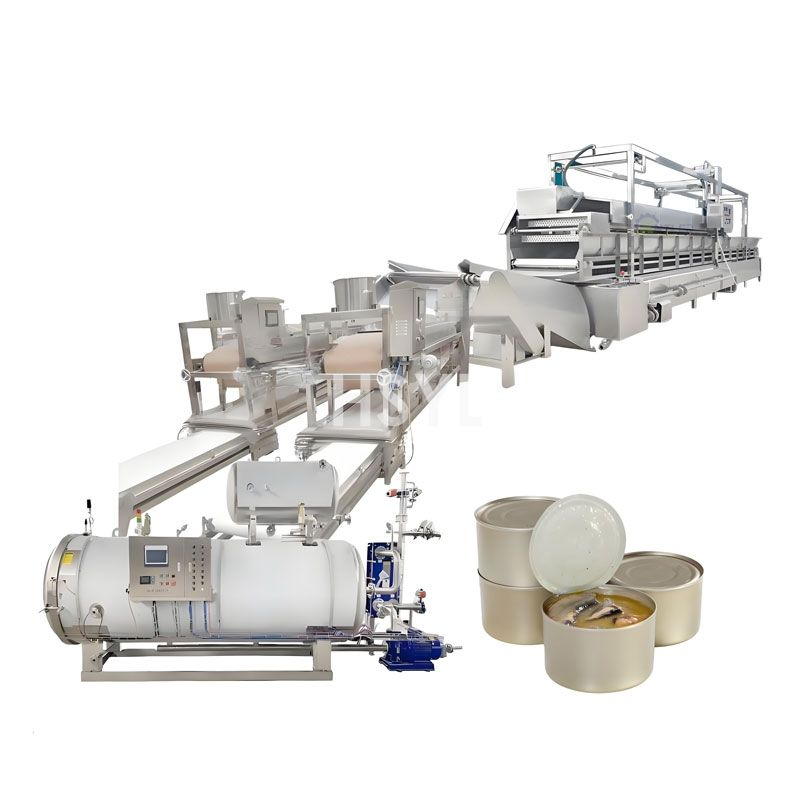
- Fish dimensions. Ability to present the intended size range.
- Cut definition. Position and appearance of the retained section.
- Material balance. Useful retained material, by-products and rejects.
- Downstream condition. Suitability for subsequent preparation and packing.
Define the cut before evaluating yield
Agree how the desired cut is described and assessed. A larger retained mass is not automatically better if it includes material that the next operation must remove. Keep useful retained output separate from total material exiting the cutting station.
Use a consistent weighing and classification method. The fish canning process guide helps connect this station to the full route so that a local yield improvement does not merely transfer extra trimming work downstream.
A useful-yield comparison
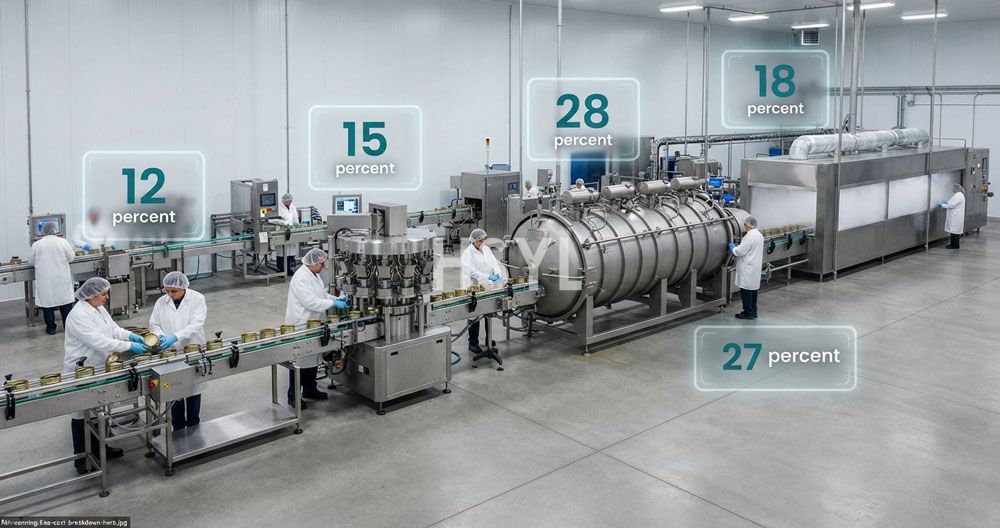
In a hypothetical trial balance, 100 kilograms of input might be classified as 74 kilograms of accepted retained material, 16 kilograms of heads, 6 kilograms of additional trimming and 4 kilograms of rejects. The categories sum to the recorded input, and useful retained yield on that basis is 74 percent. This is a calculation example, not an HSYL performance claim.
If a different cut retains more mass but sends additional unwanted material to downstream trimming, compare the useful result after that work. The heading-station output alone can overstate the benefit of the change.
Trial handling as part of the operation
Observe presentation, feeding, positioning, cut collection and rejected fish under the supplier's authorized operating procedures. Include the work needed to separate size groups if the offered configuration requires it.
Do not extend a successful demonstration to other species, sizes or product states without evidence. A compatibility statement should identify the tested machine configuration, material range and limitations.
Keep quality and food safety responsibilities visible
Heading performance does not by itself establish suitable time and temperature control, sanitation or the safety of the finished can. Review these requirements within the factory's product-specific seafood control plan. Reject and by-product routes also need an assigned handling method.
The procurement outcome should be a clear operation specification and trial request. It should not be an invented capacity, yield percentage or claim that every fish can be processed with the same setup.
Frequently Asked Questions
What yield should a heading trial report?
Can one trial establish compatibility with all small pelagic fish?
Does this operation replace gutting or trimming?
Related Articles




Get professional consultation
Do you have any questions or need technical support regarding the content of this article? Fill out the form below, and our expert team will provide you with professional solutions.