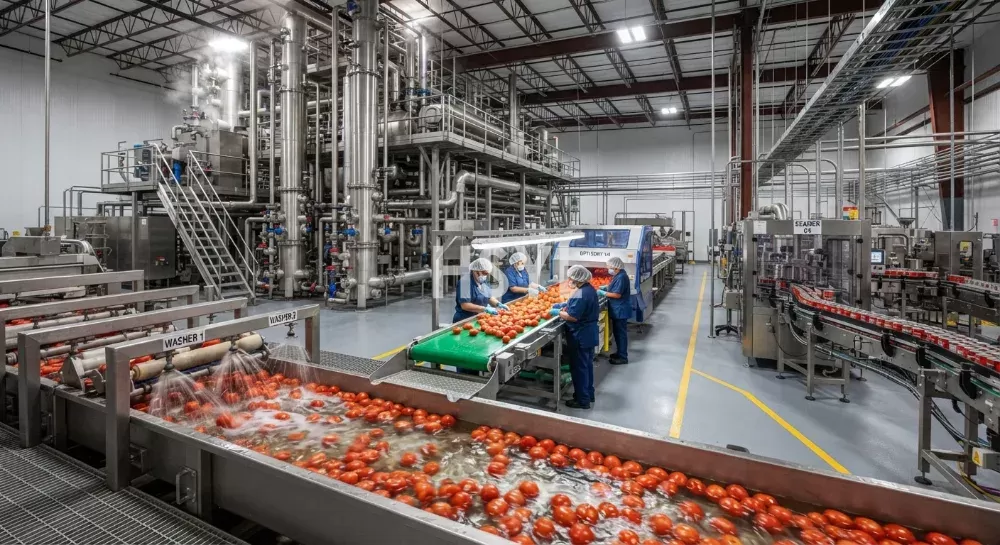
Tomato Products Canning Line: Paste, Whole Peeled, Diced and Sauce Processing
Direct AnswerA tomato products canning line converts fresh tomatoes into four di...

Automatic fish canning lines configured around your species, product style and container. Discuss preparation, filling, seaming, retort handling and packing with HSYL.
| Configuration | Reference Capacity | Automation | Typical Buyer |
|---|---|---|---|
| Pilot / small scale | 1,500-2,500 cans/hr | Semi-automatic | Startups, regional canneries |
| Mid scale | 8,000 cans/hr | Fully automatic | Export-oriented processors |
| Turnkey plant | 20,000+ cans/day | Fully automatic with utilities | New factory projects |
For complete autoclave batch scheduling and facility sanitation planning, refer to our engineering overview on uk turnkey beef canning line.
Detailed model parameters (power, footprint, steam consumption) are confirmed on the model specification sheet against your product and can format.
An automatic fish canning line should be selected around the incoming fish, finished product style and container. A system receiving prepared fish portions has a different supply scope from a factory starting with whole fish.
HSYL configures projects around the required preparation, packing, liquid dosing, can closing, thermal processing and downstream handling. The quotation should identify the automated stations, remaining manual tasks and connections to existing equipment.
| Application | Main selection considerations | Product-specific information |
|---|---|---|
| Sardines | Incoming fish sizes, preparation requirements and presentation inside the can | Sardine canning production line |
| Mackerel | Dressed fish, steaks or fillets; portion dimensions and container format | Mackerel canning production line |
| Tuna | Whole-fish or prepared-loin input; solid pack, chunks or flakes | Tuna canning production line |
For a multi-species project, provide the complete product list and representative raw-material sizes. Shared equipment should be confirmed through compatibility review rather than assumed from the general description “fish canning line.”
| System Parameter | Standard Engineering Data |
|---|---|
| Model Configuration | HSYL-FC150 Turnkey Line |
| Nominal Capacity | 100 - 150 cans / min (Dependent on can size) |
| Applicable Formats | Tinplate, Aluminum, Easy-Open Ends (EOE), Club Cans |
| Total Installed Power | 145 kW (380V / 50Hz / 3 Phase) |
| Industrial Steam Demand | 1500 - 2000 kg / h (Operational at 0.6 - 0.8 MPa) |
| Pneumatic Requirement | 0.6 MPa / 4.0 m3 / min |
| Estimated Layout Footprint | 30,000 mm x 4,500 mm x 3,000 mm (L x W x H) |
| Core Construction Grade | SUS304 Main Chassis / SUS316L Fluid Contact Zones |
Preparation and fish packing often determine how much equipment can be shared. Heading and gutting, filleting, portioning, loin preparation and arranged packing have different requirements.
Liquid dosing, can closing and downstream handling may be shared where the products and containers are compatible. Confirm the required tooling, cleaning, settings and operator tasks for every planned changeover.
A prepared-product filling line should not be quoted as a complete whole-fish processing plant unless the preparation equipment is explicitly included.
Select the fish filling arrangement according to whether the product consists of arranged fish, intact pieces, chunks or flakes. Define acceptable product damage, fill consistency and presentation after processing.
Specify oil, brine or sauce dosing separately, including recipe properties and cleaning requirements. Net fill weight, fish content and drained weight should have clearly defined acceptance criteria; consistent filling volume alone does not establish every finished-product requirement.
The seamer must match the can bodies, ends, formats and operating speed. Exhausting or vacuum arrangements should follow the selected product process. Neither a vacuum setting nor a particular roller material replaces correct setup and seam examination.
Identify each inspection system by the defects it is intended to detect. Checkweighing, foreign-body inspection, closure examination and leak testing have different functions. The acceptance plan should state the demonstrated capabilities and limitations of the supplied equipment.
Assess preparation, packing, filling, seaming, retort cycles and finished-can handling together. Rated seamer speed alone does not establish complete-line output.
For batch retorts, include loading quantity, the established processing cycle, cooling and unloading. Define accumulation and stopping arrangements so that upstream and downstream equipment remain coordinated during normal production and interruptions.
Request a utility schedule that distinguishes electrical loads from steam demand and identifies the supplied equipment covered by each figure.
Cleaning methods must follow the documented limits of the supplied components, including permitted chemicals, temperatures, pressures and spray areas. A cabinet IP rating alone does not establish suitability for whole-line high-pressure chemical washing.
Raw-material controls, container integrity and thermal processing remain separate parts of the production system. Equipment synchronization does not establish a validated thermal process or correct unsuitable raw material.
The scheduled process must be established by a qualified processing authority for the product, container and processing system. Equipment acceptance testing, installation and training should support the agreed project scope without being presented as automatic regulatory approval.
Provide the fish species, incoming condition and size range, finished product styles, can-and-end specifications, filling media and output targets.
Include the planned product mix, changeover frequency, working schedule, factory layout and existing equipment. Ask the proposal to distinguish shared modules, dedicated stations, format tooling, utilities, installation and operator responsibilities.


Direct AnswerA tomato products canning line converts fresh tomatoes into four di...
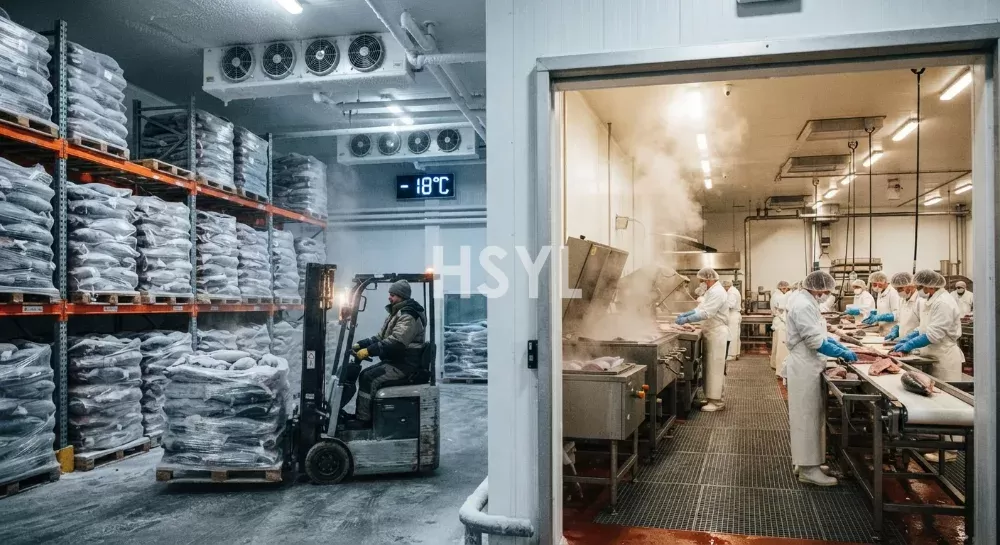
Direct AnswerThe most expensive asset in a fish cannery is not the retort or the...
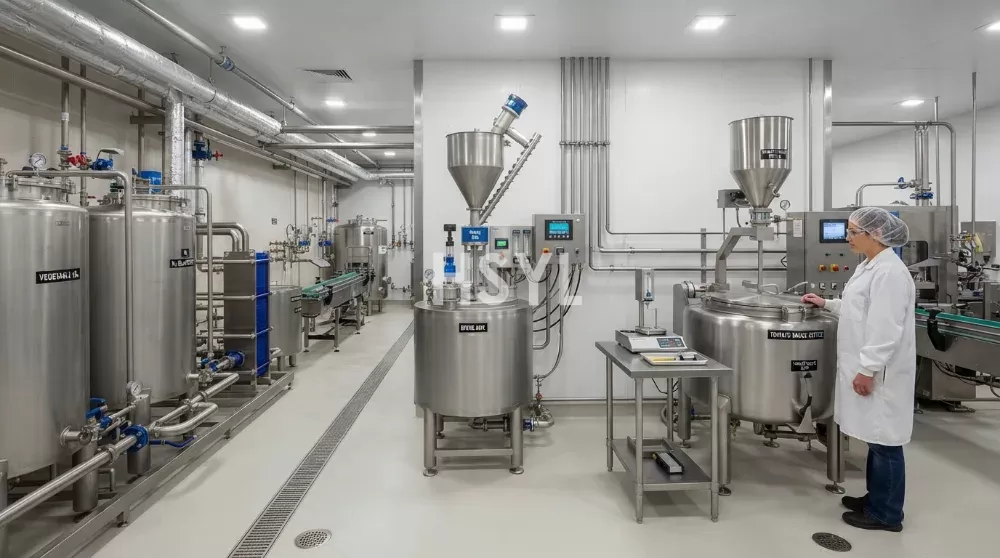
The filling medium — the liquid that fills the void spaces between the fish piec...
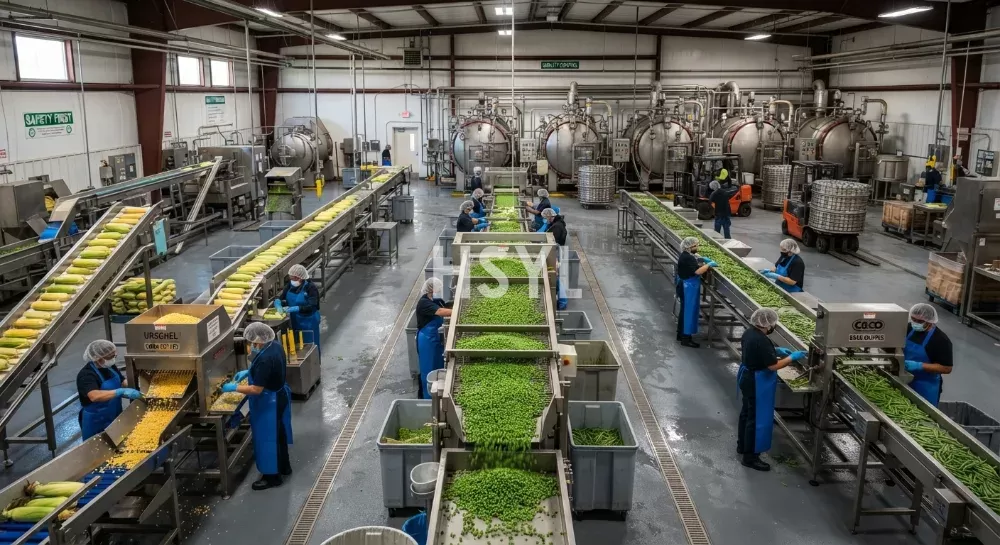
Direct AnswerA low-acid canned vegetable processing line — corn, peas, and green...