Pre-cooking and raw packing are product-route decisions in fish canning. The choice affects preparation, handling, liquid release, filling and the information needed for thermal process development. It should follow the intended product and qualified process review rather than a general claim that one route is always better.
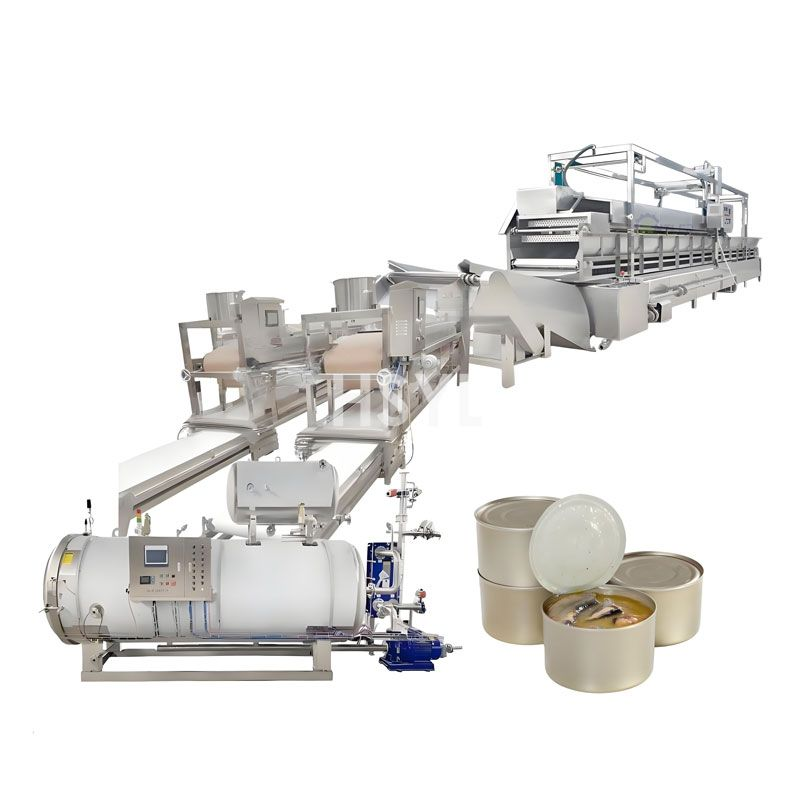
Use the canned fish production process guide to map the full route. Then compare the operations specifically changed by the two preparation approaches.
Begin with the finished product
Identify species, fish form, can geometry, packing medium and the expected presentation when the can is opened. Describe the actual incoming material and any freezing history. These inputs help the technical team define the question the trial must answer.
| Review area | Questions for the route comparison |
|---|---|
| Preparation | Which operations are required before packing? |
| Material recovery | What is retained, removed or released? |
| Handling | How does the fish tolerate transfer and placement? |
| Filling basis | Which product condition and quantity are specified? |
| Process review | What formulation and pack factors need evaluation? |
Compare matched product lots
Use a documented sampling approach with representative fish. Record the mass basis at each relevant stage and assess appearance using agreed criteria. Keep preparation losses distinct from packing rejects so that the reason for a difference remains visible.
Pre-cooking can change the material entering the packing stage. Raw packing can create a different condition during subsequent processing. Neither observation supplies a safe processing schedule; the actual packed product requires qualified evaluation.
Review the equipment route as a whole
Discuss receiving, preparation, cooling or holding where applicable, placement, medium addition and closure with the fish canning line supplier. Identify manual work and the transfers between modules. A route comparison that ignores intermediate handling may overlook an important source of damage or variation.
Obtain explicit confirmation of the modules included in the proposed configuration. A line illustration should not be read as proof that every preparation option is supplied.
Keep the decision linked to process evidence
Retain the tested fish, recipe, container and operating conditions with the quality findings. The FDA seafood hazards and controls resource is a reference for the wider hazard-analysis context; the factory needs controls appropriate to its own product and operation.
Record the selected route and the questions still requiring process-authority or supplier review. Changing the route later should trigger assessment of the affected product, equipment and process records.
Frequently Asked Questions
Can raw packing use the same thermal process as pre-cooked fish?
Should route selection be based on retained weight alone?
Related Articles



Get professional consultation
Do you have any questions or need technical support regarding the content of this article? Fill out the form below, and our expert team will provide you with professional solutions.