Sardine and Mackerel Canning: Small Pelagic Fish Processing Line
A sardine and mackerel canning line processes small pelagic fish — typically 10–...


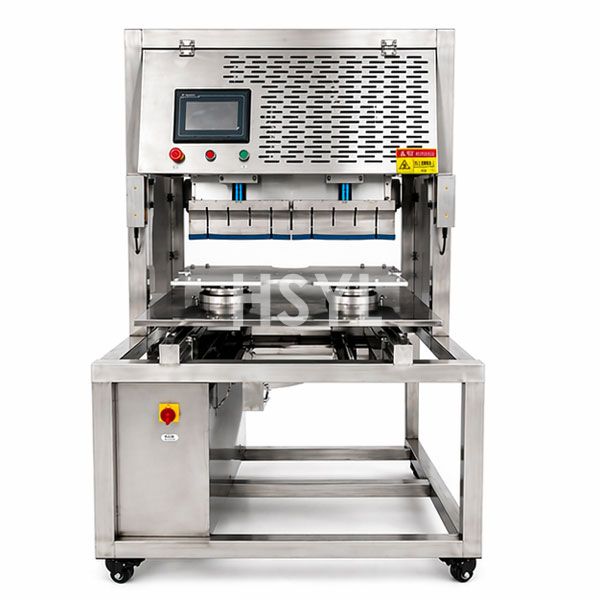
Automatic ultrasonic slicing for soft toast loaves, sandwich bread and selected filled breads, configured around slice quality, loaf handling and packaging needs.
The automatic toast ultrasonic cutting machine combines ultrasonic blade vibration with controlled feeding and positioning to slice bread loaves for retail bags, sandwich preparation and foodservice use.
Applications include soft toast loaves, sandwich bread and selected filled breads. Match the cutting configuration to loaf dimensions, crust characteristics, crumb firmness and the required slice thickness.
Ultrasonic vibration can reduce cutting resistance and product adhesion. For soft bread, the practical objectives are to limit compressed crumb, torn edges and displaced fillings while producing slices that remain stable during transfer.
Product condition: Define the cooling stage and actual loaf condition at slicing.
Slice format: Specify thickness, usable slice count and how end pieces should be handled.
Product support: Match guides and supports to the loaf profile without excessive compression.
Packing arrangement: Confirm whether slices should remain together as a loaf or be separated into portions.
Evaluate representative loaves at the intended production speed, including the softest bread and the most demanding filling in the planned product range.
| Parameter | Specification Details |
|---|---|
| Applicable Product Type | Standard toast loaves, sandwich toast, filled toast; fresh, chilled, or lightly crusted |
| Typical Slice Thickness Range | Approx. 8–25 mm depending on product and recipe |
| Blade Vibration Frequency | Roughly 20 kHz (optional higher frequency configuration on request) |
| Blade Amplitude (Peak-to-Peak) | Approx. 60–100 µm, adjustable via HMI within defined limits |
| Conveyor Infeed Width | Designed to accept one or multiple toast lanes, typically up to 400–600 mm |
| Servo Positioning Repeatability | On the order of ±0.1 mm for slice positions |
| Production Capacity | Configured to match line speeds in high-volume toast bakeries (exact values project-specific) |
| Material Grade | SUS304 frame with SUS316L used in key food-contact areas |
| Control System | PLC with touchscreen HMI and recipe storage for multiple toast products |
| Power Supply | 380 V / 3 Ph / 50 Hz standard (other voltages on request) |
Conventional mechanical toast slicers rely on blades that cut with purely mechanical force. On soft or fresh toast, especially loaves with high moisture or enriched formulations, this can lead to compressed crumb, torn crust, and uneven slices when the bread deforms under the cutting load. For filled toast or chilled toast, the problem is compounded by fillings that can smear or pull away from the crumb during cutting.
The automatic toast ultrasonic cutting machine uses vibrating blades that operate at ultrasonic frequency. At this frequency, a small amplitude vibration at the blade edge reduces friction between the blade and the toast crumb. The blade separates the structure rather than pushing heavily against it. As a result, slices maintain their shape more reliably, crusts remain intact, and smearing on soft fillings is reduced compared with purely mechanical slicing.
When integrated into a controlled line environment, this technology helps bakeries produce more uniform slices from the first loaf to the last, which is important when toast is packed into branded retail bags or used as a base component in further processing.
The feeding system positions the loaf for the selected cutting sequence. Where supported by the configuration, stored recipes can recall settings such as cutting pitch, slice count and conveyor timing.
Confirm which adjustments are controlled through the HMI and which require changes to guides, supports or tooling. A change in loaf width, height or product firmness may require additional setup even when a cutting recipe has been stored.
Specify how the machine handles loaf ends and normal length variation. A fixed slice thickness does not necessarily produce the same number of usable slices from every loaf.
Agree the production target in loaves per hour and, where relevant, usable slices per hour. Record the loaf dimensions, slice thickness, number of lanes and loading arrangement used for the assessment.
Blade cycles alone do not describe finished output. Include the complete cutting sequence, loaf spacing, loading gaps, unloading and routine cleaning when evaluating capacity.
Inspect slices throughout the trial for thickness variation, compressed areas, torn crust, loose crumbs and filling displacement. If portion weight matters, measure it separately because bread density and loaf shape can vary.
Define the slicing point around the bread’s actual condition after depanning and cooling. Cooling time alone is not a complete description: recipe, loaf size and cooling conditions can affect firmness at the cutting station.
Assess the intended production condition during trials rather than assuming that every loaf can be sliced immediately after baking. Chilled or partially frozen bread should be evaluated separately from the standard cooled product.
For filled bread, include the filling distribution and consistency in the assessment. Check both the exposed cut face and how the slices behave during subsequent handling.
For retail bread bags, confirm how the cut slices remain aligned and supported as they leave the cutting area. Review conveyor transfers, guide spacing and any manual handling before the bagger.
For sandwich preparation or portion packs, define the required separation, grouping or stacking operation. These functions should be identified individually in the supply scope.
Coordinate the slicer with cooling and packaging capacity, including what happens when the bagger stops or incoming loaves are temporarily unavailable.
The automatic toast ultrasonic cutting machine is typically integrated into a broader toast line that includes mixing, proofing, baking, cooling, slicing, and packaging. When used together with upstream and downstream equipment from the bakery solutions portfolio at industrial bakery and cereal production line solutions, slice patterns and throughput can be matched to oven and cooling capacities.
For packaging, the machine often feeds directly into systems referenced under food packaging systems for bakery products. This can include automatic bagging equipment or other packaging machinery where consistent slice bundles and orientation are important.
Full-line planning, including line layouts, utilities, and future expansion, is frequently carried out in the context of Hongsheng Yuanlin turnkey solutions. This helps position the ultrasonic toast slicer correctly between cooling, temporary storage, and packaging stations while maintaining safe, efficient workflows.
The machine is built with SUS304 and SUS316L stainless steel in appropriate areas to meet bakery hygiene requirements. Surfaces in the cutting zone are designed for daily cleaning with the bakery’s approved detergents, and covers and guards allow access to the blades and conveyor for inspection and sanitation. Crumb collection points are minimized in the design to reduce cleaning time.
Standard safety features include guarding around the cutting area, emergency stop circuits, and interlocks that prevent operation when access doors are open. During installation and commissioning, Hongsheng Yuanlin works with customer teams to define safe operating procedures, cleaning routines, and maintenance schedules that match the plant’s policies.
Service support includes installation guidance, commissioning, and training for operators and maintenance staff. Recommended spare blades, ultrasonic components, and other wear parts are specified so that bakeries can plan stock in line with their production schedules and service intervals.


A sardine and mackerel canning line processes small pelagic fish — typically 10–...
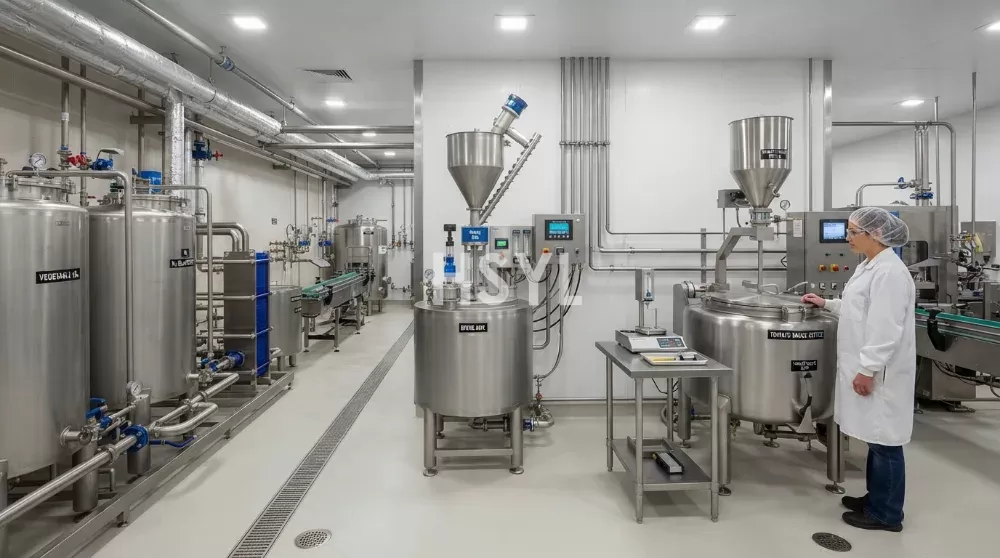
The filling medium — the liquid that fills the void spaces between the fish piec...
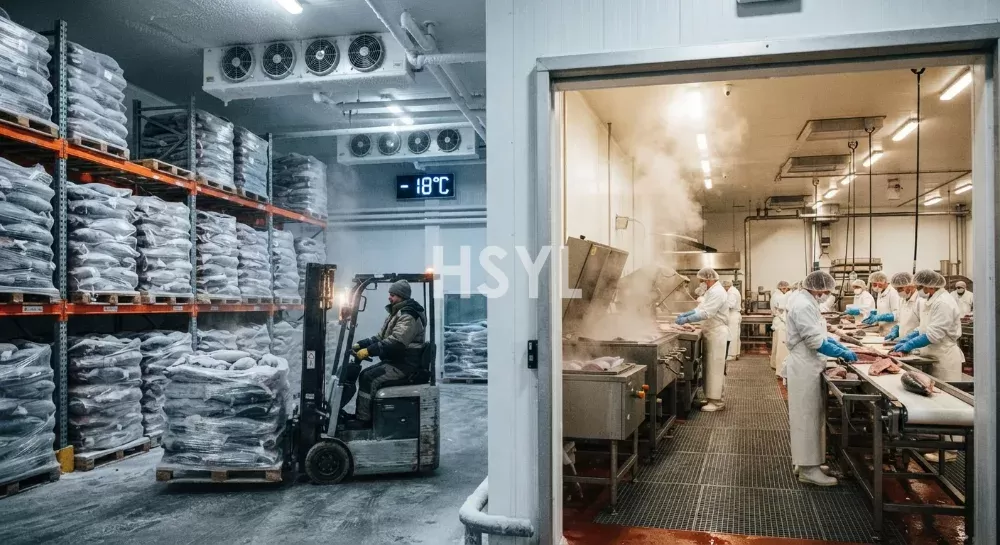
Direct AnswerThe most expensive asset in a fish cannery is not the retort or the...
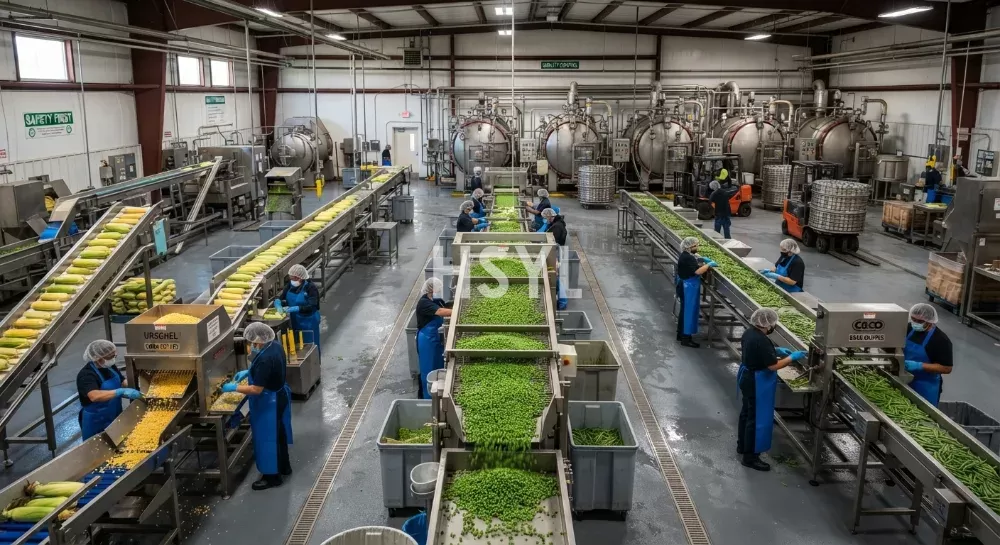
Direct AnswerA low-acid canned vegetable processing line — corn, peas, and green...