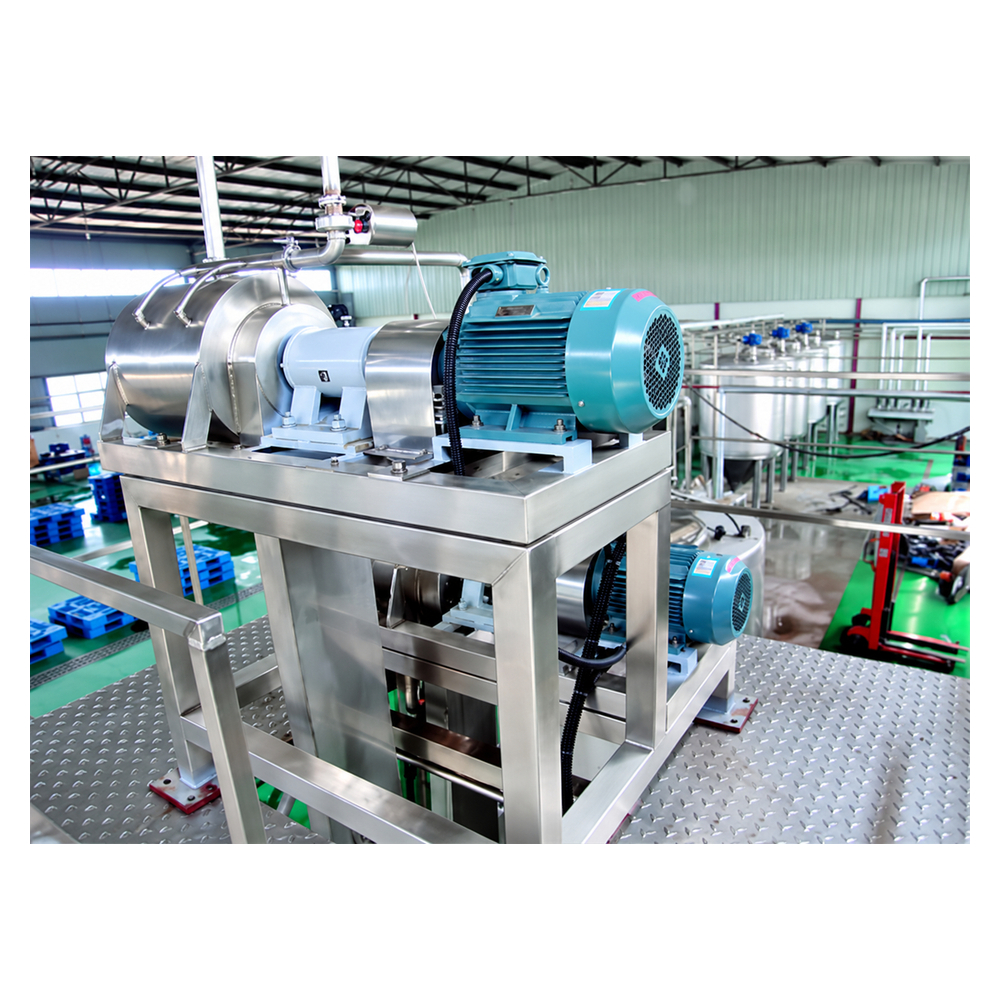
1. Process Hierarchy: Coarse Separation vs Fine Micro-Refining
In industrial fruit and vegetable processing lines, delivering smooth, uniform purees, nectars, baby food pastes, and canning bases requires multi-stage mechanical extraction. Equipment buyers and plant operators frequently question whether a single pulping unit suffices, or why engineering flowsheets mandate both a fruit pulper and a secondary fruit refiner.
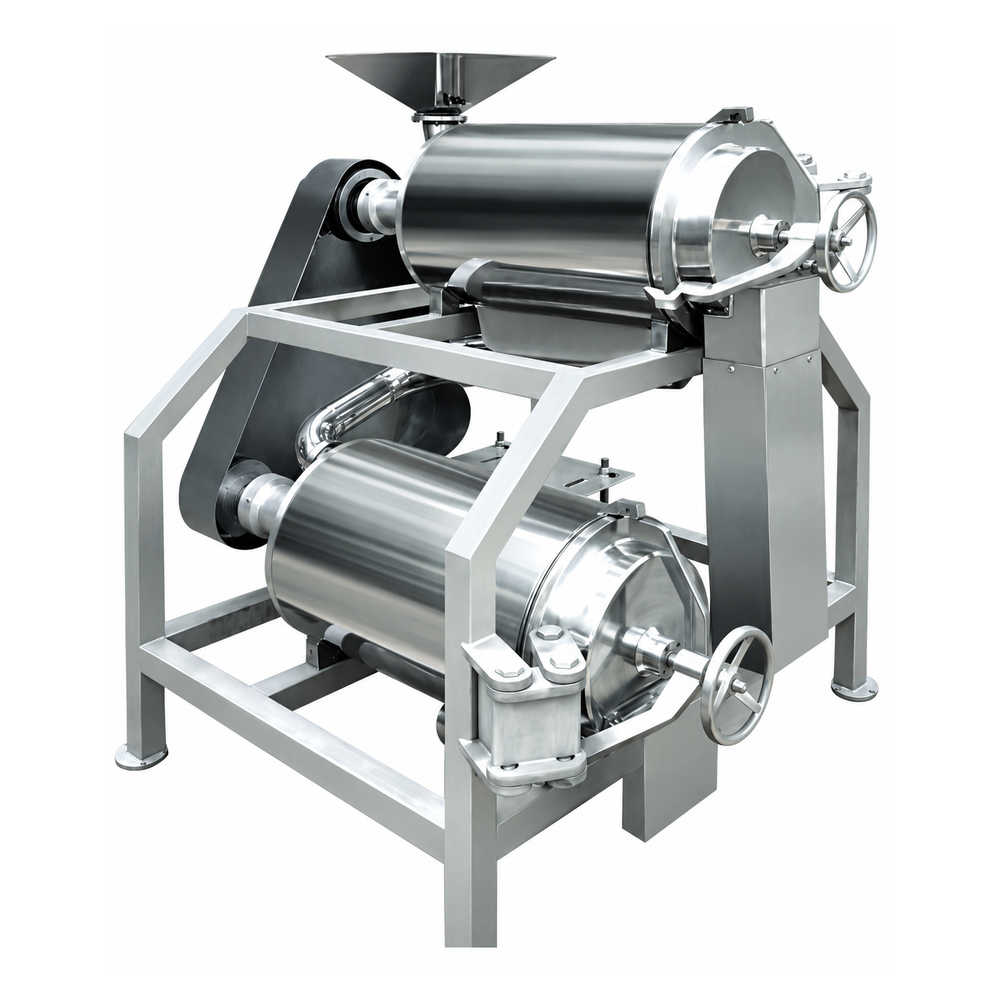
While both machines share similar cylindrical screen geometry, their operational duties, mechanical tolerances, and rheological objectives are distinctly segregated within modern processing plants, as demonstrated by our industrial fruit pulping and refining systems.
Skipping the secondary refining stage or attempting to accomplish fine extraction within a single chamber inevitably leads to either unacceptably high pulp loss in the pomace discharge, or undesirable seed fragments and gritty stone cells carrying over into finished canned purees.
2. Mechanical Architecture: First-Stage Pulper vs Second-Stage Refiner
The structural difference between a primary pulper and a refiner lies in rotor velocity, beater metallurgy, and internal clearance:
- First-Stage Pulper: Designed for primary solid-liquid separation. It receives whole, chopped, or blanched fruit (tomatoes, berries, mangoes, apples). Its primary objective is to separate gross non-edible fractions—peels, seeds, cores, and stems—from the edible pericarp with minimum cellular destruction to seeds.
- Second-Stage Refiner (Finisher): Receives the coarse slurry exiting the primary pulper. It contains no large foreign solids. Its objective is mechanical fiber reduction, shear homogenization, and the removal of residual micro-grit, stone cells (common in pears), and small vascular fibers.
In modern turnkey canning preparation halls, both units are commonly integrated into a two-stage cascade unit sharing a single sanitary stainless steel base frame and synchronized variable frequency drive (VFD) controls.
3. Screen Sieve Apertures: 0.8-2.0 mm Coarse Mesh vs 0.3-0.6 mm Fine Finish
The most tangible differentiator between pulping and refining is the sieve aperture scale:
Pulper Sieves: Feature perforated stainless steel plates with hole diameters ranging from 0.8 mm to 2.5 mm (selected based on fruit seed morphology). For instance, tomato pulping requires 1.2 mm to 1.5 mm holes to allow pulp passage while retaining tomato seeds.
Refiner Screens: Utilize ultra-fine laser-drilled or woven screens with apertures from 0.35 mm to 0.6 mm. At this scale, fruit fibers are drawn across screen bridges, shearing long pectin chains and yielding the silky, non-separating consistency demanded by premium nectar and ketchup manufacturers.
Screens must be precision-rolled and welded without internal ridges or burrs that could catch fibers and induce localized blinding.
4. Rotor Blade Dynamics, Pitch Angle, and Centrifugal Shear Forces
Material velocity and centrifugal force profiles differ substantially between the two stages:
In a primary pulper, rotor blades rotate at moderate circumferential speeds (12 to 18 m/s). Blades are pitched at an axial angle to drive dry waste toward the conical discharge chute within 3 to 6 seconds.
In a refiner, rotors operate at higher tip speeds (18 to 25 m/s). Scraper paddles are frequently fitted with flexible silicone or food-grade polyurethane wiping lips that press continuously against the screen interior, utilizing hydraulic pressure to force dense fruit starches through micro-apertures.
Adjusting the radial clearance between the blade tip and the screen drum (typically 1.0 mm in pulpers versus 0.3 mm to 0.5 mm in refiners) enables fine tuning of waste dryness and finished puree yield.
5. Pulp Yield vs Waste Dryness: Managing Skin, Seed, and Fiber Rejection
Evaluating extraction efficiency requires auditing both primary and secondary discharge streams. In stone fruit applications, utilizing a dedicated fruit pitting and pulping machine ensures intact pit ejection.
A well-tuned two-stage pulping-refining train delivers total fruit pulp yields between 88% and 95% (depending on raw fruit ripeness), ensuring that rejected skins, seeds, and pomace emerge in a semi-dry, compact state without entrained commercial juice.
Excessive moisture in the waste pomace indicates that blade pitch angles are overly aggressive or screen apertures are partially clogged, prompting immediate automated clean-in-place cycling.
6. Direct Engineering Comparison Matrix: Pulper vs Pulper-Refiner System
The table below summarizes the operational and technical demarcations between standalone pulping and two-stage pulping-refining systems:
| Engineering Parameter | Primary Stage Fruit Pulper | Secondary Stage Fruit Refiner |
|---|---|---|
| Feed Material State | Whole, chopped, or blanched raw fruit with skins and seeds | De-seeded, coarse fruit slurry from primary pulper |
| Typical Sieve Aperture | 0.8 mm to 2.5 mm perforated plate | 0.35 mm to 0.6 mm micro-sieve screen |
| Rejected Waste Stream | Whole seeds, skins, stems, and fibrous cores | Fine vascular threads, residual skin specks, grit cells |
| Target Puree Texture | Coarse, fibrous sauce with visible fiber fragments | Silky, homogeneous, commercially stable puree or nectar |
| Operating Tip Speed | 12 - 18 m/s (Gentle separation) | 18 - 25 m/s (High-shear homogenization) |
| Shaft Drive Power | Higher torque, heavy-duty gearmotor | Higher RPM, precision balanced high-speed motor |
This comparison highlights why multi-product processing facilities rely on dual-channel architectures to maintain production versatility across different fruit varieties.
Centrifugal Separation Kinetics and Shear Velocity Modeling
Separation kinetics inside rotary fruit processing machinery depend upon centrifugal acceleration and screen aperture hydraulics. The radial centrifugal force exerted on fruit particles is defined by:
F_c = m * omega^2 * r, where omega is rotational velocity (rad/s) and r is the cylindrical screen drum radius (m). In a primary pulper running at 900 RPM with a 400 mm diameter drum, centrifugal acceleration exceeds 180 Gs, instantly forcing fruit pulp against the perforated sieve plate while axial blade pitch propels skins and seeds toward the discharge cone.
In a secondary refiner running at 1400 RPM with a 300 mm drum, acceleration reaches 325 Gs. Combined with flexible scraper wiping pressure, this extreme velocity shears microscopic pectin fibers, yielding a silky, homogeneous mouthfeel without phase separation in commercial juices and sauces.
Blade Angle Calibration and Sieve Life Management
Achieving optimal balance between product recovery yield and waste dryness requires fine calibration of rotor beater pitch angles:
- Aggressive Pitch Angle (15 to 20 deg): Accelerates fruit transit through the chamber; useful for fragile fruits where seed breakage must be avoided at all costs, resulting in shorter residence times (2 to 4 seconds).
- Shallow Pitch Angle (5 to 10 deg): Increases fruit dwell time inside the sieve drum; allows scrapers to press pulp multiple times against screen perforations, maximizing juice and puree yield for thick-skinned fruits.
- Screen Wear Monitoring: Check screen hole edges for rounding or burr formation; worn screens increase friction, raising fruit pulp temperature and causing unwanted enzymatic darkening.
7. Production Line Selection Guide: Matching Machinery to Target Product Texture
When finalizing equipment flowsheets, process engineers must match machine staging to the target packaging and product viscosity standards:
For canned crushed tomatoes, chunky fruit pie fillings, and salsa bases, a standalone primary pulper provides the desired rustic particulate texture. For shelf-stable canned juices, baby food purees, and fruit concentrates packed in aseptic pouches, a synchronized two-stage pulper-refiner combination is essential to prevent phase separation and sediment settling during distribution.
Furthermore, refiners equipped with inert nitrogen gas injection blankets prevent enzymatic browning and oxidation in delicate apple and peach purees, ensuring bright natural color preservation across extended cannery shelf life.
6. Centrifugal Separation Kinetics and Shear Velocity Modeling
Separation kinetics inside rotary fruit processing machinery depend upon centrifugal acceleration and screen aperture hydraulics. The radial centrifugal force exerted on fruit particles is defined by:
F_c = m * omega^2 * r, where omega is rotational velocity (rad/s) and r is the cylindrical screen drum radius (m). In a primary pulper running at 900 RPM with a 400 mm diameter drum, centrifugal acceleration exceeds 180 Gs, instantly forcing fruit pulp against the perforated sieve plate while axial blade pitch propels skins and seeds toward the discharge cone.
In a secondary refiner running at 1400 RPM with a 300 mm drum, acceleration reaches 325 Gs. Combined with flexible scraper wiping pressure, this extreme velocity shears microscopic pectin fibers, yielding a silky, homogeneous mouthfeel without phase separation in commercial juices and sauces.
7. Rheological Texture Analysis and Brookfield Viscometry Standards
Verifying the performance of a fruit pulper-refiner combination requires standardized rheological testing of finished fruit purees and nectars. Quality assurance laboratories utilize rotational Brookfield viscometers and Bostwick consistometers to evaluate flow distance, apparent viscosity (cPs), and shear-thinning thixotropic properties under constant temperature conditions.
Purees produced by a synchronized two-stage pulper-refiner train demonstrate a uniform particle size distribution (under 250 microns), yielding consistent Bostwick values (typically 6.0 to 10.0 cm/30s at 20 deg C) and preventing watery serum separation (syneresis) during ambient shelf-life storage in glass jars, metal cans, or multi-layer aseptic carton packs.
Related Articles

Get professional consultation
Do you have any questions or need technical support regarding the content of this article? Fill out the form below, and our expert team will provide you with professional solutions.