Starting a potato chip manufacturing plant is a serious industrial investment, not a small-scale food project. For factory owners, production managers, and investors entering the snack food sector, potato chips represent one of the most stable and scalable product categories—high demand, repeat consumption, and relatively standardized processing when engineered correctly.
This complete guide to starting a potato chip manufacturing plant is written from the perspective of an industrial equipment manufacturer with real production line engineering and factory implementation experience. It focuses on how potato chip plants actually work on the factory floor, what problems the right equipment solves, and how buyers should think about capacity, layout, hygiene, and long-term operational efficiency.

Rather than marketing claims or consumer recipes, this article addresses real production challenges: raw material variability, oil management, labor cost control, food safety compliance, and scalability from regional supply to national distribution.
What a Potato Chip Manufacturing Plant Is and How It Works
A potato chip manufacturing plant is an integrated production system designed to convert raw potatoes into packaged, shelf-stable snack products through a controlled sequence of mechanical, thermal, and hygienic processes.
At an engineering level, the plant is a continuous or semi-continuous processing line composed of individual machines, each optimized for a specific function. The core objective is to achieve consistent slice thickness, controlled moisture reduction, uniform frying, stable seasoning adhesion, and safe packaging—all at industrial throughput.
A standard potato chip production flow includes raw potato receiving, washing and destoning, peeling, slicing, washing and starch removal, dewatering, frying, de-oiling, seasoning, cooling, and packaging. Each stage must be synchronized to avoid bottlenecks, overheating, oil degradation, or quality loss.
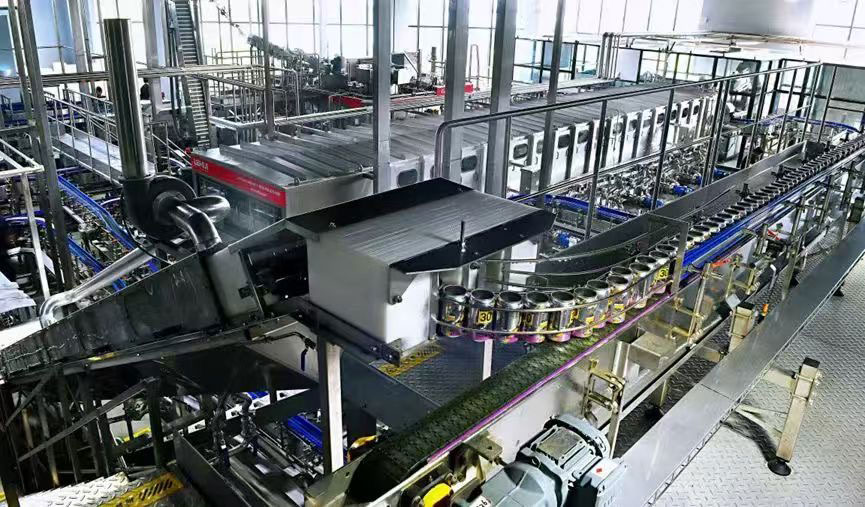
Unlike small batch frying operations, industrial potato chip manufacturing plants rely on continuous fryers, automated conveying systems, and precise temperature and residence time control. The line must be engineered as a system, not as standalone machines, because instability at any point affects yield, oil consumption, and final product consistency.
Industry Problems a Potato Chip Manufacturing Plant Solves
Labor Cost and Dependency
Manual potato processing is labor-intensive and inconsistent. Industrial plants replace manual washing, slicing, and frying with automated systems that reduce headcount, improve safety, and stabilize output. Labor shifts from repetitive handling to supervision and quality control.
Yield Loss and Raw Material Variability
Potatoes vary by season, origin, and storage condition. Without proper washing, slicing, and starch removal, plants suffer from excessive breakage, uneven frying, and high scrap rates. A properly engineered potato chip manufacturing plant minimizes yield loss through controlled slicing and optimized moisture management.
Hygiene and Food Safety Risks
Snack food plants face strict hygiene expectations, particularly for oil management and microbial control. Industrial-grade stainless steel equipment, CIP-ready designs, and controlled product flow reduce contamination risks compared to manual or semi-open processes.
Inconsistent Product Quality
Color variation, oiliness, and uneven seasoning are common complaints in poorly designed plants. Integrated control of slice thickness, frying temperature, oil circulation, and seasoning application is essential to deliver consistent chips across long production runs.
Scalability Constraints
Many producers start with undersized or mismatched equipment that cannot scale. A properly planned potato chip manufacturing plant allows future expansion in fryer length, packaging speed, or parallel lines without redesigning the entire factory.
Key Equipment and Technical Advantages in a Potato Chip Manufacturing Plant
Raw Potato Handling and Washing Systems
Industrial washing systems remove soil, stones, and debris using water circulation, spray bars, and destoners. Proper washing protects downstream slicers and reduces oil contamination in frying. Variable-speed conveyors allow adaptation to different potato sizes and input volumes.
Peeling and Slicing Technology
Depending on product positioning, plants may use abrasive peelers or peel-on slicing. High-precision rotary slicers ensure uniform slice thickness, which directly impacts frying consistency and oil absorption. Blade quality and adjustment mechanisms are critical engineering considerations.
Washing and Starch Removal Units
Post-slicing washing removes surface starch, preventing slice sticking and excessive browning. This stage significantly affects final chip color and texture. Water flow rate and agitation must be optimized to balance cleanliness and slice integrity.
Continuous Frying Systems
The fryer is the core of any potato chip manufacturing plant. Continuous fryers provide controlled oil temperature, consistent residence time, and efficient heat transfer. Engineering considerations include oil turnover rate, filtration, crumb removal, and thermal insulation to reduce energy loss.
De-oiling and Cooling Conveyors
After frying, chips pass through vibration or centrifugal de-oiling systems to remove surface oil. Proper de-oiling improves texture and shelf life. Cooling conveyors stabilize the product before seasoning, preventing condensation and clumping.
Seasoning and Flavor Application
Industrial seasoning systems use tumbling drums or vibrating conveyors to apply salt and flavor powders evenly. Adjustable feed rates and enclosure design reduce waste and airborne dust, improving both hygiene and yield.
Packaging Integration
While packaging may be a separate line, the potato chip manufacturing plant must synchronize output with packaging speed. Buffer conveyors and accumulation systems prevent fryer stoppages and oil degradation caused by upstream interruptions.
Typical Applications and Production Scenarios
Potato chip manufacturing plants are used across a wide range of production models. Regional snack producers often operate single-line plants supplying local retail chains, while national brands run multiple high-capacity lines operating in parallel.
Some factories focus on classic salted chips with high throughput and minimal SKU changes. Others produce multiple flavors, requiring frequent seasoning changeovers and flexible cleaning access. Export-oriented plants often emphasize longer shelf life and stricter oil quality control.
Plants may also be designed for contract manufacturing, where different brands share the same line. In these cases, rapid sanitation, traceability, and recipe management become critical engineering requirements.
Capacity Options and Selection Guidance
Capacity planning is one of the most critical decisions when starting a potato chip manufacturing plant. Throughput is typically measured in kilograms per hour of finished product, but buyers should also consider raw potato input and packaging speed.
Small industrial plants may operate at 200–300 kg/h, suitable for regional distribution or pilot production. Medium-scale plants range from 500–1,000 kg/h and support national retail supply. Large-scale facilities exceed 1,500 kg/h per line and require advanced oil management and energy recovery systems.
Buyers should evaluate factory layout, ceiling height, utility availability, and future expansion plans. It is often more cost-effective to install a fryer and conveyors sized for future capacity while starting at a lower operating rate.
Buyer Benefits of a Well-Designed Potato Chip Manufacturing Plant
Operational Efficiency
Automated lines reduce manual handling, stabilize throughput, and minimize downtime. Energy-efficient fryers and optimized conveyors lower operating costs over the life of the plant.
Labor Reduction and Safety
Automation reduces reliance on skilled manual labor in hot and oily environments. Enclosed systems improve workplace safety and compliance with industrial regulations.
Consistent Product Quality
Controlled slicing, frying, and seasoning deliver uniform chips with predictable texture, color, and flavor. This consistency is essential for brand reputation and retailer acceptance.
Scalability and Long-Term ROI
A modular potato chip manufacturing plant can scale with demand, protecting the initial investment. Proper engineering reduces retrofit costs and extends equipment lifespan.
Customization and Engineering Support
No two factories are identical. Engineering support plays a crucial role in adapting a potato chip manufacturing plant to specific raw materials, product targets, and site constraints.
Customization may include fryer length adjustments, oil filtration configurations, seasoning system selection, or integration with existing packaging equipment. Engineering teams collaborate with buyers during layout planning, utility matching, and commissioning to ensure stable startup and long-term performance.
Standards, Certifications, and Compliance Considerations
Industrial potato chip manufacturing plants are typically designed to meet CE safety requirements, HACCP-based food safety principles, and ISO quality management standards. Hygienic design follows FDA-oriented guidelines, emphasizing cleanable surfaces, proper drainage, and material traceability.
Compliance is not only a regulatory issue but also a commercial requirement when supplying large retailers or export markets. Equipment design and documentation should support audits and certification processes from the beginning.
Conclusion and Professional CTA
Starting a potato chip manufacturing plant requires more than selecting individual machines—it demands a system-level understanding of processing, hygiene, capacity planning, and future growth. When engineered correctly, a potato chip manufacturing plant delivers stable quality, efficient operation, and long-term scalability in a highly competitive snack market.
For buyers evaluating new projects or plant upgrades, a professional process discussion, capacity matching exercise, or layout review can help clarify technical requirements and avoid costly design compromises. An experienced engineering partner can translate production goals into a reliable, compliant, and future-ready potato chip manufacturing plant.
Frequently Asked Questions
What is the minimum capacity recommended for a potato chip manufacturing plant?
How much space is required to set up a potato chip manufacturing plant?
Can one plant produce multiple chip flavors on the same line?
How critical is oil filtration in potato chip production?
Is automation necessary for small or regional chip producers?
How long does it take to commission a potato chip manufacturing plant?
What certifications should buyers prioritize when selecting equipment?
Related Articles



Get professional consultation
Do you have any questions or need technical support regarding the content of this article? Fill out the form below, and our expert team will provide you with professional solutions.