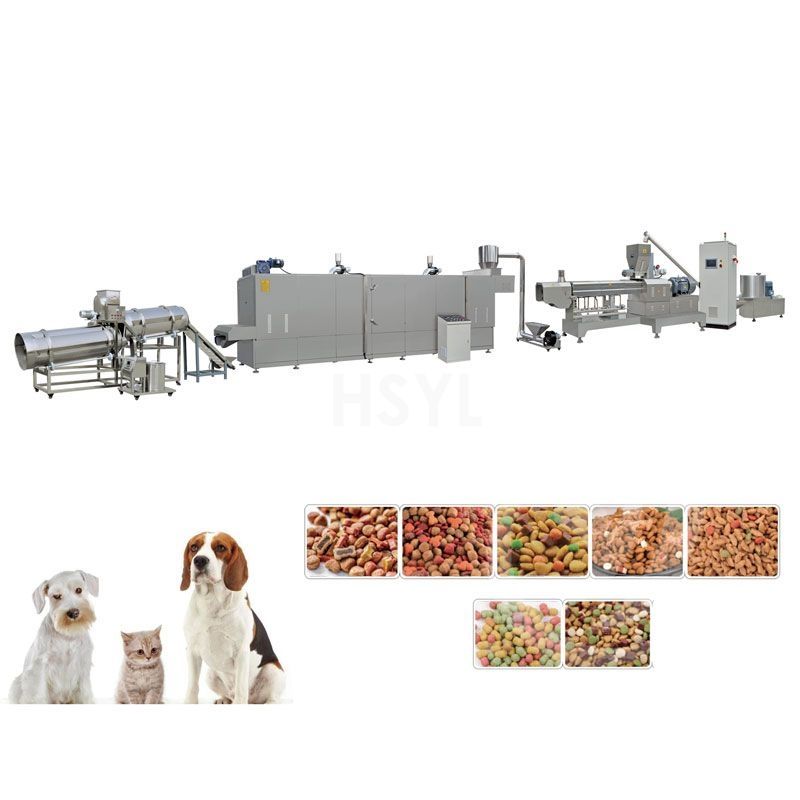
1. End-to-End Wet Pet Food Manufacturing Process Overview
The global production of premium wet pet food in hermetically sealed cans, trays, and pouches demands strict process control, hygienic machinery engineering, and thermal processing precision. Wet pet food formulations—encompassing meat chunks in gravy, loaf/pate emulsions, and shredded meat in jelly—combine high-protein animal raw materials with functional hydrocolloids and nutrient premixes.
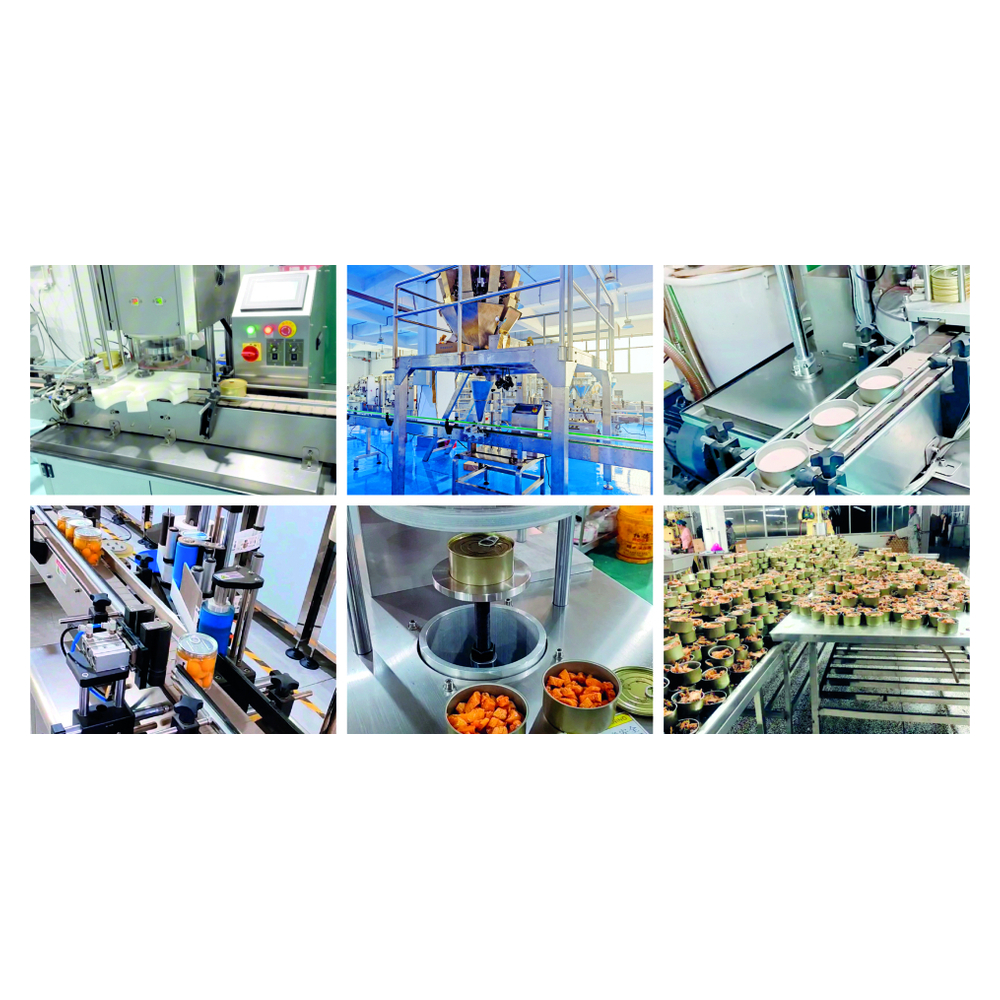
Engineering a continuous, high-efficiency facility requires integrating automated raw material preparation, vacuum thermal emulsification, multi-phase precision dosing, hermetic seaming, and retort overpressure sterilization into a cohesive line, as exemplified by our turnkey wet pet food canning production line.
Processing wet pet food differs significantly from human meat canning due to high gel strength requirements, strict palatability retention, and the presence of heat-sensitive micronutrient packages. Line design must balance rapid throughput with gentle shear handling to prevent tearing fragile meat chunks or degrading gravy viscosity before canning.
2. Raw Frozen Block Flaking, Fine Grinding, and Emulsification
The manufacturing process begins in the cold preparation hall with deep-frozen meat blocks (-18 deg C to -22 deg C) of poultry, beef, pork, or fish:
- Rotary Frozen Block Flakers: High-torque rotary drums equipped with cryogenic tool-steel blades shave frozen blocks into thin, uniform shavings without mechanical heat generation.
- Industrial Grinders: Material feeds into twin-screw meat grinders featuring angled augers and hole plates (3.0 mm to 8.0 mm) to achieve targeted particle size distribution.
- Vacuum Emulsifying Bowls: Ground meat is transferred to high-speed vacuum emulsifiers where functional binders (guar gum, xanthan, carrageenan), vegetable proteins, vitamins, and minerals are incorporated under vacuum (-0.8 bar) to prevent air entrainment and oxidation.
Maintaining temperature control between -2 deg C and +4 deg C throughout grinding and emulsification is critical. Excessive heat generation melts animal fats prematurely, creating unsightly fat separation rings inside the finished can after retort sterilization.
3. Hydrocolloid Gravy Batching and High-Shear Cooking Systems
For 'chunks in gravy' and 'chunks in jelly' formulations, the liquid phase accounts for 40% to 55% of the total can net weight. Gravy batching systems utilize dual-jacketed stainless steel cooking kettles with high-shear bottom emulsifying heads:
Starches, gums, natural colorants (caramel), and flavors (digests) are blended into water at 65 deg C to 75 deg C to hydrate polymers without premature gelatinization. The cooked gravy is maintained in insulated holding tanks with gentle paddle agitation, ready for synchronized transfer to the canning floor.
Precise viscosity control (targeting 1,500 to 2,500 cPs at filling temperature) ensures that gravy fully surrounds meat chunks without creating liquid splashing on can flanges during index transfer to the seamer.
4. Multi-Piston Dual-Phase Filling: Meat Chunks and Hot Gravy Dosing
Accurate filling represents a critical technological hurdle. As detailed in our analysis of meat canning line vs pet food canning line differences, single-stage filling creates inconsistent solid-to-liquid ratios.
Automated lines utilize a synchronized dual-phase filling carousel: Station 1 meters volumetric meat chunks via sanitary rotary pocket pistons (+-1.5% accuracy). Station 2 tops off the container with hot gravy (70 deg C - 80 deg C) using non-drip pneumatic nozzles, establishing target container headspace (6 mm to 9 mm) and ensuring clean can flanges prior to seaming.
Dosing gravy hot pre-heats the container contents, reducing the subsequent heat-up dwell time inside the retort and driving dissolved oxygen out of the liquid phase.
5. Hermetic Seaming with Under-Cover Nitrogen Gas Flushing
Once filled, open cans immediately index into an automatic high-speed rotary can seaming turret. To prevent product degradation, lipid rancidity, and vitamin oxidation during storage, residual headspace oxygen must be held below 2.0%.
Under-cover inert nitrogen gas purging sweeps atmospheric air from the headspace micro-seconds before the seaming chuck clamps the lid. Precision first and second operation seaming rolls compress the can flange and lid curl into a gas-tight double seam complying with international seam tightness standards (tightness >= 80%, overlap >= 1.15 mm).
Seamer base plates incorporate motorized vertical stroke adjustments to ensure uniform pin load pressure across slight variations in can body height.
6. Overpressure Water Spray Retort Sterilization and Lethality Control
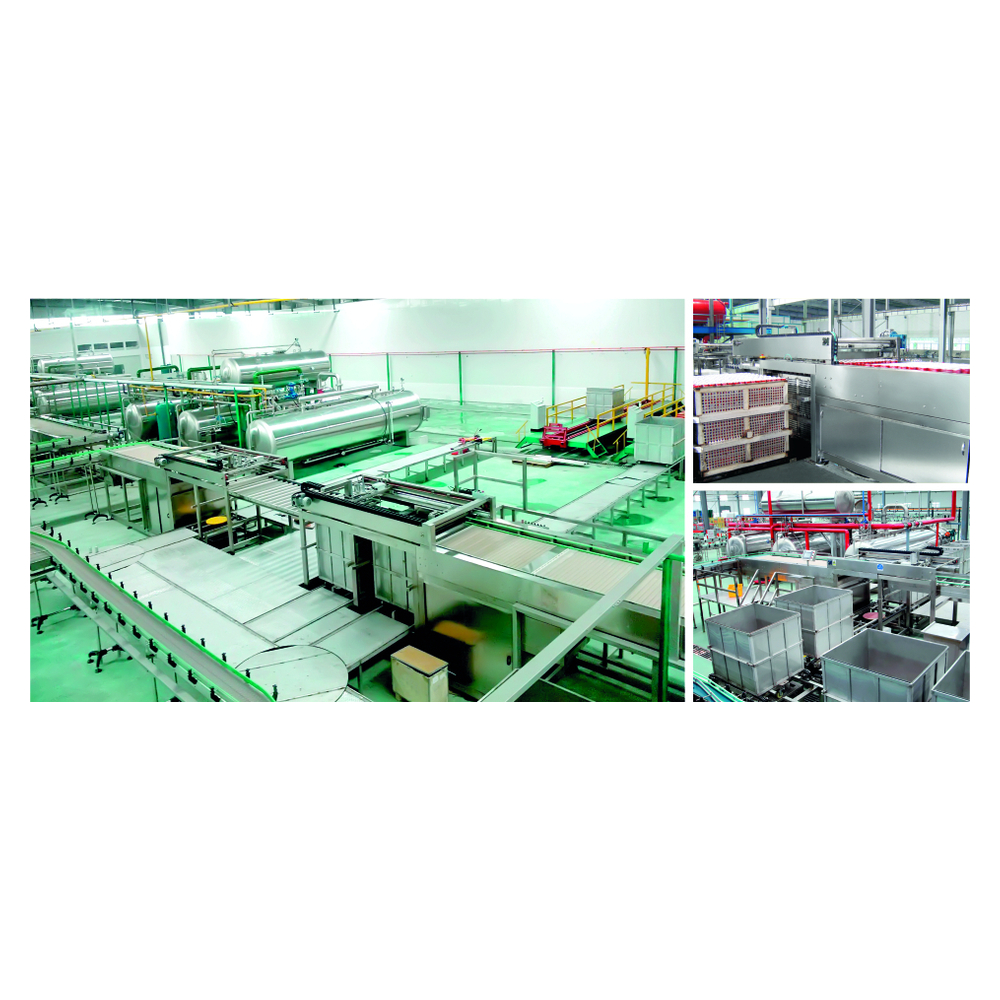
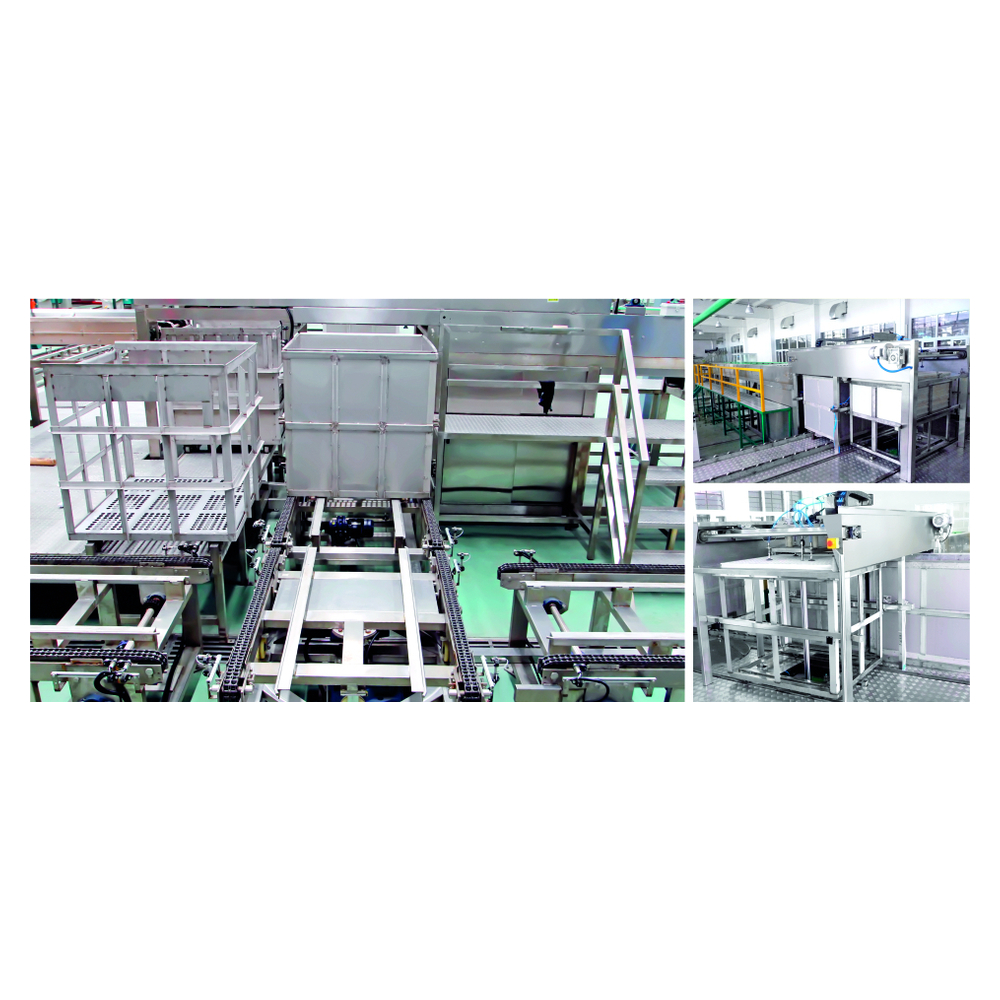
Seamed cans travel through continuous can washers and automated basket loading systems into horizontal overpressure retort sterilizers. In wet pet food processing, retort kinetics differ substantially between products:
- Loaf / Pate Formulations: Conduct heat primarily via conduction; slow thermal penetration requires extended cooking holding times (45 to 65 minutes at 121.1 deg C).
- Chunks in Gravy: Facilitate convective heat transfer through liquid currents; shorter holding cycles (28 to 40 minutes at 121.5 deg C) achieve target lethality without overcooking surface meat pieces.
- Cooling Cycle Overpressure: Pressurized air is injected continuously during cold water introduction to prevent container panelling until internal core temperatures drop safely below 60 deg C.
Accumulated core lethality (F0 value) is calculated continuously in real time. Reaching an F0 between 8.0 and 12.0 minutes guarantees commercial sterility while preventing nutritional degradation of added thiamine, taurine, and amino acids.
Sanitary CIP Piping and Cannery Wet-Area Drainage Layout
Wet pet food preparation involves high concentrations of animal fats, gelatin, and starches, necessitating automated multi-stage Clean-in-Place (CIP) regimes. Preparation vessels, emulsifying bowls, and gravy batching skids must feature self-draining sloped bottoms (minimum 2% gradient) with orbital 360-degree spray heads operating at 2.5 to 3.5 bar dynamic pressure.
The sanitary plant floor requires stainless steel slot drains or box trenches equipped with sediment collection baskets and deep-seal foul gas traps. Separating the high-risk raw meat thawing hall from the post-retort finished packaging area via positive air pressure cascades (+15 to +25 Pa) and hygienic transition airlocks eliminates airborne microbiological contamination.
Pet Food Line Preventative Maintenance and Tooling Rotation
Operating high-speed multi-phase filling carousels and nitrogen seamers requires systematic preventative maintenance routines:
- Shift Check: Check rotary meat piston seals and scraper rings; measure residual headspace oxygen on seamed cans using handheld needle gas analyzers; inspect gravy filler non-drip shutoff needles.
- Weekly Service: Lubricate seamer turret cam tracks with NSF H1 food-grade grease; calibrate chunk filler volumetric displacement cylinders using calibrated test scales.
- Monthly Maintenance: Re-hone grinder hole plates and replacement rotary knives; replace nitrogen injection porous ceramic diffuser pads; inspect retort basket divider mats for warping or embrittlement.
7. Process Handover Parameter Matrix and Quality Control Checkpoints
To ensure repeatable production yield and regulatory compliance, industrial canning operations enforce explicit parameter handover boundaries across process stations:
| Process Station | Critical Control Metric | Standard Operating Window | Quality Verification Method |
|---|---|---|---|
| Preparation & Grinding | Meat core temperature | -2 deg C to +4 deg C | Digital penetration thermometer probe |
| Gravy Batching | Viscosity & Temperature | 1,200 - 2,500 cPs @ 72 deg C | Rotational viscometer, in-line RTD sensor |
| Filling Carousel | Net weight & Headspace | Target +-1.5% / 7.0 - 9.0 mm | Dynamic checkweigher with reject pusher |
| Can Seamer | Double seam overlap & tightness | Overlap >= 1.15 mm, Tightness >= 80% | Optical video projector & teardown micrometer |
| Thermal Retort | Accumulated Core Lethality | F0 = 9.0 - 12.0 minutes | Dual calibrated Pt100 loggers & F0 integration |
Establishing these strict engineering gates at each transfer boundary enables quality control teams to quickly isolate root causes if weight variances or seam defects occur.
6. Sanitary CIP Piping and Cannery Wet-Area Drainage Layout
Wet pet food preparation involves high concentrations of animal fats, gelatin, and starches, necessitating automated multi-stage Clean-in-Place (CIP) regimes. Preparation vessels, emulsifying bowls, and gravy batching skids must feature self-draining sloped bottoms (minimum 2% gradient) with orbital 360-degree spray heads operating at 2.5 to 3.5 bar dynamic pressure.
The sanitary plant floor requires stainless steel slot drains or box trenches equipped with sediment collection baskets and deep-seal foul gas traps. Separating the high-risk raw meat thawing hall from the post-retort finished packaging area via positive air pressure cascades (+15 to +25 Pa) and hygienic transition airlocks eliminates airborne microbiological contamination.
7. In-Line Gravimetric Checkweighing and X-Ray Foreign Body Rejection
Ensuring compliance with international packaging net weight legislation requires continuous dynamic checkweighing immediately downstream from the can seamer. In-line checkweighers equipped with electromagnetic force restoration (EMFR) weigh cells evaluate up to 300 cans per minute with an accuracy window of +-0.5 grams, automatically triggering pneumatic air-blast rejection for underfilled or overfilled containers.
Downstream X-ray inspection scanners verify product fill height, head-space volume, and can end concavity while simultaneously detecting dense foreign contaminants—such as metal fragments, glass shards, bone splinters, and mineral stones—down to 0.8 mm sphere equivalents, logging every deviation to tamper-evident audit databases per BRCGS and IFS Food safety packaging standards.
Related Articles

Get professional consultation
Do you have any questions or need technical support regarding the content of this article? Fill out the form below, and our expert team will provide you with professional solutions.