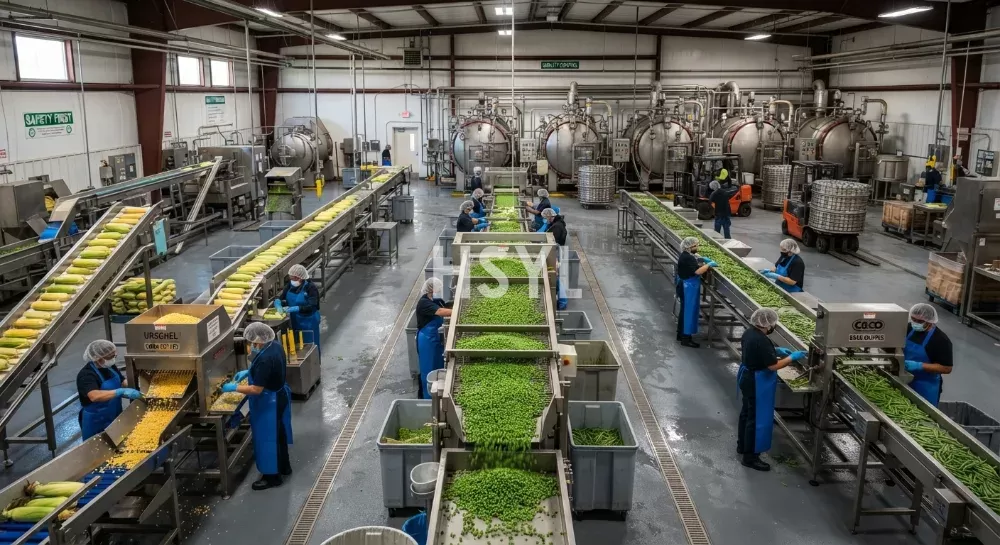
Low-Acid Canned Vegetables: Corn, Peas and Green Beans Processing Line
Direct AnswerA low-acid canned vegetable processing line — corn, peas, and green...


Canned beans production lines configured around bean preparation, filling, container closing, retort processing and packing. Discuss your raw material, recipe and output requirements with HSYL.
Planning to produce high-quality canned beans at scale? Our Canned Beans Production Line makes the process simple and efficient. From washing, sorting, soaking, cooking, filling, sealing, sterilization, to packaging,the automated and manual operations are defined in the project configuration.For complete autoclave batch scheduling and facility sanitation planning, refer to our engineering overview on cucumber canned production line.
Whether you want kidney beans, black beans, chickpeas, or mixed bean cans, this line ensures consistent quality, hygiene, and high output.
As a trusted Chinese food processing equipment manufacturer, HSYL provides turnkey solutions customized to your factory size, can size, and production capacity.
This line is suitable for producing:
Canned kidney beans
Canned black beans or soybeans
Mixed bean cans
Beans in brine, sauce, or light syrup
Raw materials: Fresh or dried beans, water, brine, sugar (optional), spices.
Quick tip: Proper soaking and cleaning of beans at the start ensures smooth cooking and uniform texture.
Start with the bean variety and whether the material arrives dry, fresh or already prepared. Dry-bean input weight, hydrated-bean weight and finished canned-product weight represent different production stages and should be recorded separately.
Select cleaning, grading and foreign-material removal equipment for the incoming material. Define the acceptable proportion of damaged beans before processing.
For dry-bean projects, establish the hydration and pre-treatment sequence for the selected variety and finished product. Soaking, blanching and pre-cooking requirements should follow the agreed process rather than a universal recipe.
Assess hydration consistency, split skins and texture using representative batches. Materials supplied in a different condition should be reviewed separately instead of automatically passing through the same preparation stages.
Select the bean filler around particle size, handling sensitivity and required output. Define net weight, drained weight where applicable, bean-to-liquid ratio and headspace as separate acceptance criteria.
Brine or sauce preparation and dosing should accommodate the recipe's viscosity and ingredients. Check the effect of conveying and filling on bean breakage.
Metal cans require compatible can bodies, ends and double-seaming equipment. Glass jars require a closing system matched to the jar and closure design. Identify the equipment and change parts needed for each planned package.
For shelf-stable low-acid canned beans, the scheduled process must be established by a qualified processing authority for the product, container and processing system.
Retort controls monitor the specified operating conditions. They do not replace the work needed to establish and validate the thermal process.
Follow the established cooling and handling procedures, then dry, code, inspect and pack the containers. Assess finished-product texture, bean integrity and applicable weight requirements after processing, rather than relying only on appearance before filling.
Automatic Processing: From raw beans to packaged cans with minimal labor
Texture & Flavor Retention: Optimized soaking, cooking, and filling keep beans tender and flavorful
High Output: Continuous operation suitable for medium and large-scale factories
Energy Efficient: Optimized water, steam, and electricity usage
Tin cans
Aluminum cans
Glass jars (optional)
Easy-open cans
Typical can sizes: 200g – 500g, customizable
| Item | Specification |
|---|---|
| Production Capacity | 1–5 tons/day (customizable) |
| Filling Speed | 20–80 cans/min |
| Sterilization Temp | Product-specific scheduled process, established for the formulation, container and retort system. |
| Control System | PLC + Touch Screen |
| Material | SUS304 / SUS316 Stainless Steel |
| Power Supply | 380V / 50Hz / 3 Phase |
Confirm the documentation applicable to the quoted equipment, including material specifications, operating instructions, cleaning procedures, electrical information and relevant machinery conformity documents.
Equipment supply, factory management systems and product-process validation have different scopes. The project agreement should identify who establishes the thermal process, verifies container closure, prepares operating procedures and completes the destination-market requirements.
Assess the investment against expected sales volume and realistic finished output. Include raw beans, packing medium, containers, labor, utilities, cleaning, maintenance and rejected product in the operating-cost estimate.
For dry-bean projects, account for hydration and processing changes when converting raw-material purchases into finished cans. Agree on the basis used to calculate yield and cost per can.
Compare configurations using the same product, package, staffing assumptions and working schedule. Payback depends on the project's investment, costs, sales and utilization; it should not be presented as a fixed period that applies to every factory.
| Section | Optional Equipment | Function |
|---|---|---|
| Pre-processing | Optical Sorter | Removes defective beans |
| Soaking & Cooking | Multi-head Cooker | Uniform bean cooking |
| Filling | Multi-head Filler | Accurate beans and sauce dosing |
| Sterilization | Water Spray Retort | Even heat sterilization |
| Packaging | Carton Packer / Palletizer | Automated final packaging |
Experienced canned beans and food processing equipment manufacturer
Turnkey solutions from factory design to commissioning
Exported to Southeast Asia, Middle East, Africa, and Europe
Reliable long-term technical support and spare parts
Factory layout & production planning
Equipment manufacturing & installation
On-site commissioning & operator training
Full technical documentation & after-sales support
Ready to start or upgrade your canned beans production line? Our Canned Beans Production Line is a reliable, efficient, and food-safe solution.
📩 Contact HSYL today for a detailed quotation, production layout, and technical support.


Direct AnswerA low-acid canned vegetable processing line — corn, peas, and green...
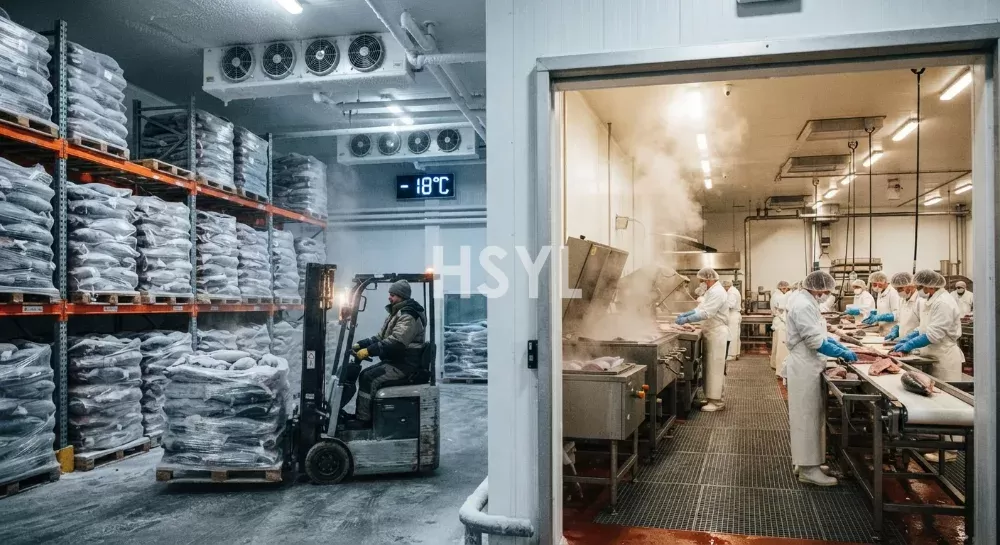
Direct AnswerThe most expensive asset in a fish cannery is not the retort or the...
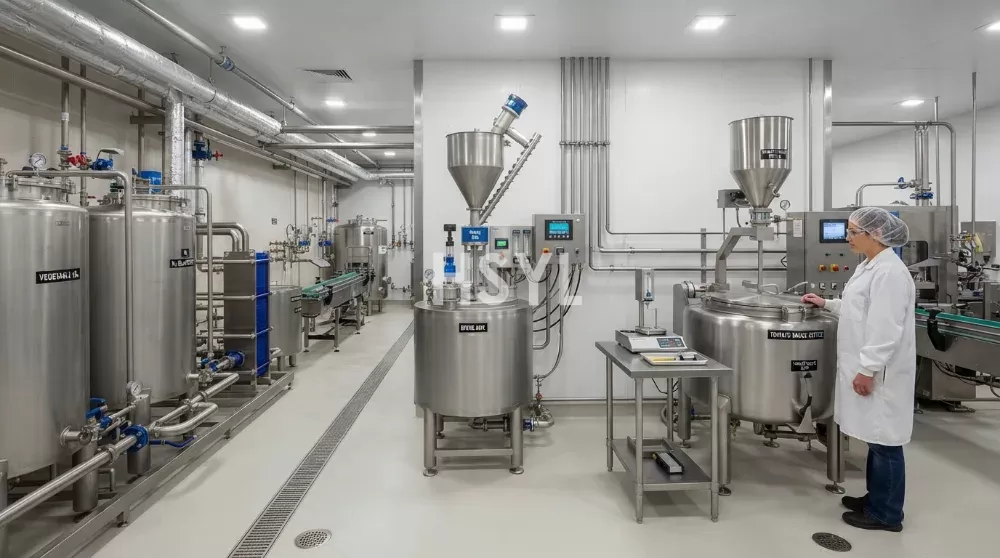
The filling medium — the liquid that fills the void spaces between the fish piec...
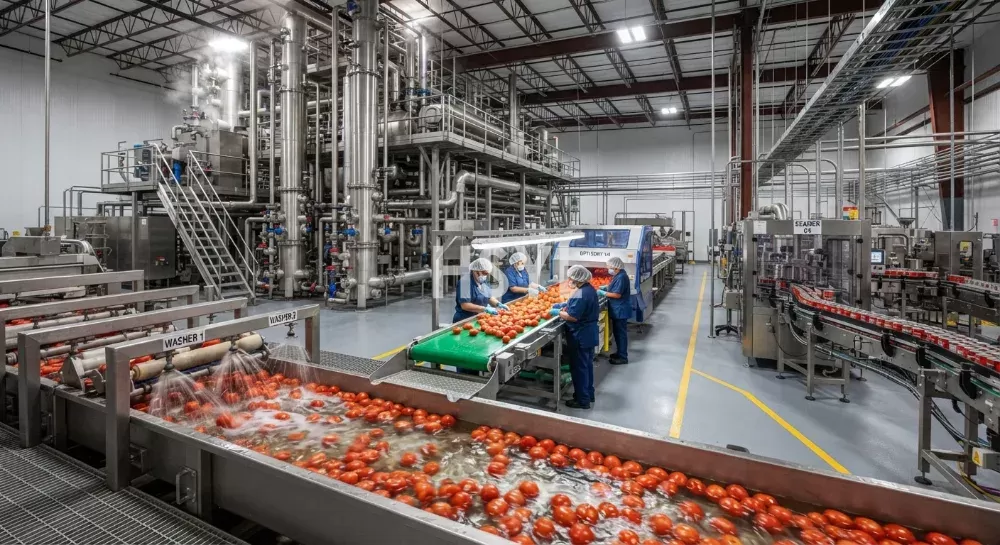
Direct AnswerA tomato products canning line converts fresh tomatoes into four di...