Introduction: The Phone Call That Changed Everything

Hi there. I’m "Old Zhang." If you’re sitting in your office right now, staring at three different quotes for sterilization equipment and wondering which one won't get you fired in six months, you're in the right place.

Let me tell you why I take this topic so personally. Back in 2014, I was running a massive condiment line in South China. We were rushing a shipment of salad dressing for an export order. To squeeze out 10% more capacity, we "optimized" (read: shortened) the pasteurization hold time.

Choosing Food Sterilization Equipment: Pasteurization or High-Pressure Retort?(图1)

Two weeks later, at 3:00 AM, my warehouse manager called. His voice was trembling. "Zhang, the warehouse is... exploding." By the time I arrived, the place smelled like a biological weapon site. Thousands of bottles had undergone secondary fermentation, built up gas, and "popped" like grenades. We lost $50,000 in product and a multi-million dollar client that night.

The lesson? Sterilization equipment isn't just "machinery." It’s the heart of your factory and your insurance policy against bankruptcy. Today, I’m going to strip away the marketing fluff and tell you exactly how to choose between Pasteurization and High-Temperature/High-Pressure (Retort) Sterilization.


Chapter 1: The "Battle" of Principles — Pasteurization vs. Retort

To make the right choice, you have to look past the stainless steel and understand what’s happening to the microbes.

1.1 Pasteurization: The "Gentle" Scalpel

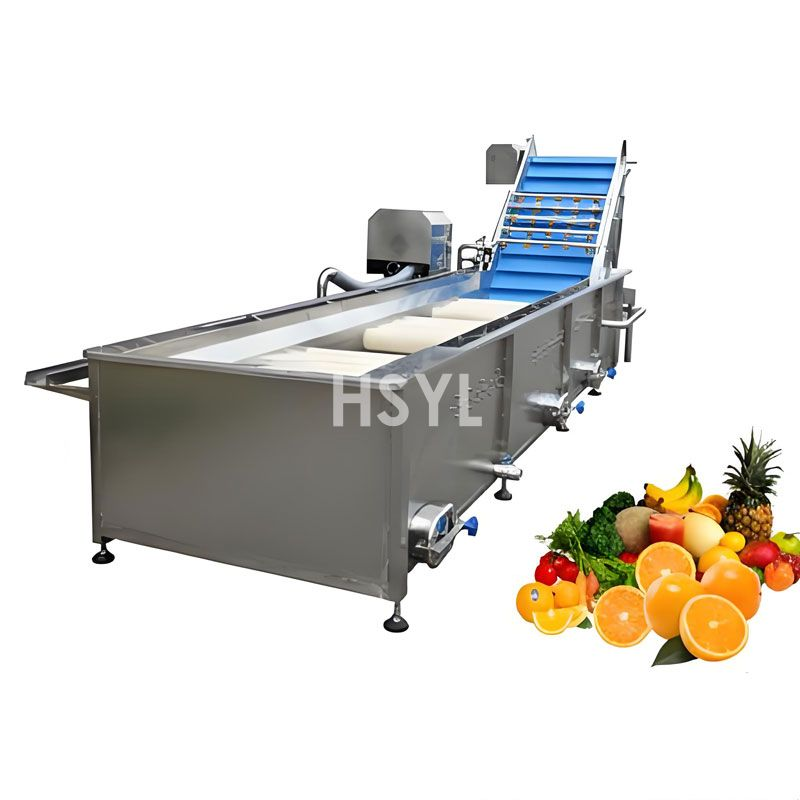
Pasteurization (typically $60^\circ\text{C}$ to $95^\circ\text{C}$) doesn't aim to kill everything. It’s a tactical strike designed to eliminate pathogens (like Salmonella or E. coli) while leaving the "good stuff"—flavor and nutrients—intact.

  • My Take: It’s like giving your food a hot bath. It’s perfect for fresh milk, craft beer, or premium fruit juices.

  • The Catch: You are at the mercy of the cold chain. If your distributor leaves the pallet on a sunny dock for an hour, the "surviving" microbes will wake up and start partying.

1.2 High-Temperature/High-Pressure (Retort): The "Nuclear" Option

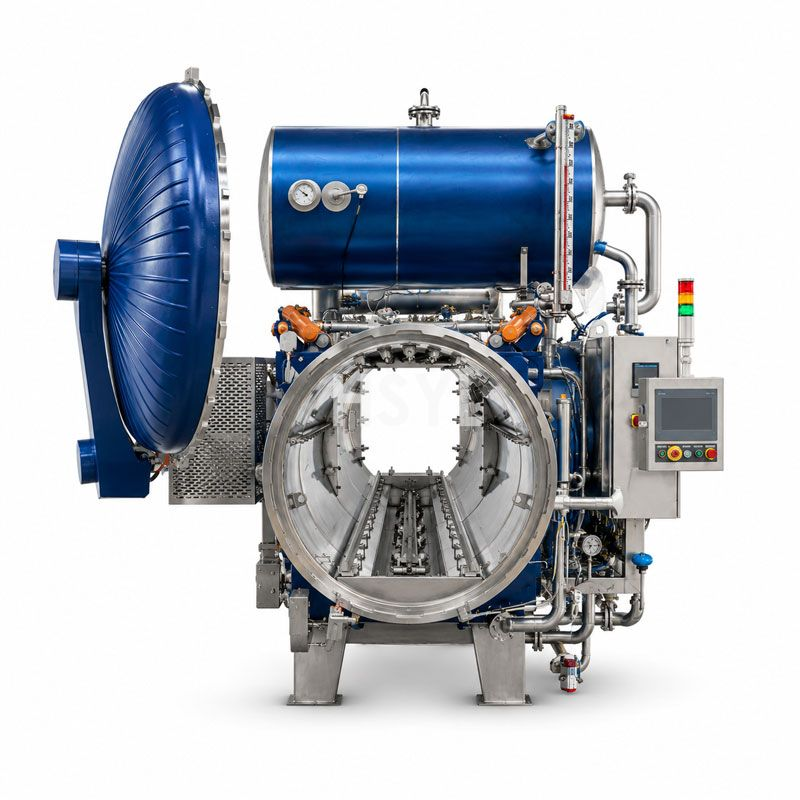
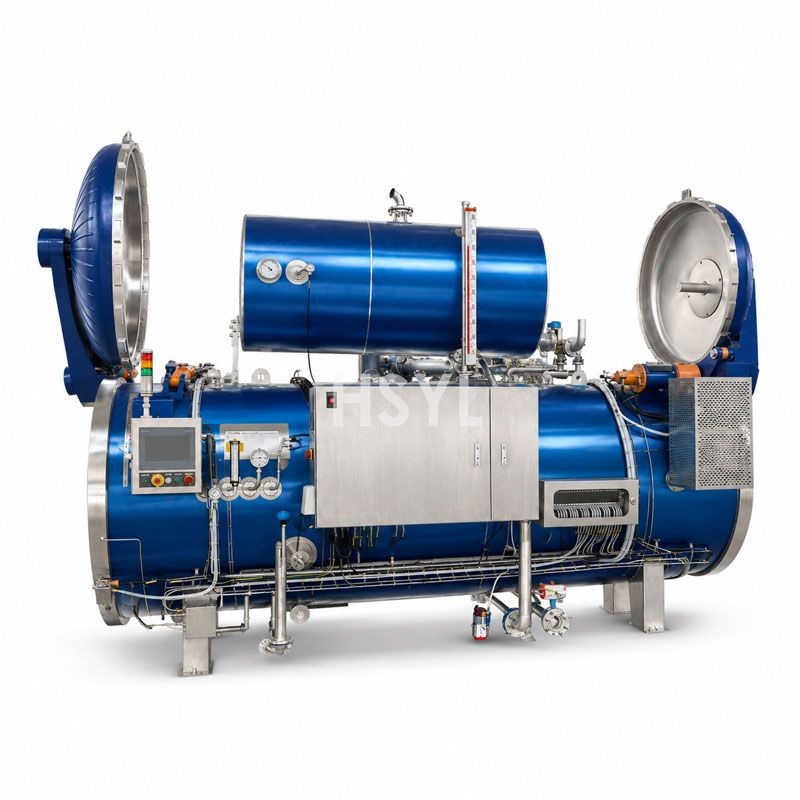
When we talk about Retorts (Autoclaves), we are talking about Commercial Sterility. We are talking $121^\circ\text{C}$ and up, under significant pressure.

In the world of Quality Assurance (QA), we live and die by the $F_0$ Value. If you aren't calculating this, you aren't sterilizing; you’re guessing.

Choosing Food Sterilization Equipment: Pasteurization or High-Pressure Retort?(图2)

This formula calculates the equivalent lethality of your process compared to $121.1^\circ\text{C}$. For low-acid foods, if your $F_0$ isn't hitting that magic number (usually 3.0 or higher depending on the product), you are risking Clostridium botulinum. And that’s a "factory-closing" mistake.


Chapter 2: Identifying Your Product’s "Personality"

In my 15 years, I’ve learned that products have "personalities." You can't force a high-pressure retort on a "delicate" product.

2.1 The 4.6 pH "Red Line"

This is the most important number in your life as a QA supervisor.

  • High-Acid (pH < 4.6): Think orange juice, salsa, or pickles. These are naturally resistant to the baddest bacteria. Pasteurization is usually your best friend here.

  • Low-Acid (pH > 4.6): Think meat, beans, corn, or mushroom soup. These are playgrounds for spores. You must use a Retort. No exceptions.

2.2 Packaging: Soft vs. Hard

  • Cans and Glass: They can handle a lot of external pressure. Traditional Steam Retorts work fine.

  • Pouch/Flexible Packaging: This is the nightmare of every production manager. If the pressure inside the pouch exceeds the pressure in the retort during cooling, the pouch "balloons" and the seal fails.

    • Old Zhang’s Advice: If you’re doing pouches, invest in a Water Spray or Water Immersion retort with Counter-Pressure Control. It’s more expensive, but it pays for itself in reduced "leaker" rates.


Chapter 3: The Economic Reality — Energy and Throughput

Let’s talk money. As a production manager, I care about "Cost Per Pouch."

3.1 Energy Consumption: The Efficiency Myth

People think $121^\circ\text{C}$ is automatically more expensive than $85^\circ\text{C}$. Not necessarily.

MetricContinuous Pasteurizer TunnelBatch Retort (Autoclave)
Instant Power LoadModerateHigh (at start-up)
Heat LossHigh (open system)Low (insulated vessel)
Water UsageHigh (constant flow)Lower (recirculated)
Energy Cost/kg~$0.015 - $0.02~$0.01 - $0.012

My Observation: Pasteurization tunnels are "energy sieves." Because they are often open to the air, they lose a massive amount of heat to the factory floor. A modern, well-insulated Retort with a heat exchanger can actually be 15-20% more energy efficient over a full month of production.

3.2 Floor Space: The Silent Killer

I once worked in a facility in Singapore where the rent was astronomical. A 30-meter Pasteurization tunnel took up half the floor. We replaced it with three vertical Retorts, saved 60% of the space, and increased our output by 30%. If your "square footage" is expensive, think "Batch."


Chapter 4: Hygiene and "Audit-Proofing" Your Line

When the BRC or FDA auditor walks in, they don't look at your shiny machines. They look at your Data Integrity.

4.1 21 CFR Part 11 Compliance

If your sterilization records are on a paper log that an operator fills out by hand, you are living in the 1990s.

  • The Trend: Modern retorts come with digital logging that tracks every second of the temperature curve.

  • The "Old Zhang" Tip: Always buy equipment that has an "Electronic Signature" feature. When an auditor asks for proof of the cook cycle from July 14th at 2:15 PM, you should be able to pull up a non-editable PDF in 30 seconds. That’s how you pass audits without breaking a sweat.

4.2 Biofilms: The Invisible Enemy

Pasteurization tunnels are damp, warm, and dark. They are a paradise for biofilms. I’ve seen spray nozzles so clogged with "green slime" that the product was barely getting hit with heat. This leads to "Cold Spots," which lead to "Spoilage."


Chapter 5: Maintenance — The "Gasket and Sensor" Nightmare

Maintenance is where the "cheap" machines show their true colors.

5.1 The Door Gasket

On a Retort, the door gasket is the only thing standing between your staff and $121^\circ\text{C}$ steam.

  • My Rule: We replace gaskets every 500 cycles, whether they look worn or not. A "blowout" during a cycle doesn't just ruin the batch—it puts your team in the hospital.

5.2 Sensor Drift: The Silent Killer

I once had a temperature sensor that drifted by $1.5^\circ\text{C}$. The screen said $121^\circ\text{C}$, but the water was $119.5^\circ\text{C}$. We didn't catch it for two days. We had to quarantine 40,000 units.

  • The Fix: Monthly calibration is mandatory. Every six months, perform a Heat Distribution Study. If you change how you stack the baskets, you must redo the study.


Chapter 6: The Future — AI and IoT in Sterilization

We are entering the era of "Smart Sterilization."

  • Predictive Maintenance: Some new machines I’m testing tell me when a pump is about to fail before it stops.

  • Remote Monitoring: I can now check the pressure curves of my factory in Vietnam from my living room in Singapore. This level of transparency is a game-changer for Quality Supervisors managing multiple sites.


Conclusion: Old Zhang’s Final Verdict

So, which one do you buy?

  1. Buy a Pasteurizer if: You sell premium, cold-chain products, your pH is low, and your customers value "freshness" over shelf-life.

  2. Buy a Retort if: You want to scale to national retail, your product is low-acid (meats/soups), or you want to eliminate the high cost of refrigerated logistics.

Don't buy on price alone. I’ve seen "cheap" $20,000 retorts cost factories $200,000 in lost product and repairs within the first year. Buy the machine with the best Counter-Pressure Control and the most robust Data Logging.


🎁 Exclusive Resource for Production Managers

I’ve compiled a "Sterilization Equipment Technical Parameter Comparison Table" that includes:

  • Real-world steam/electricity consumption data for 5 different brands.

  • A "Critical Failure" checklist for your weekly maintenance.

  • F0 calculation templates for different pouch sizes.

Want a copy? Because this contains sensitive industry benchmarking, I can't post it all here.Leave a comment with "Sterilization Sheet" and I’ll send it your way.

Let’s keep our food safe and our factories running. Catch you on the next shift!


By Zhang Wei, Senior Production Consultant. 15 years in the trenches, 0 recorded outbreaks.