The Rise of Flavored Canned Fish: Adapting Your Line for New Recipes
The global canned fish market is undergoing a transformation. Beyond traditional packed-in-water or oil products, consumers and retailers increasingly demand flavored varieties—spicy, oil-infused, tomato-based sauces, and regionally inspired marinades. For industrial food processors, this trend creates both opportunity and operational challenges. The ability to adapt existing canned fish lines for flexible flavor injection and seasoning control is becoming a strategic priority. This article provides industrial buyers and plant managers with detailed insights into flavored canned fish production, equipment capabilities, and practical guidance for modernizing production lines to meet evolving market expectations.For complete autoclave batch scheduling and facility sanitation planning, refer to our engineering overview on critical role of retort sterilization.

What It Is & How It Works
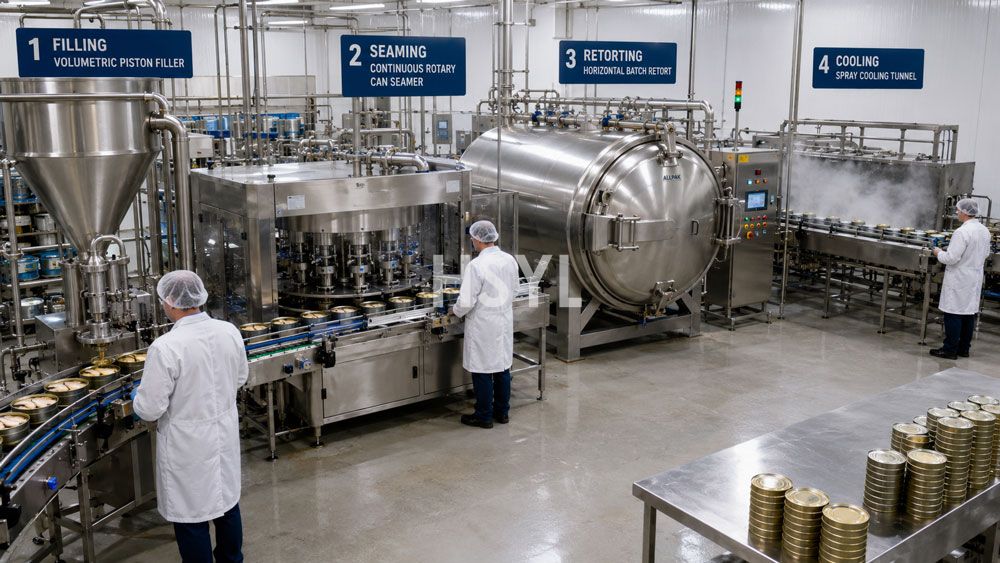
A flavored canned fish production line is designed to integrate conventional canning processes with advanced seasoning and injection systems. Core equipment includes:
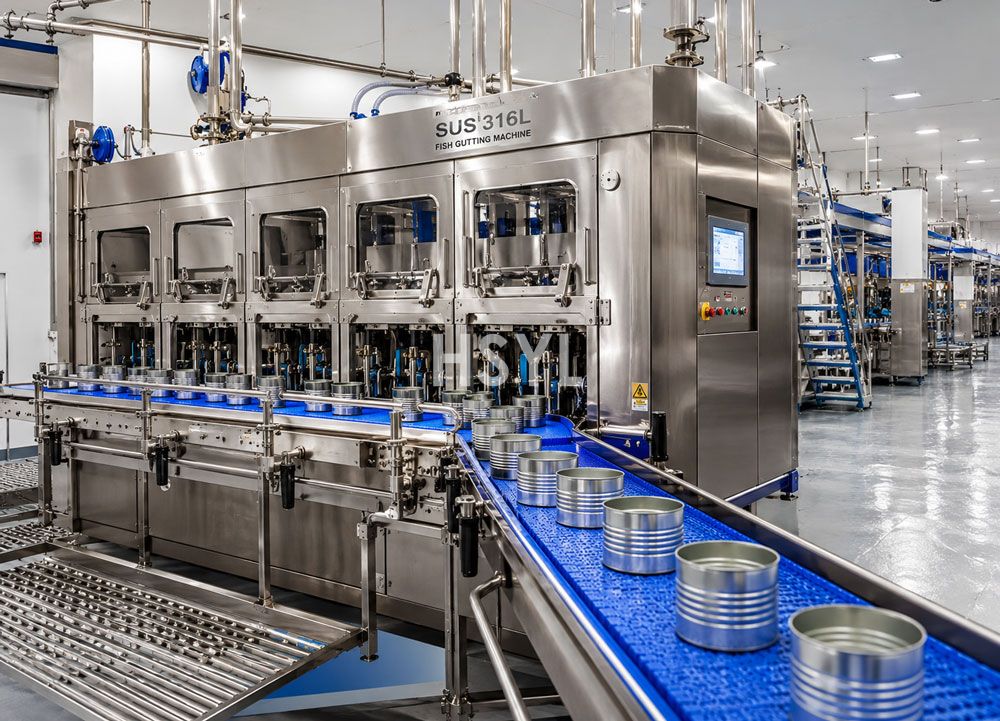
Cleaning and pre-cooking modules: Ensuring fish are scaled, gutted, and pre-cooked to optimal texture for flavor retention.
Flavor injection and brine dosing systems: Adjustable pumps and nozzles deliver precise volumes of sauces or oils into cans or trays, allowing for consistent taste profiles across batches.
Can filling and sealing stations: Ensuring hygienic, airtight closure to preserve both fish and added flavors.
Sterilization or retort units: Applying controlled heat treatment to stabilize the product while maintaining sauce integrity and minimizing nutrient loss.
Conveyor integration and process monitoring: Synchronizing injection, filling, and sealing steps with real-time control systems for production efficiency and traceability.
Modern systems use servo-controlled pumps, flow meters, and temperature sensors to ensure exact seasoning ratios. This enables manufacturers to switch between recipes—such as spicy chili, olive oil, or tomato sauce—without extensive downtime or manual adjustments.
Industry Problems This Equipment Solves
Labor Costs and Manual Inconsistencies
Traditional flavoring relies heavily on manual dosing, stirring, and portioning. Inconsistent quantities lead to off-spec product, higher rework, and labor-intensive processes. Automated flavor injection reduces labor requirements and standardizes portioning.
Yield Loss and Product Waste
Manual handling increases risk of fish breakage or sauce spillage, affecting yield. Precision dosing and gentle handling minimize losses while maintaining presentation quality.
Hygiene Risks
Manual flavoring introduces contamination points. Integrated flavor injection and closed-system filling significantly reduce microbial exposure and support compliance with food safety regulations such as HACCP and FDA requirements.
Scalability Limitations
Meeting seasonal or regional demand spikes with manual processes is challenging. Automated, recipe-flexible lines can scale throughput while maintaining product consistency.
Recipe Inflexibility
Traditional lines may only handle water-packed or oil-packed fish. Adjustable dosing systems enable rapid changeovers to diverse flavor profiles, expanding product range and market reach.
Key Features & Technical Advantages
Adjustable Flavor Injection Pumps: Capable of delivering sauces of varying viscosity with ±2% dosing accuracy.
Servo-Controlled Dosing Valves: Allow rapid recipe changeovers without recalibration.
Integrated Temperature and Viscosity Monitoring: Ensures sauce quality remains stable during filling.
Modular Line Design: Sections can be added or bypassed, enabling flexible production scheduling.
Gentle Handling Conveyors: Minimizes fish breakage during transfer and filling.
Automated Recipe Storage: Operator interface can recall flavor profiles, reducing setup errors.
Hygienic Construction: All contact parts in 304 or 316L stainless steel, designed for IP69K washdowns.
Typical Applications & Production Scenarios
Flavored canned fish lines serve a range of industrial scenarios:
High-volume production plants producing tuna, mackerel, sardines, and salmon in multiple flavor variants.
Private-label contract manufacturers supplying retail chains with region-specific sauces.
Export-oriented factories aiming to meet global taste preferences while complying with international food safety standards.
Pilot or R&D facilities testing new flavor concepts before full-scale deployment.
Lines can be configured for batch or continuous production. Typical recipes include:
Spicy chili oil sardines
Olive oil and herb mackerel
Tomato-braised tuna chunks
Lemon-pepper or teriyaki-inspired varieties
Capacity Options & Selection Guidance
Flavored canned fish production lines are offered in a range of capacities:
Small-scale: 500–1,500 cans/hour for R&D or niche products.
Medium-scale: 2,000–6,000 cans/hour for regional distribution.
High-volume: 10,000+ cans/hour for national and export markets.
When selecting a line, industrial buyers should consider:
Product type and size (whole fish, fillets, chunks)
Sauce viscosity and flavor complexity
Recipe changeover frequency
Required hygiene and sterilization standards
Integration with existing pre-cooking or packaging modules
Custom configurations are often recommended for plants with diverse product portfolios.
Buyer Benefits
Efficiency: Automated dosing and filling increase throughput while maintaining consistency.
Labor Reduction: Minimal manual intervention reduces workforce needs and operational errors.
Product Quality: Consistent flavor profiles, intact fish, and minimized sauce separation improve shelf appeal.
Scalability: Lines can be expanded modularly as demand grows or product range diversifies.
Traceability: Integrated data logging supports compliance with food safety regulations and quality audits.
Customization & Engineering Support
Modern flavored canned fish lines are highly adaptable. Equipment providers can assist with:
Recipe-specific dosing solutions
Integration with pre-existing canning or retort systems
Line layout optimization for limited floor space
Automation upgrades, including PLC programming and recipe management
On-site commissioning, training, and maintenance support
Engineering teams often collaborate with quality control and R&D departments to ensure that the line meets both operational and sensory targets.
Standards, Certifications, and Compliance
Flavored canned fish production equipment is designed to meet rigorous international standards:
HACCP: Hazard analysis and control points embedded in system design.
ISO 22000 / ISO 9001: Quality management and food safety systems.
FDA Compliance: Material selection and hygienic design principles for U.S. market approval.
CE Marking: Safety compliance for European installations.
IP69K Washdown Ratings: Ensuring equipment can withstand high-pressure cleaning without contamination risk.
These certifications ensure equipment is legally compliant and meets buyer expectations for global markets.
Conclusion & Professional CTA
Adapting a canned fish production line for flavored products is no longer optional—it is a critical driver for competitive positioning and operational efficiency. Industrial buyers benefit from precise flavor dosing, scalable throughput, and reduced labor while ensuring product quality and hygiene compliance. Manufacturers and plant managers looking to expand into spicy, oil-based, or sauce-infused canned fish varieties should consider equipment that provides flexibility, modularity, and engineering support. For tailored solutions that align with your production goals and market strategy, contact our industrial engineering team for an in-depth consultation and line assessment.
Frequently Asked Questions
How can I switch between multiple flavored recipes on the same line?
What viscosity range of sauces can the line handle?
Can the line maintain fish integrity during high-speed production?
What is the typical downtime required for cleaning and sanitation?
Are custom dosing ratios possible for niche markets?
Does the equipment support both batch and continuous sterilization?
What training is required for operators to manage multiple flavors?
How scalable is a line for expanding product portfolios?
Related Articles



Get professional consultation
Do you have any questions or need technical support regarding the content of this article? Fill out the form below, and our expert team will provide you with professional solutions.