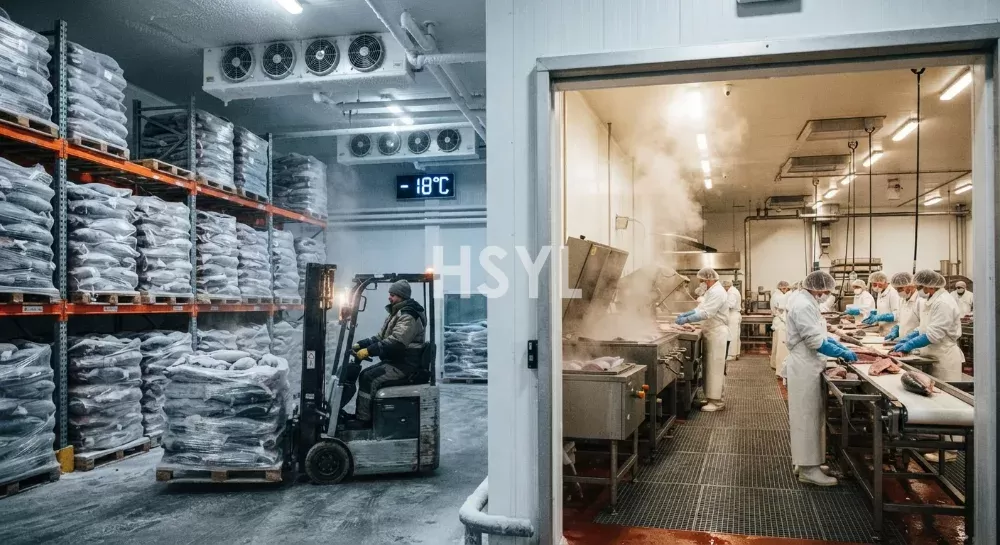
Seasonal Fish Canning: Cold Storage, Multi-Species Rotation and Year-Round Line Utilization
Direct AnswerThe most expensive asset in a fish cannery is not the retort or the...

Industrial 5000 kg/h potato starch recovery processing line engineered for 98% free starch yield. Features 12-stage hydrocyclone separation and SUS316L construction.
Maximizing the extraction of free starch granules from raw tubers while mitigating rapid oxidation presents a significant engineering challenge in commercial milling operations. The standard atmospheric extraction methods often result in severe browning and a substantial loss of fine starch particles to the effluent stream. This Turnkey Potato Starch Recovery Processing Line is engineered to resolve these inefficiencies through a fully enclosed, continuous wet-milling architecture. By synchronizing high-impact cellular rasping with a 12-stage centrifugal hydrocyclone network, this system isolates pure starch from fiber, proteins, and cellular sap before enzymatic degradation occurs. Designed for continuous 24-hour operation, the plant systematically recovers up to 98% of available free starch, converting agricultural waste streams into high-margin commercial powder.
| System Parameter | Standard Specification Data |
|---|---|
| Nominal Raw Input Capacity | 5,000 kg/h (Fresh unwashed potatoes) |
| Estimated Dry Starch Output | 750 - 850 kg/h |
| Total Installed Power | Approx. 265 kW (380V / 50Hz / 3-Phase) |
| Hydrocyclone Configuration | 12-Stage Multi-Cyclone (Concentration & Washing) |
| Fresh Water Consumption | 12 - 15 m³/h (Integrated counter-current recycling) |
| Final Powder Moisture Limit | < 14% (Regulated via negative pressure flash drying) |
| Footprint Dimensions | 45m x 12m x 15m (Requires vertical clearance for dryer) |
When processing field-harvested crops, heavy soil loading and foaming proteins frequently blind static filtration screens, causing profitable starch to flush directly into the municipal drain. We designed this extraction matrix to actively separate impurities through differential specific gravity rather than relying solely on physical screen mesh.
Implementing this extraction technology is highly advantageous for facilities already engaged in large-scale vegetable processing. For example, integrating the intake module of this recovery plant with the slicing water discharge of an automated french fries production line allows plant managers to capture the suspended surface starch that is normally discarded as biological waste, transforming an effluent treatment liability into an immediate secondary revenue stream.
The purity of the final starch powder—measured by its whiteness and low ash content—is entirely dependent on the hydrocyclone washing phase. After the raw slurry passes through the rotary fiber extraction sieves, it contains a mixture of starch, micro-fibers, and residual soil particles. The fluid is pumped into a manifold containing hundreds of individual micro-cyclone tubes.
Driven by high-pressure centrifugal pumps operating at 6.0 bar, the slurry enters the cyclones tangentially. The intense centrifugal force drives the heavier starch granules outward against the cyclone wall, forcing them downward to the underflow nozzle. Simultaneously, the lighter proteins, fine fibers, and soluble impurities are pushed to the central low-pressure vortex and expelled upward through the overflow vortex finder. Passing this refined slurry through 12 consecutive stages ensures that the final starch milk reaches a pure, concentrated 20-22 Baumé prior to vacuum dehydration.
Operational stability during peak harvest seasons dictates the profitability of a starch plant. The continuous flow architecture of this processing line eliminates the fermentation risks associated with batch-settling tanks. The entire sequence, from the raw potato entering the primary paddle washer to the dried starch entering the 25kg bagging hopper, occurs in less than 20 minutes.
A central Siemens PLC network coordinates the entire facility. Inline density meters constantly monitor the Baumé concentration of the starch milk exiting the cyclones, automatically adjusting variable frequency drives (VFDs) on the feed pumps to maintain absolute slurry consistency. If incoming water pressure fluctuates, the system auto-compensates, preventing the loss of the hydraulic vortex within the separation tubes.
Sanitary construction is non-negotiable in the production of food-grade additives. All tanks, agitators, and pipe networks feature CIP (Clean-In-Place) compatibility with fully welded SUS304 frames and SUS316L internal contact surfaces. The electrical infrastructure utilizes CE-certified components housed in IP65-rated enclosures to withstand harsh, high-humidity processing environments. We dispatch senior engineering teams globally for comprehensive Installation and Commissioning (I&C), providing rigorous on-site operator training to ensure your facility meets HACCP and ISO 9001 output parameters immediately upon handover.


Direct AnswerThe most expensive asset in a fish cannery is not the retort or the...
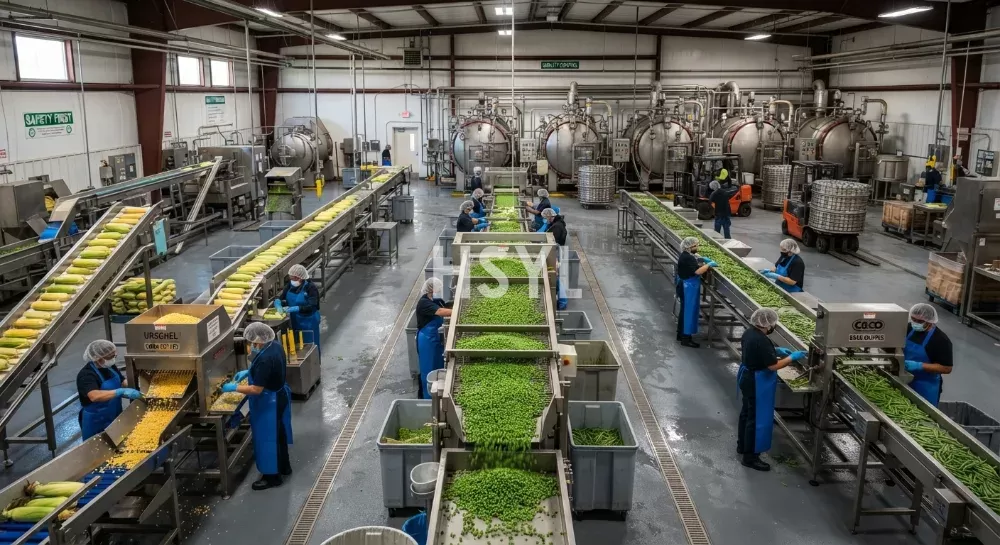
Low-acid canned vegetable processing line for corn, peas, and green beans. Press...
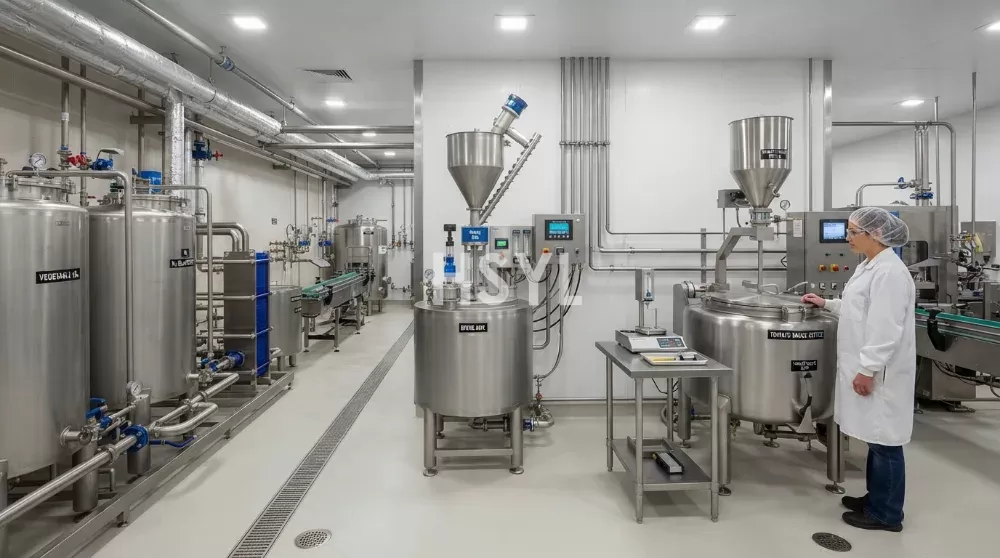
The filling medium — the liquid that fills the void spaces between the fish piec...
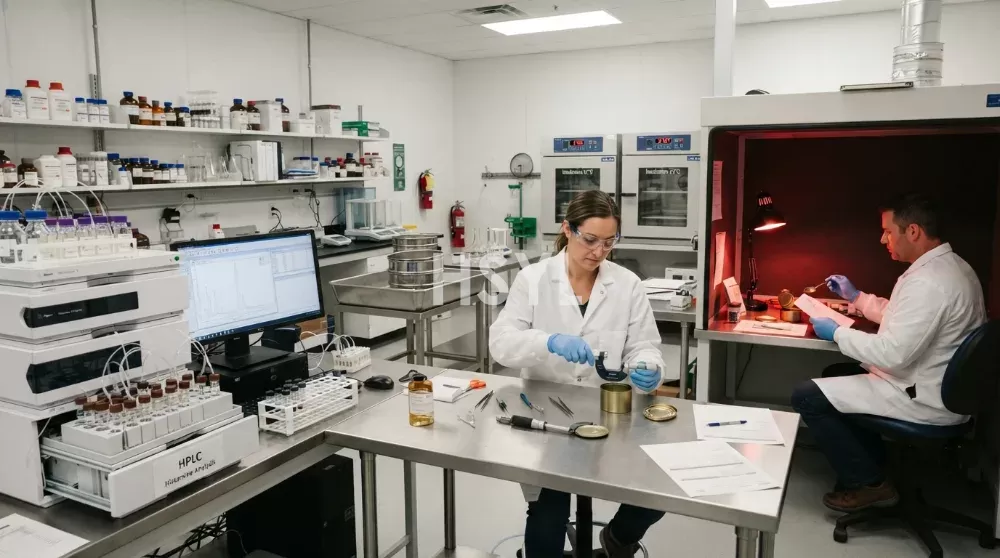
Complete sardine and mackerel canning line: heading and gutting automation, can ...