How to Ensure the Crispness of Pickled Cucumbers: The Biggest Technical Challenge in Industrial Production

In industrial pickle manufacturing, how to ensure the crispness of pickled cucumbers is widely recognized as the single most difficult and most critical quality challenge. For export-oriented pickle factories, private-label OEM suppliers, and large-scale food processors serving retail and foodservice markets, cucumber crispness is not a subjective preference—it is a measurable acceptance criterion that directly affects product grading, customer audits, contract renewals, and market pricing.

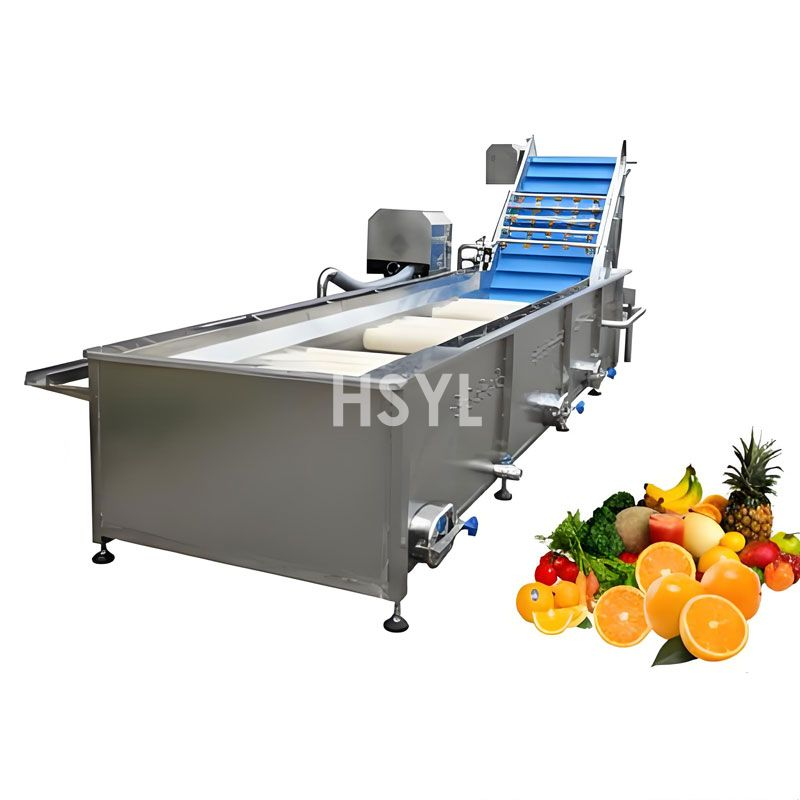
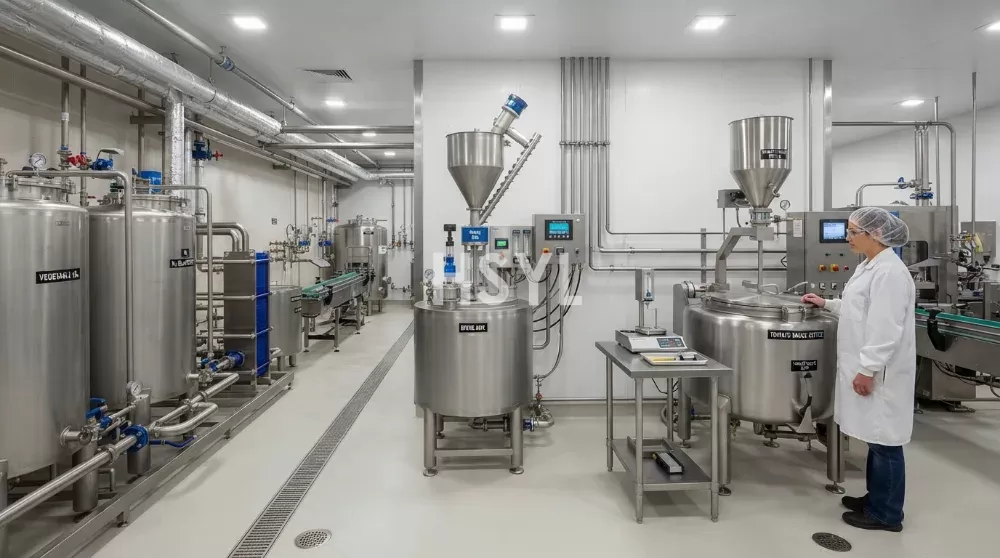
How to Ensure the Crispness of Pickled Cucumbers in Industrial Production Lines? image 1

This article is written from the perspective of an industrial processing equipment and production line solution provider. It explains, in practical and technical terms, how crispness can be reliably controlled in large-scale pickled cucumber production, why many factories fail to achieve consistency, and what system-level design principles are required to solve this problem sustainably.

Industry Context: Why Crispness Is the Hardest Problem in Pickled Cucumber Production

At small scale, pickled cucumber crispness is often treated as a raw material or recipe issue. However, once production moves into continuous or semi-continuous industrial operation, this assumption quickly proves incorrect.

In real factory projects, loss of crispness is almost never caused by a single factor. Instead, it is the cumulative result of mechanical stress, uncontrolled diffusion, uneven fermentation, and excessive thermal load, all interacting across the production line.

From an industrial perspective, crispness stability is challenged by:

  • Variability in cucumber size, maturity, and cell structure

  • Mechanical damage during washing, conveying, and loading

  • Uncontrolled salt and acid penetration rates

  • Temperature deviations during fermentation

  • Overprocessing during pasteurization or sterilization

  • Inconsistent cooling and post-process handling

This is why crispness problems often appear only after scaling up, even when the same recipe is used.

What Is Industrial Crispness Control and How Does It Work?

From an equipment and process engineering standpoint, ensuring pickled cucumber crispness is not the function of a single machine. It is the outcome of a fully integrated process system, designed to preserve cellular structure from raw material intake through final packaging.

Core Engineering Logic Behind Crispness Control

  1. Preserve cell wall integrity from the beginning
    Once the cucumber’s cellular structure is damaged, no downstream process can fully restore crispness.

  2. Control osmotic and ionic balance
    Salt, acids, and minerals must penetrate at a controlled rate to avoid tissue collapse.

  3. Minimize thermal stress
    Heat treatment must achieve microbial safety without destroying pectin structure.

  4. Ensure batch-to-batch repeatability
    In industrial production, inconsistency—not absolute parameter values—is the main enemy of crispness.

How to Ensure the Crispness of Pickled Cucumbers in Industrial Production

Raw Material Variability: The First Hidden Risk

Industrial cucumber sourcing inevitably involves variation in:

  • Diameter and length

  • Peel thickness

  • Seed cavity development

  • Harvest maturity

Without mechanical or optical grading systems, these differences lead to uneven salt penetration and fermentation speed, resulting in mixed textures within the same batch.

Effective crispness control starts with front-end classification, not formulation changes.

Mechanical Damage During Washing and Conveying

Many factories unintentionally damage cucumbers before fermentation even begins. Common causes include:

  • Excessive drum washing friction

  • High-pressure spray nozzles

  • Sharp transfer angles on conveyors

  • Drop heights at loading points

These micro-damages are often invisible but become critical during salting and fermentation, where weakened cell walls soften rapidly.

Industrial-grade systems prioritize low-impact handling and controlled flow paths to preserve physical integrity.

Salt Curing and Fermentation Inconsistency

Traditional open tanks or basic curing vats often create:

  • Vertical salt concentration gradients

  • Uneven temperature distribution

  • Variable fermentation kinetics

This results in cucumbers at the same time point exhibiting different firmness levels. In export markets, this inconsistency is frequently grounds for rejection.

Modern industrial systems use sealed curing vessels or continuous pickling systems with controlled salinity, temperature, and residence time to stabilize crispness outcomes.

Thermal Processing as a Major Crispness Killer

Heat treatment is essential for shelf stability, but it is also the most common cause of texture failure.

Problems typically arise from:

  • Excessive temperature margins

  • Uniform time-temperature settings applied to non-uniform products

  • Slow or uneven cooling after heating

Proper crispness control requires process validation based on heat penetration behavior, not conservative overprocessing.

Key Equipment Features That Enable Crispness Stability

Size Grading and Gentle Handling Systems

  • Multi-stage size grading to reduce raw material variability

  • Low-impact conveyors with food-grade contact surfaces

  • Minimized drops and directional changes

These systems reduce mechanical stress and standardize downstream processing conditions.

Controlled Washing and Pre-Treatment Equipment

  • Adjustable spray pressure and flow rate

  • Integrated debris removal without abrasion

  • Optional mineral or calcium pre-treatment compatibility

Pre-treatment stages set the structural foundation for crispness retention.

Industrial Pickling and Fermentation Systems

  • Enclosed tanks or continuous pickling lines

  • Precise salt, acid, and temperature control

  • Data logging for batch traceability

These systems eliminate environmental fluctuations that destabilize texture.

Precision Pasteurization and Rapid Cooling Modules

  • Multi-zone pasteurization profiles

  • Validated thermal load calculations

  • Uniform, high-efficiency cooling

This approach ensures safety without unnecessary structural degradation.

Typical Applications and Production Scenarios

Industrial crispness control is critical in:

  • Export-grade bottled or jarred pickled cucumbers

  • Foodservice bulk packs requiring uniform bite texture

  • Low-salt or clean-label pickle products

  • Private-label OEM manufacturing for international brands

In all these scenarios, texture consistency is as important as flavor.

Capacity Options and Line Selection Guidance

Common Production Capacities

  • 1–3 tons/hour: regional processors or specialty exporters

  • 3–8 tons/hour: medium to large export-focused factories

  • 8+ tons/hour: fully continuous industrial pickle plants

Selection Criteria That Affect Crispness

  • Batch vs continuous operation

  • Number of product sizes handled

  • Automation and data control requirements

  • Expansion plans over the next 3–5 years

Crispness stability often deteriorates when lines are expanded without re-engineering upstream stages.

Buyer Benefits of a Crispness-Oriented Production Line

  • Reduced rejection and complaint rates

  • Less reliance on operator experience

  • Higher product grading consistency

  • Improved brand and customer confidence

  • Scalability without quality loss

For B2B buyers, crispness is not a sensory preference—it is a commercial risk variable.

Customization and Engineering Support

Effective crispness control cannot be standardized across all factories. It requires:

  • Raw material analysis

  • Market specification alignment

  • Integration with existing plant layouts

  • Energy and utility optimization

This is why equipment selection alone is insufficient; process engineering support is essential.

Standards, Certifications, and Compliance Considerations

Industrial pickled cucumber systems are typically designed in accordance with:

  • CE machinery safety principles

  • HACCP-oriented hygienic design

  • FDA and EU food-contact material requirements

  • Compatibility with ISO 22000, BRC, or IFS systems

Compliance supports not only safety, but also repeatable texture control.

Conclusion: Solving the Core Question—How to Ensure the Crispness of Pickled Cucumbers

In industrial pickled cucumber production, how to ensure the crispness of pickled cucumbers is fundamentally a system engineering challenge. It cannot be reliably solved through recipes, additives, or operator experience alone.

Factories that achieve consistent crispness do so by designing their production lines around cell structure preservation, controlled diffusion, and validated thermal processing, supported by proper equipment integration and process engineering.

For processors planning new lines or upgrading existing facilities, addressing crispness at the system level is the most effective way to reduce quality risk, protect export markets, and support long-term scalable growth.